Features

New world order: can Britain, America and Australia contain China?

In the space of just a few years, Britain has gone from China’s would-be best friend to part of a pact to counter it. When President Xi Jinping came to London in 2015, Downing Street pulled out all the stops. Xi stayed at Buckingham Palace, visited Chequers and signed — of all things — a cyber security agreement. The police went to extraordinary lengths to clamp down on protests by Free Tibet supporters and a Tiananmen Square survivor. Yet just six years later the UK has now joined with Australia and the US in Aukus, a new alliance designed to check China’s power in the Pacific. Britain is no longer trying to stay neutral in the competition between the US and China. It has firmly sided with the United States.

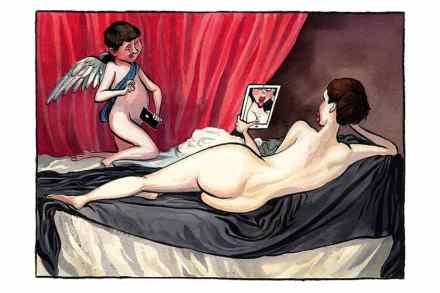
Are NFTs memes – or masterpieces?

You may think you have experienced buyer’s remorse. But until you’ve splashed out £4,000 on a Jpeg, you have not. That’s where I found myself the other day, after an adrenalin-fuelled afternoon bidding on a digital collectible ‘card’ depicting the Mona Lisa sitting on an easel. The item in question is a Curio Card, one of the earliest examples of a non-fungible token (NFT), a new technology used to buy and sell digital art. NFTs are the latest frontier for crypto-currency maniacs, the online gold rushers who keep financial watchdogs awake at night. Bored by a quiet summer for stock markets, memes and bitcoin speculation, the maniacs are piling into the fledgling digital-art market. It is booming.

When will Britain wake up to the horror of Rwanda’s President?

I doubt that Paul Kagame would have me assassinated, but it became clear to me late on Sunday afternoon that, at the very least, I am in his sights. As President of Rwanda, Kagame became the toast of the international aid community – and collected billions of dollars in aid. But is this money well spent? My book, Do Not Disturb, takes a closer look at how Kagame operates. He doesn’t appreciate the attention. My book kicks off with the strangling of Patrick Karegeya, Kagame’s spy chief, in a Johannesburg hotel in late 2013 — almost certainly on the President’s orders. It then explores the campaign of harassment, intimidation and murder that Rwanda has waged against dissidents scattered from Africa to Europe and Scandinavia to North America.

Payday: who’s afraid of rising wages?

During the Brexit referendum, Stuart Rose, the former boss of Marks & Spencer, and chair of the Remain campaign, claimed that if Britain left the EU, wages ‘will go up’. This was, he added, in a rare moment of candour, ‘not necessarily a good thing’. But the idea that salaries might rise was exactly the reason that a great many people voted for Brexit. They were well aware that it suits the likes of Lord Rose to keep wages low, and they resented it. It is now nine months since Brexit’s transitional arrangements came to an end, completing the UK’s break with Brussels and Stuart Rose’s prediction has come true — spectacularly so. Wages are rising at the fastest rate in decades.

Why Brits like me have abandoned trucking

I became a trucker by default. It was the 1980s and I was working three jobs just to pay the mortgage and keep my family going. I was a milkman, a taxi driver and a barman and I was tired and bored. We were living in a town with a ferry link to France and so at the evenings in the pub I got to know the truckers who drove back and forward from the Continent. I’d listen to their stories and think what fun it sounded. I saved up, passed my test, bought an old DAF tractor unit, hired a trailer and began my life on the road. Back then, it was just as weird and fun as I imagined it would be. On my very first trip, I met a one-legged prostitute who worked the service area at Auxerre and a Scottish driver who introduced me to the Congolese cocktail lumumba (brandy and chocolate milk).

Kabul is now a city of the dead

I lived in Kabul for nearly ten years. I had a house there for many years and I loved being there. I loved the sense of life on the edge — even at the risk of sudden death — and the extraordinary array of interesting people who visited. I later became a partner in a fuel distribution business in Kabul, with a contract to supply the jet fuel used by Nato. We supplied $2 billion worth of jet fuel, amounting to around 100,000 tons a month, giving Nato the ability to bomb the Taliban. Several Afghans worked for me, friends as well as colleagues, and over the past few weeks I’ve been trying desperately to get them out of the country, but have come up against the brick wall of government bureaucracy.

Last rights: assisted suicide is neither painless nor dignified

Is euthanasia painless? The founder of the British pro-euthanasia movement (and sometime eugenicist) Dr Killick Millard declared in 1931 that his aim was ‘to substitute for the slow and painful death a quick and painless one’. His sentiment is echoed today by the pro-euthanasia group My Death, My Decision, which says that it wants the ‘option of a peaceful, painless, and dignified death’. The British Medical Association appears to agree and this week dropped its opposition to the Assisted Dying Bill, currently making its way through parliament. As a doctor and expert witness against the use of lethal injection for execution in America, however, I am quite certain that assisted suicide is not painless or peaceful or dignified.

Assetocracy: the inversion of the welfare state

To understand how the Tories ended up in such a muddle about who they are and what they stand for, take a walk down any of the nicer streets in Boris Johnson’s constituency. North Hillingdon is as idyllic now as it was a generation ago: spacious houses, with large drives, built before the war. The houses were, once, more or less affordable. One property on Parkway, for example, was bought for £175,000 just over 20 years ago. It’s now valued at £1 million. And what’s true in Hillingdon is true of the rest of the country too. The asset boom that started at the turn of the century has transformed the finances of families across the country, turning modest-income retirees into unexpected millionaires: a new ‘assetocracy’.

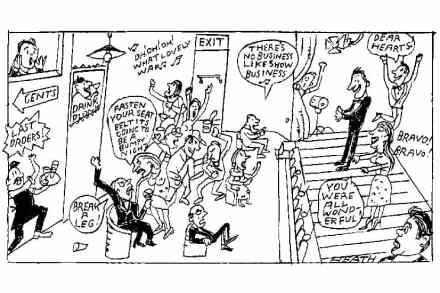
Can cartoons be both funny – and diverse?

Of the many challenges cartoonists face — rejection, money, drink, or lack of — one of the trickiest is the growing pressure to depict diversity. Nowadays readers often write to publications complaining about the dearth of ethnic minorities in our drawings and demand for cartoons to be more inclusive. It’s like being trapped in a bad political cartoon, walking a tightrope above a minefield. A quick survey of my colleagues in the Professional Cartoonists’ Organisation highlighted the following: Cartoons involve laughing at someone. If that person is black, you risk appearing racist; even including a BAME character in the background of drawing can lead to accusations of tokenism (‘background box-tickers’).

How the left thought they were right to fight the war on terror

Late one soft summer night in 1966, my brother Christopher slipped out of our north Oxford house and bicycled to the centre of the city. There he spent a worryingly long time with a spraypaint can, inscribing the words ‘Hey! Hey! LBJ! How many kids did you kill today?’ on a long builders’ hoarding outside Trinity College in Broad Street. You will have to work out for yourselves how I know this, but I do. The punctuation was perfect, and a handwriting expert could easily have told it was him. The slogan endured for months and even appeared in a TV drama filmed in the city some months later. This was how we felt then. There was no other cause so great. Even on its own terms, the Vietnam war was a terrible error and multitudes did indeed die for a mistake.

Life under the Taliban’s charm offensive

The Taliban Cultural Commission sounds a contradiction in terms but for all foreign journalists it’s the first stop in the new Afghanistan. There, in a dusty office on the first floor of the old Ministry of Information, I was handed a letter which allowed me to go anywhere in the country, except Kabul airport or military installations. In a neighbouring office I met Anamullah Samangani, a Taliban commander from the northern province of Samangan. He’s an Uzbek, resplendent in crisp white shalwar kameez, black waistcoat and black and white silk turban. He told me he has read one of my books. ‘Do you feel safe in Kabul, have you had any difficulties?’ he asked. He assured me that the new Taliban just want to be friends.

How ‘Xi Jinping Thought’ is taking over China’s classrooms

From this month, in an extension of a personality cult not seen since Mao Zedong, ‘Xi Jinping Thought’ is being incorporated into China’s national curriculum. School textbooks are emblazoned with Xi’s smiling face, together with heartwarming slogans telling readers as young as six that their leader is watching over them. ‘Grandpa Xi Jinping is very busy with work, but no matter how busy he is, he still joins in our activities and cares about our growth,’ reads one. ‘Xi Jinping Thought’ must be taught at all levels of education, from primary school to graduate programmes, and there is special emphasis on capturing the minds of the youngest children.

Tales from the Gulag: why I’m helping survivors tell their stories

I trudge up the concrete stairs of a council block of flats in west London. Up three floors. Then along one of those outside corridors, past several doors until I reach the final one. It is already open and there she is — smaller than I remember and with a charming, friendly smile. I guess that is because Ivanna knows me better now. She trusts me more. After what she has been through, it’s not surprising that it takes time to gain her trust. She welcomes me into her little one-bedroom flat and before long, I am in a different world — a world of Ukrainians, Poles and Soviets, deportations, helping resistance fighters, being arrested… it is a world of memories which mean so much to her. She is 96, and the people she was closest to are long gone.

The hell of London’s ‘American’ candy stores

The British often complain about an invasion of Americana, from burger joints to twangy accents picked up from television. I love my adopted countrymen, but for an American living far from home, these complaints can be tiresome. However, there is one Yankee invasion I hate as much as the locals do: American candy stores. There are now nine of them on London’s Oxford Street alone. A guy called Chase Manders is to blame; he started importing and selling American candy to Britain 18 years ago and opened Kingdom of Sweets on Oxford Street in 2012. Soon after, stores that once sold knickknacks to tourists started muscling in. I paid a visit to see what all the fuss was about. Could these shops take me back to my childhood? The answer was no.

The rise of the secular godparent

I always knew that I didn’t want children, but also always knew that I wanted godchildren. Lots of them. One of the less-discussed aspects of the decline of the church in our secular age is the fact that this precious relationship, more than a millennium old, is increasingly scarce. Previously godparents were there to ensure a child’s spiritual development, as well as to have in reserve some handy grown-ups should something awful befall the parents. All this is still important, but the role has shifted. Its primary benefit now is to provide a wonderful extrafamilial link that spans the generations, creating an instant and enduring bond between a child and the wider world.

The government’s social care reform plans don’t add up

As Covid-19 swept through care homes in the spring of last year, the public watched on with horror and helplessness. About a third of all Covid deaths in England took place among residents of these homes. It was worse overseas. In Spain, care home residents accounted for 40 per cent of Covid deaths last year. In the Netherlands and Sweden, it was around 50 per cent. In Canada, almost 60 per cent. But this doesn’t provide much comfort. Britain may belong to a large club of countries that got their pandemic policy wrong — but the results, regardless, were deadly. The huge holes in Britain’s social care system have been exposed. They had been expanding for decades but comprehensive reform was avoided time and time again.

The fight for the future of the Church of England

When the Church of England talks of trying new things, I prick up my ears. Back in 2004 it announced the need for ‘fresh expressions’ — new ventures alongside the normal parish system. Maybe some vibrant arty experimentation would ensue, I felt. But the main result was lots of nimble little evangelical pop-up churches, mostly lay-led. The idea of innovation seems to energise the evangelicals, although their version of innovation doesn’t always energise me. On Easter Day this year I dragged my kids to church, but there was no room at the socially distanced inn. The evangelicals round the corner let us in, so I had a glimpse of a style of Anglicanism that I normally avoid.

‘Britain is not a superpower’: an interview with Ben Wallace

Britain’s evacuation of Kabul began with an admission of defeat. Ben Wallace, the Defence Secretary, said that the UK would probably leave having failed to assist everyone who had been promised safe passage. ‘Some people won’t get back,’ he said in tears in one interview. When asked why he was taking it personally, he replied: ‘Because I’m a soldier.’ He’s the first defence secretary for 29 years to be able to make such a claim. He served with the Scots Guards in Germany, Cyprus, Belize and Northern Ireland before entering politics. His experience in uniform, he says, has given him different insights into the job: in this case, recognising just how unpredictable retreats can be.