Features

The BBC should be less opinionated

Rod Liddle says that the Corporation has no right to adopt a position on an issue such as David Maclean’s private member’s bill, and should stick to reporting the facts A BBC foreign correspondent was once sacked by the Corporation for claiming expenses fraudulently. What alerted the BBC accountants to a possible transgression was this chap’s claim for the cost of a lawnmower and the services of a gardener, given the fact that he lived in a fourth-floor apartment. I don’t know what he’s doing now, the journalist. Perhaps he’s your MP.

Milburn: how I can help Brown

Alan Milburn was nine years old when he arrived home to find the front door of his council house had been painted bright yellow. His mother, who looked after him on her own, was perplexed. In the morning it had been red, but men with brushes had come and gone. This was to have a radicalising effect on the young Tynesider. Some 40 years later, reclining in the chair of his rooftop office opposite the House of Commons, his outrage still seems fresh. ‘I can remember the emotion of being slightly freaked by the whole affair,’ he said. ‘The colour wasn’t chosen by my mum. Nor by my granddad. It was chosen by the council: but they didn’t live in that house, and we did.’ From then on, he has had a dislike of state control.

Yuschenko: historical times

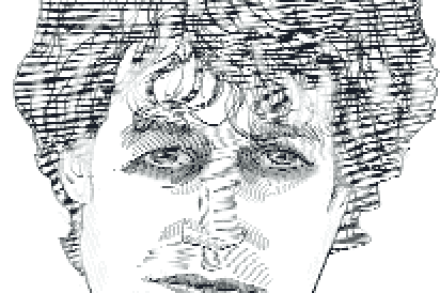
I had almost given up. The time of our appointment had changed six times in 24 hours. The presidential palace was — as it still is — in full crisis, and my interview seemed to be receding out of reach. When he finally showed up, the man at the centre of the political storm seemed perfectly calm. Victor Yuschenko was wearing a well-cut suit and a bright red tie, but it was his face that captivated my attention. This was the famous face that had shocked the world and launched a revolution. Disfigured by pocks and carbuncles, it tells the story of Yuschenko’s near-death and of his country’s bitter struggle for democracy.

Shame on Mugabe’s stooges

Rian Malan is appalled that Zimbabwe has been put in charge of Sustainable Development by the UN — and says it is symptomatic of the way in which Mugabe is indulged by foolish go-gooders from New York to South Africa Johannesburg On the day that Bob Mugabe’s genocidal regime acceded to the chair of the UN’s Commission on Sustainable Development, I found myself in the lovely Cape village of Franschhoek, once a Boer farming town but now more French and precious than Provence. Even as bitter debate broke out in the distant UN, I was checking into a luxurious hostelry and trimming my nostril hairs in preparation for meeting such luminaries as Liz Calder, publisher of the Harry Potter books, and the glamorous American novelist Siri Hustvedt, author of Things I Loved.

Sweeney’s rant at the Scientologists

Ah, now, this is what we pay our licence fee for. A maniac screaming at a maniac. I hope you caught the latest edition of the BBC’s Panorama, during which the presenter, John Sweeney, went berserk at a spokesman for the Church of Scientology — bellowing in his face at full volume in the manner of an inmate at Rampton being told that his pornography allowance has been stopped. If you didn’t see the show itself, then check out the incident on YouTube on the internet — it’s been posted there by the Scientologists as if to say look, everybody, this is what we have to put up with, abuse and harrassment. The clip is quite wonderful — perhaps the most arresting moment of TV this year and utterly hilarious.

Alastair Campbell told the crowd: ‘Unite behind Gordon to win’. But can they?

When John Reid was asked if he’d stand for Labour party leader, he would always give the same sort of reply. ‘I have a life outside politics,’ he told me at the last Labour conference. ‘I play the guitar, I play piano. I have a house in France. I could walk away from all this tomorrow, and my life would not collapse. Now you may believe me, or you may not believe me: I don’t give a ...’. At the time, I didn’t believe him. Not for a second. Mr Reid seemed to be the classic political animal. Ministerial red boxes from his many government posts are lined up in his parliamentary office like hunting trophies.

African wildlife is newly endangered

Richard Leakey never looked like he was going to mellow much with age. For the past 40 years he has been one of the most vital, energetic, tenacious and inflammatory figures on the African scene. When barely out of his teens, he made his name as an archaeological prodigy — a sort of Mozart of Lake Rudolph — and in the process very nearly beat his parents, Louis and Mary, at their own game. When he ran the Kenya Wildlife Service in the late 1980s he famously torched a 12-tonne pile of poached ivory. It was a typically unsubtle but effective gesture. The images were beamed out on network TV; the world sat up and paid attention; poaching, for a while, was stopped in its tracks.

Opportunity has stopped knocking: who will be its new champion?

Here’s a conundrum as we leave the Blair years behind us. Never has so much faith been placed in the idea of a society open to social mobility; never have so many politicians’ speeches been delivered in praise of a more classless society and the need to promote ability, regardless of background. Yet their rhetoric isn’t matched by the facts. Britain is becoming far less socially mobile. On the present indicators, we can only argue about whether it has stalled or is going backwards. What no one can convincingly argue is that it is going forwards. One of the oft-cited pieces of evidence is that of a celebrated study of children born in 1958 and children born in 1970. Those born in 1970 are more likely to have ended up poor themselves than the children born in 1958.

A slum for half a million

It was pretty barmy ten years ago but now it’s downright insane. When I last dabbled in the London property market, prices were rocketing and there were half a dozen buyers for every property. These days it’s a whole lot worse but I’ve got no choice. My wife and I have a toddler nearing his first birthday and it’s becoming impossible to lug everything up the 58 steps to our top-floor flat: baby, toys, pushchair, Cow & Gate formula, books, food, wine, beer. And it’s really not healthy. I could easily have a heart attack watching her doing all that carrying. Our home, in which I’m writing this piece, went on sale just after Christmas.

Cameron is taking on Brown

Nothing much is certain in British politics these days, but assuming that the next general election will pit Gordon Brown against David Cameron, we can be sure of one thing: its result will be a referendum on rebranding. Can the slick young pretender convince the cynics out there that the Conservatives are no longer a party of posh toffs with nasty views on immigration and labour markets? Can the dour old Scot loosen up a bit and stop making the electorate feel so very uncomfortable?

A Parisian interlude

Paris, 1 May Between two rounds of a presidential election, the city seems untypically calm. But from my observatory, two floors above the campaign headquarters of Ségolène Royal, there is a clear view of the frantic efforts underway. I have been staying in this building, with my host, a celebrated surrealist sculptor, on occasional visits for over five years. Until now its chief claim to fame has been that it was here that French Military Intelligence brought the lovely Mata Hari to be questioned in 1917 before she was taken out to be shot on trumped-up charges of espionage.

The visit

I wish to write about a place of which I know everything yet nothing, where everything is familiar yet strange, a place where I feel I go too often, but never quite enough. This place is the same for everyone, only different. It is called, of course, Home — not the Home where you now live, but the Home where you were born and in which all things must start. I used to live in Kuala Lumpur. That is, until I was 15 and my mother rode the Ekspres Rakyat with me to Singapore, where I was to continue my studies. ‘Be careful,’ were her last words to me as she got ready to hop on the next train back to Malaysia. My mother asks you to be careful about everything. You could be sitting, quietly reading a book, and she would say: Be careful. Nowadays, I fly.

New Labour’s final collapse

Fraser Nelson takes to the road and finds voters turning to whichever parties will maximise the mutiny against Blair and Brown. The SNP is now a party of protest, not separatism — but have the Tories done enough to stay on track for power? When locals give chase in a deprived Glasgow housing estate, it is normally a signal to run. The woman who started coming towards the Scottish National Party campaigners I was with on Tuesday certainly seemed angry: perhaps we’d blocked her driveway, or sullied her carpet with separatist literature. But her gripe was with Labour. ‘I’m a nurse, and I’ve seen the Health Service really suffer under them,’ she said, demanding various SNP pamphlets. ‘I’m never voting for them again.

The pangolin and al-Qa’eda

Christopher Howse meets Mary Douglas, Britain’s foremost anthropologist, and learns the connection between ritual taboos and al-Qa’eda’s cells ‘It’s no good attacking enclaves,’ Mary Douglas said, dissecting a piece of guinea fowl on her plate. ‘It just makes them more firmly enclaves.’ When I had lunch with her, she sat upright in her chair, not leaning on its back, a slight woman of 86 now, her bright dark eyes set off by silver hair. She was talking about Islamist terrorists, as classified in her own cultural theory, for she is an anthropologist, the greatest anthropologist, some say, that Britain has produced in the past half century. She was made a dame in the New Year’s honours. Her sharp mind is still teeming with ideas.

A Tory–Plaid Cymru pact?

Liam Byrne says the English must be less apathetic about  the United Kingdom, and about the threat of Scottish independence that looms in next week’s elections One party rule sums up the history of Welsh politics from 1945 onwards. Labour’s hegemony here has been both cultural and political with its tribal elders portraying any alternative as at best eccentric and at worst downright unnatural. This is the party of the Welsh establishment and its position has been bolstered by an accomplished grasp of the powers of patronage. Tory governments at Westminster have recognised that hegemony and governed through it. New Labour in the post-devolution era could by and large afford to forget Wales — a country in which it had rarely shown any interest.

Democracy may die

A few months ago I asked a Kremlin grandee, who worked with both Boris Yeltsin and Vladimir Putin, which president of Russia he preferred. I expected him to favour the warm but shambolic Yeltsin rather than the competent but icy Putin. I was wrong. ‘The difference,’ he explained, ‘is that Yeltsin was a capricious Tsar; Putin’s a practical politician.’ But who, I asked was the more lovable? ‘Putin,’ he replied, ‘because he’s always direct and he keeps his word.’ His words returned to me when I heard on Monday that Yeltsin had died. Yeltsin’s style of tsardom — impulsive, bombastic, secretive, drunken — meant inconsistency and insecurity for even his closest aides, never mind his own people.

Putin will stop at nothing

Anne Applebaum says that dissidents against the authoritarian regime, many of them in London, are raising the stakes. The President’s response is to get even tougher — and to target Britain in his new propaganda war About two years ago, Mikhail Kasyanov, ex-prime minister of Russia, made a private visit to Washington. Off the record, he told a handful of journalists that he was disturbed by the authoritarianism of President Putin. Then, in maybe a dozen or so more ‘off the record’ meetings, he told more journalists, several politicians and a lot of other people in Washington that he was disturbed by the authoritarianism of President Putin.

‘Dusty Bibles, Dirty Thoughts’

Matt Frei reports from the scene of the US campus  killings, listens to the survivors and concludes that  the only question worth asking is: where next? Blacksburg, Virginia The last school shooting I covered also happened in the morning. It was October 2006 and a middle-aged milkman finished his night shift, got a few hours’ sleep, kissed his wife and children and then walked into an Amish village school half a mile away in Lancaster, Pennsylvania. It was a glorious late summer day. Armed with ropes, rubber gloves and gaffer tape, he let the boys go and tied the girls together. He then shot ten of them execution-style. Five died. On Monday this week, Cho Seung-hui began his killing spree at Virginia Tech at 7.15 in the morning.

Kate was too posh for William

Rod Liddle says that young princes in their twenties will always prefer a peroxide blonde  with a non-U name to a fragrant, well-spoken English rose This has been a difficult week. I am still trying to come to terms with the fact that I was responsible for the traumatic break-up between Prince William and Kate Middleton. It is a terrible thing to have on one’s conscience, the dashing of young love and the hope and expectation of a nation. It’s not, of course, that I’ve been spotted dancing the night away and canoodling in Chinawhite with Kate, or Wills for that matter. I’ve never, ever, pawed a royal or a wannabe royal in a nightclub, not even Princess Michael of Kent.