Features

‘Jesus hung out with freaks’

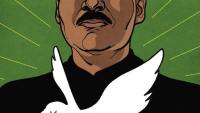
Why does the American religious right get all the attention: is there not also a religious left? Why is it always on the back foot? Why, though such a basic part of the nation’s history, does it seem un-American? It suffers from the same problem as its political cousin: most Americans think of the left as something for metropolitan elites or angry black radicals. (President Obama is associated with both.) But liberal Christian voices are breaking out. A few young preachers have edged away from conservative evangelicalism, but their criticism of the dominant religious culture tends to remain cautious (why lose the chance of a massive congregation?). A notable exception is Jay Bakker, 35-year-old pastor of a church for the young hipsters of Brooklyn, called Revolution NYC.

Taking the world as it is

Michael Oakeshott’s philosophy fits no ideological or party label – but there is no better case for conservatism I met him only once. He lived at the end of his days in a tiny slate cottage near Langton Matravers on the Dorset coast. On a damp November day, he came to greet me at the gate to his small garden, made me a small lunch of cold meat, and then sat me down in front of a coal fire to talk. I was in awe; he seemed thrilled to have a Harvard doctoral student examining every word he had ever published. And at the time, in November 1989, his delight was understandable. Mine was only the second doctoral dissertation written about him, after he had spent six decades producing some of the finest philosophical writing of the 20th century.

Winter in Poland

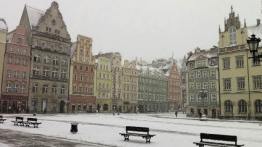
Wrocław in Poland was Breslau in Germany until 1945. We’ve travelled here to record the orchestral parts of the music we’ve written for a ballet, The Most Incredible Thing, which opens at Sadler’s Wells in March. It takes me several days to work out how to pronounce the Polish name of the city. Some foreigners call it ‘Vratslav’ but apparently the correct pronunciation is ‘Vrotswaff’ (I think). Actually no one seems to mind. We’re recording in the old Große Saal des Polnischen Rundfunks built in Breslau in the Nazi era as a concert hall for radio broadcasts.

Christmas Survey: What will happen in 2011?

Some notable friends of ‘The Spectator’ share their hopes, fears and predictions for the year ahead Dame Eileen Atkins I hope we start getting education right. Michael Gove is correct when he says we should go back to an emphasis on five basic subjects: English, maths, geography, history and a foreign language. These should not be purely the province of the naturally academic. I grew up on a council estate. It was not expected that anyone from my area would go to university. My honorary degree was one of my proudest moments. There is no use making education easy and then celebrating success if young people leave school unable to write or add up.

Christmas on stage

Thanksgiving is always a huge deal in the US and this year was no different, except for the fact that the media were full of dire warnings about the inconveniences travellers would face at the airports due to the new regulations imposed by the Transportation Security Administration in the US, and the new body-scanning techniques and the euphemistically named ‘pat-down’, which is not so much a pat-down as a feel-up.

The plum pudding trick

Which was the best Christmas party ever? Perhaps it took place on Boxing Day, Tuesday 26 December 1843, at the home of Nina Macready, wife of the famous actor. It was her birthday, but her husband was away on tour, and to cheer herself up she decided to give a children’s party, but invited a lot of grown-ups too. One of them was Jane Carlyle. Her grumpy husband, battling with his book on Cromwell, refused to go. She was feeling dyspeptic, having been obliged, for the first time, to stuff a turkey. Feeling horrible on the morning of Boxing Day, Jane was about to send an apology when a note arrived from a distraught Mrs Macready, imploring her not to ‘disappoint my poor little daughter’.

Christmas Short Story: Carcassonne

In the summer of 1839, a man puts a telescope to his eye and inspects the Brazilian coastal town of Laguna. He is a foreign guerrilla leader whose recent success has brought the surrender of the imperial fleet. The liberator is on board its captured flagship, a seven-gun topsail schooner called the Itaparica, now at anchor in the lagoon from which the town gets its name. The telescope offers a view of a hilly quarter known as the Barra, containing a few simple but picturesque buildings. Outside one of them sits a woman. At the sight of her, the man, as he later put it, ‘forthwith gave orders for the boat to be got out, as I wished to go ashore’.

Access all areas | 18 December 2010

It is an exciting day for Liberty Osborne, the Chancellor’s daughter, to join him at work. The windows at HM Treasury are boarded up, workmen line the road replacing the bombproof (but not student-proof) glass. Graffiti defaces the walls, but although several politicians are named and shamed in spray paint (‘Why did Nick Clegg cross the road? Because he’d promised not to’) there is nothing unkind about the author of the cuts: George Osborne himself. When we meet the Chancellor at 10.30 a.m. in 11 Downing St, he does not look the slightest bit like a man under siege. Seven-year-old Liberty bounds out of his study, waving at us cheerfully. The Chancellor is no less upbeat.

Leaves on the line

What is happening to trees in Britain? Horse chestnuts now turn brown in July. A microscopic caterpillar eats out the green insides of the leaves; only the outer skins remain. Horse chestnuts also weep dried blood from their bark, and sometimes the huge trees spectacularly die. Alders have been weeping bloody tears and dying. Newspapers warn of sudden oak death and acute oak decline. The Forestry Commission has stopped planting Corsican pine because of red-band needle blight. The problem is globalisation of pests and diseases. Diseases which for millions of years evolved to come to terms with their local hosts are introduced to other countries and find new host trees that have not adapted to living with them. The horse chestnut itself symbolises globalisation.

Memories of wartime

I was born in London in 1935. By the summer of 1939, it was considered wise to get children out of the city before the war started. I wasn’t separated from my sobbing mother at Victoria station and put on a train holding a gas mask. Instead, my mother and I went down to Devon to stay with my grandmother, who had rented a house in the village of Torcross. In London, the war did not stop for Christmas. Toy shops before the war had sold small forts modelled on the Maginot and Siegfried lines. Now boys in the city wanted toy planes like the ones they saw flying overhead. But in Devon in 1940 things were still peaceful and we had a big Christmas lunch with all the trimmings. We were joined by an uncle whose job it was to pull bodies out of bombed buildings in London.

O come all ye faithless

The Spectator understands the work pressure on vicars at this time of year. We know it is tempting simply to read out the diocesan Christmastide message. So here, for all clerks in holy orders, we offer this cut-out-and-preach sermon for use at carol services: May I speak in the Name of the Father, Son and Holy Ghost — though for many of you it might as well be in the name of the heathen god Thor. Interesting chap, Thor. Red-headed. Liked to hurl bolts of lightning and cause mayhem. A Norse Simon Heffer. I come not in peace. I will not wring my hands and speak to you in the voice of a primary school teacher. I am not going to employ some drippy parable while smiling at you like a flatulent goat. The Britain of Jeremy Paxman demands something ruder.

Can this man defeat al-Qa’eda?

Amr Khaled’s TV preaching has made him Islam’s answer to Billy Graham – and he’s mounting a direct attack on the terror camps of Yemen Aden, Yemen There’s a new weapon in the war on terror, ladies and gentlemen. Never mind drones and spies, surgical strikes and covert ops, they’re old hat. There’s a time and a place for them, of course, and we must thank our spooks and soldiers for helping to keep us safe, for foiling plots and knocking off the odd wayward beardie in distant deserts and freezing mountain passes. But that’s not really draining the swamp.

Prison Notebook

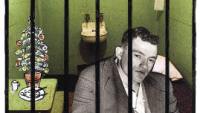
Christmas Day is quiet in the prison. There’s a tree in the chapel, and a few bits of tinsel on the wings, but the air is not celebratory — it’s subdued. The men eat their processed turkey alone, or in pairs, in their cells, while images of happier Christmases flicker tauntingly from their TVs. There are countless people in the outside world who spend a lonely Christmas, too, of course; but on Christmas Day in the prison in which I work as a chaplain, there will be 700 lonely men under one roof. On the first Sunday of Advent, I give a sermon on the significance of the Advent candles: the purple ones for penitence, the pink one for Gaudete Sunday, and the white one in the middle for Christmas Day.

The true cost of the Olympics

There was something rather un-British about all that grovelling to Fifa last week. That, at least, appears to be the new national consensus after even the combined charms of Prince William, David Cameron and David Beckham failed to land England the World Cup. We are not, we now realise, the kind of people who prostrate themselves to fat foreign sports bureaucrats. The mother of parliaments will never yield its cherished prerogatives to the rococo whims of some grubby Swiss tax-dodgers. Oh, wait a minute... Entirely without the help of Mr Julian Assange, The Spectator today publishes an international sporting equivalent of the WikiLeaks cables.

The sensational truth

For a man who earns his living by publishing other people’s email, Julian Assange has a high opinion of himself. You can hear that in his rhetoric, which combines the paranoia of the early Bolsheviks with the arrogance of a teenage computer hacker. When a subordinate dared threaten him a few months ago, Assange slapped him down by declaring himself ‘the heart and soul of this organisation, its founder, philosopher, spokesperson, original coder, organiser, financier, and all the rest’. When others threatened to leave, he declared, in the manner of the young Lenin, that the organisation was in ‘a Unity or Death situation’. His goals are as vast as his self-esteem: chief among them is the destruction of the American government as we know it.

The Gaokao challenge

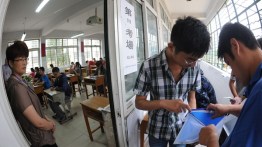
There is a word, unknown in this country, which once a year strikes terror into the hearts of millions of young people: Gaokao. This is the slang term for the Chinese National Higher Education Entrance Examinations, and though only a few translated questions have found their way out of the secretive state, their level of complexity raises serious concerns about our own education system. The results released by Pisa (the OECD Programme for International Student Assessment) this week not only raise the same concerns but absolutely confirm them. The Pisa people tested nearly half a million 15-year-olds worldwide, in maths, literacy and science. What did they find? China comes top; Britain 25th, having dropped several places since the last study.

Scents and nonsense

Christmas is coming, so that means presents. And for lots of us, that means scent. Some of the hopeful donors will be the sort to wander helplessly around a fragrance department, bewildered by choice until they seize, in desperation, on the stuff that looks nicely packaged. That was the route whereby my father once bought my mother some pleasing aftershave. Others will know exactly what they’re after: the scent their womenfolk have always liked, the perfume their own mothers used to wear. Which is dandy: some of the most beautiful and original perfumes have been with us for decades, a century even. But it’s an illusion to think that what we’re buying is the same scent as Coco Chanel et al used to wear. What we’ve got now is a 21st-century version of the originals.

White mischief

Boris Johnson’s enemies are hoping for a final snow-down London woke to snow and people wondered whether this time Boris Johnson would show true grit. His enemies reckon there’s no business like snow business for catching him out. They trust he will be found wanting, as he was by the unexpected snowfall in February 2009, when the city ground to a halt. Many people treasure the belief that the Mayor of London is fundamentally incompetent, and are disconcerted to find that sometimes whole months go by without any real evidence that the Tories have, in the words of the immortal Polly Toynbee, ‘put up a clown to run a great global city’. The snow reached Scotland and the north of England first.