Features

Out of the shadows

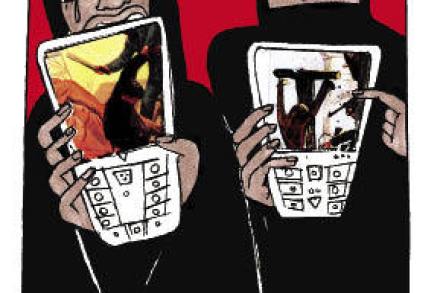
Bin Laden’s death has exposed Pakistan’s double game with the West Even those of us who did not believe that Osama bin Laden was producing his videos from a cave in a remote tribal mountain would never have guessed that he was, in fact, living in a ‘Come and Get Me’ three-storey house surrounded by cabbage fields just down the road from Pakistan’s top military academy. To many in Washington, here was final proof — if any were needed — that its supposed ally has been playing a double game; that, for the past ten years, Pakistan has been playing the role of US ally (and taking more than $18 billion of American aid) while all the time sheltering the Taleban and al-Qa’eda.

Terrorism after bin Laden

Two propositions: first, whatever its short-term consequences, the killing of Osama bin Laden will neither significantly hasten nor significantly delay the decline of al-Qa’eda. That is happening anyway. Secondly, however slowly or rapidly AQ declines, it will not significantly affect the global level of terrorism. We’re stuck with it anyway. But it’s manageable. Two propositions: first, whatever its short-term consequences, the killing of Osama bin Laden will neither significantly hasten nor significantly delay the decline of al-Qa’eda. That is happening anyway. Secondly, however slowly or rapidly AQ declines, it will not significantly affect the global level of terrorism. We’re stuck with it anyway. But it’s manageable.

Mission impossible

The killing of Osama bin Laden settles nothing, decides nothing, and repairs nothing. Yet the passing of the al-Qa’eda leader just might serve an important purpose. We confront a moment of revelation: coming across bin Laden comfortably ensconced in a purpose-built compound in the middle of major Pakistani city down the street from the nation’s premier military academy should demolish once and for all any lingering illusions that Americans retain about their so-called global war on terror. The needle, it turns out, was not in the haystack but tucked safely away in our neighbour’s purse — the very same neighbour who professed to be searching high and low to locate that very same needle. Think we’ve been had? Bin Laden was an indubitably evil figure.

The 24-hour rush to certainty leaves plenty of room for conspiracy theories

I know that Wills married Kate last weekend because I saw it with my own eyes. I didn’t have much choice in the matter because my wife was camped out in front of the TV for 12 hours being catty about Victoria Beckham’s Croydon facelift and stupid hat and generously summoning me in whenever Lady Amelia Spencer, the pouting blonde baddun accused of lamping some bloke in a Cape Town McDonald’s drive-thru restaurant (that’s how I like my quasi-royals to be), hove into view. So, anyway, I had no objections when the BBC and ITV News that night reported their marriage as an unchallenged fact, nor when the newspapers said the same thing the next morning.

Net loss

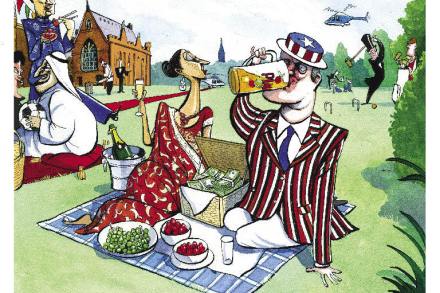
The scene is a drawing-room at nightfall. A group of weekenders sit in time-honoured tradition around a crackling fire. One is engrossed in a magazine; another chats with her boyfriend; the rest debate whether the word ‘zapateado’ is permissible in their board game. But this is not a house party as Terence Rattigan knew it: the magazine is being read on an iPad; the lovers are exchanging endearments by text message; the game-players have swapped the Scrabble set for a laptop with access to Wordscrape. New technology is tightening its grip on our lives, and not even the country house weekend is immune.

Spy fiction

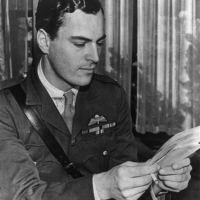
Have historians exaggerated Ian Fleming’s role in the cracking of the Enigma code? Ian Fleming is best known for his novels about the superspy James Bond. But his reputation as a creative genius has been considerably enhanced by his exploits during the second world war as a lieutenant commander in naval intelligence. He has been praised in particular for coming up with Operation Ruthless, the first viable plan to capture naval Enigma codebooks for Alan Turing and his codebreakers at Bletchley Park. In the words of the official Enigma historian, this was ‘a somewhat ungentlemanly scheme’. That was putting it mildly.

PAKISTAN NOTEBOOK

Karachi is a notoriously lively city, with gun battles on the streets a daily occurrence — so it seems only sensible to stay in the comfort and safety of the Sind Club, a grand institution built during British rule in the centre of the town. Karachi is a notoriously lively city, with gun battles on the streets a daily occurrence — so it seems only sensible to stay in the comfort and safety of the Sind Club, a grand institution built during British rule in the centre of the town. It was here that my travelling companion, Charles Alexander, and I watched the royal wedding in Urdu in company with elderly members. I blubbed as we joined in the hymns, but when it was all over it did seem odd that there had been no kiss.

Scarborough unfair

If it is evidence of the decline of British civilisation that you are after, you cannot do better than go to Scarborough. It is precisely because the material traces of that civilisation are still so much in evidence there, albeit dolefully altered, that the impression is so strong and so painful. The town retains its wonderful position, of course. One is still struck immediately on arrival by ‘the freshness of the air, so different from what is breathed in the interior of England’, as described by Dr John Kelk in his The Scarborough Spa, its new chemical analysis and medicinal uses; to which is added, On the Utility of the Bath (3rd ed. 1855).

Axeman in chief

After a year in government, most ministers look ten years older. Not Francis Maude. He bounds into the anteroom of his ministerial suite to greet me, wearing his customary open-necked shirt with a red check that matches the colour in his cheeks. In a confident voice, he says, ‘I just need to get some things decided and then we’ll be right with you.’ It is more like meeting a businessman at the height of a boom than a politician in the age of austerity. In Maude’s office overlooking Horse Guards Parade, the businesslike atmosphere becomes even stronger. Phrases like ‘saving money off the overhead’ and ‘drive prices down in procurement’ tumble from his lips.

The meaning of a marriage

‘A princely marriage is the brilliant edition of a universal fact, and, as such, it rivets mankind,’ wrote the great constitutional theorist Walter Bagehot. ‘A royal family sweetens politics by the seasonable addition of nice and pretty events. It introduces irrelevant facts into the business of government, but they are facts which speak to men’s bosoms and employ their thoughts.’ Bagehot was writing about the marriage of the future King Edward VII to Princess Alexandra of Denmark in 1863, but his sentiments equally apply to the coming royal wedding, for he concluded that one half of the human race at least ‘care 50 times more for a marriage than a ministry’.

Royal Notebook

No one was more irritated than I was when the royal engagement was announced on 16 November. Not, I hasten to say, because I did not welcome the news, but selfishly, because I realised I would miss a rare lunch at the Historic Houses AGM — and many further lunches over subsequent weeks. Since then, as when the Princess of Wales was killed, I have been a prisoner of the media. The engagement took everyone by surprise — and the calm discretion with which the whole process has been handled since must be a delight, and even possibly a surprise, to Buckingham Palace and Clarence House. Nothing leaks. I also detect a gentler approach from the media. They seem glad for any titbits that we veterans can provide, since a new, uninformed generation of journalists has sprung up.

All theatrical bigots should be equal in the eyes of the law

What, to your mind, constitutes a ‘hate crime’? I’ve been wondering about this since reading the comments of Paul Marshall, of the Cumbria CID. What, to your mind, constitutes a ‘hate crime’? I’ve been wondering about this since reading the comments of Paul Marshall, of the Cumbria CID. Paul had been expressing his great satisfaction that a shaven-headed lumpenprole idiot called Andrew Ryan had been sentenced to 70 days in prison for burning a copy of the Koran in public. Speaking in the manner of a Premier League football club manager, Marshall said: ‘Today’s result shows how seriously we take hate crime.’ And he added: ‘The incident was highly unusual for Cumbria in that we have such low levels of hate crime in the county.

How to play the big day

Through fashionable London the marriage of Prince William and Kate Middleton is causing confusion. Privately, the snoots of Islington and Notting Hill are no different from the rest of us. They think Kate looks cracking and RAF pilot William would make a fine son-in-law. Is there not always something irresistible, my dears, about a tall, young prince with a chopper? Yet metropolitan smoothness makes them hesitate. Is royal fever socially wise? Is it ever acceptable for a cool cat in designer denim to wave little Union flags and sing the national anthem? Metro-smoothies fret about expressing their gaiety at this fairytale wedding. They do not want to be reported to Commissar Polly Toynbee. They fear being haunted by the ghost of republican Claire Rayner.

‘What is truth?’

It’s unwise to rely on the Gospels for an accurate description of that first Good Friday ‘And yet we call this Friday good.’ So what actually happened on the first Good Friday? The balance of probability is heavily against those who would dismiss the whole affair as a mere addition to the literature of mythology. Beyond all reasonable doubt, we can be certain on two points. A man was crucified and His death had dramatic consequences. Even though we are aware of the story’s ending, the Gospel narratives are a compelling read. Yet there is one difficulty: a childishly incoherent distortion of the historical record, which is in danger of undermining the four authors’ credibility, but which does tell us a lot about the Palestinian politics of the period.

Mexistan

It’s high time the US ended its ‘see no evil’ approach to Mexico More dead bodies found in Mexico this week. As we all focus on Libya and Afghanistan, the cartels keep stepping up the violence just over the border — so perhaps the time has come for America to take a really objective look at our neighbours to the south. We could start with a quick rereading of Alan Riding’s rather good book on Mexico, Distant Neighbors. The picture is not comforting. Parts of it, near the border, are more like Afghanistan than America. There is unbridled violence, financing of corrupt activities through drug trafficking, control of what should be governmental authority by brigands or worse, and corruption all the way through the social and political hierarchy.

The Spectator’s over-80 power list

It is hard to think of a time when the over-80s have held such sway over British public life. Shirley Williams has the government at her mercy as she decides what to do about its NHS reform bill. If many are unaware that P.D. James is woman, then even fewer will know (or care) how old she is. This is a list of people who are still filling theatres, selling books and inspiring millions in their ninth (and, in some cases, tenth) decade. Their artistic, political or scientific brilliance has only been cast into sharper relief by the passage of time. This far-from-comprehensive list of Britain’s great octogenarians (with a sprinkling of nonagenarians) has one particularly notable exception: the Queen. The success of her reign requires no elaboration.

Reason vs romanticism

The American South? You don’t know the half of it Stand by. I am going to explain the American South, a subject that makes the quantum theory seem like child’s play. The first thing you must understand is that there is no South — there are two. One is the Upper South of horses, tobacco and Episcopalians; and the other is the Deep South of mules, cotton and Baptists. The second thing is that there is no mid-South. It’s a geographical term with no sociological undercurrents, used by climatologists and weather reporters to locate their own brand of undercurrents. The Upper South in its purest form consists of Maryland and Virginia.

‘We’re all doomed!’

Scotland is staring into a £4.5 billion black hole ‘Their form of rule is democratic for the most part, and they are very fond of plundering…’ That description of the Scots by Cassius Dio, the Roman historian, in the early 3rd century testifies to the consistency of the Scottish character over 1,800 years. Today the Scots are so democratic they have saddled themselves with three tiers of government, while their enduring taste for plunder has progressed from the crudity of border reiving to the sophistication of the Barnett Formula. Scotland has successfully reversed the fiscal arrangements that would have been familiar to Cassius Dio in the days when outlying nations paid taxes to Rome: contemporary Caledonia is a dependency that exacts tribute from Westminster.