Features

Nowhere to hide | 13 September 2012

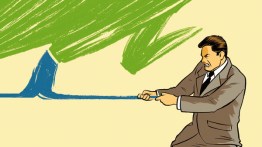
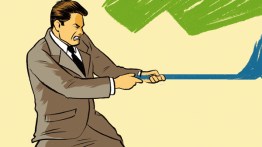
Ever since the millennium, I have wondered how long the utopian faith in the emancipatory potential of the web will last. Of course, we know the new technologies give the citizen new powers to communicate and connect. We hear this praised so loudly and so often, how could we not know? But what benefits the individual also benefits the powerful, and gives states and corporations surveillance powers the secret police forces of the 20th century could only dream of. If you doubt me, consider how today’s scandals are technologically enabled. The Telegraph’s publication of MPs’ expenses would have been impossible 30 years ago. The source would have had to photocopy hundreds of thousands of pieces of paper.

Fights of the feminists

Naomi Wolf’s Vagina is not an organ so significant it needs italics; it is a book, and a catalyst for a swiftly assembled feminist lynch mob. In the New Statesman, Laurie Penny wrote, ‘Naomi Wolf’s Vagina is crassly attention-seeking… It’s upsetting to see a prominent feminist having what can only be described as a dramatic public meltdown.’ She had another go in the Independent: ‘Claims that the vagina is “not only co-extensive with the female brain but also is part of the female soul” are frankly offensive… today’s young women deserve better.’ In the Times Janice Turner complained that Wolf had ‘medically unnecessary major spinal surgery’ to restore her vaginal orgasms.

Hancock’s hour

David Cameron has made clear where he thinks the future of the Conservative party lies. In his reshuffle last week, he brought 12 of the 2010 Tory intake into government. This chosen dozen are clearly on a fast track to the Cabinet. The promotion of some of these newbies was a surprise. But one of them has been marked out for preferment since before he was even selected as a prospective parliamentary candidate. Matt Hancock’s head-start came from having demonstrated his talents as George Osborne’s chief of staff, working in the same offices as Cameron and Osborne throughout their time in opposition. In government, he has helped prepare Cameron for Prime Minister’s Questions.

A speech for Europe

On Wednesday the President of the European Commission, José Manuel Barroso, gave a ‘State of the Union’ address at the European Parliament in Strasbourg. Here is the text of the speech Senhor Barroso did not give: Amigos! Citoyens! You there! This is my State of the Union address. Our European Union is, after all, in a right old state so I thought I would make a speech about it. Anything Mr Obama can do, your unelected president José Manuel Barroso can do better. It has been another magnificent year. Borders have crumbled. National sovereignty has shrivelled. As you can see, all is going according to plan. Here on the mothership, even we have been surprised at how fast things have developed.

False idols | 6 September 2012

It is widely agreed that 9/11 had a silver lining: that frightening day prodded us into thinking about religion, into taking it seriously. It nudged us away from our embarrassed evasion and forced us to admit that religion is a huge cultural and political force, even in Britain. It helped to bury the myth that gradual secularisation was making religion less important each year, something that sophisticated people could safely ignore or sneer at. It led us to begin a loud, boisterous, but also serious and nuanced, debate on the place of religion in public life. But did it? Is it true that we began to think more clearly about our complex religious inheritance? That we now honestly and intelligently grapple with the fundamental issues around religion’s relationship to politics?

All right now

From the US elections in November, the American left will be largely absent. Americans voters will choose between the forces of moderate conservatism, headed by President Barack Obama, and the forces of radicalism, led by Republican presidential candidate Mitt Romney. Obama and most of his fellow Democrats are conservatives in two senses. To begin with, most of their policy agenda originated on the right, not the left. Obama’s foreign policy has its roots in the tradition of Republican realists like Colin Powell, Brent Scowcroft, Henry Kissinger, Richard Nixon and his first defence secretary, Robert Gates, who was a carry-over from the Bush administration.

False idols

It is widely agreed that 9/11 had a silver lining: that frightening day prodded us into thinking about religion, into taking it seriously. It nudged us away from our embarrassed evasion and forced us to admit that religion is a huge cultural and political force, even in Britain. It helped to bury the myth that gradual secularisation was making religion less important each year, something that sophisticated people could safely ignore or sneer at. It led us to begin a loud, boisterous, but also serious and nuanced, debate on the place of religion in public life. But did it? Is it true that we began to think more clearly about our complex religious inheritance? That we now honestly and intelligently grapple with the fundamental issues around religion’s relationship to politics?

Making me violent

When the Criminal Records Bureau says you’re a violent criminal, it’s not easy to put the record straight. Recently, I decided to volunteer with The Samaritans. It won’t surprise you to hear I found out a good deal about myself in the process. What might surprise you is that what I found out was that I was a violent criminal. The revelation came after I’d sent off my details for what is know as an ‘enhanced disclosure’ check by the Criminal Records Bureau (CRB). Anyone who applies to work with children or vulnerable adults is usually checked, so I wasn’t anxious about it at all.

The great pay shift | 6 September 2012

The news, when it emerged this summer, had an air of inevitability: women for the first time are scoring higher on IQ tests than men. Girls have long been doing better than boys in GCSEs and today they make up the majority of university students. When they graduate, they’re more likely than men to find work and an increasing number are now the family breadwinners. The word ‘pursewhipped’ — referring to men being in financial thrall to women — is slowly entering the English language, and with it the understanding that this is not about equality. Britain, like many other places, is witnessing a gender power flip. It is odd that this phenomenon should be the subject of jokes when its implications are so far-reaching.

The great pay shift

The news, when it emerged this summer, had an air of inevitability: women for the first time are scoring higher on IQ tests than men. Girls have long been doing better than boys in GCSEs and today they make up the majority of university students. When they graduate, they’re more likely than men to find work and an increasing number are now the family breadwinners. The word ‘pursewhipped’ — referring to men being in financial thrall to women — is slowly entering the English language, and with it the understanding that this is not about equality. Britain, like many other places, is witnessing a gender power flip. It is odd that this phenomenon should be the subject of jokes when its implications are so far-reaching.

Driving to Shangri La

I’d go to Canada if I wanted to ski, or fish, or see the Northern Lights, but in the end it was only to launch my (Canadian) boyfriend D.W.’s book that I ventured west. I hate to think of myself as prejudiced, but even lyrical books like Will Fiennes’s The Snow Geese don’t do much to encourage Canadian tourism. Which made D.W.’s goal — to woo me into a love of the Great White North — difficult: I was determined not to be converted. D.W. is a native of the Kootenay Valley, British Columbia, where, he says, ‘Men are men, and so are women.’ His book is set there, in ‘the Valley’, and is a hard-as-nails collection of short stories about sad men and lost opportunities. This — small-town Canada — was my destination.

A fan’s notes

When was the last time a piece of technology made you happy? Truly happy, so satisfied with the experience that you immediately wanted to repeat it? For me it was last weekend, in a pub toilet, using an Excel Xlerator hand dryer. This unbelievably powerful bit of equipment sorted out my mitts in less time than it takes to say ‘force 12 hurricane’. I was tempted to re-wash them, simply for the fun of using it again. And I realised this is the only sort of device that gives real pleasure these days: one that does a basic job very, very well. All the kit that’s supposed to amaze us — computers, iPads, smartphones — just leaves us frustrated.

War on games

On a visit to my old school not long ago, I found myself confronted by my former PE teacher, now the deputy head. She fixed me with an icy glare. ‘Oh no,’ I said, ‘I’ve forgotten my note.’ The icy glare froze completely so I explained: ‘You remember? I’m the one who came to every single PE and games lesson with a note from my parents saying I had neck ache.’ Icy glare. To her, it still wasn’t funny. More than 20 years later, and on the night I was invited back to present the prizes, my lack of enthusiasm for school sport still made her look me up and down with a stare that said, ‘You are a dangerous subversive.’ At my alma mater there was nothing you could do to compensate for being useless at sport.

Dictating terms

When the International Criminal Court (ICC) was set up ten years ago, it was meant to make the world a safer place. The Court and the various UN war crimes tribunals were supposed to pursue and punish war-criminal dictators as a warning to all the others. The idea may have been a noble one but, as Syria now demonstrates, it has proved hideously flawed. Far from deterring brutal dictators, the prospect of ending up like Slobodan Milosevic or Charles Taylor has persuaded some of the worst dictators that they only have one choice: to fight it out to the end. The Assads are only the latest family to prove this point. Before them it was the Gaddafis. As the Libyan regime began to crumble, there were numerous attempts to get members of the family out.

Malthus’s children

Two hundred years ago, the creepy Revd Thomas Malthus would take to his pulpit to rail against the copulating lower orders. Author of An Essay on the Principle of Population (1798), Malthus was one of the first promoters of the overpopulation thesis. If people — especially poor people — didn’t stop having so many babies, ‘premature death would visit mankind’. The demand for food would outstrip mankind’s ability to produce it, giving rise to famines, to ‘epidemics, pestilence and plagues’ that would ‘sweep off tens of thousands’. His scabrous sermons provided a satisfying shudder down the backs of his pious, prole-fearing followers.

A hostage’s daydream

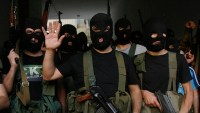
Twenty-five years ago, in a windowless Levantine oubliette, my wrist and ankle were bound with chains, but my imagination soared. Among my many daydreams was a reunion a quarter-century hence. The guests at this illusory affair were to have been my captors. There were times when I envisaged our encounter as real, and others as a piece of theatre. Either way, 25 years on, it hasn’t happened. Nor has anything else I expected before I escaped from Hezbollah in Beirut in August 1987. The rendezvous was to take place at the Grand Hotel Kadri in Zahle, a Christian village where the foothills of Mount Lebanon descend into the Bekaa Valley.

End game

Britain has been at war in Afghanistan for over a decade. Many Britons now take it for granted that its country’s intervention in Afghanistan has failed and when Nato troops pull out in 2014 they will leave behind a volatile and unsettled state that could easily plunge into a civil war — much worse than what western forces inherited back in 2001. No doubt the chance of Afghanistan fracturing in the hands of a corrupt, incompetent government, a well armed and motivated Taleban opposition in the south and ethnic warlordism in the north is high. Rapacious neighbours, especially Pakistan and Iran, may regenerate their proxy wars for influence, as they did in the 1990s. Al-Qa’eda is still active in many parts of the world.

Have it by heart

Earlier this year the Education Secretary Michael Gove suggested that primary school children ought to learn a poem by heart. Even if the teaching unions had not objected I would have needed no further convincing. I was converted to Gove’s idea years ago, by Terry Waite. Having haphazardly discovered poetry on my own at state school, it was slightly later that I heard Ronald Runcie’s hostage-negotiator-turned-hostage give a sermon on a cold Sunday evening in chapel. Within ten minutes he had introduced me to a new poem and a new idea, which is a good average for a sermon. The poem was ‘Burnt Norton’, the first of T.S. Eliot’s ‘Four Quartets’.