Features

Archbishop John Sentamu on why politicians are like men arguing at a urinal

‘I shoot further than you, I am the biggest of the men!’ says John Sentamu, Archbishop of York. He is talking about the way politicians conduct themselves in the immigration debate. ‘We have got to be more grown up about it and not be like people who are screaming at each other across banks of a river,’ he says. ‘They mustn’t do what some people call male diplomacy which is always around the urinal… that kind of argument, it doesn’t work!’ Sentamu prefers a still small voice of calm from politicians, even if his own voice is booming and indomitable. His is never more than a few words away from a chuckle or a joke. This week sees the publication of a collection of essays called On Rock or Sand?

The rise of ‘living apart together’ – and why I’ve stopped doing it

I’ve never lived with a man I didn’t marry: Tweedledee, 1979–1984, and Tweedledum, 1984–1995. (The names have been changed to irritate the pair of them.) So when I left my second union and moved to Brighton to chase the man who is now my third (and hopefully final) husband, I was keen to establish and keep separate households. I was quite pleased to find that not only was I having a blast seeing Daniel while maintaining a maverick social life (he didn’t want to be in a swimming pool full of drunken, shrieking girls’n’gays any more than I wanted to be in a room full of game-playing, beer-drinking men) but was apparently part of a growing social phenomenon.

Only Muslims can stop more terror attacks

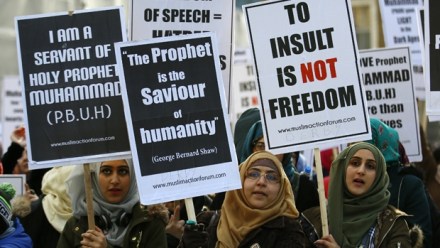
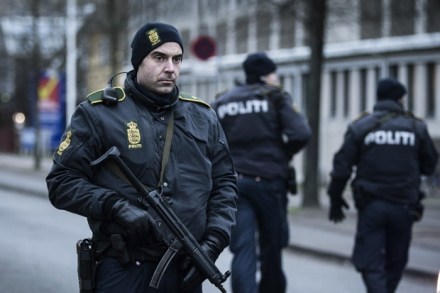
The targeted assassinations at Charlie Hebdo are triply repellent. Being planned, they are the product of considered decisions, not a moment of folly. Being aimed at journalists, they have deliberately chosen the vulnerable heart of the freedom that is fundamental to our values. Being gratuitously cruel in casually murdering an already wounded policeman, they display a chilling depravity. As such, attacks like this are intolerable: they must be stopped, and therefore they must be understood. The assassinations follow the random car-crash terrorism of December and the Syrian beheadings of November. All were perpetrated by young Muslim men. But what we are experiencing is not the product of a religion: it does not deserve to be so dignified.

The charming little airport that ruins thousands of holidays

Horror films occasionally use the device of the deceptive idyll. An apparently restful place — a clearing in the woods, a pretty cottage — is the site of a fiendish atrocity. A goodie escapes and breathlessly reports the matter to the police. Next morning the authorities race to the scene, and find nothing. Wickedness has been concealed. The deceptive idyll has returned. Such a place is Chambéry airport in south-east France. Framed by mountains and fringed by Lake Bourget, it was founded in 1938 and has not grown much. On weekdays little disturbs the airfield daisies save the tinkle of distant cow bells and a cooling Savoyard breeze. You can imagine the Milka girl dating the guy with the ping-pong bats. Yet on winter Saturdays, Chambéry’s mask drops.

Why does Isis slay hostages? To cover up the fact that it’s losing

At this point in the war between the jihadist group known as the Islamic State and a US-led international coalition, many observers are wondering how Isis keeps winning. Isis is up against western air power and powerful regional opponents, and yet has apparently seized a territory larger than the United Kingdom, and is expanding into Egypt, Libya, Algeria, Yemen, and elsewhere. It seems incredible. But the truth is that it’s difficult to say Isis is winning by any objective measure. In Iraq, the group has been put on the defensive in the provinces of Nineveh, Salahaddin, and Diyala, and may soon face a major offensive on its stronghold of Mosul. It’s true, unfortunately, that Isis is on the offensive in Anbar province, and could potentially capture new territory there.

The deep instinct that Britain’s immigration debate still ignores

The issue of immigration won’t go away, because it threatens the soul of the nation. Nobody in political authority uses such language today, because they are unsure of the validity of ‘soul’ and of the political safety of the term ‘nation’. They will use the term ‘we’ in the context of Britain and its people, but would surely dodge defining it. Try as he might this election year, neither Cameron nor Miliband can do anything to persuade anxious voters they care about immigration, because they don’t use language which reaches the soul. No one else does either, not even Nigel Farage — it just won’t do. Yet only this abandoned language will work if the issue is to be faced up to and the electorate is to hear it and believe it.

What The Theory of Everything doesn’t tell you about Stephen Hawking

Stephen Hawking is a misogynist; and also, quite possibly, a narcissist. You wouldn’t know it from watching The Theory Of Everything, the new biopic from Working Title, in which you are invited only to weep when he discovers he has motor neurone disease at 21, and then marvel at his achievements in physics. It goes wild on the obvious cognitive dissonance of Hawking’s life and work — trapped in his body, yet transported in his mind to the stars. I cried as Eddie Redmayne — as Hawking — falls, rises and is redeemed with medals too numerous to type; he is very good, but he only goes where the script allows him.

The Krays, Dennis Nilsen – and Chris Grayling: a conversation with Sir Ivan Lawrence QC

I’m standing with Sir Ivan Lawrence QC in a narrow room at his Pump Court chambers, examining an oil painting sent to him from Broadmoor by his former client the late Ronnie Kray. It is a naive depiction of a house in a field which could, at first glance, be the work of a worryingly forceful five-year-old. Yet what it lacks in finesse it makes up for in emphasis: the signature ‘R Kray’ is daubed in thumping capitals. Sir Ivan defended Kray in his 1969 murder trial over the killing of George Cornell in the Blind Beggar pub in Whitechapel. Cornell, a member of the rival Richardson gang, had reportedly called Ronnie ‘a fat poofter’. Although Ronnie was duly convicted and sentenced to life, he retained respect for his counsel.

Check yourself: have you succumbed to this corporate speak epidemic?

You know how it goes with corporate speak. A strange new habit grows and spreads, creeping largely unnoticed into the language, until one day you hear a sentence so bizarre, so divorced from normality, that it brings you up short. It happened to me the other day. A call centre operative, in the middle of a prolonged display of not being able to help, had to check something with a colleague. Before doing so she said: ‘Would it be OK if I put yourself on hold?’ Just stop and consider that sentence for a moment. ‘Would it be OK if I put yourself on hold?’ The woman who uttered it was once, I’m sure, a normal little girl, learning to speak.

Brazil: Rio without the grande

Rio de Janeiro scared me at first. I landed at night in a rainstorm and from the airport took a taxi whose driver had no idea where I was going. I did not speak Portuguese; he did not speak iPhone. We drove through dark streets where the 7ft fences around each smart apartment block gave way to the concrete walls of the favelas. At the cocktail bar where we made our first stop, two burly men stood at the drive clutching machine guns. This didn’t calm my nerves. I suppose that partly I was overwhelmed by the scale of the city and its looming ambition. Publicity photographs of Paris or London are taken from street level, gazing up at the Eiffel Tower or the London Eye. The typical postcard of Rio offers a God’s-eye view over Christ the Redeemer’s shoulder.

How the NHS silenced a whistleblowing doctor

Almost two years ago, a cancer surgeon named Joseph Meirion Thomas decided that he could no longer keep quiet about what he regarded as a major abuse of the NHS. The Francis inquiry into the scandal at Stafford Hospital had just published its report, reminding doctors of their ‘duty of candour’. Thomas interpreted that to mean that health professionals ‘should feel supported and protected should they ever need to speak out.’ In that spirit, he wrote in The Spectator about ‘health tourism’ — foreign nationals using NHS services to which they are not entitled, placing an already overburdened system under yet more strain. His article caught the attention of Jeremy Hunt, the Health Secretary, who ordered a full investigation.

Return of the fairy-hunters

If like me you get all your news from the Cornish Guardian, you may have spotted an article announcing that the Fairy Investigation Society is conducting a survey. They’re seeking information from anyone who has seen any pixies, elves or sprites — all on a strictly anonymous basis. I rang the man behind the research and he told me that in just three months, he’s had over 400 replies. An example: ‘I was walking down a field in Scotland when I noticed a winged being leaning up against the side of a sycamore tree. He was as tall as the trunk, maybe 15 feet.’ You might laugh it off, but the man was deadly serious — as are his informants.

Elizabeth is about to become Britain’s longest-reigning queen. Here’s how she’s changed monarchy

On 24 September 1896 Queen Victoria was given a present of a paper knife, and expressed herself ‘much delighted’. The handle was set with overlapping gold coins each bearing the portrait of a British monarch. The uppermost coin bore an image of Victoria herself; the one beneath it, that of her grandfather George III. As Victoria recorded in her journal, 23 September 1896 was ‘the day on which I have reigned longer, by a day, than any English sovereign’. She had exceeded George III’s record of 21,644 days on the throne and, unlike her grandfather, remained of sound mind (if you overlook her taste in interior decoration and her views on women’s rights).

My perfect island – and the posher one next door

The Republic of Maldives is the lowest country in the world and has the highest divorce rate. Is there correlation between altitude and fidelity, I wonder? Male, the capital, is 370 miles south-west of the southern tip of India. From the air it looks like Tower Hamlets. From Male we flew first by DHC-6 Twin Otter seaplane to the tiny coral island of Moofushi — about 20 thrilling minutes — and checked in at the Constance Moofushi island resort. I was allocated a thatched wooden bungalow (number 35) with sundeck, loungers, and wooden steps leading down directly into the warm, shallow sea. I could look down from the balcony rail of number 35 and see baby sharks and fishes up to two feet long cruising around at the foot of my stairs.

Bob Dylan and the illusion of modern times

I was talking the other day to a young woman who knows a lot about the history of rock. We shared an enthusiasm for Bob Dylan’s later work — especially Blood on the Tracks (1975). As we talked, it occurred to me that Dylan recorded this ‘late’ effort 40 years ago, only 13 years into his career. So why do we treat it as belonging more to our time than, say, his folk ballads from the early 1960s? Some baby-boomer journalist must have decided around 1970 that something Dylan did in 1965 or 1966 — maybe his switch to electric instruments or his motorcycle accident — marked a critical break in history. We stupidly accept this view of things: Dylan is now in his sixth decade as a symbol of American youth. But time does keep moving on.

Why I detest clothes with words on

As a provincial teenage virgin with ideas so far above my station that they gave me vertigo, I frequently reflected bitterly that whoever coined the phrase ‘Schooldays are the best days of your life’ must have come to that conclusion after being involved in a serious car-crash the evening following their last day at school, probably rendering them a tetraplegic. And the little thing which summed up how thoroughly inappropriate it was was the horridness of name tags. All the wondrous beings I had it in me to be, written off by my mum’s humdrum hand in those four syllables: Julie Burchill. Then and there, I took a violent dislike to clothing with writing on. In the 1980s I was repelled by the rise of designer clothing.

Dallas, city of culture

When George W. Bush was outed as an artist, after a computer hacker uncovered his nude self-portraits, jaws dropped around the world. Could Cowboy George, a man whom even Kim Jong-il’s cronies dubbed a philistine, actually be a closet aesthete? This spring, at the first exhibition of his works in Dallas, he confessed: ‘There’s a Rembrandt trapped in this body.’ It shouldn’t come as such a surprise. Bush’s hometown of Dallas may be stereotyped as a cultural wasteland, synonymous with big oil, big hair and Wild West machismo, but it, too, has an artistic side the world is only now discovering. Take the 50th anniversary of the JFK assassination.

Low life’s Limpopo legend

‘You’ve got a lot to live up to,’ said the ranger. ‘The last Spectator journalist who stayed here was Jeremy Clarke. He made quite the impression.’ Like some sort of Zulu legend, our ‘Low life’ columnist’s time at Shambala game reserve is now talked about around the campfire — or braai as it is known in South Africa. ‘I heard he commandeered a safari vehicle and set off to find a drinking hole,’ said one of the camp staff. ‘He held a wet T-shirt competition,’ said another. ‘All the local women were very impressed.’ Apparently even Douw Steyn, who owns the reserve, still reminisces about Jeremy’s time there. You might not have heard of Steyn, but you will know his work.