Features

Caught on the net

What, if anything, should a moral, liberal-minded person think about the hacking of the infidelity website Ashley Madison? And by ‘liberal-minded’, please note, I do not mean ‘Liberal Democrat-minded’, for such a person would perhaps merely think ‘Can I still join?’ and ‘I wonder if my wife is already a member, though?’ and ‘But will I find anybody prepared to do that thing I like with the pillow and the chicken?’ Rather, I mean somebody who believes in the sometimes jarring moral precepts that ‘People should be free’ and ‘People should not be a bit of a scumbag’. Ashley Madison, you see, is a website claiming 37 million users worldwide that exists to facilitate marital infidelity.

Teenage terrors

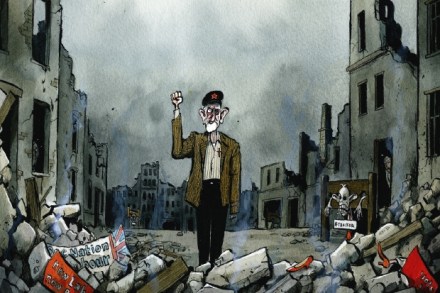
One of the great moments of my student life was opening the door and seeing visitors step back, shocked. I’d shaved my hair off to an eighth of an inch. It felt like velvet but looked spiky and hard. It was all down to Ulrike Meinhof, co-founder with Andreas Baader of the Red Army Faction, who’d just hanged herself in Stammheim prison, in Germany. My friends liked my haircut as we conflated Ulrike the martyr with images of a mullet-haired Jane Fonda raising her fist against the US army on behalf of the tortured Viet Cong.

Degrees in disaster

So farewell, Yanis Varoufakis. You used to be Greece’s finance minister. Then you resigned, or were you sacked? You took control of the Greek economy six months ago when it was growing. Yes, honestly! Growth last year ran at 0.8 per cent, with forecasts of 3 per cent this year. The government had a primary budget surplus. Unemployment was falling. Until you came along. Varoufakis was a product of British universities. He read economics at Essex and mathematical statistics at Birmingham, returning to Essex to do a PhD in economics. With the benefit of his British university education he returned to Greece and, during his short time in office, obliterated the nascent recovery. The economy is now expected to contract by 4 per cent this year — an amazing transformation.

Dying for attention

Not content with Facebooking our every foible, Instagramming the births of our children and live-tweeting our daily lives, more and more of us are now making a public spectacle of dying. We’re inviting strangers not merely to ‘like’ expertly filtered photos of our breakfasts, but to admire the way we peg out. Nothing better captures the death of privacy than this publicisation of death. It began with the literary set. It’s a rare writer these days diagnosed with a terminal illness who doesn’t get a book out of it. Jenny Diski is the latest public dyer. She’s giving readers of the London Review of Books a blow-by-blow account of her death by lung cancer, covering everything from the diagnosis to her chemo sessions.

Pop psychology

It’s not quite as bad as we feared: Sealed Air, the company in New Jersey that makes bubble-wrap, is not yet discontinuing poppable bubble-wrap. But its newly designed sibling, non-poppable bubble-wrap, surely spells the end for the real thing: it’s cheaper to ship, because it leaves the factory airless and thus can be ‘flat-packed for your convenience’. The companies who receive it will need to buy an expensive pump to fill the reams of polythene with columns of air, and that air will be beyond the popping power of human fingertips. Panic broke out among the bubble-wrap-popping millions across the globe on hearing the news of the threat to their habit earlier this month. The pastime is universally adored.

Vive Hollande?

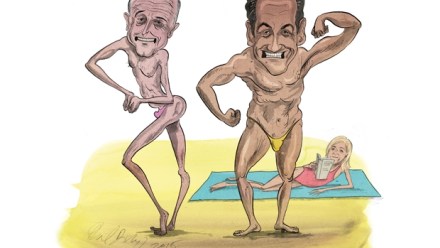
François Hollande appears to have been consigned to the political mortuary. The first Socialist French president since François Mitterrand has been more unpopular than any of his predecessors in office — his approval rating sank to 13 per cent towards the end of last year. His style of government has been ridiculed. His private life has been the subject of mockery. He is compared to a hapless captain of a pedalo navy or a wobbly French pudding, a Flanby. But don’t write off Flanby just yet. Thanks to the peculiarity of French presidential elections, he may well win a second term.

Al-Qaeda could end up the big winners in Syria

[audioplayer src="http://rss.acast.com/viewfrom22/workingwithal-qa-eda/media.mp3" title="Ahmed Rashid and Douglas Murray discuss how the West is working with al-Qa'eda" startat=38] Listen [/audioplayer]After plunging Syria into five years of a bloody civil war that has killed 300,000 and displaced 10 million, Bashar al-Assad is preparing for the endgame. He has been digging a bunker for himself, creating an enclave in the mountains around the coastal city of Latakia where his community, the Alawites, are in a majority. The Iranians are helping him set up this new retreat, but his hope of hanging on to Syria is dying.

Blue is the collar

Blue collars are all the rage in the Tory party these days, which makes Stephen Crabb a very fashionable cabinet minister. He was brought up in a Welsh council house by his mother, a single parent. His political views were shaped by seeing the way in which Thatcher’s reforms transformed his neighbourhood. He still believes Conservative values give the best hope for working-class and Welsh voters. As George Osborne leads an ever-deeper raid on Labour territory, we can expect to see and hear a lot more from people like Stephen Crabb. For the last year this confident 42-year-old has been Secretary of State for his native Wales, and his approach has been to champion full-blooded — rather than semi-apologetic — conservatism.

Who dares lies

Sir Christopher Lee, who died last month aged 93, knew how to play a part. One of the consummate actors of his generation, whose career spanned nearly seven decades, his versatility on stage and screen was legendary. At first glance his military career during the second world war was similarly versatile. According to some reports and obituaries in the days after his death, Lee served in the Special Air Service (SAS), Long Range Desert Group (LRDG) and Special Operations Executive (SOE). In reality he served in none. He was attached to the SAS and SOE as an RAF liaison officer at various times between 1943 and 1945, but he did not serve in them and never, as one paper stated, ‘moved behind enemy lines, destroying Luftwaffe aircraft and fields’.

Africa’s most wanted

It’s Saturday morning in the courtyard of the Al-Zawiyah detention centre on the outskirts of Tripoli and Colonel Nourdeen Mishaal of Libya’s Ministry of Interior’s Department for Combating Illegal Immigration is about to have his weekend ruined. The Colonel has delivered an impassioned speech praising his own government and exhorting the West to do more to help in the battle against the people smugglers responsible for the thousands of migrants arriving in Europe every week. He dismisses his regime’s pariah status (the Islamist government has no international recognition). If there is a problem with migrants, he states with the full authority of his office, then the blame lies with western intransigence.

A wolf in the kitchen

Wolves have powerful symbolic meanings for humans. They are part of the mythology that defines us: Little Red Riding Hood, Romulus and Remus, the wargs in Tolkien, Mother Wolf in The Jungle Book, Maugrim in The Chronicles of Narnia. Wolves have profound resonance for us all. Wolves intermittently break out in the stories we tell and are told; currently they have been doing their stuff in Game of Thrones and Twilight. And as Miss Jean Brodie said, for those who like that sort of thing, that is the sort of thing they like. But do we really have to take the next step and fill our homes with wolves? Apparently we do. Since these entertainments entered British consciousness, there has been a great surge in demand for the wolf-iest dogs: huskies, malamutes and Saarloos.

Counter-strike

The People’s Assembly, the self-appointed left-wing pressure group behind the recent anti-austerity demonstrations, portrays itself as the voice of the masses struggling under oppressive Tory rule. It claims that no fewer than 250,000 demonstrators went to its rally in central London last month (a figure dutifully regurgitated by broadcasters). But photographs of the event in London indicate no more than 25,000 attended. The bogusness does not stop there. Despite its demotic name, the People’s Assembly is no spontaneous uprising of the angry British public.

Benedict’s back

One of the finest speeches Benedict XVI ever delivered was about sacred music. It is a small masterpiece, in which Benedict recalls his first encounter with Mozart in the liturgy. ‘When the first notes of the Coronation Mass sounded, Heaven virtually opened and the presence of the Lord was experienced very profoundly,’ he said. Benedict robustly defended the performance of the work of great composers at Mass, which he insisted was necessary for the fulfilment of the Second Vatican Council’s wish that ‘the patrimony of sacred music [is] preserved and developed with great care’. Then he asked: what is music? He identified three places from which it flowed.

Ali Baba and the 300 hostages

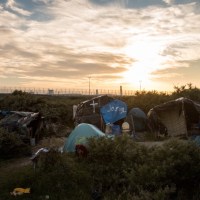
In the heat of the midday sun, the fields and woodlands between Greece and the Republic of Macedonia look idyllic: birds sing, the grass is smudged with wild poppies, all seems quiet. But this picture of pastoral peace is, I’m afraid, an illusion. This is Greece’s Wild West, a lawless and desperate place known as ‘The Jungle’, where people are beaten up every day. ‘It’s dangerous out there,’ says the fat Greek policeman standing with me, just north of the village of Idomeni. Then he waddles back to his car. The predators in this jungle are Afghan people-smugglers, their prey the poor migrants who have struggled here from all over Africa, Asia and the Middle East.

A letter from Harper Lee

Who knows whether Harper Lee, now 89, has given permission for her novel, Go Set a Watchman, to be published next week? Perhaps — as the rumours have it — she really is deaf and blind, and mentally incapable of sanctioning the book’s release, as she sits in a nursing home in her birthplace, Monroeville, Alabama. But I do know that — contrary to popular opinion — she hasn’t shut herself off from the world since To Kill a Mockingbird was published in 1960. Quite the contrary — in the past half-century, she has been an exceptional consumer of world affairs, British affairs in particular. She’s a long-time Spectator reader, for God’s sake! How do I know all this?

Don’t abandon Tunisia!

Just as a pilgrimage to Mecca is a holy obligation for all Muslims, it should now be a patriotic duty for as many Brits as possible to holiday in Tunisia. I say this not to make light of the tragic attack on the beach at Sousse last week, but to urge everyone to show the terrorists that they cannot win. They want to terrify us and shut down Tunisia’s resurgent tourist trade. They want to turn it into a failed state, a recruiting ground for lobotomised self-detonators. What better reaction could there be for those untouched by this attack than to laugh at our enemies and board the next flight to Hammamet? Even now, you’re more likely to be killed in a traffic accident in Britain than by a terrorist in North Africa.

Greece’s crisis turns to tragedy

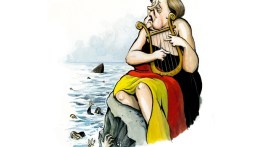
 Athens On Sunday night, a protest in favour of staying in the euro gathered in Syntagma Square, in front of the Greek parliament building. They were quickly confronted by a group of anti-EU protestors. What could have been an ugly stand-off was avoided by an unseasonal downpour. The 28ºC heat plunged to 19ºC and the young protestors — organised by social media — fled home, as did the riot police soon afterwards. Things are in a terrible way here, but not quite terrible enough for a Greek to hang about in the rain. As one Athenian journalist told me on the roof of the Amalia Hotel, while we watched the protestors scuttling home under their umbrellas, the country is suffering crisis fatigue.