Exhibitions

Enchanting but outrageously expensive: Tutankhamun reviewed

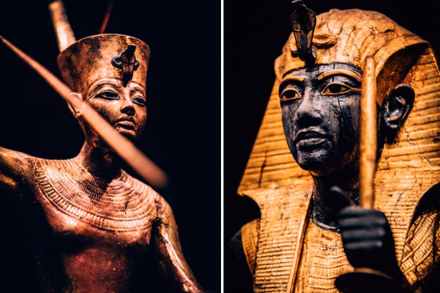
Like Elton John, though less ravaged, Tutankhamun’s treasures are on their final world tour. Soon these 150 artefacts will return permanently to Egypt. Nearly a century after Howard Carter disrupted their 3,000-year rest in the Valley of the Kings, they are to be retombed in the new Grand Egyptian Museum in Giza. But first they undergo their final ordeal, an outing in London. The genius of the Saatchi show, curated by Tarek El Awady, is to simulate the trials the pharaoh’s mummified corpse endured in the netherworld. After having his brain pulled out through his nose, Tutankhamun had to pass through 12 gates guarded by snakes, crocodiles, vultures and supernatural beasts.
Why did David Bomberg disappear?

David Bomberg was only 23 when his first solo exhibition opened in July 1914 at the Chenil Gallery in Chelsea. ‘I am searching for an Intenser expression,’ the brash young painter wrote in the introduction to the catalogue. ‘I hate… the Fat Man of the Renaissance.’ As if to advertise his radical intentions, the first work in the exhibition, the strikingly geometric ‘The Mud Bath’, was hung outside the gallery, facing the street. Bomberg was endowed with a self-belief bordering on conceit. Born in 1890, the fifth of 11 children of Polish-Jewish immigrants, he spent his childhood in the overcrowded slums of Birmingham and east London.

The forgotten masterpieces of Indian art

As late as the end of the 18th century, only a handful of Europeans had ever seen the legendary Mughal capital of Delhi, which, within living memory, had been the largest, richest and most spectacularly beautiful city on earth, twice the size of London and Paris combined. But after a century of anarchy, Delhi was not what it once was. By 1805, it lay half-ruined and sparsely populated, ruled by a blind Emperor from a crumbling palace. Delhi’s ruins bewitched the young artist James Baillie Fraser when he arrived in the 1810s from Calcutta. Fraser was already planning two series of aquatints, one on Calcutta, the other of the Himalayas.

To fill a major Tate show requires a huge talent. Dora Maar didn’t have that

Dora Maar first attracted the attention of Pablo Picasso while playing a rather dangerous game at the celebrated left-bank café Les Deux Magots. She ‘kept driving a small pointed penknife between her fingers into the wood of the table’. From time to time she missed, and a drop of blood appeared on her gloves. This alarming form of digital Russian roulette was the basis for an early work by the performance artist Marina Abramovic, who will be featured at a major show at the Royal Academy next autumn. There is nothing so arresting in the large exhibition devoted to Maar’s work at Tate Modern as the images of the artist herself, and not only those by Picasso. There are some individuals who have an impact on the arts through sheer force of personality.

A museum-quality car-boot sale: V&A’s Cars reviewed

We were looking at a 1956 Fiat Multipla, a charming ergonomic marvel that predicted today’s popular MPVs. Rather grandly, I said to my guide: ‘I think you’ll find the source of the Multipla in an unrealised 1930s design of Mario Revelli di Beaumont.’ He looked a bit blank. This exhibition is a rare attempt to explain the car, perhaps the most dramatic since the Museum of Modern Art’s 1951 New York show where Philip Johnson coined the term ‘rolling sculpture’. It is both occasionally brilliant and continuously exasperating. Rather as if in a crowded restaurant you are overhearing snatches of fascinating conversation coming from different tables. The context is significant. The V&A and the Science Museum were only separated in 1909.

Remarkable and imaginative: Fitzwilliam Museum’s The Art of Food reviewed

Eating makes us anxious. This is a feature of contemporary life: a huge amount of attention is devoted to how much we eat, when we eat it, where it comes from, to toxic foods, organic and inorganic ones, environmentally damaging groceries, those that tot up too much mileage or cause damage to the rainforest. Some of these worries are relatively novel, but preoccupation with the nourishment we consume is not. A remarkable and imaginative exhibition at the Fitzwilliam Museum, Cambridge, Feast & Fast: The Art of Food in Europe, 1500–1800, documents just how obsessed our ancestors were with every aspect of their meals. At its heart are a series of recreations by Ivan Day, a specialist on the subject of what can only be described as edible art.

The extraordinary paintings of Craigie Aitchison

One of the most extraordinary paintings in the exhibition of work by Craigie Aitchison at Piano Nobile (96–129 Portland Road, W11) is entitled ‘Georgeous Macauley in Blue against a Red Background’ (1968). It depicts the sitter, a Nigerian who was Aitchison’s favourite model of the 1960s and ’70s, wearing a peaked cap and double-breasted jacket. The catalogue quotes a reminiscence by the artist which provides a partial explanation of the headgear. ‘He wanted to be a traffic warden, and I said, “Why do you want to go about in the rain doing that?” And he said, “Because you get a uniform.”’ The art and life of Aitchison (1926–2009) were all like that: perfectly logical and at a unexpected tangent from normality.

John Flaxman is the missing link between superhero movies and Homer

As you enter the forecourt of the Royal Academy, you see them. A row of artistic titans, carved in stone, peer down from their alcoves in the higher half of the gallery’s façade. Thanks to the name plaques, they’re easily identified. You can see Pheidias, the genius of the Parthenon; Leonardo and Raphael; Sir Christopher Wren. And then there’s… John Flaxman. Who? That’s a completely legitimate question. If these guys are, so to speak, the Avengers of art history, then Flaxman is the equivalent of Hawkeye. Hell, maybe he’s Agent Coulson. Even on his plinth, he has a mildly apologetic air. Under a bald pate, his hair hangs down in curly curtains. His hand, clutching a chisel, crosses his chest self-deprecatingly.

The truth about food photography

While looking at the photographs of food in this humorous exhibition at the Photographers’ Gallery, I thought of how hopelessly outdated our own snaps will soon look. What seems fresh, clean and wonderfully modern to our eye — an Ottolenghi salad, say, dotted with pomegranate seeds and za’atar — will soon look almost tragic. How we photograph food betrays some of our deepest fantasies about ourselves. What’s more, good taste can quickly sour. Feast for the Eyes brings together food photography from the 19th century up to the present day and reveals just how much our attitudes to food change. At first, photographers emulated the principles of still- life painting, using symbolic gatherings and classical references.

The beauties of the universe are revealed in the paintings of Pieter de Hooch

In the early 1660s, Pieter de Hooch was living in an area of what we would now call urban overspill surrounding the commercial boom town of Amsterdam. It wasn’t the best of neighbourhoods. Nearby was a little street nicknamed ‘whorehouse alley’ (het hoerenpad). Tanners plied their trade thereabouts, which involved soaking hides in urine. But smells and sounds are not necessarily recorded in pictures, and in this 17th-century version of affordable housing, De Hooch painted images of utter domestic tranquillity. One such picture, ‘A Mother’s Duty’ (c.1658–60), is among the star exhibits in a delightful little exhibition of De Hooch’s work at the Museum Prinsenhof, Delft.

You’ll be blubbing over a wooden boulder at David Nash’s show at Towner Art Gallery

Call me soppy, but when the credits rolled on ‘Wooden Boulder’, a film made by earth artist David Nash over 25 years, I was blinking back tears. Funny what the mind will make human. Within a few minutes I started to think of Nash’s boulder, hewn from a storm-struck oak in the Ffestiniog valley in Wales, as ‘the hero of our story’. A hefty hero, weighing half a tonne, but buoyant. In October 1978, Nash launched the boulder into the Bronturnor stream near his studio at Capel Rhiw in the slate-mining village of Blaenau Ffestiniog in Snowdonia. For 25 years, switching from crackling film to high-def digital, Nash filmed the boulder, through snow, rain, heat and gloom of night, as it made its way downstream. Mired, moored, marooned on an inland sea.

A cast of Antony Gormley? Or a pair of giant conkers? Gormley’s RA show reviewed

While Sir Joshua Reynolds, on his plinth, was looking the other way, a little girl last Saturday morning was trying to prise a littler sculpture from the pavement of the Royal Academy’s courtyard. For all its tininess — from a distance the sculpture’s curvy lumps, 12 x 28 x 17cm, resemble horse droppings a security guard might dig into their rose bed — she couldn’t shift it. ‘Iron Baby’ (1999) is a solid iron cast made by Sir Antony Gormley of his six-day- old daughter abased before the Enlightenment temple of art, buttocks facing Piccadilly in eloquent critique. But for the Instagramming hordes, you might step over her heedlessly on the way to the exhibition, a survey of Gormley’s works from the late 1970s to today.

The rare gifts of Peter Doig

‘My basic intention,’ the late Patrick Caulfield once told me, ‘is to create some attractive place to be, maybe even on the edge of fantasy — warm, glowing, but often, by use, rather seedy.’ He frequently succeeded, as you can see from a beautifully mounted little exhibition at the Waddington Custot Gallery. It is a reminder of what a witty and inventive artist Caulfield (1936–2005) could be. Four screen prints from 1971, ‘Interior: Morning, Noon, Evening and Night’, give a virtuoso display of the visual legerdemain he could work using the simplest of props. These all have the same basic design: a window frame, consisting of thick, black lines, with a lampshade dangling in front of it.

Whooshing seedlings and squabbling stems: Ivon Hitchens at Pallant House reviewed

Set down the secateurs, silence the strimmers. Let it grow, let it grow, let it grow. Ivon Hitchens was a painter of hedgerow and undergrowth, bracken and bramble. Whoosh! go his seedlings, sprouting, bolting, demanding repotting. The first Hitchens you see on the wall outside this exhibition at Pallant House is his lithograph ‘Still Life’ (1938). A squabble of stems break bounds, vault the vase, bid for freedom. I’m a wildflower, get me out of here. ‘I love flowers for painting,’ Hitchens said. ‘Not a carefully arranged bunch such as people ought not to do — but doing a mixed bunch in a natural way.’ If his posies were ever bridal bouquets they have long since been thrown, trampled, sat on by an usher and shoved in an ice bucket to revive.

Why was Sigmund Freud so obsessed with Egypt?

Twenty years ago, I visited the ancient Egyptian city of Amarna with a party of American journalists. Even in those days this place, near Asyut on the Middle Nile, was regarded as a dodgy destination for western tourists. As a tribute to the value of an entire CBS television crew as a terrorist target, we were accompanied by a squad of heavily armed, black-clad Egyptian special forces. But the sense of daring adventure was dented when, shortly after arriving at the ruins, we were joined by a couple of intrepid Germans who had come in a taxi. The Germanic world has long been fascinated by Amarna and its ruler, the pharaoh Akhenaten — which is why many of the best finds from the place are in Berlin — and none more so than the founder of psychoanalysis.

Canine connoisseurs

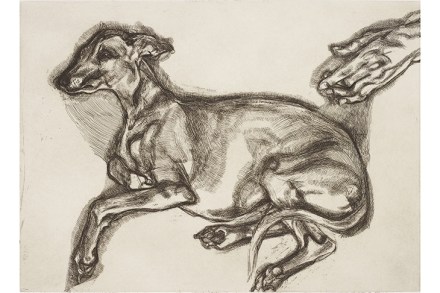
Stepping into any art gallery, the last thing you expect to be greeted by is a cacophony of barking and wet noses on your knee. This, however, was the welcome I received at the current exhibition at Southwark Park Galleries. Dog Show is, as the name suggests, about dogs. Not just about dogs, though; each of the works has been chosen by a dog — or, as they put it, a canine curator. ‘We’ve never asked dogs about their opinions on art, even though some dogs see an awful lot of it,’ explains Judith Carlton, director of Southwark Park Galleries. Well yes; it’s most likely true that no one has ever asked dogs for their thoughts on art, but there’s probably a reason for that.

What’s in a name? | 8 August 2019

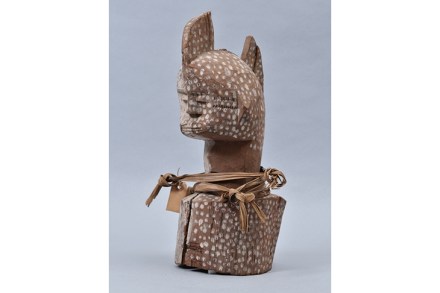
Perhaps we should blame Vasari. Ever since the publication of his Lives of the Artists, and to an ever-increasing extent, the world of art has been governed by the star system. In other words, the first question likely to be asked about a painting or sculpture is whodunit? And if the answer turns out to be, not Leonardo da Vinci — as has been suggested in the case of the controversial ‘Salvator Mundi’ — then the price tag becomes enormously smaller. Does this matter? Artist Unknown, a little exhibition at Kettle’s Yard, Cambridge, investigates the case of the anonymous work.

Modern sublime

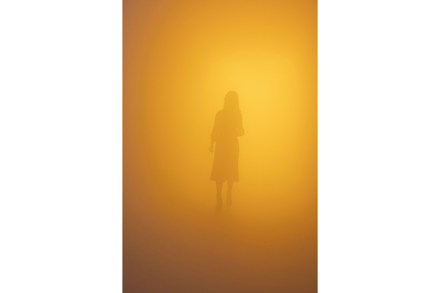
Superficially, the Olafur Eliasson exhibition at Tate Modern can seem like a theme park. To enter many of the exhibits, you have to queue. The average age of the crowds in the galleries is much lower than it might be at, say, the RA. And most visitors keep their phones permanently ready to snap a selfie — which isn’t really what the artist has in mind. He wants you to concentrate on a reaction that is internal and unphotographable. Eliasson — as the title of the show, In real life, might suggest — offers sensory experiences.

Joining the tea set

It had to happen. Since almost everything became either ‘artisan’ or ‘curated’, conditions have been ripe for a curator of artisan teas. And sure enough, if you Google ‘tea curator’ you’ll find one promising regular infusions of ‘a curated selection of single-origin, artisan teas’. Now Compton Verney has done the sensible thing and curated an exhibition about the stuff. The starting point of A Tea Journey: from the Mountains to the Table is a copy of a painting by Johan Zoffany showing John Peyto-Verney, 14th Baron Willoughby de Broke, taking tea with his wife and three daughters around a tray loaded with Chinese porcelain, overlooked by a gigantic silver tea urn.

Hiding in plain sight

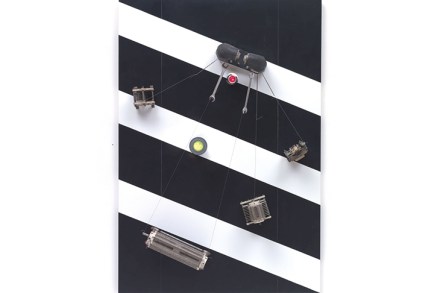
Steel flowers bend in a ‘breeze’ generated by magnetic pendulums. This is the first thing you see as you enter Tate Modern’s survey show. And ‘Magnetic Fields’ (1969) is pretty enough: the work of this self-taught artist, now in his nineties, has rarely been so gentle, or so intuitive. But there’s a problem. ‘I would like to render [electromagnetism] visible so as to communicate its existence and make its importance known,’ Takis has written. But magnetism hides in plain sight. A certain amount of interference is necessary before it will reveal itself. Does the interference matter? Does the fact that gallery assistants have to activate this work every ten minutes spoil the ‘cosmicness’ of Takis’s art?