Columns

Boris’s red wall problem

When Boris Johnson met with his cabinet in person for the first time in four months on Tuesday, his aim was simple: to boost morale. He was conscious that the replacement of normal meetings with virtual ones had led to ministers feeling muted. He believed that giving everyone some face-to-face time would help, and pushed hard for an actual meeting. Johnson won that argument, even if the cabinet did have to meet in the faded grandeur of the Foreign Office’s Locarno Suite to allow everyone to be socially distanced. This is not what Johnson’s team envisaged when he won his 80-seat majority in December. They assumed with a majority that large they would not have to worry about party management.


Young people have never paid attention to the BBC

In January, the director-general of the BBC, Lord Hall of Birkenhead, announced that the corporation intended to shift away from making programmes enjoyed by older members of the public to concentrate on the ‘lives and passions’ of young people, in particular 16- to 30-year-olds. Of course Hall was not the first BBC employee to take an obsessive interest in young people, and nor was his mantra anything other than the norm in a country where older people, who are comparatively well off, pay their taxes, commit little crime, consume like crazy and indeed pay the licence fee, are held in a certain contempt. A month before Hall made his statement, the BBC had devoted considerable airtime to yoof and its wants, needs and aspirations regarding the general election.

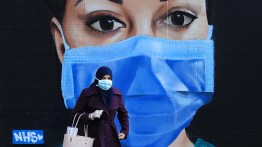
In an age of science, why are face masks a matter of opinion?

In 1846 Vienna, as across much of the world, a relatively new disease called puerperal (or ‘childbed’) fever had reached epidemic proportions in the local maternity hospital. Death rates of mothers and babies after childbirth were averaging 10 per cent, sometimes twice that. Across the western world millions were dying, the rate reaching 40 per cent in some hospitals. A Hungarian doctor in Vienna’s hospital, Dr Ignaz Semmelweis, began to wonder whether the problem might be something on the hands of doctors who’d been conducting post mortem examinations on the fever’s victims. He suggested handwashing with a chlorine solution. It worked. Deaths plummeted.

Open letters have become ransom notes

In the States, the ‘open letter’ is enjoying quite the formal renaissance. Curiously, recent examples of this newly popular epistolary genre exhibit striking similarities to the ransom note. During June’s riots following George Floyd’s murder, a beloved independent bookstore in Denver called The Tattered Cover posted online that the shop would be politically impartial, the better to remain a neutral space for customers. Cue local outrage. Cue the store’s immediate volte-face: fulsome support for Black Lives Matter. The reversal proved unsatisfactory. Signed by miffed patrons and authors, an open letter to the owners listed ten demands.

The Union is in graver danger than ever

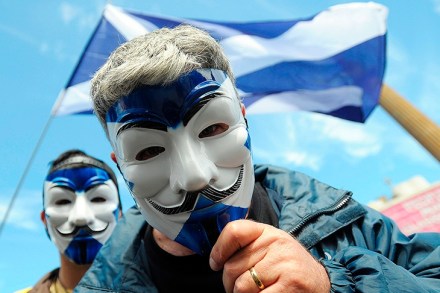
The greatest single danger to this government is the state of the Union. Prime ministers can survive many things, but not the break-up of the country they lead. No. 10 has a plan to avoid this: it simply won’t allow a Scottish independence referendum this parliament. No legal referendum can take place without Westminster’s consent and it will be declined on the grounds that a generation has not elapsed since the ‘once in a generation vote’ in 2014. This approach, however, cannot change the fact that the Union is now in even graver danger than it was during that campaign. In recent weeks, the polls have consistently shown independence ahead. Scottish Unionists are downhearted.

Why I will wear a face mask

We are enjoined by certain experts to wear face masks while having sexual intercourse. No change there, then, for me. It’s the only way I’m allowed it. I don’t even get to choose my own mask. My wife keeps several in a cupboard under the stairs. If, when I retire to bed, I see the face of Benito Mussolini or Douglas Murray neatly laid out on my pillow — or, for more exotic excursions, the late President Sirimavo Bandaranaike of Ceylon — I know that fun times are ahead. This usually happens twice a year — on my birthday and on Walpurgisnacht. I don’t know if these largely latex creations protect either me or the recipient of my laboured exertions from Covid. Perhaps they do, perhaps they don’t.

My fears for the future of my church have been realised

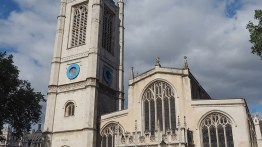
The only memorable argument I have ever heard in that tedious debate about whether Shakespeare was a Catholic came from the poet Tom Paulin. I remember him claiming in a lecture that the ‘bare ruin’d choirs’ sonnet must have been written by someone who had seen the despoiled monasteries, desecrated churches and ravaged holy places of a faith of which they were a part. Famously, such an argument only gets you so far, for by this logic Shakespeare was also a king, empress, ex-king, sailor, magician and fool, among many hundreds of others. But part of the rationale stayed with me. Which is that the bitterest truth of all is that loving a thing does not mean you can protect it, and that even the things you consider most sacred can be trampled over.

She was just a damn cat – and I loved her

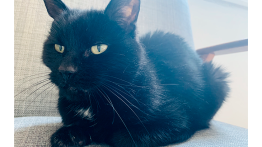
I’ve never dug a grave before. But that was how I spent my Sunday afternoon. Three feet is awfully deep to dig, and three feet is how deep you have to go if you don’t want foxes to turn a little tragedy into a horror-comedy. I laboured till the head of the spade went out of sight. My children were eating burgers from the barbecue a few feet away, and I worried that they might guess what I was up to. Thank God for the heroic incuriosity of children. I told the youngest something about planting a tree and it seemed to satisfy him. The truth would have been ‘planting the family cat after we put her down tomorrow’. I worried the hole wasn’t big enough. But then it struck me that it was just about the diameter of a cat door and I felt my throat catch.

The vanity of ‘white guilt’

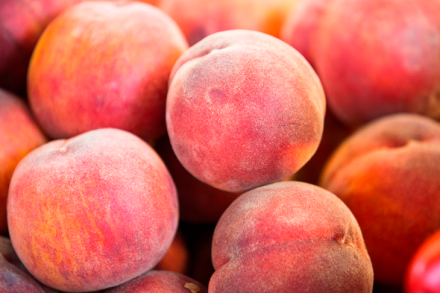
When I was about ten, on return home from church I ate a peach, the juice of which dribbled down my new pink frock. I scuttled to my room to change, bunching the dress under the bed. I emerged the picture of innocence, but I felt guilty. For weeks, the garment pulsed with accusation. Going to sleep, I always knew it was there. Sure enough, my mother discovered the wad while vacuuming, and she was furious. She could have scrubbed out the juice had I told her about it right away. To this day, I’m mindful that you can only expunge stains while they’re still fresh — and somewhere in there lurks a metaphor. I’m not prone to remembering the ingestion of individual pieces of fruit. That small memory looms as a touchstone for the experience of culpability.

The ineptitude of despots

Displaying the pristine neutrality that has made her such a popular figure, Newsnight’s Emily Maitlis apparently tweeted the following last week: ‘No. 10 is trying to control the media, and everyone in our democracy should be afraid.’ Sadly, this typically sane and measured observation was later deleted. Was she told to delete it? Or did she think better of it but was not quite up to tweeting: ‘No. 10 isn’t trying to control the media and we should probably all rest easy.’ I wonder how many other tweets she’s deleted before I got around to seeing them? ‘The schools are closed not on account of Covid but because giant Tory goblins are devouring our children. And nobody says anything.

The Spanish approach to face masks

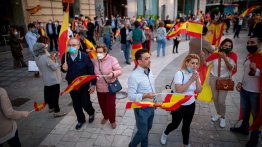
We self-critical British should never forget that other nations are pretty crazy too. I write this from Andalusia, Spain; and when it comes to cockeyed rules for limiting the spread of Covid-19, the Spanish offer us some stiff competition. One is reminded of the Mad Hatter’s Tea Party. Very gradually (I’d guess) over the months during which Spaniards have been subject to a face-mask regime, people seem to have lost touch with the reasons the rules were laid down in the first place. Practices have simply been absorbed into popular culture, their origins now ignored, forgotten or never understood.

The young are the most vulnerable to the Covid crash

Coronavirus is deadlier for the old than the young. But for the young, it is economically devastating. A third of working 18- to 24-year-olds have lost work because of the pandemic. Between March and May, the number of those under 24 claiming universal credit doubled to almost half a million, and those who leave school or university this year can expect to earn less a decade from now than they otherwise would have done. During lockdown the young have, to a remarkable extent, accepted their lives being put on hold to protect their elders. Fairness dictates that steps must now be taken to prevent them from bearing the brunt of the coming recession. Without help, the young will be hit hard in the next few years.

Keir Starmer’s quiet revolution

For the first time in 13 years, the public, when polled, think a Labour leader would make the best prime minister. To be fair, Sir Keir Starmer has been helped in this regard by the Conservatives, who haven’t done wonders for their reputation as the party of competence in recent weeks. But the opposition leader has had a decent start. Yes, Starmer is right when he says his party has a ‘mountain to climb’ to win power following Jeremy Corbyn’s historic defeat, but the Tories are on their fourth term and no party has ever won five times in a row. When Iain Duncan Smith was elected leader of the Conservative party, he said he ought to be judged on his first hundred days. The public gets a sense of the opposition leader by this point, he argued.

What a leaked NHS memo tells us about White Fragility

Of all the people who have made cash in the past month, few can have raked it in like Robin DiAngelo. Since the death of George Floyd, the white American academic and author of White Fragility has been absolutely milking it. A term I probably shouldn’t use, since Peta last week declared milk a symbol of white supremacy. I might say she is absolutely creaming it, though by the time you read this ‘cream’ might be racist too. In which case it will join the British countryside, which was designated as racist by the BBC’s Countryfile last week. A fact that I learned after opening Google’s homepage, where I was educated about the late black American drag queen Marsha Johnson.

The pandemic’s invisible victims

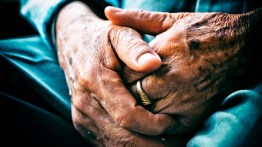
I sometimes pick up some food at Tesco for an 86-year-old pensioner who lives a few streets over. At the weekend, I brought him milk and cornflakes. He opened his front door; I put the bags down, retreated the required two metres, but when I looked up he was in tears. ‘I’m sorry,’ he said, quietly. ‘I’m just so lonely at the moment.’ Should I have moved closer, put my arm around him? At the moment the risk of passing on the virus is low in London. I’ve had the bug (I think) and I used hand gel after leaving the supermarket. It’s been said of the recent protests that distancing is irrelevant because racism is a deadlier epidemic than Covid. If that’s true of racism, isn’t it also true of loneliness in the old?

To understand the past, you need to inhabit it for a while

‘It’s no go my honey love, it’s no go my poppet; Work your hands from day to day, the winds will blow the profit. The glass is falling by the hour, the glass will fall forever, But if you break the bloody glass, you won’t hold up the weather.’ The first poem I ever heard was ‘Eenie, meenie, minie moe, catch a tiger by the toe. If he hollers, let him go’, etc. I found it mystifying. How would one catch a tiger by its toe? And do tigers ‘holler’? ‘There is something about this poem they’re not telling me,’ I thought, full of worry, my nappy beginning to chafe. This was last week, by the way. (Ha. Only kidding.

A minority opinion on Covid deaths

When the media have gone large on the conclusions of an overpoweringly tedious report, one of the biggest favours a columnist can do for a readership is to read the source. Friends, you owe me. I will expect flowers and chocolate. For I have located Public Health England’s ‘Beyond the Data: Understanding the impact of Covid-19 on BAME communities’ and ploughed through the whole bloody thing. This is the report that produced headlines like the Guardian’s ‘Historical racism may be behind England’s higher BAME Covid-19 rate’. Channel 4 News hit the same black-and-brown-patients-are-dying-of-racism note, which conveniently chimes with the current hair-shirtery of Black Lives Matter. A bit too conveniently, I thought, which is why I tortured myself.

Will the shock of Covid change anything?

Earlier this month, a curious report caught my attention. Apparently there exists no rigorously established evidence that electric shock therapy, or ECT (electroconvulsive therapy), works. At all. In Electroconvulsive Therapy for Depression: A Review of the Quality of ECT versus Sham ECT Trials and Meta-Analyses, Dr John Read, Professor Irving Kirsch and Dr Laura McGrath have shown that the therapy, commonly administered for severe depression, has not (despite claims) been shown to have any significant positive effect, ever. It can be dangerous, carrying a small risk of death and a higher risk of serious memory loss, yet (the authors say) more than a million people worldwide are undergoing this therapy today, for no proven benefit.

Why Biden might be better for Brexit Britain

At the best of times, US presidential elections require the British government to walk a tightrope. In 1992, a Tory prime minister got this very wrong. John Major’s excessive support for George Bush Sr’s unsuccessful re-election effort alienated Bill Clinton. The damage to the UK’s relationship with the country’s most important security partner was only fully repaired when Tony Blair became prime minister in 1997.

This could have been a great opportunity for the Church

During these months of inertia, I confess to having on occasion made illicit trips to churches in the English countryside. Enjoying the frisson that surely accompanies all law-breaking, I have often gone so far as the church door, there to examine not only the locks and bolts but also the laminated notices which adorn so many buildings of the Church of England. The other week I visited a 12th-century church whose laminated instructions were an especially fine example of their kind. These signs informed the visitor that the church was closed due to the Covid crisis and that God can of course be worshipped anywhere, but (and this part was underlined) ‘not here’. A little harsh, that wording, I thought.