Columns

The West doesn’t know best

I’d always rather liked the Finns, until I came across the conductor Dalia Stasevska. When I asked my mother what they were like, back when I was five or six and enjoyed staring at a globe of the world, she described them as ‘drunken and stupid, but very brave’. This was, by Mother’s standards, an extremely kindly benediction. Most of her descriptions of the world’s various people did not contain commendations. There were a few exceptions — Trinidadians were ‘drunken and stupid, but very cheerful’, for example. But by and large, to her the world comprised people who were drunken and stupid, apart from the Muslim world, where people were merely ‘stupid’.

Boris the builder mustn’t buckle over planning reform

The government will pass the test it has set itself: schools in England will return next week. Pupils may well have to wear masks at times, but they will be back in the classroom. Yet ministers privately acknowledge this isn’t the real challenge. The bigger question is what effect the return of schools has on the prevalence of the virus and what happens to education in the case of further local outbreaks. The exams grading debacle and the various other summer U-turns have been damaging. As one minister concedes: ‘There’s only a limited amount of time before the “incompetence” label sticks. It hasn’t yet — but we can’t afford many more mistakes.

Protestors are clearing a path for Trump

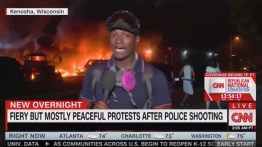
‘This city is not going to stop burning itself down until they [the protestors] know that this officer has been fired.’ Thus spoke Whitney Cabal, a leader of the Kenosha chapter of Black Lives Matter, in response to the latest police shooting in Wisconsin. The use of the passive in that sentence is revealing. As Theodore Dalrymple has pointed out (see ‘The knife went in’) it is common for people to assign motive to inanimate objects when they are loth to admit to being in the wrong. I suspect that the suitably named Ms Cabal knows that the state of Wisconsin did not auto-combust this week, as Krook does at the end of Bleak House. True, there was first a police shooting and arrest. But someone must then have put a match to the place.

How progressive misogyny works

It happens a lot lately. Not just in a Twitter DM or an email but in real life. Someone tells me they can’t really say what they think in their workplace any more. What awful things do they think? Mostly that the rights of vulnerable women should be protected and that children should be allowed to express their gender however they like without being whisked to a clinic. In the café the other day, a woman I vaguely knew from the playground asked me if I had received a letter she had sent to the Guardian. I hadn’t. She needed me to know that she and her friends who work in the public sector are fed up with being ‘silenced’.

Brits aren’t idiotic – but our institutions are

Two headlines from the same news-paper, less than three weeks apart. So, the Guardian on 31 July: ‘The Guardian view on delaying elections: it’s what autocrats do.’ This was in response to a suggestion from the US President that the elections might need to be delayed on account of Covid. And then on 17 August: ‘By delaying the New Zealand election, Jacinda Ardern appears magnanimous and conciliatory.’ This was in response to the New Zealand Prime Minister postponing the elections on account of Covid. The only rational response to this fairly typical piece of doublethink is that the Guardian likes Jacinda Ardern whereas it does not like Donald Trump.

The crucial variable with Covid-19 isn’t ethnicity – it’s fat

In the UK’s capital city, where do the fewest obese people live? North London. The most? East London. The weight disparity between largely white and largely immigrant residents might seem to concern race, but I will argue — against the tide, as right now everything is about race — that, deep down, the fat differential isn’t ethnic. The American and British media have chided for months about higher Covid fatality rates among minorities, and I’ve previously cast medical dubiety on the fashionable claim that these patients are dying of racism. Released last month, a statistically meticulous Columbia University study of some 7,000 cases validates my scepticism.

The importance of Gavin Williamson

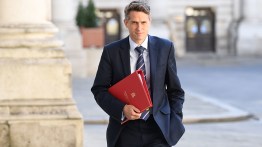
When Boris Johnson tried to call a general election in September last year, everyone around him assumed that Jeremy Corbyn would agree. When this didn’t happen, Johnson found himself out of ideas. Dominic Cummings’s plan was to keep calling for an election, keep holding votes and hope the resolve among opposition parties would break. The Prime Minister decided to get a second opinion. He wanted someone who knew parliament and its dark arts, and could advise him how to fight and win its battles. He summoned Gavin Williamson. On being presented with the plan, the former chief whip gave a long pause. ‘It’s a preposterous plan,’ he finally replied. ‘And that’s exactly why you should do it.’ It worked.

Today’s undergraduates are customers – and the customer is always right

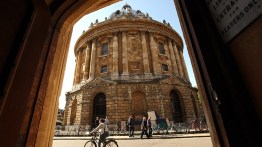
If you’re looking for a sign of the academic times, you could do worse than consider the image, published in newspapers recently, of Mr Chan King Wai at a solemn ceremony in China last year. There is Mr Chan, grinning stiffly but with real pride, dressed in a scholar’s cap with a gold tassel, and a red and shiny purple gown. Around his neck, a little incongruously, is a stripy Brideshead-type scarf. He looks like he has presented himself for Oxbridge theme week on RuPaul’s Drag Race. He is showing a certificate to the camera. Holding the other end of the certificate, and mustering more of a grimace than a grin, is Alan Hudson — recently retired director of programmes in leadership and public policy at Oxford’s China Centre.

My pronouncement on the BBC

Radio 4 recently ran an adaptation of Albert Camus’s The Plague in which the protagonist, Dr Bernard Rieux, was transformed into a woman. A woman who was enjoying a lesbian ‘marriage’. Of course they did, you will be muttering to yourself. If the BBC can transgender a rabbit in Watership Down they can certainly put a lesbian in The Plague. The boss of BBC audio drama, Alison Hindell, explained that the masterpiece had been altered to provide ‘contemporary resonance’. Does it resonate with you? Drama invites us to suspend our sense of disbelief for a while but needs to have at least a slender connection to reality. The original story is set in Oran, Algeria. Yet nobody thought it a bit rum that this well-to-do doctor batted for the other side. Openly.

When everything is ‘racist’, nothing is

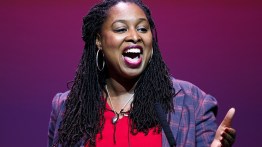
Hearing that Dawn Butler MP had been pulled over by the Metropolitan police, I briefly hoped the taxpayer might get back the whirlpool bath she charged us on her parliamentary expenses. But the officers skipped the boot and went straight to the passenger side, where they found the member for Brent Central recording them with her phone and looking pleased as punch to audition as the new Rosa Parks. As it happens, the footage she released showed the police being deeply polite, and they subsequently explained that the pull-over had been due to a registration-plate mix-up. But Butler claimed it was a case of the dreaded ‘stop-and-search’ and within hours she was on Channel 4 News, being grilled by one of their crack interviewers.

The dismal rise of the modern elopement

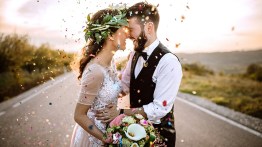
I didn’t realise how attached I was to the traditional British wedding — the whole messy, pricey, drunken business — until I discovered it was under threat. The new fashion is for elopement, just the happy couple, one or two friends and a photographer, all perched on the edge of some picturesque cliff or on a mountain top. It makes sense while we’re all social distancing, but I suspect the elopement trend is set to continue — and I think it’s dismal. I first saw the signs when I asked a friend what he was up to this Saturday. ‘Oh, I’m just off to an elopement,’ he said. My immediate instinct was that he should call the police.

Kamala chameleon: the many faces of Biden’s running mate

Kamala Harris, the new Democratic vice-presidential nominee, certainly looks the part. Barack Obama once called her ‘the best-looking attorney general in the country’, though he later decided that was a sexist remark and apologised. She’s half-black, half-Indian and she has a charismatic Californian smile. If a director were casting for someone to play America’s first minority woman vice-president, he’d probably plump for an actress who looked like Harris. She dresses like the Hollywood idea of a political woman — power-suits and pearls. She’s got what wonks call the ‘optics’ down pat. It’s easy to forget but only last year Harris was considered a favourite to win her party’s presidential nomination.

Why the Lib Dem leadership contest matters

When Dominic Cummings addressed government advisers recently, he said that he was so out of touch with day-to-day politics that he needed to ask who the current leader of the Liberal Democrats was. In fairness to the Prime Minister’s most senior adviser, he’s not alone in this confusion. Since Jo Swinson lost her seat to the Scottish National party in the December election, there have been only interim leaders in place as members pick a successor. Ask a No. 10 staffer or Tory MP which candidate they would prefer to win — Layla Moran or Sir Ed Davey — and you are more likely to be met with laughter than a serious reply. Once again the Liberal Democrats are being talked up as a party on the brink of extinction.

Never has a virus been so oversold

There’s nothing unprecedented about Covid-19 itself. The equally novel, equally infectious Asian flu of 1957 had commensurate fatalities in Britain: scaled up for today’s population, the equivalent of 42,000, while the UK’s (statistically flawed) Covid death total now stands at 46,000. Globally, the Asian flu was vastly more lethal, causing between two and four million deaths. The Hong Kong flu of 1968-69 also slew up to four million people worldwide, including 80,000 Britons. Yet in both instances, life went on. What is unprecedented: never has a virus been so oversold. Why, I’d like to sign on with Covid’s agent. What a publicity budget.

We are living in a post-truth society

Activists wish to change the name of a school in north London because it is named after a road which was named after a dairy farmer who had the same name as someone the activists dislike. This is the Rhodes Avenue primary school in Wood Green, named after Thomas Rhodes, a great-uncle of Cecil Rhodes who died when Cecil was three. According to the activists, Thomas cannot be ‘disentangled’ from Cecil despite the fact that they are totally different people separated by two generations. These genii would like the school to be renamed Oliver Tambo school, after the popular South African murderer and politician.

Why should anyone be forced to shield?

The best way (and with politicians sometimes the only way) to know whether people are aware they’ve made a mistake is seldom to put that question point-blank. A reflexive ‘oh no I didn’t’ kicks in. Do you honestly think, for example, that government ministers are privately confident that as Covid-19 swept the country, hospitals were right to send elderly patients back untested to care homes, even with the limitations to our knowledge at the time? Of course not. But something stupid about British politics appears to constrain them from saying so. Possibly, before trying to persuade us, they have persuaded themselves they were justified; and we all do this to some degree.

Why the government is concerned about a second wave

As the government struggled on Saturday with the question of whether to impose a quarantine on those returning from Spain, there was a hold-up: a key minister was unavailable. Transport Secretary Grant Shapps was on a holiday flight to Spain and hadn’t landed yet. When Shapps eventually made it on to the Zoom call from his holiday villa, one person who sat in on the meeting was surprised by the speed at which the quarantine decision was made. After being stung by accusations that the government moved too slowly in its initial handling of the pandemic, Boris Johnson now wants to show it is moving quickly.

How the Catholic church betrayed the dying

Of all the sad and surreal things to happen in the past few months, the Catholic church’s decision to abandon the dying was, for me, the worst. The Church of England abandoned its churches, forbidding first congregants then priests from setting foot in them, making it clear that in fact it actively dislikes church buildings. But the Catholic church in England betrayed the people who needed it most: the men and women who found themselves in the awful eye of the storm, dying of Covid-19 without family and, as it turned out, without even the possibility of a priest.

Fat-shaming didn’t do me any harm

One of the genuine pleasures I always take in arriving back in the north-east after being in London is that I am suddenly transformed from being an aged fat pig with bad teeth into a youthful, lissome creature with teeth no different to anybody else. It is not the clean air or the glorious countryside which has this effect; it’s just that everything is comparative. Giles Coren once observed that for every 50 miles you travel away from our capital, you go back in time about ten years. If this is true — and I suspect it is — then up here on Teesside we’re in the middle of that very agreeable summer of 1970, with hot pants, Ted Heath suddenly elected, Rivellino scoring goals for fun in the World Cup and The High Chaparral on the telly.

No one emerges from a court fight looking clean

The case of Johnny Depp vs the Sun, heard over recent weeks at the High Court in London, certainly gives fresh life to the old warnings about dirty linen and its public laundering. Whatever the results, I would be surprised if it didn’t provoke others to think again about the wisdom of reverting to the law. The influencers formerly known as the Sussexes, for instance, must be wondering whether their forthcoming legal case will result in them solely being showered with praise. Of course one has sympathy for famous people who feel that they have been badly portrayed. It is unpleasant to read nasty things about yourself in the newspapers. Especially if you have spent years reading largely pleasant things, carefully placed there by yourself or your PR team.