Columns

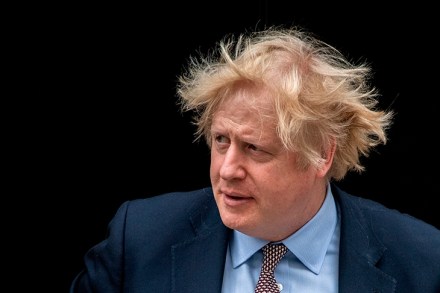
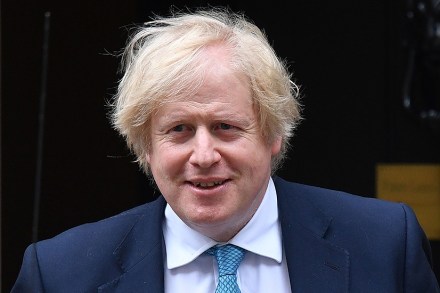
Does anyone think Boris has handled this well?

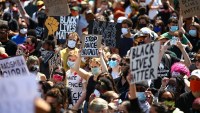
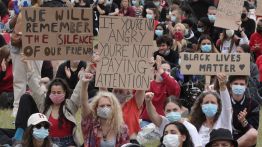
I don’t know what’s happened to our football hooligans. The modern malaise, I suppose. A gradual descent into ineffectuality. Back in the day, Harry the Dog of Millwall would take an entire away stand by himself and do a few coppers on the way. He would surely turn in his grave looking at today’s lot. We were warned about their arrival in London last weekend. Told they would be tooled up and ready for action, turning on each other. And what happened? Nobody opened up like a tin of peaches by ‘my little friend, Stanley’; just a few skirmishes here and there. Handbags, as the football commentators would put it. Compare that with the entirely peaceful demonstrations by Black Lives Matter and their allies.
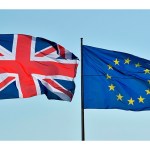
Is a Brexit deal within reach?

Trade talks between the UK and the EU are in a better place than they have been at any point since they started back in March. Now, in one way this is not impressive — the diplomatic equivalent of being the tallest mountain in Holland. For the first three months of these negotiation both sides were bullish, restating their maximalist positions, and coronavirus forced the negotiations online, making diplomacy and quiet compromise trickier. But now an intensive series of talks have been agreed, some of which will be face to face. Both sides appear to be in earnest about trying to break the deadlock. The British side is, privately, far more optimistic than it has been at any previous point in the negotiation.

Why ‘football thugs’ want to defend statues

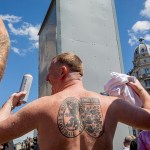
‘Saturday the 13th … everyone’s out to go up town to do Antifa. Loads of West Ham, Millwall, Chelsea, Arsenal, Cockney Reds, even northern firms are coming down. It’s gonna be massive. Birmingham are on the prowl up there looking for ’em and their firm’s half black. Saturday everyone has to go.’ There followed some emojis: I read the text and was amused — but not surprised. Funnily enough the West Ham lot have done ‘statue protection’ before. A few years ago, some of us got up very early to go to Upton Park to protect the monument to our World Cup winners, Geoff Hurst, Bobby Moore and Martin Peters. Rumours had gone around that Millwall fans were planning to desecrate it. The Hammers fans stood guard. It worked.

In praise of statue-toppling

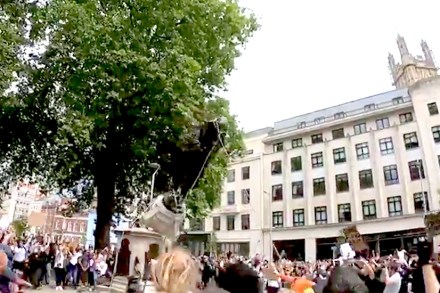
I couldn’t disagree more with Sir Keir Starmer (it was ‘completely wrong,’ ‘it shouldn’t have been done in that way’) or with Boris Johnson (‘if people wanted the removal of the statue there are democratic routes which can be followed’). No, there was something magnificent about the sight of the Bristol mob throwing into the harbour the statue of a man whose trade was notorious for throwing sick slaves with no monetary value into the sea. 1890s Britain raised that statue.

Normality won’t return until schools do

From Monday, you will be required by law to wear a face covering on public transport. Paradoxically, this is a sign that the government wants life to return to being as normal as possible. Ever since the start of the pandemic, there has been debate about whether the government should tell people to wear masks in public. The argument in favour was that it would help stop the spread of the virus by making it harder for people to pass on the disease. There were two main arguments against it. The first was that urging people to wear one could lead to a shortage of the medical-grade masks that health and social care professionals so desperately need.

The dying need real conversation, not false cheeriness

A nurse friend recently finished six weeks in a Covid intensive care unit where she witnessed many deaths and always ensured that nobody died alone. She sat holding a hand, listening, reassuring. Now on leave, she is writing down some of her experiences with the dying. A wise priest I knew said that no matter how strong your faith, your view of what happens at death and ‘the life of the world to come’ should be an agnostic one. But he still recounted some remarkable things he witnessed when sitting with the dying, and my nurse friend described similar experiences.

Marching against racism is too easy

When I first saw the footage of George Floyd being asphyxiated by a policeman’s knee on his throat, my reaction was pretty standard. My eyes bugged. I stood up. I exclaimed something like: ‘Bloody hell!’ We’ve all seen the video dozens of times now, but it’s worth clinging to that initial shock, the better to appreciate that America’s spontaneous collective revulsion in response to such grotesque abuse of power was genuinely commendable. Yet the nationwide marches a fortnight ago had a clear goal: the culprit’s arrest. If late in the day — had a civilian choked a policeman to death, he’d have been handcuffed faster than it takes to say ‘black lives matter’ — Derek Chauvin was charged.

Whitehall on trial: how the government is preparing for the Covid inquiry

During the pandemic, Nicola Sturgeon has developed a reputation for announcing things just before the UK government does. But there has been no Downing Street follow-up yet to her announcement last week at First Minister’s Questions that there will be a full public inquiry into Scotland’s handling of the crisis. This silence should not, however, be taken as a sign that there won’t be a UK-wide inquiry as well as a Scottish one. Staff inside No. 10 accept that there will have to be one: when 50,000 people are confirmed or suspected to have died from a new virus, a private ‘lessons learned’ exercise won’t be enough.

Why are street protestors exempt from the corona clause?

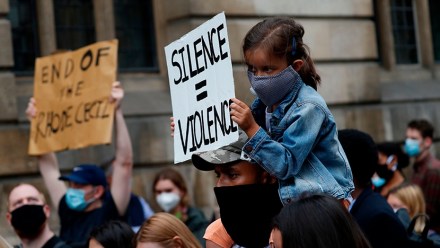
It is nearly four years since Black Lives Matter had their first major protest in London. Emulating their US counterparts, the protestors held up their hands and chanted ‘Hands up, don’t shoot’, a chant popularised after the 2014 killing of Michael Brown in Ferguson, Missouri. By then it had been known for a year that before his death Brown almost certainly said no such thing and had lunged for the arresting officer’s gun before being shot. Still the London protestors chanted what they believed Michael Brown had said, as they processed along Oxford Street, accompanied by unarmed British policemen who couldn’t have shot them if they’d wanted to.

There’s no point in bishops – Covid has shown us so

It is a relief to parents that young children are allowed out a bit now as the length of the lockdown has wreaked havoc with tempers. Birthdays have been particularly difficult. Zoom parties, with every guest in their little on-screen box like stamps in an album, are a poor substitute for a roomful of overexcited kids eating jelly. My granddaughter was eight last week and at last could meet her best friend, who lives next door, in the new paddling pool. They have managed uncomplainingly via walkie-talkies through a window so this was a joyful reunion. But what about the other would-be dressed-up party guests, not to mention gift-bearers?

The real problem with Newsnight

The Twitter feed of BBC Newsnight editor Esme Wren (remember, I read this stuff so you don’t have to) is full of plaintive whining that no cabinet minister will agree to appear on her benighted programme. The Twitter feed of her chief presenter, Emily Maitlis, is largely a screed of bile and petulance directed at the government, some of which is usefully later recycled into her opening programme monologue. Unless Esme has had her brain scooped out with a soup spoon you might expect her to have found a connection between these two facts. Not a bit of it. ‘Cabinet minister, what is it about Newsnight, with its left-wing presenters, left-wing reporters, left-wing agenda and loathing of the government that makes you reluctant to travel across London for a late-night interview?

We can’t see the wood for the trees

I was relieved to discover, earlier this week, that the Prime Minister’s special adviser, Dominic Cummings, was a symbol of inequality in modern Britain. Relieved because I have been scouring the country for such a symbol for ages and had hitherto not succeeded in finding one. Cummings is just that symbol, according to Robert Peston, because his father has a garden with some trees in it. Cummings was thus able to walk through these trees, whereas people who do not have fathers with a garden with some trees in it are not able to do so. Privileged bastard. There is, however, one small problem.

I’m sick of people patronising Captain Sir Tom Moore

Nobody earns the right to respect just by having lived into old age, whenever that begins — it has happened by chance and by virtue of having dodged a few bullets. But everyone has the right to be treated with good manners and kindness by those with any power over them — even prisoners and toddlers having pyrotechnical tantrums. Mostly, politeness and consideration are forthcoming. It is always a shock if a bank clerk, dentist or traffic cop are brusque, perhaps because it is so rare. Still, I can stand rudeness more easily than I can tolerate being patronised, something older people encounter regularly. When Colonel Sir Tom Moore raised millions for NHS charities, everyone cheered and no one was rude about him, but my goodness was he patronised!

Covid has all but left London. Why?

My partner, Julian, hovered at my shoulder on Friday as I tapped out my Times Saturday column (about travel quarantine). I’d slipped in a paragraph with my own thoughts about the transmission of Covid-19. ‘Cut the lot,’ he said. ‘You’re not an epidemiologist. Nobody’s interested in your theories.’ This was probably good advice so I put my own thoughts on hold. Until now. Because something’s still nagging me. I know I’m not an epidemiologist, but silences speak loud in science, and from those experts put up for media interview I notice a curious silence — a silence on what feels like a most important report and, from their interviewers, a timidity about pressing them. The question the experts should be asked is about London.

Is living without risk really living at all?

Taking my life in my hands — as we all do when getting out of bed — I walked along the Thames last week. On the northern footpath east of Blackfriars Bridge, a young man ran atop the adjacent wall and jumped across a gap in the brickwork. The gap was six feet long, the wall as high. Had he missed, he’d have met all manner of hazards on either side. He gained nothing overt from that leap, only an ephemeral sense of satisfaction, yet risked broken bones or a fractured skull. As he turned heel in preparation for repeating the feat, I was both aghast and impressed. We could call that young man foolhardy.

X days to save the economy!

I wonder what the Labour party will use as its scare slogan at the next election? After all, the usual one of ‘[Insert number] weeks/days/minutes to save the NHS’ may not work next time. Not that it worked every time before. But it has long been the favourite attack line of a British left that likes to portray the Conservative party as so ravenously right-wing that whenever it comes to power it wastes not a moment in dismantling Attlee’s post-war creation. And yet, although the Conservative party has been in power fairly often since 1945, not once has it managed to dismantle, privatise, or otherwise sell off the NHS. Its tendency, rather, has been to increase spending, ring-fence spending and more.

Why schools should stay shut

Has the stock of any politician fallen more sharply, these past three or four years, than that of Shami Chakrabarti? As the leader of Liberty, and an almost weekly performer on the BBC’s Question Time, she was a respected purveyor of leftish sanctimony to the masses, a humourless voice of conscience and, I think, self-regard. The battles she fought then were at least, in the main, on the side of decency — and while we might have found her a little trying and even bumptious, there seemed no doubt that here was a young woman motivated by principle. That notion was swiftly expunged when she accepted a brief from Jeremy Corbyn to whitewash anti-Semitism in the Labour party via an ‘independent inquiry’ headed by herself.

Are you a lockdown eel or a pygmy goat?

I identify strongly with the garden eels in the Tokyo aquarium. Pre-corona, they were perfectly sociable. Come opening hour, when visitors’ faces began to squash against their glass, they’d happily stare back. Every week that goes by without visitors, the eels become more fearful and these days, the aquarium reports, when the keeper arrives to check on them, the eels vanish into the sand. Me too. Much as I long to get out and about, at the same time I can feel myself losing the knack of sociability. I jump when the man from Amazon knocks; slither quickly back into my basement kitchen after the daily outing. There are psychologists looking intently at us in lockdown. There will never be another chance to see how humans behave under these weird conditions.