Columns

The lost world of lockdown

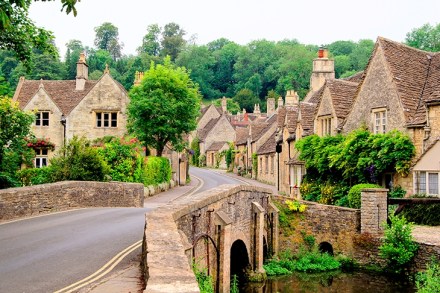
It started when, the day after the announcement of some lockdown easing, I drove five miles along the coast road. For seven weeks there had been barely another car, and now it was like a normal pre-pandemic morning. Our little town was no longer deserted, and there were queues for newsagent and bank. Many holiday and second homes are apparently occupied, though no one is actually allowed to be here of course. Nevertheless, agencies are merrily advertising: ‘Come and lock down in beautiful, safe North Norfolk.’ The paths to the beaches are open again, and if the wind had not swung round to blow a vicious north-easterly they would have been crowded.
Does Google know me better than I know myself?

My research assistant, John Steele, is also a songwriter. A friend emailed him with the lyrics of a Fleetwood Mac number. These days Google often appends emails with a shortcut to save you typing your own answer by suggesting one or two likely responses. In the Fleetwood Mac lyric a former lover wonders whether her ex can see her reflection in the snow-covered hills. Google’s suggestion was ‘No’. Musicians have pondered some of life’s most profound questions, so John and I tried posing a few in emails, to see Google’s suggested response. Some were hilarious. If only David Bowie were here to know that ‘Yes!’, there is life on Mars. To Freddie Mercury’s ‘Is this the real life?’ the suggested answer is ‘Yes’.

The British state needs rewiring

‘Covid-19 has been perhaps the biggest test of governments worldwide since the 1940s,’ declares the government’s command paper on the virus. The fact that the following paragraph proposes ‘a rapid re-engineering of government’s structures and institutions’ is telling. It is an implicit admission that the British government machine is, in several important areas, failing this test. The argument about whether the UK has the worst death toll in Europe risks descending into statistical absurdity. Until excess mortality figures are known, it won’t be possible to come to a verdict. But it’s hard to argue that the UK has done much better than France, Spain and Italy.

Who can still make a Sunday joint last a week?

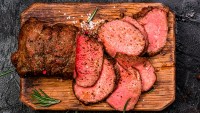
Sunday lunch was always roast beef and, in the traditional way, the Yorkshire pudding was served first with gravy, supposedly because if you were full of cooked batter you wanted less meat. Monday saw cold meat, jacket potatoes and pickles, while the beef bone went into the pot with lentils, pearl barley, carrots and onions and bubbled on the hob for days, the basis of every dinner until Friday’s fish and Saturday’s sausages and mash, before Sunday came round again. That is what everybody had and, like all housewives, my mother made the most of every morsel. Throughout and after the war, waste was a crime. I hate cooking and am bad at it for all I learned, by watching, about roasting the potatoes in the hot fat round the meat, and I always helped beat the batter.

In defence of the lockdown

I realised things were getting back to normal when I threw away a third of a tin of chopped tomatoes last week. Back in March you couldn’t get them for love or money. I still remember the appalled look on a woman customer’s face at our local farm shop, in mid-April, when she was told that, while the store was out of tinned tomatoes, she could have real ones instead. ‘That’s not the same,’ she said, with a degree of rancour. ‘Um… if you chopped them up with a knife, I think they’d be pretty similar. You know?’ she was informed, but she wouldn’t have it and stomped off. There was always something a little spurious about those early shortages, with people panic-buying yeast when the shelves were stocked with loaves of bread.

Hugging China hasn’t done us any favours

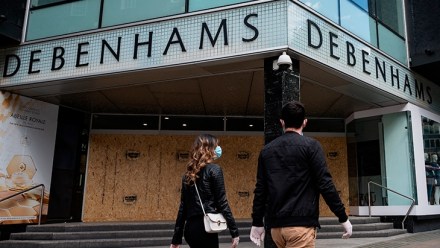
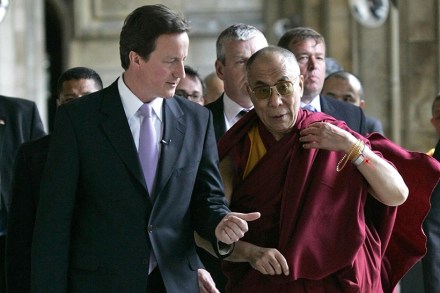
Like nearly everything named a ‘scandal’, ‘affair’ or given the suffix ‘gate’, almost nobody now remembers the Dalai Lama affair. But back in 2012, flush with recently acquired power and optimism, David Cameron and a man called Nick Clegg went to see the Dalai Lama while he was on a trip to London. Whether Cameron and Clegg knew what they were getting into wasn’t clear. The pair had a short meeting with the Lama at St Paul’s Cathedral — or at least in one of those bland conference ante-rooms English cathedrals constructed in the last century to atone for the splendours next door. Looking like a couple of travelling salesmen trying to flog the Dalai Lama a timeshare, Cameron and Clegg had the meeting and moved on. Not so Beijing.

This pandemic has put politics on fast-forward

‘The normal grease of politics is not there,’ bemoans one sociable cabinet minister. Certainly, the whispered conversations in corridors that make up so much of Westminster life are in abeyance during this period of social distancing. The fact that the backbenches and the cabinet have deep reservations about the government’s approach matters far less than it would in normal times. In the Zoom parliament, there is no such thing as the mood of the House. One Tory grandee pushing for a significant easing of the lockdown complains that the current arrangements ‘make it easier for No. 10 to ignore parliament and cabinet’. But contrary to appearances, politics has actually sped up, rather than stopped, during the pandemic.

Lockdown used to be the norm for new mothers

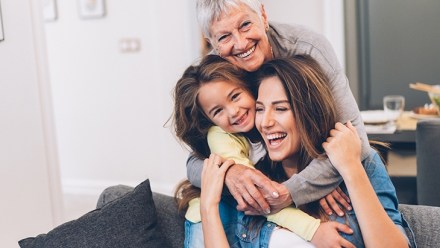
I laughed when my Spanish midwife mentioned in passing that in Latin American countries they have a custom for new mothers known as la cuarentena — the quarantine. This was back in late February, a few weeks before my daughter Lily was born. I remember thinking it seemed not only ludicrous but archaic for a woman to spend a 40-day period stuck at home after giving birth. Modern mothers got on with life. I planned to do just that. I had invested in all the necessary equipment. The car seat was installed. I had bought the state-of-the-art breast pump which connects to my phone. My husband and I had chosen the pram because the slick adverts boasted that it could fit into the overhead locker of an aeroplane.

The politics of book shelves

I pulled a Canadian girl in a nightclub, back when I was in my very early twenties. She seemed very nice, if somewhat quiet. We went back to her place, where I spent an agreeable night. I sneaked out just after dawn while she was still sleeping and, upon looking under the bed for my socks (I always used to take them off back then), saw every book Ayn Rand had ever written neatly stacked up, in alphabetical order. Not just The Fountainhead and Atlas Shrugged, but Anthem and Ideal and The Virtue of Selfishness and all the rest, the ones even Rand cultists have forgotten. I scarpered for the Tube double quick. A narrow escape. I don’t remember much else about the lass apart from the fact that she had inverted nipples. But they didn’t scare me as much as those Ayn Rand books.

We crave certainty over Covid-19. There isn’t any

One of the strangest developments to have occurred during this very strange time is that the Prime Minister’s special adviser, Dominic Cummings, may have attended a meeting of some people. Worse, various politicians are suggesting that he may have actually said something at this meeting. Very senior people are insisting that if Mr Cummings did say something at this meeting, even if we have no idea as to what it was he said (‘Can you fetch the Gummy Bears please, Mary, I think this going to be a long one’ or ‘Sorry, Zoom is on the blink again’), then he shouldn’t have done so. The Prime Minister’s special adviser attending a meeting! I think of all the various calumnies which have occurred during this crisis, this is by far the gravest.

Lessons from the plague village that isolated from the world

Locked contentedly into the rhythms of farming life and digging for lead on its Derbyshire Peak District slopes, the village of Eyam lay blissfully unaware of what was about to hit it, and propel it into the history books for ever. The Viccars family, the Reverend William Mompesson and his family, Elizabeth Hancock and her six children, 350 villagers at least… none had any inkling. London existed in most minds only through talk in the public house, stories from travelling merchants and perhaps the first periodicals beginning to circulate in England. The metropolis was half a world away, a foreign place, a foreign culture. News of the plague we now call bubonic will at first have been more of a curiosity than a concern.

Do we really want to go back to normal?

On the day our A-level exams began some wit wrote on the blackboard: ‘I wasted time, and now doth time waste me.’ I thought of that again yesterday when a writer friend emailed: ‘Like you, I thought I would be much more productive but I do find it very hard to focus… and I still haven’t filed those boxes of books in the sitting room.’ The days fly by and the sunshine was a real bonus, for it is pleasant and surely good for the soul to sit in it, reading, dreaming, nodding off, and topping up our Vitamin D levels. I said here at the beginning of lockdown that I would finish the book I had already started, plus some short stories, this weekly column and the occasional book review.

If this is a war, let’s fight it like one

Under the cloud of conformity that has settled over the land as a replacement for air pollution, heretics who doubt the wisdom of annihilating a nation in the name of saving it are obliged to navigate around numerous disputational booby traps. You hate old people and want them to die (though some oddballs questioning the proportionality of wholesale lockdowns are old people). You’re only concerned for individual ‘liberty’ and refuse to make personal sacrifices for the greater good, so you’re unpatriotic. All you care about is money. You’re evidently a Trump supporter, and therefore you’re stuck with endorsing his advice to cure Covid-19 by drinking bleach.

Getting coronavirus does not bring clarity

I had thought that actually getting the coronavirus would bring clarity — that there would be some satisfaction in meeting the enemy, feeling its spectral hands around my lungs. No such luck. Uncertainty is the hallmark of Covid-19. Even its origins are murky: wet markets or the Wuhan Centre for Disease Control? Who knows, and who would ever believe the Chinese government anyway? When you’ve got it, the sense of medieval unknowing only deepens. Is this definitely it? Will it get worse? Will it come back? My version of the virus began with a nasty headache and a grubby feeling of unease, after which I threw up on the bathroom floor. ‘That’s disgusting, Mum,’ said my four-year-old son, handing me a towel with a look of patronising distaste.

I love my fellow hacks – even when I disagree with them

It’s one way to keep in touch with people. Each morning, somewhere between the first coffee of the day and the first drink, I open my computer, log on to social media and see which of my friends or colleagues is ‘trending’ today. ‘Ooh,’ I think as I see their names flash up, ‘I wonder what Julie/Charles/Allison/James/Rod (usually Rod) has done now’. Then I click and read all about their crimes, usually through a filter of people labouring under the impression that a writer’s job is to say what everyone else has already agreed on. The howls, incidentally, mostly emanating from people who in no sense subscribe to the organ in which the crime is said to have occurred. This is one of the brightest moments of my day.

Now is the time for comfort reads

It all started on the day after the Brexit referendum. People who do not get the result they voted for in any election are naturally annoyed, sad, even despairing. If we sincerely believe in one political party and point of view, and lose to the opponents, we feel doomy and gloomy and say so. We used to speak our minds to friends and fellow believers, and that was that. Brexit changed everything. For many who lost, that was not that, and it still isn’t. What started on social media extended to public platforms and personal communication. Disagreement became vicious, language abusive, people tore at one another, claws out, simply for having a different opinion. I lost count of the old friends who dropped and blocked me on discovering I voted Leave and have never picked me up again.

The difficult balance of public vs political agony

Fear is the politician’s friend. When terror grips the public, an opportunity arises for those in power to step forward as the people’s guide and protector in dangerous times. One sees this in wars. One sees it whenever the public suspects hostile conspiracies, networks of spies or mischief-makers. We likewise cleave to leaders who will confound predatory foreign powers, terrorist plots or the danger of being swamped by waves of immigrants. In fear or anxiety the people will hug their leaders closer, and their leaders know this as surely as every priest knows that despair and anxiety are his faith’s most reliable draw.