Columns

Who’s missing from that list of Great Black Britons

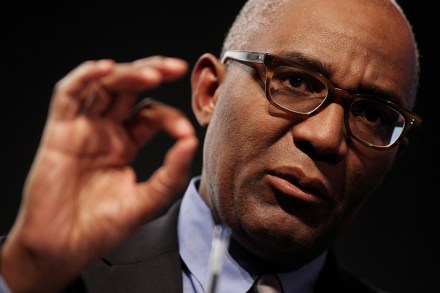
There are two striking things about the new book, 100 Great Black Britons, which was compiled to celebrate the achievements of British people from an African or Caribbean heritage. The first is the sheer number of people included who are ghastly or mediocre or both. The second is the number of truly brilliant black Britons who were left off the list — for reasons which are not, I think, terribly mysterious. Under the ‘both’ category we have, to name but a few, Diane Abbott, David Lammy and the reliably hilarious Dawn Butler. There is also Kehinde Andrews, of course, a lecturer at a former polytechnic who will be appearing on a TV programme in your front room very soon opining about how everything in the universe, from hydrogen to oganesson, is racist.
The trouble with a ‘decolonised’ curriculum

I always felt sorry for my father, then president of a chronically strapped educational institution, for having ceaselessly to approach wealthy prospective donors with a begging bowl. How much more delicious, I imagined during his tenure, to instead be the widely welcomed party that doles out the dosh. But as the administrators of Australia’s Ramsay Centre for Western Civilisation have discovered since 2017, it isn’t always easy to give money away. Funded by a $3 billion bequest from the late healthcare magnate Paul Ramsay, the centre was established in order to revive the flagging humanities at Australian universities.

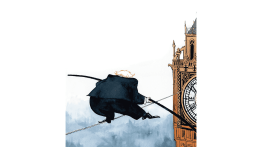
Prime ministers can’t pick the crises that define them

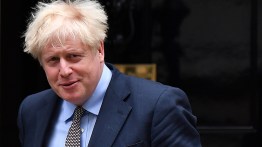
In a non-Covid world, next week would be the Tory party conference. Boris Johnson would march on to the stage in Birmingham to receive the adulation of his grassroots supporters. The biggest Tory majority since Margaret Thatcher’s final victory in 1987 would have been celebrated. There would have been cheer after cheer for the new intake of Tory MPs, elected in seats that had been Labour for generations. It would have been a triumphalist conference with much talk of how the Tories had won a two-term victory. The virus has changed everything. Tory conference is now an online only event with short speeches.

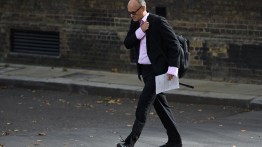
The memo Dominic Cummings never sent

There’s something about Dominic Cummings I will always like, and perhaps partly it’s the danger. I hardly know him well — perhaps at all, really — but will never forget an evening many years ago after a Times debate, when a few of us participants repaired to a restaurant called Fish near London Bridge. We sat up late, talking and drinking until we were just a handful; and one was Dominic. Hours with this arresting man sped by. He reminded me of one of my heroes in politics, the late Sir Keith Joseph, though Cummings is relaxed and loose, and Keith could be stiff and shy. What they shared, though, beyond a beguiling intellectual confidence, was an appetite for stripping things back to first principles and following the logic.

In defence of wokeness

We have been reading an awful lot about ‘wokeness’ recently. Nobody, I notice, seems to be much in favour of it. In fact, the sharpest pens of the right seem to stab at more or less nothing else these days. Stab, stab, stab, they go. Many incisions are made and much ink and sawdust is spilled. So, being a believer in giving peace a chance, I’d like to sit for a moment on the bar stool still pleasantly warm from my colleague Rod’s momentarily departed bottom to offer a word or two in wokeness’s defence. I worry, you see, that it might be a bit of an Aunt Sally. Thing is, ‘woke’ is a term that you now only ever see used as a sneer.

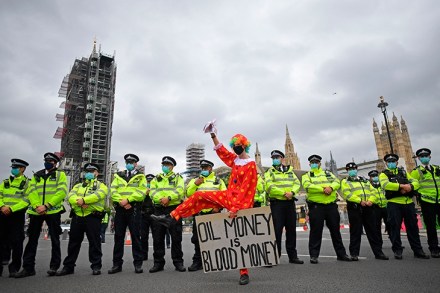
All protests are not equal in the eyes of the police

I’ve never been a great fan of public demonstrations. When I was at university, one of the great causes du jour involved a bus company owned by a man accused of not much liking the gays. My generation were short on causes, so intermittently there would be a call for direct action against the bigoted buses. I slipped along once, not sure whether I really wanted to join in. Apart from the sight of a few dozen callow students preventing one of the guilty buses from progressing up the High Street, my main memory is the almost animalistic rage of a number of the bus’s passengers. Unable to be heard above the chants, they looked like flies in a bottle, getting ever more furious about being made to be late for their next appointments.

Who rules supreme in America?

Within hours of Supreme Court Justice Ruth Bader Ginsburg’s death, Democrats and Republicans began fighting over how to fill her seat — and when. The stakes are high because the Supreme Court is so important. It can invalidate any federal, state or local law by ruling that it violates the US Constitution. And its decisions set precedents that lower courts must follow. Its rulings are final, made by judges with lifetime appointments. Donald Trump intends to fill Ginsburg’s seat as quickly as possible. He will announce his nominee by the end of the week. That nominee will then face hearings before the Senate Judiciary Committee, chaired by the Republican Lindsey Graham. Once a nominee gets through the committee, the full Senate debates his or her case.

Time for me to be more assertive

In the light of recent articles in The Spectator, I think it is vital I should point out here and now that I thought Boris Johnson was crap long before Toby Young and our editor, Fraser Nelson, did. I remember suggesting more than a year ago that the entire Johnson clan was a bit thick and borne aloft simply by depthless ambition and droit de seigneur. I felt a bit bad about it because Boris was a former boss of mine here and also a kind of mate. But you have to be ruthless in this job, get in quick with your bludgeon, even if it’s your own granny on the end of it.

Why No. 10 fears the second wave

The government is bracing itself for a second wave of coronavirus. Everyone knew the autumn and winter would be more difficult than July and August. But what is depressing ministers is how new restrictions have had to be imposed before the summer is even out. ‘It is going to be a long, hard autumn,’ warns one minister intimately involved in this effort. In many ways this country is better prepared for a second wave than it was for the first. Policy-makers know more about the virus and how it spreads, doctors are better prepared to treat it, the government is better organised than it was before, has better data and significantly more testing capacity. In Whitehall, they expect these changes to be put to the test very soon.

The Covid hysteria is getting worse

Readers may recall a column last month that laid out powerful evidence for the proposition that the ethnic and racial disparities for dire Covid outcomes are overwhelmingly due to obesity. While I also read the piece aloud for posting online, fewer of you will have listened to the audio rendition. That’s because YouTube took it down. The explanation was pro forma: the column violated the site’s opaque ‘community guidelines’. An appeal produced the further explanation: ‘YouTube does not allow content that spreads medical misinformation that contradicts the World Health Organisation or local health authorities’ medical information about Covid-19, including on methods to prevent, treat, or diagnose Covid-19 and means of transmission of Covid-19.

JK Rowling’s fundamental mistake

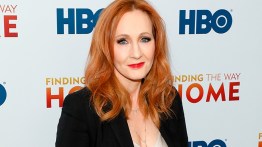
I had my first doubts about Lord Hall, the former director-general of the BBC, when he addressed a group of us BBC editors back in about 1999 in his role then as head of news. A pleasant, emollient man, he revealed that he was thoroughly enjoying reading the second Harry Potter book, which had recently been published. Grow up, Tony, I thought to myself. Get yourself some Dostoyevsky for Christ’s sake. Snobbish it well may be, but I can’t take seriously an adult displaying such infantile predilections (and this goes for those grown-up admirers of Philip Pullman). Harry Potter was a big sensation at the time.

The next generation of gay men will be far more boring

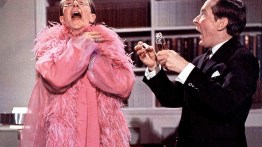
Last week we broadcast my BBC radio Great Lives episode on Kenneth Williams. The effervescent comedian and presenter Tom Allen chose him. It was just enormous fun. You don’t, as a presenter, need talent to lead a programme on Williams: you just play archive clips and everybody falls about laughing. We certainly did. Funniest of all was his ‘Julian and Sandy’ sketch, about a holiday in Portugal. In the ‘Polari’ gay lingo Williams popularised, he described how they’d both been badly stung. ‘Portuguese man o’war?’ asked their interviewer. ‘I never saw him in uniform,’ Williams replied.

The dark side of ‘cute’ culture

I have become allergic to ‘cute’, bad-tempered biddy that I am. Cuteness and the requirement to be cute have spread like pondweed across children’s TV and out into the adult internet. Cute culture is a way of worshipping youth — cute characters by definition have babyish features: big heads and eyes, fat cheeks and clumsy bodies — and one of the many reasons I’m hostile is that I’m pretty sure youth-worship is exactly the opposite of what youth needs. ‘These Paw Patrol pups,’ I asked my son one day, as we watched his favourite superhero cartoon dogs save a grateful baby whale, ‘do they ever rescue ugly old animals?’ ‘No, not really,’ he said. ‘Old things aren’t cute.

No. 10’s no-deal dilemma

Backbenchers are discussing when to give Downing Street a bloody nose, a former prime minister is on the warpath and the government is fighting on multiple fronts. All of this is contributing to the heated atmosphere at Westminster. But one thing is keeping Tory tempers in check: the party’s poll lead. As long as the government is ahead in the polls, it is hard to declare that it is in crisis. This lead also limits the frustration of Tory MPs. You can’t claim that this or that event will lead to the Conservatives losing the next election when the opposition are still behind. Why are the Tories still ahead despite such a torrid summer?

Falsehoods are running amok

I don’t know how much of a shock this will come to you as — perhaps none, because you are deeply prejudiced people, subconsciously guided by your inner fascist. So, an ‘activist’ called Vicky Osterweil has caused a bit of a stir in the USA with a book advocating the looting of private property as a means of redistributing wealth and dismantling capitalism. Violence and pillaging enables well-informed, politically aware activists like Vicky to acquire worldly possessions without recourse to the reactionary and frankly tiresome notion of working for a living. No shock or surprise in any of that to me: you can probably do a degree in Radical Looting these days.

Who would risk being a government adviser?

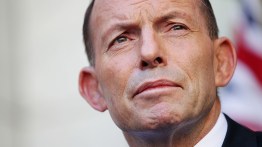
Poor Tony Abbott. It would seem being prime minister of Australia doesn’t bring you to the attention of the British media. To come into its sights you must be put forward for a role as UK trade adviser. Then they will discover your existence and aim to destroy whatever reputation they didn’t know you had with the usual modern British charge-sheet. This time the charge was led by Kay Burley. The latest advertisements for her Sky television show boast that Burley is ‘always formidable, rigorous, fair, honest and searching’, among much else. Perhaps Burley hadn’t seen the advert. Certainly she displayed no such qualities when she discovered the existence of Tony Abbott.

To save the Union, negotiate Scotland’s independence

The first cabinet meeting of the new term and Boris Johnson’s summer holiday were both dominated by one concern: how to turn the tide on Scottish nationalism. Johnson’s foray into the Highlands was intended to demonstrate his own personal commitment to the Union; it also allowed him to find out for himself how awful mobile phone coverage is in much of rural Scotland. The cabinet on Tuesday discussed how to stop the Scottish National party turning the legislation that will underpin the UK’s post-Brexit internal market into their latest argument for independence. The Prime Minister is confident about his chances of knocking back the Nationalists.

How a lie becomes truth

Teachers were told to exclude children who made ‘inappropriate’ jokes about Covid when they returned to school this week. These days every joke is inappropriate in one way or another: someone, somewhere will find it transgressive. I cannot imagine being a schoolchild and not making a joke about Covid, and a sense of humour is about the only thing these kids have got left. But for the officials who dreamed up these edicts, humour is the last refuge of the bourgeois, as Herbert Marcuse or one of those Frankfurt School monkeys put it. (I forget exactly which one. Maybe it was Jürgen Habermas. What a fun night you’d have out on the town with those boys.

The trouble with ‘taking back control’

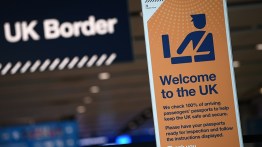
I sympathised with Leave voters who yearned to ‘take back control’ of British borders. After all, if being a country means anything, it surely entails first and foremost a clear understanding of who comes under that country’s protection — and who doesn’t. Otherwise a country is just a patch on a map. Yet I’ve always found Leavers’ high hopes for reduced immigration heartbreaking.

Are liberal conservatives now history?

It was a luminous late August sunset, and we were in France, dining outdoors with some friends who have a magical, charming place in the countryside there. We were discussing audiobooks of the kind you could listen to on a long car journey and I mentioned how Julian, my partner, and I had enjoyed my Times colleague David Aaronovitch’s memoir of childhood and youth, Party Animals: My Family and Other Communists. If you haven’t read it, do. David’s family were hardline members of the British Communist party. He was brought up to believe that ‘God Save the Queen’ was an anthem of imperialist oppression, and the revolution, hopefully peaceful, was perhaps just around the corner.