Columns

Voters have lost their nerve

Elections teach us nothing. Instead, each tribe dredges succour from the minutiae, proving that they had been right all along. The moderate left — here and in the US — insists that tacking to the centre is the way to beat a populist right-winger, despite the fact that Joe Biden won by the skin of his teeth, through the votes of people who couldn’t be arsed to go to the polls on polling day and against a candidate of whom the most charitable description would be ‘fundamentally deranged’. The woke far left, meanwhile, argues the reverse, implying that the tightness of the vote was down to a lack of progressive zeal, much as was the Democrat failure to capture the Senate.
This lockdown comes at a high political cost

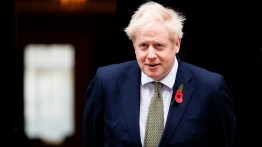
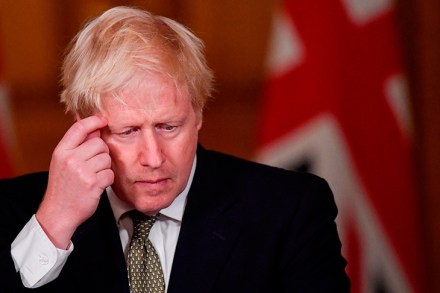
Keir Starmer has his first attack line of the next general election campaign. He will say that England’s second lockdown was longer than it needed to be because the Prime Minister didn’t act when he had the chance. If Boris Johnson had listened to the scientists, Labour will say, we’d have had a two week ‘circuit-breaker’ and controlled the virus. As things stand, a man who set his face against lockdown was then forced to adopt one — making it longer, more painful and costing far more jobs. A couple of weeks ago, there was a clear dividing line: Labour wanted national measures; the Tories wanted regional ones. So Starmer can now claim to have won the argument. This has depressed Tory MPs.

The infantilism of locking down to ‘save Christmas’

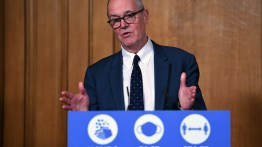
It seems, then, that this latest lockdown has been instigated simply to protect two very questionable institutions — the National Health Service and Christmas. Both have a certain historicity about them and were widely liked. Both, too, have become bloated and hideous caricatures of what they once were. There is a certain infantilism about the repeated demands to ‘save Christmas’ which conjures up the image of serious adults — Chris Whitty, for example, or Sir Patrick Vallance — hanging up their stockings on Christmas Eve and jumping up and down on the bed in excitement at five o’clock the following morning. There is no Santa Claus, Patrick. There is no sleigh and the elves have been long ago furloughed. It all comes from Argos, mate. Hark!

The cameras miss what’s really happening in Washington

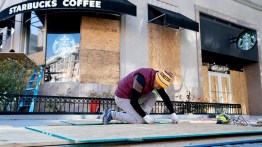
Washington, DC On election day in the capital there is no thrill in the air, but there is a sound: that of hardboard being placed over all of Washington’s windows. Wherever you go in the centre of town, the area is either boarded up or in the process of being so. I enjoy my sausage and eggs on a sidewalk to the accompaniment of the last windows being drilled. ‘Was everything all right?’ my waitress enquires. ‘Delicious,’ I tell her. ‘If the city is still here tomorrow, I’ll be back.’ DC feels as if it is preparing for a natural disaster, not an election result. Like all other major cities in the Western world, Washington has been stripped of its tourists by coronavirus. But an added exodus of the locals has occurred.

In defence of Emily in Paris

A frothy new drama called Emily in Paris arrived on Netflix last month. Starring Lily Collins — daughter of Phil — it tells the story of a pretty social media ‘expert’ who moves from Chicago to Paris, where she manages to offend almost everybody she meets, and yet somehow triumphs. It is Eloise in Paris for the Instagram/Trump generation. The show is a croquembouche-esque fantasy of Frenchness. Anorexic-looking chicks eat croissants and pretend to enjoy them. There are pre-war apartments with parquet flooring, and windows decorated with twinkling fairy lights. The men are handsome bastards who know how to cook omelettes.

I’m voting to make America boring again

I just spent £2.50 in postage to bring about one of the last things I want. Specifically, the next-to-last thing I want. If the polls are right (and how should I know?), my absentee ballot will help leave Trump behind as a one-term historical aberration and install as US president an elderly Democratic lifer whose cognitive capacities remain uncertain. Many an ambivalent Biden voter will share my concerns about victory: Covid. Who is that masked man? Biden often flaunts his face coverings even when nowhere near another human being, while his party has embraced the mask as a badge of nobility, righteousness and partisan unity. Obliging computer modellers now posit that more than 100,000 Covid deaths ‘could’ be prevented if 95 per cent of Americans always wore masks.

What will post-pandemic politics look like?

A few days ago, I came across a group of Tory MPs in a House of Commons corridor looking rather perplexed. It soon became apparent why. They had been discussing the government’s myriad problems and expressing their concerns about how things were being handled by Downing Street. Then their phones had pinged with news of a poll that showed the Tories moving into a six-point lead. To be sure, not all the polls are this favourable to the Conservative party: one at the weekend had Labour two points ahead.

The morality of free school meals

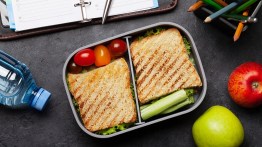
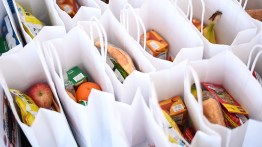
The main problem with the government giving in over free school meals during the holidays — other than that it is immoral and unconservative, neither of which have been bars to Conservative policy-making in the past — is that it is a hostage to fortune. What if, next week, another highly paid professional footballer — Tottenham’s Harry Winks, for example, or Liverpool’s Joe Gomez — decides that the nation’s children should also be given by the taxpayer elevenses and high tea? Such a campaign would generate enormous traction, especially among the affluent. Newspapers would feel unable to resist. Come on, Prime Minister, how can you deny a starving child his right to a scone with some cream and strawberries?

Why I’m ducking the Rashford debate

Moments arrive when it becomes clear you’re losing the zeitgeist. Whatever might be the spirit of the era, you don’t get it any more. For me such a moment occurred last week as I followed news and commentary about the footballer Marcus Rashford’s campaign for meal vouchers for disadvantaged children during the school holidays. A Nottinghamshire Conservative MP, Brendan Clarke-Smith (Bassetlaw), had spoken in the Commons debate. ‘Where is the slick PR campaign encouraging absent parents to take some responsibility for their children?’ he asked. ‘I do not believe in nationalising children.’ ‘Brilliant!’ I thought. And well put.

The Hay has become the Starbucks of literary festivals

The Hay Festival, memorably described by Bill Clinton as ‘the Woodstock of the mind’, has, over the past couple of decades, transformed into something more like the Starbucks of literary festivals. Like a bookish spider plant, it has sent out runners from its home in the rain-sodden Welsh marches to grow festivals all over the world. This spring it went to Abu Dhabi — where its chief point of contact was 69-year-old Sheikh Nahyan bin Mubarak Al Nahyan, a scion of the wealthy ruling dynasty who enjoys the title of ‘minister for tolerance’ in that illiberal regime. Should it have been there? This is a perennial ethical problem. Remember that species of diplomacy that in the Blair years was called ‘constructive engagement’?

Boris Johnson’s high-risk Brexit strategy

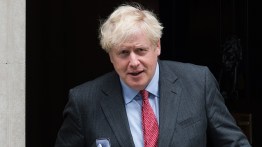
There’s a reason why No. 10 is always so inclined to ratchet up the tension in any given scenario. Downing Street’s staff, and particularly the Vote Leave alumni, believe that one of their strengths is that in high-pressure situations, they stay calm while others panic. This confidence is not totally misplaced. Last autumn, Boris Johnson and his aides kept their nerve better than any other group in British politics — the result was a decisive parliamentary majority. Last October, they suggested Brexit talks were over and no deal was inevitable. They then briefed out unprecedented levels of detail from a Boris Johnson-Angela Merkel phone call before eventually doing a deal.

My week with the baying Antifa mob

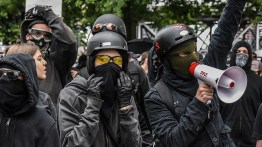
Portland, Oregon In the days when you could still watch a nature documentary without feeling as if you were sitting through a politics lecture I saw footage of a pack of smaller predators taking down an elephant. At the time I remember thinking: ‘Why don’t you keep running? Why don’t you knock the first one off and keep going?’ Strangely, I thought of that elephant again in the very different savannah of Portland, Oregon. In recent years this city in the Pacific Northwest has become famous for a variety of reasons — none of them good. As one long-term resident said to me last week: ‘This used to be a very civil town.’ Not any more.

Spare us David Hare

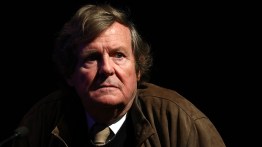
Having not watched television for nine months and already growing bored of the 1,000-piece jigsaw of General Alfredo Stroessner (part of the ‘Vigorous Leaders’ range from Waddingtons), my wife suggested — for a novelty — that maybe we should take in the new political thriller starring Hugh Laurie, called Roadkill. We have fond memories of Laurie from previous dramas and are both mildly interested in politics, so it seemed an agreeable idea. ‘What side is it on?’ I asked, with a note of warning. ‘BBC One,’ replied the missus, and we looked at each other glumly and I said: ‘Oh Christ. It’ll be a woke BAME-athon.

There are no good choices for Boris Johnson

Boris Johnson used to be defined by his commitment to having his cake and eating it. But now he isn’t having any cake, let alone getting a chance to enjoy it. He is in a hideously difficult position as he tries to balance the needs of public health and the economy. There are no good choices. He is damned if he does and damned if he doesn’t. Since the end of the first lockdown, the government’s policy has been to try to control the virus without shutting down the economy. This is becoming increasingly difficult.

Covid has killed off our civil liberties

It started with smoking. The 1960s and 1970s saw little popular objection to legislation restricting advertisements by private companies purveying a legal product. Little objection was raised thereafter when these same companies were banned from promoting their wares at all. Broadly shamed, even smokers have mutely accepted confiscatory taxes on cigarettes. As laws to protect the public from passive smoking have extended parts of the US to beaches, parks and even one’s own apartment balcony — locations where the danger to others is virtually nonexistent — few have cried overreach. It’s a truism: tobacco companies are evil (and so are smokers). The suppression of smoking is widely regarded as a public health triumph.

Get yourself to Sweden – while you still can

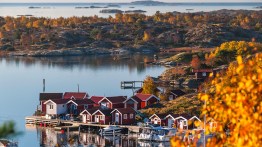
An idea gains ground that we shouldn’t go abroad any more: that the very act of travelling without urgent reason is somehow irresponsible. I don’t subscribe to this. To me, travel has always been such an important and productive part of life, a source of knowledge and happiness. So while I can travel, I will. But quarantine is making it harder. My partner and I belong to what one survey reports is the 18 per cent of quarantined people who actually do stay at home. Much as I love our Derbyshire home, 14 days quarantined in one corner of the Peak District is a serious deterrent from visiting most of the rest of the world. But not from visiting Sweden, yet.

What I got wrong about lockdown

The news that residents of Liverpool are not allowed to visit any other cities in the UK is a hammer blow not just for the Scousers themselves, but even more so for the rest of us, who will be forced for an indefinite period to abide without their famous cheeky wit. I am not sure how I will cope. Covid has impinged horribly on the lives of all of us, but this may be the most grievous development of all. Luckily we can still treat ourselves to the pleasures of hearing the Metro Mayor for the Liverpool City Region, Steve Rotheram, on the radio every five minutes or so demanding cash from the government.

Veeps shall inherit the earth

‘Who am I? Why am I here?’ That was how Vice Admiral James Stockdale began the 1992 televised vice-presidential debate. It’s now regarded as a famous gaffe, yet Stockdale’s questions reflect the way most viewers feel about ‘veep’ debates. Who are these people? Why am I watching? Four years ago, 37 million Americans tuned in to watch now Vice President Mike Pence argue with Senator Tim Kaine, Hillary Clinton’s running mate. Even the most ardent followers of American politics would struggle to remember a single phrase. Last night felt different. It’s hard to claim that Pence, the Vice President, vs Kamala Harris, the running mate of former vice president Joe Biden, should be the most consequential debate of 2020.

The transatlantic mask divide

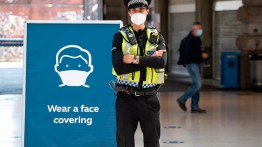
Should we wear our masks? The question has been on my mind as I have been battered that way and this by a variety of people with stronger feelings than mine on the matter. The week before last, while I was walking down Oxford Street, police outriders began to emerge. Like most of the public I stopped with interest and some excitement, wondering who the traffic might be halting for. Sadly it turned out to be neither the Queen nor Matt Hancock. Instead the traffic was being stopped for several thousand anti-lockdown protestors. Those of us who had hoped to catch a glimpse of, or even a wave from, the Health Secretary found ourselves instead being shouted at. ‘Take off your masks’ the marchers declaimed from the road’s centre at those of us on the pavement.

Bring back Westminster Abbey’s bells

It took me several weeks, after returning to the Spectator office, to work out what was missing. It wasn’t the people — though Westminster is a zombie town these days, and even Pret A Manger, once hectic as a trading floor, is calm. I like the calm. What’s missing, I realised as I walked past Westminster Abbey, is the bells. If you’re anywhere near the Abbey when the bells start up, it’s like being caught out in a monsoon. It’s overwhelming and joyful. You can’t speak. You can’t think. There’s nothing for it but to stop and gawp up like a guppy at feeding time. The bells have been silent since March, since the Church of England abandoned its churches, and it’s strange how claustrophobic it feels without them.