Columns

Am I alone in not wanting to download the Covid app?

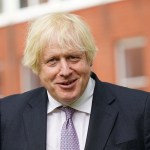
As I begin, I’m tortured by the doo-do-doo-do of The Twilight Zone’s theme music. I’ve hurtled back in time. Suddenly I’m a wise-ass, liberty-loving journalist who’s had it up to my eyeballs with intrusive, ineffectual top-down nanny-ism, and I’m pooping on yet another pitiful feint at ‘doing something’ by the lumbering big state. OK, check. This feels dead familiar. But I went to a poncier school, my hair is way weirder, and it seems that my name is Boris Johnson. Consider this, then, an act of either plagiarism or ventriloquism. If with a tad more alliteration (I’m keener on assonance myself), Boris of a few years back would have written this very column in The Spectator.


The case for travelling abroad

I’m off. In the week when you may read this, my partner and I will be winging our way to the European mainland, exploring, visiting friends, and immersing ourselves in new places, among new people who speak languages other than our own. Even as I write this, I can anticipate a sour response from some who read it. Over the past year I’ve learned that any mention of travelling abroad draws from certain quarters three types of disgruntlement. Three, in fact, of the Seven Deadly Sins. The first is Envy. ‘Oh, bully for you!’, ‘It’s all right for some’, etc. This I disregard.

The sorry state of the modern apology

I think I would like to apologise for this article in case someone who reads it takes offence. I will not mean the apology, of course — it will simply be an attempt to get me out of the mess occasioned by own words. It will not get me out of the mess, however, but make things worse, because an apology is an admission of guilt. This is Type One of the Modern Apology — meaningless and counter-productive, usually something enforced by employers or party bosses, people in charge. A desperate attempt to save one’s skin which always, always, does the reverse. It is usually accompanied by a painful explanation, along the lines of: ‘I deeply apologise for any offence I may have caused.

The true cost of the convenience economy

‘Where’s the car?’ said my wife Alice, interrupting my Zoom meeting on Saturday morning. ‘It’s where you left it,’ I said perhaps more pointedly than was kind. ‘When you drove it home last night. On the drive.’ ‘No it isn’t,’ she said. I left my Zoom meeting, shambled to the front of the house and looked out of the window. She was right. Half-full skip, yes. Wheelie bins, yes. The usual pizza boxes, empty vodka miniatures and crisp packets scattered outside our house by generous pedestrians? Present and correct. But no car. ‘It’s been stolen,’ I said gloomily and, of course, I was right.

Will England pull out of the World Cup?

I wonder if the moral guardians of our country — the England football team — intend to participate in the 2022 World Cup in Qatar? Most of the players are currently kicking their heels (and presumably missing) in such places as the Turks and Caicos Islands, so they have plenty of time for rumination. Having become, in the words of their manager, a ‘beacon of light’ within a country of savages and bigots, it will be interesting to see if their moral stance extends to boycotting a tournament which is to be held in a totalitarian slave state that outlaws homosexuality and isn’t entirely up to speed on the issue of women. Further — graft, corruption and greed were among the reasons why Qatar was chosen in the first place.

The 2020s will be boring, not roaring

Earlier this year, I noted the suggestion (made by an American academic and run with by a swathe of the British press) that we may be about to enter a party decade. The claim was that much as the Great War was followed by the Roaring Twenties, so the Covid era might be followed by a roaring 2020s. Advocates of the theory might point to the queues of young people waiting to get into the country’s nightclubs at one minute past midnight on Monday’s so-called ‘freedom day’. But I would suggest that there is more evidence accumulating in the opposite direction. Far from roaring, I would say it is more likely that we are entering the era of the Boring Twenties.

The tax-and-spend Tories

When you ask a government minister why something hasn’t happened, you get a one-word answer: ‘Covid’. It has become the catch-all excuse for manifesto promises not materialising. But in the case of social care, there is a particular truth to it. A meeting last week between the Prime Minister, the Chancellor and the Health Secretary nearly resulted in an agreed policy. A plan was expected this week. Then Sajid Javid tested positive for Covid, putting the three into isolation and the policy on hold. Johnson feels he needs a solution to social care, having promised to solve the issue when he became PM two years ago and again in the Tory manifesto.

Immigration is Joe Biden’s Achilles heel

Having indulged an unhealthy interest in human migration for decades, I’ve been intrigued by how the number of illegal immigrants that journalists cite as living in the US never changes. For years on end, I’ve read that the population of America’s ‘undocumented’ — a euphemism that seems to upbraid the receiving country’s bureaucrats for failing to issue its woefully overlooked residents the proper papers — is 11 million. With the artificial precision that often attends these unverifiable figures, which derive their authority from sheer repetition, some journalists will quote the number as 11.3 million.

What did the Romans ever do for us?

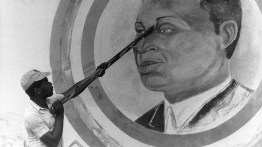
The mayor of London, Sadiq Khan, is planning to install a statue of John Chilembwe in Trafalgar Square. Mr Chilembwe was a Malawian Baptist famous for, among other things, leading an uprising where the head of a Scottish farmer was chopped off and put on a pole. He is much revered in his home country for all this and his face has appeared on banknotes. In truth, Mr Chilembwe didn’t incite the murder of many people, in the great scheme of things. If the mayor is searching for a murderer who did punch his weight, he could do worse than hoist up a statue of Francisco Macías Nguema, the former dictator of Equatorial Guinea.

Can Boris crack the unwhippables?

‘Nothing except a battle lost can be half so melancholy as a battle won,’ wrote the Duke of Wellington after the Battle of Waterloo. This sentiment, rather than any form of triumphalism, is what Tory whips should feel after winning the vote on the government’s decision to reduce spending on foreign aid from 0.7 per cent of GDP to 0.5. The vote is a sign of the battles to come in the rest of this parliament. The government put its authority on the line in the Commons debate. The Prime Minister opened it, the Chancellor closed it. The government also offered something of a concession, a pledge to return to 0.7 once the current budget was balanced.

The death of the dream my family fought for

Before plunging into a vexed question, it’s sometimes wise to point out that one is aware how vexed it is. I haven’t been living in a cave these past few years. Even as I speak, doctoral theses are doubtless being written on ‘identity politics’: whole books have been devoted to what has become very much the topic of the day, and (without always being precise about what we mean by the term) we in the world of politics and the political media sometimes seem to talk of little else. But during a recording for my BBC Radio 4 Great Lives programme this week, it came home to me what these ideas have displaced. Out have gone the beliefs and ideals that meant so much to me as a boy.

Why the mangling of language matters

I thought that this week I would share with you a bunch of words and phrases which are currently overused and I find thoroughly annoying. The idea came to me after hearing a woman with the IQ of a soap dispenser speaking on Radio 4 about the godawful programme Love Island. During the course of her peroration she continually referred to myself. Not to me, but to herself as ‘myself’. Such as: ‘I would say so far as myself is concerned…’ No, sugartits. The word is ‘I’m’. She is far from the only culprit: myselfitis is spreading rather more rapidly than the Delta variant. So too is its kind of antithesis. Twice recently I have been asked by phone-callers if ‘yourself’ is happy with the service being provided, etc.

The long list of problems waiting for the Tories after 19 July

The long-awaited easing of restrictions will not be the triumphant moment that many expected back in May. The Delta variant has seen to that. Increasing infection numbers have made the government nervous about the reopening. From 19 July, ministers will be busy trying to look responsible — consciously putting on their masks in crowded spaces — instead of being photographed gleefully enjoying the return of various freedoms. If case numbers are, as Boris Johnson has predicted they might be, at 50,000 a day and rising on 19 July — and even the double-vaccinated still have to isolate for ten days if they come into contact with an infected person (which will be the case until 16 August) — then that will put a dampener on any celebrations.

The bogus business of stigma-busting

Our society is bristling with social stigmas, we’re told, even in the progressive West, even in London. Life is so horribly stigmatised that celebrities are increasingly keen to raise awareness not of diseases or disabilities, but of the stigma that’s said to surround them. So: less campaigning for cancer research, more for breaking the stigma around talking about cancer. Less feeding the world, more brave standing up to the stigma attached to food poverty. Once you’re alert for stigma, it’s astonishing how much mention of it there is.

Oli London and the trickiness of being ‘trans-racial’

Not everyone will have heard of Oli London, a British social media influencer who made news for two reasons last week. The first was that London came out as plural. Which is to say that he came out as a non-binary person. Which is very 2020 and something so un-noteworthy that I’m sure you’ll agree it is hardly worth remarking upon. The other thing London did was more unusual. Which was that he came out as Korean. You might guess from his name that Oli London is not Korean, but he has spent some time there (in the South rather than the North apparently) and enjoys the language and culture. So in his coming-out message London revealed some rather extreme plastic surgery to his face and announced that he wished to be known as Korean.

The UK’s immigration figures are a fantasy

Journalists filing to deadline are apt to dig only so deep when googling for statistics, which in themselves are sometimes derided as worse than damned lies. Thus we’re often suckers for ‘known facts’. Besides, if the UK’s Office for National Statistics doesn’t produce reliable data, where’s a poor scribbler to turn? Nevertheless, the current uptake of Britain’s offer of settlement status to resident EU citizens exposes even this upright organisation’s immigration statistics as, well, worse than damned lies.

The political baggage of moving house

We are currently house-hunting — please let me know if you have one going spare. We are looking for a home in the north-east of England in any constituency which was once solidly Labour and is now in the talons of a brutally right-wing Conservative MP — this is my wife’s stipulation and I find it fair enough. However, we do not want to live too near the poor people. In truth we had been casually looking across a vast swath of Northumberland, Durham and North Yorkshire for a good half-dozen or more years, but until now there had been little urgency to the business. We marvelled at the property market up there: houses, grossly overpriced, would remain on sale for quite literally years.

My voyage back through the landmarks of my life

I was looking forward to my dinner at Daquise in South Kensington, a Polish restaurant that’s been there for ever yet feels curiously up-to-date; but that wasn’t until 7.30. I’d finished my afternoon’s work, I’d brought in the washing and written two thank-you cards, and it was still only five o’clock. I hate hanging around. By Tube to South Ken is only half an hour — so what to do? ‘Why not go the long way, on foot and by river?’ I thought. My flat is by the Thames in east London, so I could walk along the river to the Canary Wharf jetty and hope for a river bus to Chelsea.

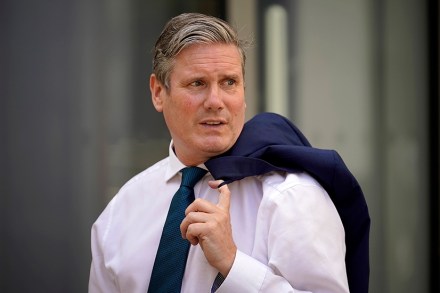
Keir Starmer’s days are numbered

I think Keir’s had it. This may not discomfort you terribly, I know. Still less the fact that Labour will rummage around in its idiot box and find someone even more un-electable to lead the party. Cheeky Nandos perhaps, or Angela No-Brayner. Someone mental for whom patriotism is an anathema and who finds it difficult to rise up for a moment off their knee, all the while banging together saucepans for the NHS, Cuba and transgender rights. Starmer’s days are numbered because of what just happened in Chesham and Amersham and what is about to happen in Batley and Spen. Sacking his closest ally and election edgelord supremo, Baroness Chapman of Darlington, and then giving her a job to be useless in somewhere else will not stave off the crisis.

The word ‘mother’ isn’t offensive. The Catholic church should say so

I’m used to waiting for the Catholic church to make sense. I’m a convert to Catholicism, and Catholic ideas sometimes take a while to become clear. I start from a position of suspicious distaste, but if I sit tight, I’ve found, the strangest things come right. It’s in this spirit of patient confusion that, since the beginning of the year, I’ve been waiting for the Catholic bishops of England and Wales to speak out in defence of the word ‘mother’, and to state the simple, unremarkable fact that only biological women give birth. Out of America, out of universities, from the HR department of every big business has come this push against ‘gendered language’.