Columns

How tech revolutions happen

Trends in New York City tend to foretell trends in London, whose fashions in turn set the pace for smaller British cities. After a summer in the Apple, I can therefore provide British urbanites with a glimpse of their future. I get around on what I newly perceive as a dumpy, sluggish pushbike. Mayor Bill de Blasio has invested extensively in the city’s cycling infrastructure — much to the resentment of motorists, and often for good reason. As London drivers will also attest, removing whole lanes from congested thoroughfares is rarely justified by the modest number of car trips that cyclists obviate. Still, given the soaring popularity of two-wheeled transport, when chugging against a headwind alongside the Hudson I ought to have plenty of company. Indeed, I do.


Blame it all on the middle-class drug users

We can suffer a lethal pandemic with lockdowns, petrol shortages and supermarket shelves almost entirely denuded of sausages. But when Facebook and its various ahellspawn offspring go down for seven hours, the country is sent into a tailspin of misery and confusion. On Monday, Facebook users could be seen out on the streets of our towns and cities accosting strangers and explaining to them exactly what they had for supper the night before, or showing photographs of themselves with a couple of friends enjoying a night out in a pub in Ruabon. All they wanted, these people, was a thumbs up from those strangers, or a warm hug or a kiss.

We should never have been in Afghanistan

Two important studies have been published this autumn on the apparent failure of our almost 20-year war in Afghanistan. In the Times Literary Supplement my friend Rory Stewart has been reviewing The Afghanistan Papers by Craig Whitlock; and last week I went along to the launch at the Frontline Club in Paddington of the BBC correspondent David Loyn’s The Long War, my copy of which has just arrived. Both look like brilliant accounts of what went wrong, both will surely prove useful guides to a lamentable episode in modern statecraft, but both — and Rory too in his own TLS assessment and recommendations — appear to me to be missing the point.

Boris’s hostage to fortune

Most prime ministers would be worried about supply chain shortages. But as became increasingly clear at the Tory party conference in Manchester, Boris Johnson has instead spotted a political opportunity. He denies there is a crisis and claims that the recent ‘stresses and strains’ amount to nothing more than the economy reawakening after lockdown. As for the worker shortages, he believes they are proof of a ‘robust economy’ which will result in people being paid more. This has been the Tories’ theme in Manchester: set up a dividing line between a government that wants workers to be paid more and those who want to ‘reach for the same old lever of uncontrolled immigration to keep wages low’.

How would making misogyny a hate crime have saved Sarah Everard?

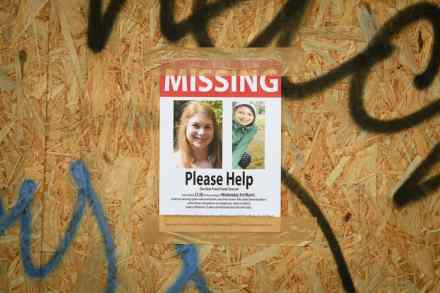
I’m not sure very many of our politicians, the London Mayor or even the Met can really be said to care about the death of Sabina Nessa, the poor young school-teacher murdered in London nearly a fortnight ago. If you claim to care about the victim of a terrible crime, if you’re going to grandstand and say ‘something must be done’, you have to care about what actually happened to her. The circumstances matter — else how can you try to prevent it happening again? ‘Say her name’, they all intone, before using that same name as a sort of springboard from which they can leap on to their own favourite hobby-horses and canter off, quite forgetting this very particular, very sad affair.

Labour has gone back to 1983

One day quite soon someone at a petrol pump is going to get a tyre iron wrapped around their head. It will almost certainly be the middle-aged male driver of a Land Rover Discovery — a flatulent showboating car driven almost exclusively by smug pigs — while he is busy filling up his 16 jerry cans with unleaded. It will take place in a city — there’s still quite a bit of petrol left in our towns, because townsfolk are not sociopaths — and the assailant will be a Ukip-voting working-class man in his early thirties called ‘Matt’. With any luck, the jury will acquit.

The tactics of victimhood

Late last week the Labour deputy leader was the subject of a glowing profile in the Times. The piece described Angela Rayner’s alleged physical similarity to Nicole Kidman, spoke indulgently of her ‘outspokenness’ and otherwise confirmed my suspicion that most of the people who go into politics should never be allowed near the stuff. Rayner described herself as having ‘thrived’ off the ‘chaos’ of recent years. Apparently ‘the trauma, the screaming, the unpredictability — this is my bread and butter’. She continued: ‘In fact, I think it’s strange when people are nice. I find taking compliments more difficult than taking abuse, to be honest. I’ve never had that love and affection, so I don’t crave it.

The Covid pantomime at my father’s memorial

This last weekend I attended the memorial service for my father, who died in July. This isn’t a bid for sympathy. Everyone’s father dies; most of us expect to suffer our bereavements in private; you didn’t know him. But in a larger sense, this is a bid for sympathy. That is, sympathy for us all. Beforehand, Riverside Church — a grand, storied edifice on Manhattan’s Upper West Side — had sent out an email circular to prospective attendees. Perhaps recipients might have anticipated a ministerial reaching out: ‘We treasured Dr Shriver’s membership of our congregation, and Riverside’s clerics wish to convey our sorrow at your loss. We regard his passing as our loss, too.

The life of an ambassador’s wife

‘One day,’ she writes, ‘we had the Minister for Northern Ireland for the night. He arrived wearing a kilt, which must have made the evening memorable for our German guests.’ Writing here (I should explain) is the widow of Sir Julian Bullard, then ambassador in Bonn, the West German capital. ‘Harry [the butler] beckoned to me and whispered “Come and see his bed”… so I followed Harry upstairs. The bed was neatly turned down. Tucked in, with only their heads showing, was a line of stuffed animals.’ The pair are surprised by the minister himself, nipping back to fetch papers. ‘He introduced each animal to me in turn. “Never travel without them. Couldn’t sleep if I did.

The war against intelligence

Two weeks have passed and somehow James Conway is still in a job. He is the director of the English Touring Opera, despite having fired 14 of its musicians because they were born with the wrong colour of skin. These middle- to late-career musicians were presented with a letter from James informing them that henceforth the ETO was no place for goddam honkys. Well, OK, it didn’t quite say that — it thanked them for their excellent work and told them they were out on their ears because Conway wanted to make the orchestra more ethnically diverse. The ETO claimed they had carried out this cracker pogrom at the behest of the Arts Council — which wouldn’t have surprised me terribly.

Will this be Keir Starmer’s Kinnock moment?

Next week, when Keir Starmer appears on stage at Labour conference in Brighton, it will be the first time he has spoken to a packed crowd of party members since he became leader. Covid restrictions meant his inaugural leader’s speech at party conference in September 2020 was delivered to an empty hall and shared via a video link. It was a blessing in disguise. Starmer had an excuse for failing to make much of an impression. He was also able to deliver criticism of the Jeremy Corbyn era without fear of boos from the delegates. His audience will be less forgiving now. Over the past year, his position as Labour leader has weakened.

In defence of Jess Brammar

I noticed with interest that Gigalum island — off the Kintyre peninsula in Argyll — was up for sale for half a million quid or so. Nineteen rather barren acres, slightly warmed by the Gulf Stream. These little parcels of desolation quite often become available for purchase and I do wonder if Gigalum should be purchased by the state for the dumping of toxic waste. Gruinard island, further north, was used by the government during the second world war as a site for testing militarised anthrax, for example. My proposal for Gigalum is that it should be a repository for everyone in the country with the word ‘diversity’ anywhere in their job title.

The Tories need a new purpose

One of the things that distinguishes Boris Johnson from the last three Tory prime ministers is that he has a comfortable majority. This gives him a lot of flexibility. Unlike David Cameron, Theresa May or John Major, Johnson can handle a parliamentary rebellion of quite some size. Indeed, the 25 Tory MPs who in July voted against the cut to foreign aid would have wiped out any Conservative majority since the 1992 election. Until recently, Johnson hadn’t used his 80-seat majority much. He did take on large Tory rebellions over Covid powers, but the significance of these revolts was reduced by the fact Labour either abstained or backed the government on virus measures. ‘In the past it has appeared we don’t know how to use our majority,’ says one secretary of state.

Where has the truth gone?

There were two remarkable things about Emma Raducanu’s wonderful win at the US open last week. The first was the win itself. The second was the reaction to it. For the fact that Raducanu happens to be of Romanian-Chinese descent and was born in Canada meant that her triumph was immediately spun through the same political cycle as everything else. Mayor of London Sadiq Khan proclaimed that the star’s story is ‘London’s story’ and showed the virtue of ‘diversity’. Other politicians and hacks joined him.

Is it cruel to crush your child’s dreams?

I think it’s for the best if we ban all children’s books containing the word ‘dream’. Dream big, little dreamer, dare to dream… that sort of thing. And especially an unbelievably popular series of books for primary school children, name of Little People, Big Dreams. There are hundreds of titles in this series and nearly four million copies sold worldwide. It’s a rare school that doesn’t stock them. Bin them all, I say. Perhaps it sounds cruel to actively want to crush a child’s dreams, but it’s for their own good. The books sound cosy, aspirational, unobjectionable, but in fact, deep in children’s young and spongy minds, they’re sowing the poisonous seeds of false ideas that might later do them real harm.

Is it time to defund the world’s policeman?

It gets lost in the many creative purposes successive American administrations invented to justify remaining in Afghanistan, but the primary goal of the original aerial assault in 2001 was clear and primitive: revenge. Not always a dish best served cold. That military operation was an attempt to satisfy public thirst for payback, and also for agency. 9/11 made the country feel powerless. Given today’s glorification of victimhood, it’s worth remembering that when Americans were granted victimhood en masse, they didn’t care for it. If in the eating revenge is often thin gruel, so also is the experience of being proved right. I opposed the extended occupations of both Afghanistan and Iraq.

Champagne, sex or the Tories: what could you live without?

In idle chatter the other evening, somebody pooh-poohed champagne. He was a brave soul because in certain circles — and this was among them — one is presumed to think the presence of champagne a mark of opulence, extravagance, a special occasion, a treat. In even more exalted circles, of course, a display is made of not thinking it a treat but a staple, and babbling in a familiar manner about ‘Bolly’ as though one had proceeded straight from the breast to the bubbly without passing through lemonade on the way. ‘To be honest,’ said my friend, ‘if Fate were to touch my shoulder and whisper that I would never drink champagne again, would I be bothered? It’s perfectly -pleasant of course, but not something I’d miss much.

The political power of Roy ‘Chubby’ Brown

There is a rather sweet moment in the middle of each Roy ‘Chubby’ Brown show where, after some magnificently obscene one-liner, he addresses the howling audience. ‘I love you people,’ he says. ‘Just like me, you’re rough.’ The audience laughs and applauds at this observation of itself. The wall is broken and the performer and audience are as one. This is ‘rough’ used primarily in its north-east of England context, meaning not so much violent or abrasive (although both are also possible), but cheap and low-down and a little bit ugly. Roy’s now 76 and has been knocking them dead for 40 years, packed houses wherever he goes. But you won’t see him on television.

Boris’s premiership is entering a dangerous new phase

The announcement of a tax increase for both workers and employers to fund more spending on health and social care is Boris Johnson’s biggest gamble since he won the 2019 general election. He is betting that, under the cover of Covid, he can get away with breaking his manifesto commitment not to raise personal taxes. Voters can be unforgiving of politicians who break their promises. Johnson is aware of this danger. Earlier in the crisis, when the Treasury pushed to drop the pensions triple lock — which ensures that the state pension goes up by inflation, earnings or 2.5 per cent, whichever is highest — because the Covid crisis was making it unaffordable, Johnson resisted on the grounds it was a manifesto commitment.

What’s the harm in opening the church doors?

The end of summer 2021, the end of the great British staycation. I sat on the grass outside the post office on Holy Island, Northumberland and watched as the tourists milled about. After a visit to the Priory, and the Pilgrims Fudge Kitchen, a fair few of them would wander up to the Catholic church, St Aidan’s. Even if you’re not the sort to ever go to church, you might pop in for a quick look on Holy Island, aka Lindisfarne. This is where the gospels were translated, and where St Aidan, in 635, founded the monastery from which he converted the pagan north. Aidan came here from Iona, at the request of nice King Oswald, and went about on foot evangelising. Not horseback, says Bede, he didn’t want to set himself above the locals. On Holy Island the tourists are polite.