Columns

The fatal flaw in ‘see something, say something’

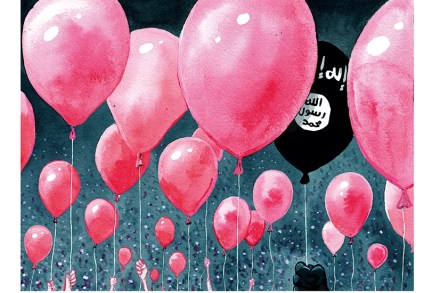
The official review into the Manchester Arena bombing was published this week. Four years after 22 mainly young people were killed at a pop concert, the review by Sir John Saunders reveals a catalogue of failings, as such reviews always do. Yet one failing stood out in particular. On the night in question the bomber, Salman Abedi, had been standing around the exits to the stadium for over an hour and a quarter. You would have thought that in that time, the sweaty young man with a rucksack might have attracted some attention. And you would be right. A number of people, including security guards hired to protect the venue, expressed alarm about the man struggling to walk because of the weight of his rucksack, which was packed with a 32kg bomb.
Life is about to get harder for Boris Johnson

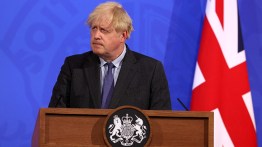
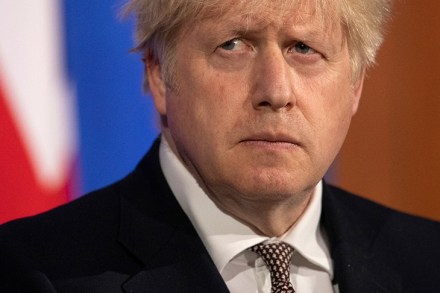
Covid restrictions are meant to end on 19 July. But parliament will not return to normal until September. The Commons goes into recess on 22 July and there’s no desire in government to end proxy voting for the dregs of the session. The chief whip has told colleagues that he might struggle to get MPs to come to Westminster for just the last three days of term. The Commons chamber has been a strange place during the pandemic: less bear pit, more petting zoo. Since so few MPs have been allowed in, it has been far harder for them to persuade their colleagues by force of argument or to put a minister under sustained pressure. This has neutered the chamber as a force. The Covid restrictions have distorted things in other ways too.

A breath of fresh airwaves

A couple of decades back the Radio Society asked me to moderate a debate for its summer festival. ‘Between who?’ I asked them and was delighted when they replied: ‘It’s entirely up to you.’ I chose the charismatic hook-handed Muslim cleric Sheikh Abu Hamza al-Masri and the then leader of the British National party, Nick Griffin. They were quite big news at the time — but were not really allowed on the airwaves, still less television. Hamza wasn’t allowed on because ‘mainstream’ Muslim organisations objected and we always did what we were told by them. Griffin wasn’t allowed on because he was a ‘fascist’.

Air travel is in terminal danger

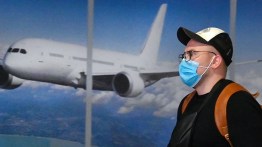
During the political car crash of 2019, I couldn’t imagine ever agreeing with Theresa May. Yet last week she exhibited both principle and pragmatism — qualities sorely lacking in her capitulation to the conniving EU paradigm whereby Northern Ireland made Brexit supposedly insoluble. The legacy of that surrender, Ulster’s disastrously unworkable trade protocol, will wait for another day. I come to praise May, not to bury her. The previous prime minister stressed to the Commons that ‘chaotic’ and ‘incomprehensible’ international travel restrictions, more oppressive this summer than last, send the message that Britain is ‘shut for business’.

The difference between looking and seeing

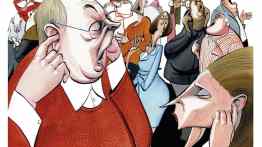
By the side of the road from Sudbury in Derbyshire to Ashbourne, there is a lone eucalyptus tree. This is rolling country, small fields bordered by oak, ash and hawthorn. A eucalypt in this unlikely place stands out, its grey-green foliage so different from the more vivid greens of rural England, its pale trunk slimmer, its trailing swishes of narrow leaves more elegant, its thin branches more graceful than those of its stout and stubby British counterparts. You notice. You wouldn’t if you were in Australia.

The biggest danger to Boris comes from the enemies within

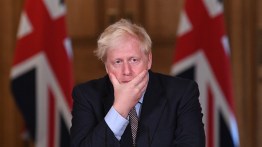
Boris Johnson’s predecessor was destroyed by her inability to meet deadlines. Theresa May extended the Brexit transition period so many times that her party eventually turned against her. Johnson, who was notorious for pushing deadlines when he was a journalist, is now discovering the political problem with missing dates. The Prime Minister may still be flying high in the polls but if he cannot meet the new date for ending restrictions — 19 July — then his own MPs will lose faith in his ability to restore normality. The whole point of the government’s staggeringly long lockdown timetable, announced back in February, was to set an achievable deadline.

Why this G7 summit matters more than most

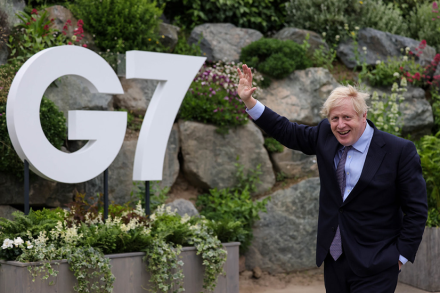
It’s risky planning a trip to the British seaside at any time of year. But if the weather forecast is to be believed, Boris Johnson will get away with this gamble at the weekend’s meeting of the G7 at Carbis Bay in Cornwall. Brexit’s critics were always going to seize on any evidence that Britain was being sidelined by the rest of the world after we left the EU. So it is fortunate for the government that the UK is the host of this year’s summit because it has placed this country at the centre of things. This G7 is unusually consequential. It is the first time that these leaders have met in person for well over a year. This will give the meeting momentum; it would be hard to think of a worse format for diplomacy than group video calls.

The polarising power of plague

Now that the government has kindly allowed us to go out again, I wonder if anyone has discovered the same social challenge I have encountered? Which is that almost nobody agrees on anything. I should pre-empt a possible line of attack here and acknowledge that I am aware of the case study I am basing this on. Still I fancy the problem is wider than myself. Of course we never did agree on everything. But, after a year of seclusion, it seems that as we de-bubble, the divergences are far greater than before. Not least regarding what we have just been through. It forks off at the very beginning. For instance there are people — few in number, and perhaps not in your own circle of acquaintance — who basically disbelieve the whole Covid thing.

The forgotten joy of spontaneity

If you ask people what they’ve missed out on since the pandemic, they’ll probably lament their cancelled plans. Weddings postponed, birthday parties axed and family reunions moved to Zoom. Me, I’ve missed the unplanned. The spontaneity that knocks your routine, muddles your diary and lands you tipsy in the pub on a Monday night when you were supposed to be at the gym. For more than a year, our lives have been ruled by the principle of ‘safety first’. Accidents — even the fun ones — have been avoided at all costs. It has been illegal to act on a whim or at least, in the better times, very strictly regulated.

My advice to Gareth Southgate

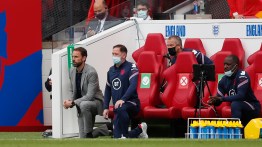
This is a difficult issue to raise on the eve of a major football tournament, but as a progressive individual I am deeply disturbed by the England manager Gareth Southgate’s reverence for Sir Winston Churchill. Twice in the past this man who holds English football’s most important position has cited his apparent hero. Once, commenting on his predecessor Sven-Goran Eriksson’s performance at halftime in the 2002 World Cup quarter final against Brazil, he said: ‘We needed Churchill. We got Iain Duncan Smith.’ And then a few years later when asked if the England team should have a foreign manager, he said: ‘With England I want an Englishman who’s going to say: “Remember Churchill.

Independence would be karmic vengeance for Sturgeon

I have a mean streak. Perhaps my cruellest urge is to give people what they claim to want. When political parvenues disparage capitalism and the unfairness of meritocracy while talking up an ‘equitable’ socialist utopia, I want to stick them personally in a society where work pays the same as sloth, the well-off flee and the left behind expect everything to be free — just so long as the rest of us don’t have to submit to this inert destitution, too. When eco fanatics demand zero carbon emissions by 2025, I yearn for their own Amazon orders to arrive months later by donkey cart. I’d grant their wish: dead phone batteries on windless days and nights that are cold and dark.

Big Tech is turning into Big Brother

The Big Tech social media giants are having to rethink their policy of censoring anybody who suggests that Covid originated from a lab near Wuhan, rather than through some local chowing down on sweet and sour pangolin testicles. This is because it now seems quite possible, if not probable, that the virus was kindly bestowed upon us by Chinese scientists. I don’t know either way, but I would suggest that a suspicion that the virus was man-made, given the proximity of the Wuhan Institute of Virology, scarcely qualifies as a lunatic conspiracy theory to be banned from public utterance. But that’s what the Big Tech companies decided — almost certainly for political reasons.

Boris Johnson has defied the pro-lockdown groupthink

Should the name of Dominic Cummings ever make it into the Oxford Dictionary of National Biography, there’s one Cummings phrase our successors are sure to see. ‘Weirdos and misfits’ were what he valued. He said so in his blog, describing his preferred applicants for a job with his team at No. 10. I like the phrase. Such misfits can so often light the pathway where more timid minds and characters lose their nerve or their way. Cummings has always valued disruptors; always railed against Orwell’s ‘groupthink’; always rated the kind of people who question the conventional wisdom, the nostrums of the hour. And good for him. He’s one of them, and we need such people.

China is not as strong as it appears

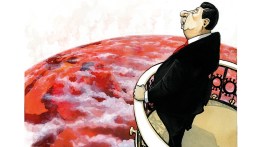
The theory that the pandemic began with a leak from a research laboratory in Wuhan is rapidly gaining currency. Since Matt Ridley’s cover piece for The Spectator last week, Joe Biden has ordered US intelligence agencies to ‘re-double their efforts’ and report to him within 90 days on the origins of Covid. The US administration has made it clear that the various intelligence agencies are split on whether they believe the virus is natural or man-made. It is doubtful whether the US agencies will be able to come to a conclusion with any great confidence. Definitive evidence is unlikely to emerge.

The cold reality facing Sajid Javid

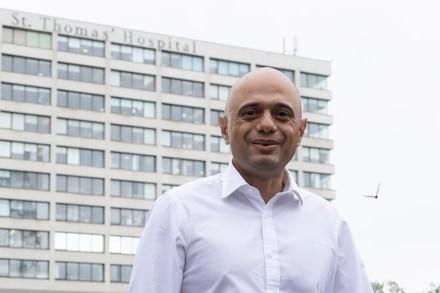
The most difficult time for a new secretary of state is normally the first three months in the job. An early mistake can sink confidence among both the public and Whitehall officials. But for Sajid Javid, his first three months as health secretary will be his easiest. The real challenge will come later. The easing of restrictions on 19 July will almost certainly go ahead, which means Javid will be able to point to an early success. I understand that the current plan, which the government will set out next week (though the formal decision on whether to proceed will only be taken a week beforehand), is for a comprehensive reopening. The one-metre rule will be ditched, masks will no longer be compulsory and venues will be allowed to operate at full capacity again.

My plan for Belarus

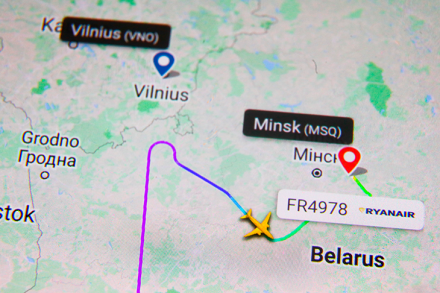
A terrible thing, to be torn. Last Sunday was International Day to End Obstetric Fistula, a very painful condition affecting the nether regions of women who have just given birth. I very much wished to observe the occasion in some way, but Sunday was also World Turtle Day, which naturally commended itself to me as well. Having thought about it, my hope was that those suffering from obstetric fistulae and the turtles might put aside whatever differences they may have and waddle together in a show of unity and I could commend them both at the same time. Better still, however, would have been if last Sunday had been designated International Day to Bomb Minsk. I sometimes feel that the people who choose what stuff to campaign about tend to miss the bigger picture.

Apple’s cowardly surrender to the mob

A few weeks ago, more than 2,000 employees of Apple Inc. signed a petition that led to the sacking of a clever and capable tech engineer, Antonio García Martínez. García Martínez was fired for sexism — not because he behaved badly towards any women, but because of a passage in a book he wrote five years ago. The book was Chaos Monkeys, an exposé of the Silicon Valley scene, and here’s the offending sentence: ‘Most women in the Bay Area are soft and weak, cosseted and naive despite their claims of worldliness, and generally full of shit… but the reality is, come the epidemic plague or a foreign invasion, they’d become precisely the sort of useless baggage you’d trade for a box of shotgun shells or a jerry can of diesel.

When exactly did harpsichords become racist?

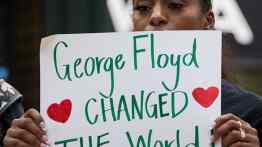
It’s a dangerous thing when you import the worst aspects of another culture. And an even worse thing when you import the worst interpretation of that worst aspect of another culture. This week marked a year since the death of George Floyd at the hands of a policeman in Minnesota. Since that time, Derek Chauvin, the policeman who killed Mr Floyd, has been tried, convicted of causing his death and is currently awaiting sentence. Around the world, the actions of this one awful policeman have been extrapolated out beyond endurance. It has been claimed that they revealed the truth about race relations in America. They have been used to claim that race relations around the world are the same as they are in America.

How much damage to the government has Dom’s bomb done?

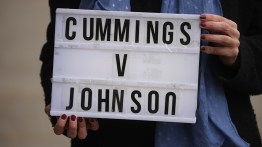
The more anticipated a parliamentary appearance, the less it tends to live up to its billing. But Dominic Cummings’s testimony before MPs on Wednesday was one of the more remarkable parliamentary moments of this century. His attacks on his former boss were jaw--dropping. He said that it wouldn’t have helped if Boris Johnson had chaired Cobra meetings at the start of the crisis since the Prime Minister didn’t take Covid seriously and that it was ‘completely crazy’ that the country had to choose between Johnson and Jeremy Corbyn at the last election (this remark was particularly astonishing given Cummings’s influence on the Conservative campaign). But his criticisms of the entire way that the British state works were just as significant.

The government debate over June 21

The roadmap out of lockdown is the signature document of Boris Johnson’s new team in No. 10. It’s intended to be cautious, detailed and based on a new mantra of under-promising and over-delivering. It’s meant to strike a contrast with the chaos that came in the early stage of the pandemic by projecting an image of competence and calm. So far, so good. Each stage — including Monday’s easing — has proceeded as planned. The vaccine rollout has been the fastest in Europe (although the Prime Minister still complains, in private, that it could have gone faster) and is now credited by ministers as a large part of the reason the party made so many gains in the local elections.