Columns

The strange theatre of mask-wearing

However surreal and dystopian the pandemic landscape seemed at first, no enduring vista feels ‘surreal’ and ‘dystopian’ indefinitely. Citizenries uniformly obliterating their faces with ear-to-ear muzzles has come to seem par for the course. But I’m still amazed by how eagerly a certain segment has embraced masking in public, especially in the US. More perplexingly still, many of these people regard any release from mask mandates as an attempt to take something precious away from them. They recall a certain kind of belligerent animal that gets trapped in a cage, and when you open the door it glooms in a corner and refuses to leave.

The two halves of Ireland can’t be forced together

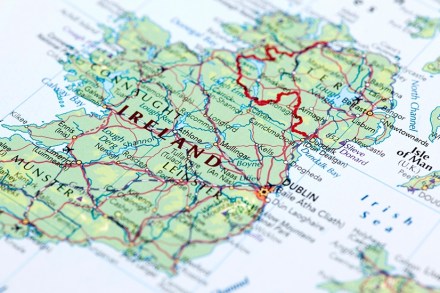
Last week, Edwin Poots was elected leader of the DUP. You will have read all about him. I have. You may not previously have known much about him. I didn’t. We should hesitate, I think, to respond to his elevation with a broad-brush sneering dismissal, or in personal terms. We know, of course, about Mr Poots’s creationist beliefs and most of us reject them, and I don’t like his views on homosexuality or abortion; but Poots has proved able to work pragmatically with republican fellow politicians. In an important way, though, this isn’t about Poots, but what he represents: a unionist shift towards back-to-basics fundamentalism.

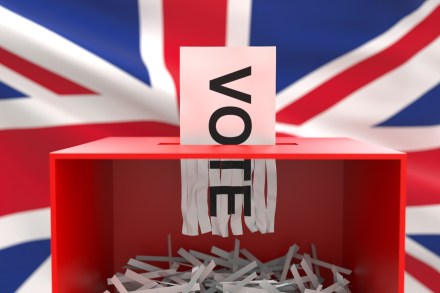
Why I spoilt my ballot paper

The headline ‘Government to allow people to hug’ one might have expected to hear on early evening news bulletins in January 1661, shortly after Oliver Cromwell was posthumously executed and puritanism began its slow and welcome withdrawal from England. It sounds a little odd in 2021. Below the headline came the inevitable caveats from the medical clerisy. While hugging you should turn your face aside so as to minimise the risk of infecting the person you are embracing. I think people are also enjoined to keep their hands well above the waist — during amorous encounters with people in your ‘bubble’ you are allowed only to ‘get your tops’, as we schoolboys used to put it. No kissing, and certainly not with tongues.

The Proustian power of handwriting

Towards the end of April, my mum sent me a letter. She doesn’t write as a rule — we speak on the phone — but this time she sent something. It’s hard to explain the effect her handwriting had on me after so many months of being apart. It was as if she was there, in envelope form, on the doormat. And because her handwriting’s been so familiar for so long, it wasn’t simply my mum as she is now, but Mum through three decades. I stood there in the gloom of the hall, vertiginous with memory, and I realised how unlikely it is that any future generation will have this same experience. I’m Generation X, the last of the analogue gang, brought up on handwriting. Our things weren’t encoded, they were imprinted: records and tapes.

The wrath of Nicola Sturgeon

I can’t seem to find the Oracle of Delphi’s complete works. The libraries remain shut and when I go to Google I find the search engine inadequate in the matter of the ‘Complete Pythia’. So I throw the following story out there unsourced in the sure and certain knowledge that next week’s letters page looks set to be a bloodbath for me. Spectator readers are among the most learned readers around, and I know my fate if I relay any of this inaccurately. Nevertheless, here we go. Several years ago an utterance I’m pretty sure came from the Delphic Oracle lodged in my head. A foreign king (I hear you tapping ‘Dear Sir’ as I type) wanted to know whether he should go across the river and invade a neighbouring kingdom.

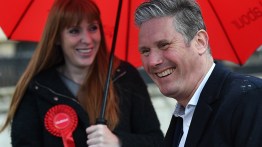
Keir Starmer isn’t Labour’s biggest problem

Keir Starmer has turned a drama into a crisis. The local elections were always going to be difficult for Labour. The government is enjoying the political dividend of the vaccine rollout, and approval for its handling of the Covid crisis is now back to where it was a month into the first national lockdown. Much of the world is still struggling, but Britain has the lowest Covid levels in Europe and Boris Johnson’s approval rating is far higher as a result. He triumphed, and Labour struggled. But Starmer made this so much worse by his actions before and after polling day. The first error was to hold the Hartlepool by-election on the same day as the local elections.

The problem with Britain’s mental health

Experts tell us that we are facing a mental health ‘time bomb’ in the UK, partly as a consequence of Covid restrictions and partly because we have a Conservative government which has as its apparent main priority a malevolent desire to see people go insane and, hopefully, kill themselves. I am paraphrasing the experts here, all of whom hate the Tories and want more money spent on their area of expertise, i.e. mental health.

The true cost of make-believe money

I like Bill Maher. He’s a rare practising left-wing comic who’s actually funny. But last week, his routine on cryptocurrency hit eerie harmonics. ‘I fully understand that our financial system isn’t perfect, but at least it’s real,’ he began. By contrast, crypto is ‘just Easter bunny cartoon cash. I’ve read articles about it. I’ve had it explained to me. I still don’t get it, and neither do you’. Bitcoin is ‘made up out of thin air’ and is comparable with ‘Monopoly money’. As for conventional legal tender: ‘We knew money had to originate from and be generated by something real, somewhere.

Who regulates the regulators?

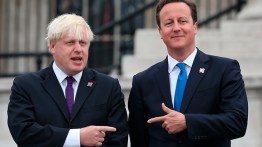
This isn’t about David Cameron and Greensillgate; it isn’t about Boris Johnson and wallpapergate or Jennifer-Arcurigate. It isn’t about Westferrygate and the illegal planning approval (later reversed) given to a big Tory donor by the responsible minister (Robert Jenrick) for that grotesque development. Nor about Mr Jenrick’s department’s awards under the Towns Fund, which the public accounts select committee found had ‘every appearance of being politically motivated’. Nor is it about (Lord) Edward Lister and the late Sir Jeremy Heywood and twohatsgate, nor about Len McCluskey, Joe Anderson, Paul Flanagan and Flanagangate in Liverpool. Some of these men (the last two) have been the subject of police inquiries and one is on bail.

What’s next for the Union?

The Union faces two simultaneous challenges in Northern Ireland and Scotland that both look set to worsen in the coming years. In Northern Ireland, the immediate problem is that Brexit has disturbed the fragile balance there. (A more persistent problem is the fact that after the Good Friday agreement, the Democratic Unionist party and Sinn Fein replaced the more moderate Ulster Unionists and the Social Democratic and Labour party as the main Unionist and Nationalist parties.) The debate over where various borders should go has turned into a question of identity. Unionists argue that the UK government’s agreement to create half a border in the Irish Sea threatens Northern Ireland’s place in the United Kingdom.

Dilyn the dog’s Downing Street diary (as told to Rod Liddle)

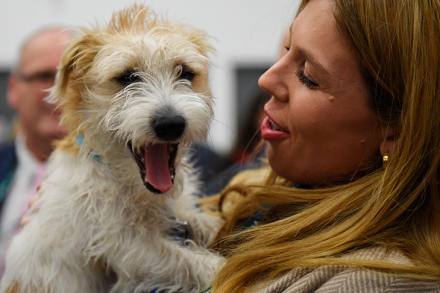
I heard them rowing again this morning, look you. I had just completed my first dump of the day in Allegra Stratton’s handbag when I heard their voices spiralling upwards, the Man and the Woman. They’re not in a good place right now, which is fine by me. A plague on both their houses. Mimsy, woke Carrie, who purchased me under the mistaken impression I was a Peke who would lie gently across her bloody lap all day. And that shambling albino wreck, kind of half-dog half-man, who apparently runs the country, when his wife lets him. Money seemed to be at the heart of their disagreement — it often is.

The curious rise of cottagecore

Cottagecore, not to be confused with cottaging, is an aspirational lifestyle trend. The word is relatively new —although you’ll find it used all over TikTok — but the idea isn’t. If you have ever dreamt of leaving behind the urban sprawl for something more bucolic, or donned a cheesecloth dress and flower crown in the hope that it will make you seem a little folksy, you’ll understand the aesthetic. Cottagecore is the eternal search for a pastoral idyll, updated for the Instagram generation. It is hardly surprising that such a romantic movement has been revived during a time of pestilence and isolation. Throughout the pandemic, many of us have felt as though we aren’t exactly living our #bestlife.

Carrie Symonds and the First Girlfriend problem

One of the least attractive aspects of American politics is epitomised in the ‘Office of the First Lady’. The office in the East Wing of the White House has grown under consecutive presidents and, depending on the incumbent’s ambitions, can include policy and legislative initiatives. All emanate from a person solely in place because some years earlier they were lucky enough — or otherwise — to marry a person who became president. It all makes America less like a democracy, more like a court, with the inevitable overspill of ‘First Children’ and more. By convention this country has been spared that problem.

Putin’s on manoeuvres – are we ready?

‘What follows plague?’ I asked a medieval historian at the start of the pandemic. ‘War,’ he replied. In recent days, this remark has seemed worryingly prescient: 120,000 Russian troops are massing on the border with Ukraine, China is aggressively increasing military activity across the Taiwan Strait and Iran has responded to Israel’s successful sabotage of its nuclear facility by declaring it will enrich uranium to close to the level required for a nuclear bomb. The West — and specifically the new US President — is being tested. Those who want an end to the western-led rules-based system are pushing to see what they can get away with.

How to get a police record (without committing a crime)

I couldn’t quite believe it when first I read the newspaper subscriber’s letter. Columnists for the Times and Spectator do still get real letters, and this one from (shall we say?) Mr Jones had enclosed the copy of a letter he had written to a lady whom we shall call Mrs Smith. Mr Jones had read about the public protest she was leading last year against an Emmerdale episode in which a couple, after much agonising, choose to abort their Down’s syndrome baby. Mrs Smith has a Down’s syndrome child, whom she adores. Mr Jones’s letter to her defended the broadcaster’s right to show parents who make a different choice. He believed the reasoning of such parents should at least be heard.

The case against reparations for slavery

Last week, a bill cleared the US House Judiciary Committee that would establish a 13-person commission to consider federal reparations for slavery. Although similar legislation has been introduced in every Congress since 1989, this is the closest such a bill has ever advanced towards a full vote in the House. The President’s support for this pet far-left project is unsurprising. A reparations commission featured in Joe Biden’s campaign platform. Advocating the establishment of this commission is a hop, skip and a jump from advocating reparations, full stop. The UK’s proliferating parliamentary inquiries often function to kick sensitive subjects into the long grass. But an American panel convened to address such a hot topic would create expectations.

Our mental health is going up in smoke

As we creep back into the open, as the Covid wards empty and the mental health clinics fill up, how are we going to tell what’s driven people crazy: lockdown, or what seems to have been a favourite lockdown hobby — smoking weed? Last week Sadiq Khan, London’s goblin mayor, announced that if re-elected he’ll set up a commission to look into the case for decriminalising cannabis. It’s not in Khan’s gift to decriminalise anything — Downing Street has already issued a response which amounted to: ‘Decriminalise dope? You must be high.’ But Khan doesn’t care. This isn’t about the policy, it’s about the posturing.

What the demise of Quilliam teaches us about Britain and Islam

There was much rejoicing among Britain’s Islamists last week when the thinktank and campaigning organisation Quilliam announced that it was closing. The Islamists were pleased because for the 14 years since its founding Quilliam has been the most prominent Muslim-run organisation arguing for a progressive, non-Islamist Islam. The exact reasons why Quilliam has shut down are not clear. The co-founder, Maajid Nawaz, has blamed the difficulties of sustaining a non-profit in the era of Covid. Perhaps it is that, or perhaps it is something else. The group never had an easy ride. But the fact that it didn’t, and that so many prominent British Muslims are celebrating its demise, points to a problem worth noting. I was there in 2007 when Quilliam started.

Joe Biden’s party is over

Washington, DC The Democratic party is dying. That may be hard to believe since Democrats control both houses of Congress and won the last presidential election with a record 81 million votes. But the exiguous margins of their hold on the House and Senate, with fewer than 51 per cent of the seats in either chamber, tell another story, as does the desperation of their struggle to abolish the filibuster and federalise election law. Those policy aims are of a piece with dreams of ‘packing’ the Supreme Court with left-liberal justices — and packing the Senate too, by turning tiny Democratic bastions into new states. The left wing of the party even assails the constitutional principle behind the Senate itself, the idea of equal representation of the states.

How I’ll remember Shirley Williams

Shortly after the news of Prince Philip’s death was announced by Buckingham Palace, a woman called Karen Geier tweeted the following: ‘Deeply saddened to hear it was peaceful. He deserved so much more (pain).’ Ms Geier is a writer who has been published by, among others, the Guardian and the Huffington Post. That’s the kinder, gentler left for you. Meanwhile, the BBC received 100,000 complaints (a record) for its relentless coverage, the entire schedule having been ripped up on 9 April so that a succession of people could explain to us how nice the Prince was. I suspect it wasn’t only carping lefties phoning in to moan — I grew a little tired of it all by lunchtime.