Columns

The Nobel truth

I suspect that there are no people in the world quite so right-on as the Nobel prize committee members. A bunch of affirmative-action hand-wringing Scandies, desperate to prove that they are woker than thou. This mindset brought the Nobel peace prize to Barack Obama before he had actually done anything, if you remember. He later brought peace to nowhere. The scarcely less risible award of the literature prize to Bob Dylan followed shortly after, presumably for lines such as: ‘Twas in another lifetime, one of toil and blood / When blackness was a virtue and the road was full of mud.’ Bob’s award reminded me of the BBC turning paroxysms in an effort to be ‘hip’ when Lou Reed shuffled off his mortal coil.


America, the Taliban and a farewell to arms

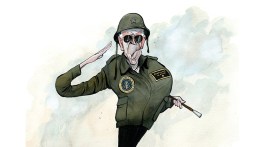
It was quite the handover at Kabul airport this week. The last American troops to exit Afghanistan reportedly left facing an ‘elite unit’ of the Taliban. In a season finale that the most dystopian screenwriter would have struggled to invent, the elite Taliban unit was itself bedecked in US military kit. That is, they were not only wearing uniforms and protective kit provided by the fleeing US army, but were parading the airport with US-provided guns in US-provided vehicles. This was the culmination of a fortnight that the White House is still trying to present as a success. One of the biggest airlifts in history, they insist. In reality the Biden administration has pulled off a feat few of us thought possible.

The Tories aren’t in party mood

Nearly two years on from the general election and 11 years since the Tories took office, they remain comfortably and consistently ahead in the polls. This is remarkable. In September 2008, when Labour was in power, it was almost 20 points behind the Conservative party. Eighteen years before that, when the Tories were in power, they regularly trailed by double digits. You might think this Tory lead, and the poor numbers for the leader of the opposition — Keir Starmer’s latest approval rating is minus 39 — would have led to Tory triumphalism. However, when Tory MPs return to parliament next week, they will do so in a strikingly subdued mood. In part this is because of the issues at the top of the agenda.

Would you want London to be overrun with Americans like me?

PODCAST: Lionel Shriver discusses this column with Dr Remi Adekoya in our The Edition podcast. Listen here.  The Afghans the Home Office is scrambling to resettle in Britain present one of immigration’s most sympathetic cases: translators and other support workers for allied troops whose lives are potentially imperilled by Taliban revenge against collaborators. Councils are searching for big, many-bedroomed properties to rent or repurpose, as fleeing Afghan families can have a dozen members. The Home Secretary has offered to resettle 20,000 Afghans in due course. Yet if history serves, we’ll soon see many more than 20,000 Afghans land on British shores, all of whom won’t necessarily have worked for Nato and few of whom will wait to be invited.

Boris Johnson’s problems are piling up

This time last year, Boris Johnson and his team were making plans to ‘move on’ from the pandemic. He had been elected thanks to Brexit, then had to handle the Covid disaster, but he didn’t want either to define his government. ‘We have an indecent amount of great stuff to get into as soon as this ends,’ he’d tell supporters privately. But this claim had two problems. First, there would be no end to the Covid drama. Second, the ‘great stuff`’ he intended to do was often a mystery even to his own government. For a while, the success of the vaccine procurement kept his poll ratings high. There was a hope that Britain would be the first country to jab its way back to normality.

Is it cruel to eat fish?

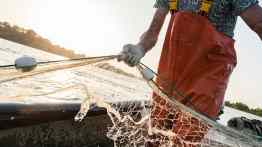
It was a hot late evening on the Greek island of Tinos, and we were sitting at a quayside restaurant outdoors, enjoying a nightcap glass of ouzo. One or two other tables were still occupied by diners, all of them Greek. Foreign tourism is only slowly coming back but Greece has a strong internal holiday market, and Tinos, a lovely island, is only an hour or two by ferry from the mainland. A couple of children, small girls, were playing around the edge of the quay. The tranquil scene was now disturbed. The girls were looking in alarm at something under an unoccupied table. A big fish, beached, more than a foot long, was flopping around on the concrete, gasping. Other diners looked on, unconcerned, but I thought the children were distressed.

The neocolonialist legacy of Tony Blair

The Americans may have pulled out, but luckily the Afghans have the world’s vibrant community of witches intervening to save them. A website for these practitioners of the black arts has devoted its entire attention to the Taliban. One witch commented: ‘It seems like the Taliban gets most of their power from Allah. If we hex Allah it should affect all of the Taliban. Can we hex Allah?’ Another witch, under the user name ‘i-follow-tiny-people’, reports she has made a voodoo doll of the Taliban leader and asks: ‘Any witches want to help me with curses?’ The new Afghan rulers’ days are surely numbered. Whatever magick the witches conjure up, it cannot possibly be less productive than an intervention by Tony Blair.

Lily Cole, the burka and why we were right to leave Afghanistan

I have the feeling that Joe Biden will have to wait a while before he receives his Nobel Peace Prize, the traditional gift bestowed upon an American president if he’s a Democrat and before he’s actually done anything. The civilised world — by which I mean the mass of deluded lefties and liberals who understand nothing but firmly believe that they are the civilised world — is aghast at the man right now. There is no doubt in my mind that the pullout of US troops from Afghanistan was atrociously handled by a doddering halfwit and based upon magnificently flawed intelligence.

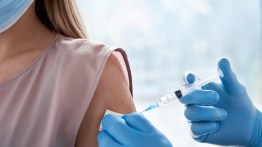
The Covid vaccines may affect periods. Are we allowed to talk about this?

It’s fashionable to talk about periods. Books on the subject, with glossy red and pink covers, are bestsellers. They have sassy titles like Period Power: A Manifesto for the Menstrual Movement and Period:Twelve Voices Tell the Bloody Truth. The Periodical is a podcast for ‘everyone who bleeds, and their friends’. And this being our ultra-capitalist world, you can obviously buy a T-shirt, notebook or phone cover with a period-related slogan slapped across it. ‘Anything you can do, I can do bleeding’ is one mantra. I admit to having not engaged much with this world. My period has always seemed to me a private matter, of no interest to anybody else and only vague interest to myself.

The Afghan withdrawal may not hurt Joe Biden

When was the only time America’s left-liberal media gave President Trump any real credit? The answer is 7 April 2017, after he threw a few fairly pointless missiles at Assad’s forces in Syria. ‘I think Donald Trump became the President of the United States last night,’ gushed Fareed Zakaria of CNN. The New York Times said Trump had shown ‘heart’. Brian Williams, an anchor on MSNBC, went so far as to quote Leonard Cohen: ‘I am guided by the beauty of our weapons.’ In recent days, the same outlets have for the first time started airing heated criticisms of President Biden over his decision to pull America’s troops out of Afghanistan and his stubborn insistence that he’s right to do so even as the Taliban regain control.

The flaw at the heart of humanitarian intervention

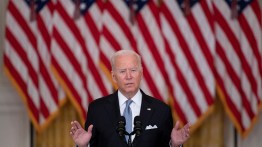
One of the most interesting aspects of President Biden’s speech on the American withdrawal from Afghanistan is that it shows he suffers from faulty memory syndrome. Like many of the rest of us, I suspect. Today Biden says that the mission of the allies in Afghanistan ‘was never supposed to have been nation-building’. But back in the early years of the conflict then Senator Biden was all for this now dirty phrase. ‘Our hope is that we will see a relatively stable government in Afghanistan,’ he said in 2001. One that ‘provides the foundation for future reconstruction of that country’.

Why the government was right to drop vaccine passports

12 Sept 2021: Health Secretary Sajid Javid has announced that the government is shelving its plans to introduce mandatory domestic vaccine passports (details here). Below is Lionel Shriver's column from August 2021, in which she argues vaccine passports were always a bad tool for tackling Covid-19. Despite having mocked app-happy Albion in my last column, I finally downloaded the NHS app. (Lest I seem a raging hypocrite, the institutional app is quite distinct from the Track-and-Trace Covid one, possession of which marks you as insane.) I found the app’s elaborate security features for registration bitterly comical. I had to photograph my passport, then record a video of myself speaking four prescribed numbers to affirm that my face matches my ID.

The National Trust has lost the language of architecture

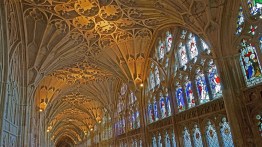
Press officers, breathe easy. This is not another column attacking the National Trust. Actually, I tell a lie. It is. But my complaint isn’t bullying or slavery or LGBTQ+ery or even chocolate Easter eggery. It is more single and specific: the National Trust does not speak architecture. Or if it does, it’s keeping shtum. Since the great May reopening, I’ve dragged my husband around half a dozen National Trust properties, landscapes and gardens (he hardly ever protests, always pays for tea). We’ve done Stourhead, Oxburgh, Ickworth, Lacock, Cobham Woods and Disraeli’s Hughenden Manor. In the gap between lockdowns last year, we did Sissinghurst and Knole. I cannot fault the car parks, the rhododendrons or the second-hand bookshop in the Oxburgh potting shed.

How to burst the grade inflation bubble

The Tories regard a return to rigorously marked exams as one of their big achievements in education. In 2010, the year they took office, more than a third of A-level entries received an A or A* grade. By 2019, following an overhaul of the curriculum, only a quarter did. Despite the havoc wreaked by Covid on education, the government was determined to carry on this trend. That’s why last year, after exams were scrapped, the Department for Education tried to further control grade inflation by using an algorithm. It worked, in part, by assessing the past results of schools — but a consequence was that exceptional pupils from historically underperforming schools were marked down. This seemed very unfair and the backlash was swift.

Will anyone publish my rabbit tale?

The literary sensation of the season is apparently a book called The Constant Rabbit, by Jasper Fforde. In brief, a spontaneous and unexplained anthropomorphic event which occurred 55 years ago has left Britain with a population of more than one million human-sized rabbits who can speak, read, watch television etc. They live among us. The Guardian called the book ‘chilling and realistic’, which perhaps gives you an insight into the level of general insanity that pertains in that institution. The book is of course a satire. The poor rabbits are victimised by right-wing thugs and subjected to all kinds of horrors.

Putting the commie in committee

Last month an epidemiologist called Professor Michael Baker described the UK government’s decision to free its people from Covid restrictions on 19 July as ‘barbaric’ and an ‘experiment’. Professor Baker lives in the little-known hermit kingdom of New Zealand — a country which, under the guidance of people like himself, has banned almost all foreign travel and imposed long domestic lockdowns. Such is the grip Baker and his friends have on the country that the appearance of just two Covid infections in the entire population caused the nation to go into a hysterical spasm, with much bed-wetting, shrieking and governmental resignations. You are allowed to die of anything in New Zealand, but not Covid.

How Nextdoor became the new Neighbourhood Watch

Long before the official numbers began to rise, back in 2014, it was clear that knife crime was on the up. You could tell by the way small boys chased each other through the park with machetes, and by the zombie blades left in flower beds. Now, seven years later, I feel the same way about what goes by the cosy-sounding name of ‘neighbourhood crime’. There’s the fashion for car theft (as poor Sam Leith found out), and the constant predatory circling of iPhone thieves on e-scooters. But worse than that, I think burglary is back, and I think it’s thanks to crack. We know drug use is creeping up: on Tuesday it was announced that drug-related deaths in England are at the highest level they’ve ever been. As for burglary stats, for those I rely on Nextdoor.

The path to re-enchantment

Most social occasions now seem to kick off with a wasted hour or two. The time is spent discussing Covid: who’s had it and who hasn’t, who’s had the most nightmarish encounter with a mask fanatic and who the worst lockdown. After that there can be a second course, discussing things like international travel. Remember when we used to be able to book a ticket, put up with the indignities of the budget airlines but still arrive in any place we wanted? Now everybody has stories of friends and relatives they haven’t seen, places they can’t go, and experiences they’ve had to miss. The world has become a little smaller. A perfectly dull evening can be spent rehearsing all this. It is all good boring stuff. War stories from a non-war.

Don’t pick a fight with the SNP

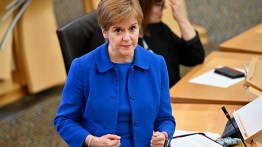
Since the Holyrood elections in May, the campaign for Scottish independence has been noticeably quiet. But that is about to change. This autumn Nicola Sturgeon will try to push the issue to the top of the agenda once again. The expectation in Edinburgh is that Sturgeon will soon unveil a governing agreement with the Greens, which would give her pro-independence government a formal majority in the Scottish parliament. With that under her belt, and with her activists increasingly impatient for action, she may move to introduce an independence bill. This would be a deliberate provocation. The constitution is a matter for Westminster — and it is very hard to see how the Scottish parliament could legally bring about a second independence referendum.

Should Britain be vaccinating teenagers?

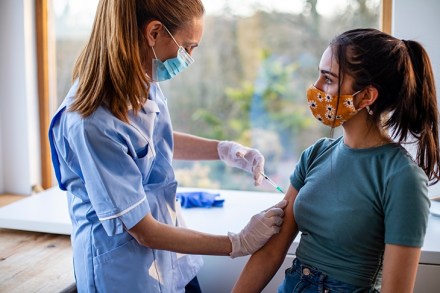
Last week there was acute concern in government about the country’s re-opening. Would restrictions need to be reimposed when schools return in September? Ministers fretted. But those nerves have now been replaced by cautious optimism. Case numbers have been falling for a week straight and it increasingly looks as if this wave has peaked. No one in Downing Street wants to declare mission accomplished. What will happen to the numbers when people’s fear of being ‘pinged’ by Test and Trace eases and they start to socialise more? Cases need to be falling consistently between now and schools returning. Privately, scientists are stressing risks remain. They warn that there is still a danger of another wave with a bigger peak than this one.