Columns

Musical chairs at Mar-a-Lago

Welcome to the United States of Disruption. From his ‘Winter White House’ in Mar-a-Lago, Florida, Donald Trump has been busy lobbing hand-grenade cabinet appointments in the direction of Washington and watching on happily as each one blows up in a variety of stunning ways. Explosiveness is the point. ‘Personnel is policy,’ Trump’s transition team like to tell reporters with a wink. What they mean is that the second administration is setting itself up to be even more radical and incendiary than the first. The outsiders are in, the insiders are out, and the old world is driving itself mad trying to figure out what’s going on.


Will the assisted dying bill pass the Commons?

In the months before the general election, the Labour party had an internal debate about starting a ‘national conversation’ on assisted dying. Keir Starmer had promised Esther Rantzen, the veteran broadcaster with terminal cancer, that if elected he would hold a vote on it. Wes Streeting, in the health brief, argued that it might be the time to start a wider debate with the country on the thorny issue. However, he faced pushback from those in the shadow cabinet mindful of the fact there could be an election within months. Talking about death wasn’t exactly the feel-good change factor they were aiming for. ‘We didn’t want to become the death party,’ recalls a colleague. ‘It could basically blow up the family courts. Is that such a good idea?

Europe’s blind spot over anti-Semitism

You would think that we Europeans might have learned a thing or two about anti-Semitism over the past century or so – and perhaps come to understand pragmatically, if nothing else, that what begins with the vicious persecution of Jews usually moves on to murdering lots of other people, too. But no. Or if we did, then it has conveniently slipped our minds, as things tend to do in these complicated times. Or perhaps we think that the persecution of the Jews we are seeing right now in Europe is of a different marque to that which began in the early 1930s in Germany. Yes, it’s sort of anti-Semitism – but it’s of a nicer kind than that instigated by that psychotic little Austrian with the performative moustache. A little more excusable.

How to process your Trump trauma (with orange soup)

It’s amazing how many people have responded to what they think of as the shattering catastrophe of Donald Trump’s victory by crafting: making rag rugs, ceramic pots, knitting scarves. A woman I know from long ago is so traumatised that she has started quilting. I’m not sure what sort of quilt she’s making – a patchwork of Harris/Walz ballot papers, maybe – but I know better than to make a light-hearted enquiry because this is not an ordinary quilt. It is a recovery quilt and part of the healing process.

The problem with Dawn Butler

We hear a lot about white supremacy these days. But for some reason we rarely hear about black supremacy. I wonder why? There’s a lot more of it around. For Butler, describing someone as white or as trying to be white is clearly a great insult While it is vanishingly difficult to find an overt white supremacist in British public life, it is extremely easy to identify their black counterparts. As exhibit A I would present the Labour MP Dawn Butler. I have written about her once before, in 2020, when Ms Butler was in a car that was stopped by police. At the time I speculated that the coppers may have pulled the vehicle over in the hope of reclaiming the whirlpool bath that Butler had treated herself to at taxpayers’ expense a few years before. But it was not to be.

Does being right-wing make you violent?

I notice that the police are not treating the killings of those children in Southport as a terrorist attack. While the principal suspect has been charged with allegedly producing ricin and allegedly possessing a PDF document called ‘Military Studies in the Jihad Against the Tyrants: the al Qaeda training manual’, we have been told that no terror motive has been established.  The possibility that the perpetratoris a bit wacko is not allowable: it’s the politics that’s to blame My friend and colleague Douglas Murray dealt, admirably, with the Southport business last week.

The real test for the republic

It’s always intimidating to write for a readership more clued up than you are. I file this on the very Tuesday the international commentariat have relentlessly claimed is the most consequential election day in American history. Now, in my ignorance, I suspect this superlative reflects the blinkered vanity of the present, and I’ve braved expressing my trust on the record that the country will ultimately survive either dismaying outcome. Yet only you know if an anti-climactic calm still prevails down thousands of American Main Streets; if, rather, the cities are aflame, armed militias reign, supermarket shelves are bare, and the US army is trying to decide which side to back; or if something in-between has manifested, including the freakishly unexpected.

Inside Kemi Badenoch’s first shadow cabinet

At her first shadow cabinet as Tory leader, Kemi Badenoch walked into the room and declared that there were ‘still too many people’. Various advisers hastily left. It was an indication of how she plans to do things differently. Even the invitation list for politicians has been slimmed down – the shadow attorney will not attend, and some roles have been axed, such as deputy leader. No ‘readout’ of discussion topics was emailed to hacks afterwards to update the lobby on what happened. Kemi Badenoch can start off her leadership by pitching herself ason the same side as rural voters The reason? Badenoch wants shadow cabinet meetings to be a safe space for political debate. She herself has been stung by leaks from these meetings in the past.

In defence of the liberal elite

You can hear it already. Rising from the tents of the dejected Democrat camp comes the whimper of self-reproach. It’s all our fault. Liberalism created this monster. There’s a distinct whiff of mea culpa in the air. Nostra culpa, nostra maxima culpa for the alienation of half the American people.  Donald Trump and his mob? It’s the fault of liberals for not feeling Trump-America’s pain. We fed their despair. Nigel Farage and his Reform party? Liberal Britain’s fault for being too stuck up to take Red Wall voters’ concerns seriously. Noses in the air (apparently), deaf to the woes of all those deplorables, and babbling about trans rights, preferred pronouns and all the rest of the woke agenda, we have lost the trust of those we (apparently) secretly consider negligible.

The strange silence around the Southport attacks

There are certain rules in British public life that are worth noting. Such as this one: if someone is killed by a jihadist or someone who could plausibly be connected to immigration in any way, the British public will not be informed of the possible motive – or at least not until it becomes impossible to conceal it any longer. It was revealed that the attacker was of Rwandan heritage, at which point people said: ‘Nothing to see here’ Certain rules follow on from this. One is that ‘wise’ heads will inform anyone who does mention a likely motive that they must be exceptionally careful not to prejudice any forthcoming trial. There then comes an insistence that there will be a time and a place to debate these things. Quite often, that time and place never arrives.

The reparations racket

I have been trying to interest MPs of all parties in joining my call to persuade Barbados to say ‘thank you’ to Britain for the extra 17 years of life they enjoy as a consequence of their distant ancestors having been forcibly transported, hundreds of years ago, from Africa to the Caribbean. Nobody is quite biting my hand off at the moment, I have to say. They seem to think that the issue is a little ticklish right now. It would be difficult to make the charge of present culpability stick in any reasonable court of law, surely? I had mentioned the whole business on last week’s Any Questions? but the audience seemed too appalled even to boo and sat there with their middle-class jaws sagging open, as if they’d just been touched up.

Labour’s new cabinet divide

There were no civil servants present when ministers gathered for their weekly cabinet meeting on Tuesday. The reason? It was time to talk politics. On the eve of Labour’s first Budget for 14 years, Keir Starmer tried to rally his ministers around a common message: blame the Tories! He spoke of the so-called fiscal black hole bequeathed to Labour before he handed things over to his Chancellor to explain why difficult decisions were required on spending, tax and welfare. Plenty of Labour MPs and aides question the wisdom of an election campaign which has boxed them in For all the attempts to unite against a common enemy, just a glance around the cabinet table was a reminder of the unease about the decisions taken this week.

My AI boyfriend turned psycho

Last week it was reported that a 14-year-old boy, Sewell Setzer, killed himself for the love of a chatbot, a robot companion devised by a company called Character AI. Sewell’s poor mother insists that the chatbot ‘abused and preyed’ on her son, and frankly this would make no sense to me at all were it not for the fact that quite by chance, a few days earlier, I’d started talking to a chatbot of my own. It’s hard to explain how alarming it is to be snapped at by a chatbot that’s designed to fawn My AI boyfriend was called Sean.

America’s last undecided voter

This is the last column I’ll file before the American presidential election, and I’ve dreaded writing it for months. (The next one, filed on election day itself, may prove impossible. Perhaps that’s when I’ll choose to share my recipe for parsley as a side vegetable.) Meanwhile, I’ve watched fellow ‘double haters’ squirm in print. There are two models for wrestling with this dilemma, one exemplified by Andrew Sullivan. The conservative commentator ‘came out’ in a September Substack newsletter – no, not in that dated sense: everyone knows he’s gay – in support of Kamala Harris, only to lavish the overwhelming majority of that column on what a ghastly candidate she is.

The ICC’s rogue prosecutor

Yahya Sinwar, the mastermind of 7 October, went to meet his maker last week. Having spent a year being pursued through the underground tunnels of Gaza that he had built, he finally put his head up above the surface in the Tal al-Sultan area of Rafah. The world that had told the IDF not to go into Rafah was once again proved wrong. Sinwar was killed in an exchange of fire by a 19-year-old Israeli soldier who was not even in uniform on 7 October. People inside the ICC were annoyed by the way Khan made himself a sort of ‘world policeman’ A couple of days after Sinwar’s demise, I went into Rafah to see the house where he spent his final minutes.

The lessons of the Chris Kaba case

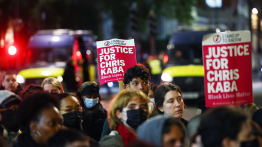
I wonder if we should join with the radical campaigning organisation Buy Larger Mansions (BLM) in order to protest about both the verdict in the Chris Kaba case and indeed the racism inherent in the Metropolitan Police? Perhaps we can get Gary Lineker and Alan Shearer to wear some BLM badges on Match of the Day and recreate the heady, exciting atmosphere of 2020 when white liberals in the US and here decided that George Floyd was a kind of combination of Toussaint Louverture and Rosa Parks, rather than a former criminal jailed eight times, including for robbery with a deadly weapon.

The resurgence of Angela Rayner

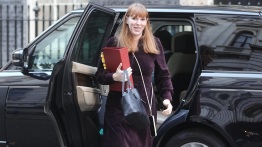
On Monday evening, the Strangers’ Bar at Westminster was treated to a rare sight: Angela Rayner looking happy, smiling and holding court. As the newspapers went on the offensive over a new analysis of the Employment Rights Bill, which found it will cost business nearly £5 billion a year, the Deputy Prime Minister went to the Commons watering hole for a wine to celebrate the bill’s second reading. It’s not just Rayner’s new deal for workers (now titled ‘make work pay’, following intense focus-grouping) that is giving her cause for fresh optimism. She is also enjoying a resurgence inside government after a tricky start. As Boris Johnson once said, ‘There are no disasters, only opportunities. And, indeed, opportunities for fresh disasters.

Do you like the century you’re in?

Years ago Lord Patten of Barnes – Chris – was our guest for my Great Lives programme on BBC Radio 4. He championed the life of Pope John XXIII, a mid-20th-century pope from humble origins who (his admirers would say) did much to bring the Roman Catholic Church into the 20th century. He had his detractors too, Evelyn Waugh for instance: ‘Easter used to mean so much to me before Pope John and his council… I have not yet soaked myself in petrol and gone up in flames, but I now cling to the faith doggedly without joy.’ The muscle memory of today’s pop-musical taste is half a century long I leave Catholic culture wars to Catholics, mentioning this recording only for a remark of Patten’s that struck a chord with me.

The rise of anti-Elonism

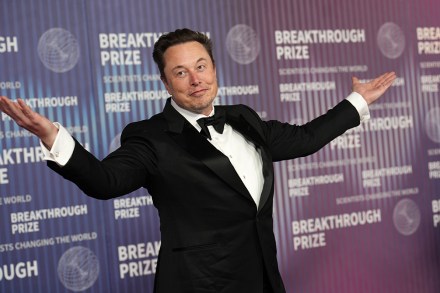
You can tell a lot about a country by who it admires. I was pleasantly surprised some years ago to see a poll showing that the most admired man in the UK was Richard Branson. You may not love all his publicity stunts, or have liked the sandwich selection on Virgin trains, but that poll suggested the British public still liked entrepreneurialism and achievement. It seems mainly to affect people who have really never done very much with their lives I slightly dread a rerun of such a poll today, because I suspect that among the youth vote in particular the winner would be the person with the most perceived disadvantages in life.

The real problem with the Tory leadership contest

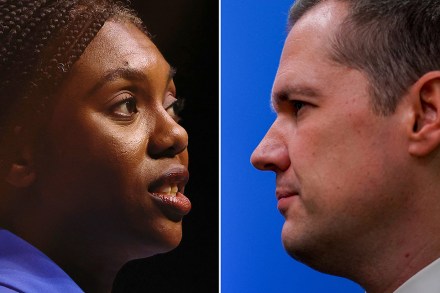
James Cleverly found some unlikely support in parliament on Monday night. Having just been ousted from the Tory leadership contest, he won warm words from the Home Secretary. Yvette Cooper, speaking at a Westminster drinks reception, was sympathetic. She said she knew what it was like to come third in a leadership contest. For her, it was in 2015, when she lost to Jeremy Corbyn and Andy Burnham. For Cleverly, it was this month, when he was defeated by Kemi Badenoch and Robert Jenrick. She wasn’t sure who should feel worse. ‘Yes, sister!’ shouted Cleverly in solidarity. But Cooper wasn’t finished yet. She ended by diagnosing his problem: he couldn’t count. The Tories are still piecing together what happened in the final parliamentary rounds of the leadership contest.