Columns

Don’t ambush parents with activism

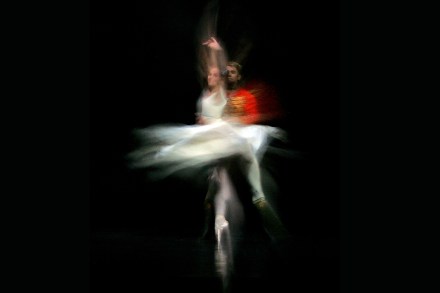
As we sat down at the Royal Opera House to watch one of the Royal Ballet’s soloists perform Letter to Tchaikovsky, an announcement began. ‘Tchaikovsky is understood to have been a gay man, who was forced by the conventions of society to marry a woman,’ explained an earnest female voice from off-stage. ‘The music, words and dance describe the pain and guilt he experienced as a closeted queer person… but like many others before and since, the fact that he was queer meant that he had to stay secret about who he really was… It is still illegal to be gay or queer in 69 countries, and queer people continue to face discrimination or violence all over the world, including here in Britain.

My mission to save the elm

Ophiostoma novo-ulmi is not an expression that sits easily at the head of a Christmas Spectator column, so I’ll return later to the unpleasant fungus and disobliging beetle that over my lifetime have been devastating the English elm, and turn instead to one of our most beloved poets offering his own personal homage to his most beloved tree: Old Elm that murmured in our chimney topThe sweetest anthem autumn ever made. John Clare wrote ‘To a Fallen Elm’ in the 1830s: a poem that was partly a lament inspired by his boyhood memories of the English agricultural enclosures. Thoust heard the knave abusing those in powerBawl freedom loud and then oppress the freeThoust sheltered hypocrites in many an hourThat when in power would never shelter thee.

My rules for church readings

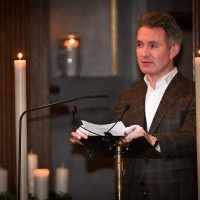
It is that time of year when people in churches across the land have to face the difficult question of how to read scripture out loud. I count myself a bit of an expert in this, not because I have had to do it many times for some 35 years, but because I have seen everything go wrong that can go wrong. It is like the fear that engulfs me when-ever an unaccompanied treble kicks off the first verse of ‘Once in Royal David’s City’ at the service’s start. If the treble goes off-key in that solo verse, one of the great black holes in the universe opens up – for the choir and conductor must swiftly decide whether they should begin their next unaccompanied verse in the original key, or resign themselves to whatever key the treble has arrived at.

Why the ‘family’ is under threat

Now that John Lewis has produced a Christmas ad that celebrates family, starring white people as humans, all sorts of thinkers and commentators on the right have decided that the progressive madness is nearly over. One after the other they’re popping up in print, like bunnies who’ve decided the fox has gone. ‘Whisper it, but woke is over,’ these pieces begin. Even those Tories who thought it wisest to put their pronouns in their Twitter bios have quietly deleted them.

Why 2025 could redefine politics

Santa will have a tricky time this year fulfilling all the Christmas wish lists in Westminster. Keir Starmer is desperately hoping for a change in the political weather and Kemi Badenoch would like an in with Donald Trump. Ed Davey dreams that Labour’s electoral troubles will get so bad that proportional representation starts to look appealing. Nigel Farage, meanwhile, wants to avoid what usually happens with him and keep his party from falling out. Come the new year, all four leaders will have their eyes on May’s local elections. The 21 county councils, ten unitary authorities and one metropolitan district are up for grabs for the first time since 2021. Back then Boris Johnson was riding a wave of popularity after the vaccine rollout and the Tories won Hartlepool from Labour.

Can you tell a good guy from a bad guy in the Middle East?

Please excuse the tone of jubilation, but I have been dancing around my kitchen for the past couple of days, in a state well beyond elation, at the removal from power of Bashar al-Assad’s murderous regime in Syria and its successors who, I am convinced, are a little like our own Liberal Democrats, except with powerful rifles. No matter how deranged the dictator, whoever is trying to oust him will be about ten times worse An expert from a Washington D.C. thinktank told the BBC that some of the chaps who had marched through from Homs to Damascus were ‘moderates’. This was the line taken up, so far as I am aware, by the corporation itself and indeed most other broadcasters – hence my delight.

In defence of first past the post

Here comes a new law in political science: Joe’s Law. As I write, the Republic of Ireland is still working out, after its general election, what sort of a coalition government will be entailed by its system of proportional representation. And the Germans are fretting already about whether and how a new coalition might be put together, the last one having disintegrated. A new election looms, held according to Germany’s ‘personalised proportional representation’ voting system. Voters may not have agreed on much but they did share a longing for bold and decisive government Joe, meanwhile, is a first cousin twice removed whom I didn’t even know. He’s 16, and has a paper to write about our ‘first past the post’ (FPTP) voting system.

Beware the Qataris

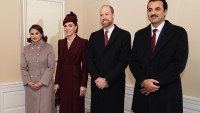
I feel some sympathy for the British royal family because of the ghastly people they are forced to meet. The late Queen had to greet Nicolae and Elena Ceausescu, Idi Amin and Robert Mugabe. This week the King and Prince and Princess of Wales had to meet the Emir of Qatar and his wife. True to form, the state media in Britain managed to miss every major problem with this. The BBC did say that there might be protests around the visit because of Qatar’s record on ‘LGBT rights’. But more troubling is that Britain should ever have welcomed the leadership of such a sordid, terrorist-supporting statelet.

Labour’s Nigel Farage nightmare

Arriving on stage to accept ‘Newcomer of the Year’ at The Spectator’s Parliamentarian of the Year awards, Nigel Farage gave a warning to the Westminster establishment. ‘I’ve got a bit of a shock for you,’ he said. ‘If you think that I and four other people – the newcomers into parliament this year in the general election – were a shock, I’m very sorry but at the next election in 2029 or before, there will be hundreds of newcomers under the Reform UK label.’ He added: ‘We are about to witness a political revolution the likes of which we have not seen since Labour after the first world war. Politics is about to change in the most astonishing way. Newcomers will win the next election. Thank you very much.

The BBC vs Gregg Wallace

The last time I took my wife to watch Millwall play a home game, a gentleman a few rows in front of us took grave exception to the behaviour of an opposing player and identified him, very loudly, as the author of The Critique of Pure Reason – repeatedly and with venom. Having vented his spleen, he turned to sit down and caught sight of my wife. An expression of contrition spread across his face and he said to me in a conciliatory tone: ‘I am very sorry for using such language in front of your lovely lady.’ The apology, you will note, was to me, not to my wife. Such is the arcane concept of chivalry and decent manly behaviour down The Den. I accepted his apology with a smile.

How to get on the housing ladder

It is always interesting to watch the debates that roil a nation. So far as I can see, the current debate in parliament mainly consists of trying to work out whether the NHS is competent enough to kill people or not. This week one of our greatest Home Office ministers – Jess Phillips MP – was asked about the question of ‘assisted dying’. She said that, naturally, she is in favour of this ‘progressive’ policy. But one qualm held back her support. In Phillips’s estimation the NHS is ‘not in a fit enough state’ at present to kill patients on demand. Many people whose family members have gone through the NHS might beg to differ with Phillips on this point.

Why Reform has Wales in its sights

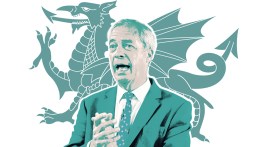
A spectre is haunting Wales. Fresh from Reform’s election victories in Westminster, Nigel Farage is turning his attention westwards, to Cardiff Bay. He wants Reform to replace the Tories there as the main challenge to Labour in May 2026, creating a major platform for his party ahead of the 2029 general election. The man plotting the Tories’ downfall in Wales is someone who knows their leader well. Oliver Lewis, Reform’s chief spokesman, worked with Kemi Badenoch at Coutts. ‘She was very aware of the importance of fulfilling duties she felt were important to her,’ he says, carefully, when we speak.

What Scott Bessent’s appointment means for Trump 2.0

How rare it is to be given a second chance. That’s what the American people have handed Donald Trump. His second shot at the presidency means avoiding past mistakes, which in TrumpWorld means finally harnessing the full power of the state. Even in the last year of his first term, Trump was struggling to fill all the political appointment vacancies he had at his disposal. This was the consequence of never developing a real plan for governing that went beyond chanting ‘Drain the swamp’. Elon Musk talked down Bessent as the ‘business-as-usual choice’, but that’s what markets are looking for This time round, things are going to be different. Trump is announcing new departments and staffing them before he even re-enters the Oval Office.

I hope you didn’t sign that petition

Did you sign it, then? And if so, what were your expectations? That Sir Keir Starmer would look at the figures and say – perhaps with a tinge of remorse – ‘Yup, that’s it, I’m bang to rights, we’ll have an election?’. Or were you simply hoping to annoy him? If so, I assume you are disappointed, because Sir Keir doesn’t look very annoyed to me. It turns out we are no better than those liberal lefties who can’t believe that other people have different views The petition to demand a general election on the grounds that the people who didn’t vote Labour on 4 July are upset at the result so far has almost 2.7 million signatures.

Am I alone in thinking?

‘Et remarquant que cette vérité, je pense, donc je suis, était si ferme et si assurée, que toutes les plus extravagantes suppositions des Sceptiques n’étaient pas capables de l’ébranler, je jugeai que je pouvais la recevoir sans scrupule pour le premier principe de la Philosophie que je cherchais.’ Pardon my French – and I translate below. But so elemental was what René Descartes wrote (afterwards rendered in Latin ‘Cogito ergo sum’) that his phrasing should confront us first in his own language. Though in 1637 Descartes will have known nothing of robots, still less of artificial intelligence, he settled by this remark a debate that we think remains open, and which has recently resurfaced in media commentary. Can robots achieve consciousness?

Britain’s failing statecraft

I mentioned some weeks ago that one of the great points of interest – not to say enjoyment – in our era will be seeing how Keir Starmer’s government copes with the incoming Donald Trump administration in Washington. It is fair to say that many Labour MPs, not to mention the mayor of London (who spends more time grandstanding abroad than he does addressing violent crime in his own city), have been wildly impolitic. If there are two candidates in the running to lead your most important ally it would seem prudent for a wise man to keep his diplomatic options open. Alas, Westminster does not appear to be flooded by wise men.

The true meaning of free speech

Right after Donald Trump’s landslide, I opined on YouTube that this turning point could sound the death knell for Woke World – an observation that decayed to hoary cliché within hours. I also supposed that Trump’s triumph might signal to the UK that all that diversity, equality and inclusion/systemic racism guff is totally yesterday – in the hopes that even if Brits don’t care about fairness, rationality and reason, they might at least be horrified by appearing passé.

Labour’s Chinese takeaway

I was thrilled to learn that our government intends to enjoy an ‘open’ relationship with China – one of my favourite countries, as I am sure it is yours. Sir Keir Starmer announced this intention when he bumped into Xi Jinping at the G20 beano in Rio de Janeiro. He also said: ‘We want our relations to be consistent, durable, respectful, as we have agreed, avoid surprises where possible. The UK will be a predictable, consistent, sovereign actor committed to the rule of law.’ Those agreeable adjectives are all Keir’s – I didn’t slip any in, surreptitiously, Not even ‘predictable’, which I assume was there to reinforce the earlier commitment to not surprising the Chinese, perhaps by jumping out from behind a hedge and demanding the return of Hong Kong.