Columns

Who really built this country?

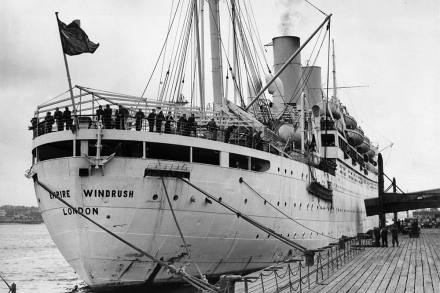
Anyone who has visited Canada or Australia in recent years might have noticed an interesting new tradition. This is the trend for issuing a ‘land acknowledgement’ at the start of any public event. Before discussion gets under way, some bureaucrat or other will get up and note that we are all fortunate enough to be on the land of X, and then garble the name of some not-especially-ancient tribe. The moment gives everyone a feeling of deep meaning and naturally achieves nothing. Even our King indulged in some of this in May when he opened the latest session of the Canadian parliament. Before getting down to the meat of his speech, Charles said: ‘I would like to acknowledge that we are gathered on the unceded territory of the Algonquin Anishinaabeg people.
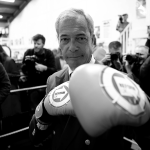
Farage is the pacesetter of British politics

For the past year, Nigel Farage has served as the great pacesetter of British politics. Reform UK has shot to the top of the polls, as Labour and the Tories languish behind. On immigration, the economy and much else, it is his five-man band that sets the tune. It is the inverse of Norman Lamont’s jibe about ‘being in office but not in power’. From his new base near the top of Millbank Tower, Farage enjoys a commanding view of Westminster. The office, an explosion of teal decor, has a large press briefing room, which aides liken to the one in the White House. At a desk adorned with a porcelain Union Jack bulldog, Farage plots his next steps.

And now let’s bomb Glastonbury

A small yield nuclear weapon, such as the American W89, dropped on Glastonbury in late June would immediately remove from our country almost everybody who is hugely annoying. You would see a marked reduction in the keffiyeh klan, for a start, and all those middle-class Extinction Rebellion protestors would find, in a nanosecond, that their rebellion was pointless, because extinction had arrived even more summarily than they expected. Go on, glue yourselves to that, Poppy and Oliver. Street drummers, liberal politicians, provo vegans, radical rappers, spiritual healers, Billy Bragg, that bloke who owns Forest Green Rovers, druggies, tattooed blue-haired hags, almost the entirety of middle-class London – all evaporated.

‘Trans rights’ has never been a civil rights issue

Indisputably a nutjob, Chase Strangio is the soul of nominative determinism. The lawyer for the American Civil Liberties Union is a ‘trans man’ – meaning a woman, of course; one of the trans movement’s lesser impositions is forcing consumers of pliant media to keep translating wishful thinking into real life, much as the unhip once had to keep remembering that ‘super-bad’ means ‘super-good’. Strangio is a rare example of sexual disguise that is reasonably persuasive. The 42-year-old woman passes for a certain kind of man: weedy, slight and very short, with narrow shoulders, Marx Brothers eyebrows, just-credible facial hair, a tight fade over the ears bursting into a cocky skywards coiffure, and a chronically smarmy, self-satisfied expression.

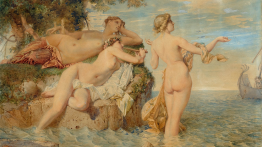
The dangers of toxic femininity

The American critic and classicist Daniel Mendelsohn has just published a new translation of The Odyssey. In his superb introduction, Mendelsohn also does something that many modern translators and critics avoid, which is to point to the oddness and different-ness of Homer’s world. For that and many other reasons, reading Mendelsohn’s fresh and clear translation was a counterweight to one of the great imperatives of our time: ‘Let us look at this long-ago thing only in order to see if it can shed any light on the glorious us and now.

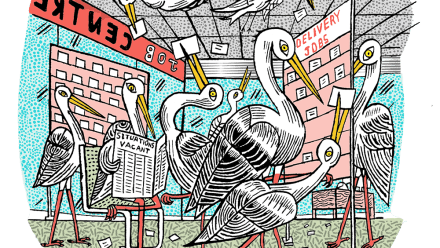
Small boats are causing Labour big problems

Summer is here – and for some in Labour it cannot come soon enough. After a tricky first year in office, the parliamentary party is in fractious mood. More than 100 of Keir Starmer’s MPs are raging against his welfare cuts; others are fuming about Israel. Some aides in No. 10 hope recess will give the government a much-needed chance to catch its breath. ‘Everyone needs a lie-down,’ says one party manager.  Yet in one corner of Whitehall, summer brings no respite. The Home Office is braced for a season of bad headlines: two more months helplessly watching small boats cross the Channel every day. Warm weather increases the likelihood of such trips.

Come friendly bombs and fall on Iran

It is heartening to see the lefties out marching in defence of mullahs and their enlightened rule of Iran. The Stop the War Coalition has been organising protests the length and breadth of the country, demanding ‘Hands off Iran’. It is harder for the marchers to identify specifically with their cause than it is when they’re marching about Palestine: Iranians don’t wear keffiyehs. Perhaps they should take on their marches an intricately woven carpet or some uranium-235. Or maybe design some sort of badge that can be cheaply manufactured and somehow symbolises the country – I would suggest the image of a crane with a homosexual dangling at the end of it.

What else could Israel do?

Over the past few days British readers have been able to enjoy a number of hot takes on the situation in the Middle East. First, there have been all the politicians, such as the Scottish First Minister John Swinney, who have called for our government to step in and ‘de-escalate’ the conflict between Israel and Iran. But even leaving aside whether the mullahs in Tehran can be swayed by Britain or Scotland, ‘de-escalation’ is the only surefire way to ensure that they continue to pursue a nuclear capability. Elsewhere, the BBC has been playing a blinder. When the conflict began, it decided that its audience would be well served by having the celebrity chef Hugh Fearnley-Whittingstall give his thoughts on the matter.

My campaign to bring back real life

A new book by an American writer, Christine Rosen, details the way in which we are losing touch with the real world: the one we evolved in, as opposed to the virtual one. All the scrolling and texting means we’re forgetting the look and feel of life unmediated by screens. The book is called The Extinction of Experience, and if we get more anxious year by year, then it’s not just wars or the cost of living, Rosen suggests, but because we’re grieving for the real world, whether we know it or not. I definitely know it. I’m Gen X, so I grew up without the internet, yet like other members of my generation now find myself caught in the smartphone itrap, dependent and resentful.

Why the Tories should oppose regime change

As a minister I lived by mantras: simple principles that summed up how I believed you got things done. Faced with a PowerPoint presentation as means of influencing policy, I’d sling it back in the box with the injunction ‘Think in ink’ – in other words, make a proper sustained argument on paper instead of trying to advance shonky argument with a series of unevidenced assertions, a dodgy graph and the words ‘levelling up’ on every page in bold. Told that the prospect of a judicial review should mean shelving a policy, I’d write on the submission: ‘If the legal advice says no, get a better lawyer.

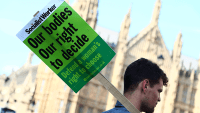
My modest proposal

It’s surely time we dropped our cynicism and got behind the government’s National Abortion Drive, another noble attempt to kickstart our floundering economy. The United Kingdom has made great strides of late in this area, recently overtaking France in the number of abortions performed annually, the figures showing the largest increase since this sort of stuff was legalised. The door, then, is already ajar. All we need to do is push a little. Our elected representatives were intent on doing just that this week by voting for an amendment that will now decriminalise abortion right up to the day of birth. I don’t wish to seem churlish, but to me this demonstrates a marked lack of imagination and ambition.

Has deporting illegals become illegal?

The circus around Kilmar Armando Abrego Garcia – whose full name the New York Times likes to trot out as if citing an old-school English aristocrat – speaks volumes about the immigration battle roiling the US. Our friend Kilmar is what we fuddy-duddies insist on calling an illegal immigrant. The Salvadoran crossed clandestinely into the US in 2012. As for what he’s done since, that depends on whom you ask. According to his GoFundMe page, Kilmar is a ‘husband, union worker and father of a disabled five-year-old’. Left-wing media portray ‘the Maryland man’ – a tag akin to Axel Rudakubana’s ‘a Welshman’ – as an industrious metalworker devoted to his family.

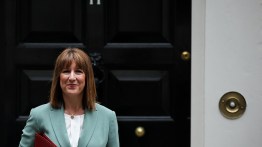
Rachel Reeves, the Iron Chancer

Gordon Brown may not be every teenager’s political pin-up. But as an Oxford student, Rachel Reeves proudly kept a framed photo of him in her bedroom. It was Brown who introduced the first multi-year spending review in 1998: the kind of big political set-piece speech which he relished. Reeves’s speech on Wednesday showed the level of constraints facing the Treasury this decade vs the 1990s. Chess, not poker, is the Chancellor’s chosen game of recreation. As a player and a politician, she prides herself on making decisions guided by skill, care and thought. Yet this week she staked her government’s future on a series of political bets. Her tax rises and changes to Treasury rules gave her some £300 billion to spend across Whitehall – including £113 billion in capital funding.

How to ruin a city

Why would you choose to make a city crappy? Plenty of cities don’t have much going for them. But when they do, it takes a certain amount of skill to actively wreck them. Take London, for instance. Anyone in charge of our capital needed only to maintain it, if not improve it. Yet in almost a decade as mayor, Sadiq Khan has overseen a decline which is obvious to any resident or visitor. That first sign of rot – the tolerance of minor crime – is everywhere. It might be graffiti on the Tube. Or it might be the fact that it is risky to hold a mobile phone in the street or park a bicycle. Khan’s police aren’t interested in minor crimes such as phone and bicycle theft. And they’re not much interested in major crimes either, such as stabbings.

My plan for Prevent

In the autumn of 1940, British cities were being bombed every night by large aeroplanes whose provenance was apparently of some considerable doubt. While the public almost unanimously believed the conflagrations to have been caused by the Luftwaffe, the authorities – right up to the government – refused to speculate. Indeed, when certain members of the public raised their voices and said ‘This is all down to Hitler and Goering and the bloody Germans!’, they received visits from the police who either prosecuted them for disturbing the peace or put their names on a list of possible extremists. The nights grew darker. The number of towns and cities subjected to these nightly bombardments widened.

What history doesn’t tell us

The trouble with history is that it is topiary. History is what’s left after the unwanted foliage has been clipped and cleared away. The topiary birds, pigs and pyramids are just yew bushes minus the clippings, these forms having emerged from the topiarist’s shears. Your yew-based pig is a product of selective disposal, even down to its curly tail. Likewise with a historian’s shears. The raw material may be facts (in the words of the 19th-century German historiographer Leopold von Ranke, ‘what actually happened’) but the history book’s account, the shape and meaning we give to an era, relies as much on the happenings we choose to discard as on those we decide to notice. In like manner, Ancient Greek astronomers conjured up fantastical constellations by topiarising the stars.

Leave our period dramas alone!

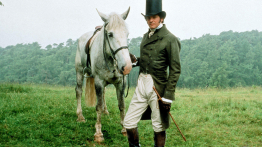
It is a truth universally acknowledged that any article about Jane Austen must begin with a mangled, platitudinous variation on her most famous line. Irritating though this is, it’s rather a good metaphor for the state of the wider treatment of Austen – and her near contemporaries – by popular culture. When it comes to adaptations of novels from the Georgian, Regency and Victorian periods, and even longer ago, we find ourselves in a deep trough. If you want mangled, platitudinous variations, you now need look no further than today’s costume dramas. And this year being the 250th anniversary of Austen’s birth, we should brace ourselves for a barrage of them. Many of those behind the upcoming slough of modern takes on Austen et al hardly inspire confidence.

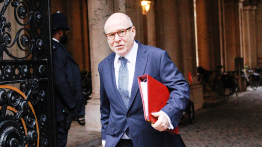
Richard Hermer’s campaign against Britain

Five years ago, the man who is now Lord Hermer gave an interview to the Times. The then QC was asked how he’d want to be remembered. The answer he gave was curious. ‘The world will be a better place,’ he said, ‘when privileged men like me stop seeking a place in history.’ I’m not sure who Lord Hermer thinks should be seeking a place in history, though I assume he was just paying lip service to the spirit of 2020 and wanted to be read to mean that in future most of the running should be done by underprivileged transsexuals. While I cannot agree on the substance, I can agree on one specific. The world would certainly be a much better place if people like Lord Hermer stopped seeking historic roles.

Kemi’s one chance at recovery? Trussonomics

You may have noticed that for some while the BBC News people have stopped referring to Reform UK as ‘far right’ or ‘hard right’. That’s not because Nigel Farage has tacked to the left a little on such policies as nationalisation; one characteristic of the left is that if they consider you ‘far right’, they will not commend anything you say, even if they fervently agree with it. You will never gain their favour, even if you join Greta Thunberg on her stupid and narcissistic boat expedition to Gaza and then pronounce your solidarity with all trans folk. This is one of the mistakes often made by people who are right of centre and have said or done something that has aroused the fury of the left-wing mob.