Columns

Is Andy Burnham ready for the world stage?

If Andy Burnham has a golden rule, it seems to be this: do the opposite of Keir Starmer. The new Prime Minister has made a habit of differentiating himself from his predecessor. He has backed away from assisted dying and changes to the jury system, purged Starmer loyalists and swapped Eeyoreish despair for Tiggerish hope. Burnham’s visit to Ukraine this week offered yet another example. While it took Starmer four days to make his first overseas visit as prime minister, Burnham waited four weeks. Both men are keen supporters of Kyiv – yet the new Labour leader clearly wants to do foreign policy differently. ‘I’d rather do my trips with a real reason behind them,’ he said. ‘I’m here for a reason.
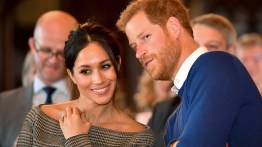
Harry and Meghan deserve a second chance

A little while back I came across a copy of Ted Hughes’s Laureate poems which had an inscription to some friends. Inside was an unpublished squib by the late poet laureate which read: ‘The Royalist/ Is afraid/ The Queen’s a pin/ In a hand-grenade.’ If I understand the poet’s meaning correctly then I count myself such a royalist. I dislike criticism of the royal family, especially of the monarch. When it happens it feels too much like people hammering at something fundamental – far more fundamental than the critic appreciates. If criticism is to be made it seems to me that it should be done privately, so as not to disturb the fragile equilibrium of the rather magical arrangement we have on these islands.

Call me a cripple

In case you missed it (well done, if so), last week Will Self wrote an extraordinary rant on Substack attacking various journalists for how they wrote about Jason Arday and demanding they be held responsible for his death. It reminded me of one of those dogs in a pub that starts barking at some imagined threat to its owner, then gets carried away with the excitement of its own barking until it totally loses its mind and has to be taken outside to calm down.

We are ignoring the biggest threat the world faces

In my mid-twenties, my one-bedroom in Astoria, Queens, developed a roach problem. I don’t mean the odd single scurry disappearing irretrievably beneath the fridge, either. Oh, it started that way. But I didn’t take measures when the situation was manageable because roaches gave me the creeps, and so many activities beckoned that were much more fun. Between a small shelf and the kitchen wall I stored spare brown paper bags – from which I began to detect a rustling. At some point, the bags began to move. Beside them, the wall gathered an undulating shadow that I trained myself never to look at directly; like Faye Dunaway in Little Big Man, I would ‘avert my eyes at the necessary moment’. One night a friend came to dinner and stared at that wall in frank revulsion.

Middle England is finally waking up to the migrant crisis

I don’t know how familiar readers are with the term ‘accelerationism’. It is generally used to describe a tendency on the left, though is increasingly heard on the right too. The basic idea of accelerationism is that there are certain flaws in the societal structure which if pushed could bring things to their inevitable conclusion more quickly. It is why there are so many people on the left of politics who say that sustainable government spending should be discouraged. It is not just because they are economically illiterate. What they really hope is that a speeded-up financial disaster will expose the ‘underlying contradictions of capitalism’, and we’ll all realise that Karl Marx was right and promptly vote for Zack Polanski or similar at the next election.

Baby Gabriel-Rumi is the latest victim of the global surrogacy business

On Tuesday, a court in Dallas, Texas will convene to decide the fate of a small baby called Gabriel or Rumi, depending on who you believe his mother is. Gabriel-Rumi is at present a sort of Schrödinger’s baby, suspended between possible futures and suspended also, poor sod, between life and death: born with heart disease, headed now for surgery. Gabriel-Rumi’s short life has so far been the subject of a media frenzy, for reasons I’ll explain, but should he later look back and be appalled at all the fuss, I’d like him to know what a service he’s already done the world.

I love Cape Town – but it’s not Africa

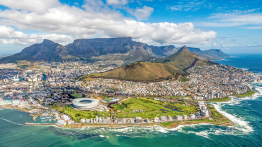
There can be few foreign cities where the Spectator, Times and Telegraph are more widely read than Cape Town. In a queue where I waited before coming home this week, readers volunteered to me – a columnist whom they recognised – their thoughts about these journals, their contents and their columnists. I love Cape Town but it’s not Africa. Along with Nairobi it’s perhaps the African city where white English people could now most easily imagine settling or retiring; but, though visits are always pleasant, I can never quite escape a nagging feeling that something’s not quite right about this lively, wealthy, cultured city in its breathtaking setting – and I’m not just talking about the appalling black slums you pass as you drive to or from the airport.

Bond’s identity crisis mirrors Britain’s

Sometimes I wake up in the night disturbed by dreams of James Bond. Surely, you might say, that’s the point of him; a man of such raw sex appeal that he can break the somnial boundary of women all over the world. But these aren’t sexy dreams about Bond’s past; they’re nightmarish visions of his future – Bond in the modern British public sector. Picture it, 007 walks in for his briefing with M. The process is not the quick-witted sparring of classic Bond but a long PowerPoint presentation complete with a quiz at the end to show he’s been listening. Miss Moneypenny doesn’t ‘feel comfortable’ booking Bond flights because of the carbon output, so he finds himself on a rail replacement bus service.

Politicians’ contempt for the press is contempt for the public

I was hacked by the Chinese a few years ago. Security at News UK, where I was employed on the Sunday Times, told around 20 journalists that our emails had been compromised. An agency of the Chinese state was searching for information on our coverage of Chinese issues, including Beijing’s crushing of Hong Kong and the decision to sanction members of parliament. To be honest, I’d have been pretty offended if I hadn’t been on the list. Frankly, if the Chinese want to know what I know, they can take out a subscription to The Spectator, just as they could have bought a copy of the Sunday Times. But this is what you expect from the Chinese, isn’t it?

How I learnt to stop worrying and love pessimism

I was on friendly terms with Rod Liddle for quite a few decades. He applied for the job I got when I was 17 at the New Musical Express, which kicked off my writing career. Though I wouldn’t claim we were bezzie mates, we had a lot of the same friends and we met up in a couple of group lunches and had a laugh. So I was surprised at my lack of grief when he died. (Apparently he too was remarkably sanguine about his ending.) My overwhelming feeling was: ‘Good for Rod – he escaped!’ It’s the first time I can recall feeling that way about the premature death of someone I knew a bit and liked a lot. Why, I wondered, did I react like this?

Don’t blame supermarkets for your expensive shop

I’m sufficiently nostalgic for the British supermarkets I left behind in 2023 that on visits to the UK I run a small-scale import business between London and Lisbon. I restock: Tesco Dijon mustard (top-drawer and a bargain), rice bran oil (unavailable in Portugal) and (do not tell Portuguese customs) blocks of extra-sharp British cheddar along with bags of slender fine green beans, tails all lined up marvellously on the same side. Thus I was put out by the new Chancellor’s warning earlier this month that the government will be ‘watching closely for any suggestions that customers are being taken for a ride’ in supermarkets. John Healey’s keeping an eye out for ‘price-gouging’, assuring the public that ‘our regulators have the powers to clamp down on it’.

The mawkish madness of Dobby’s ‘grave’

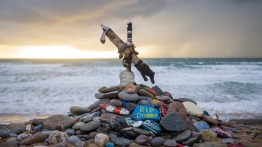
I don’t know how many readers have visited the grave of Dobby the house-elf, but any who have should immediately be sectioned and have their subscriptions to The Spectator cancelled. This strong course of action occurs to me after reading one of those stories that can make you laugh, cry and smack your head into your hands all at once. It relates to a ‘memorial’ which apparently sits on Freshwater West beach in Pembrokeshire, Wales. The area is run by the National Trust – a charity which used to look after our nation’s heritage sites. The beach in question was where filming took place for Harry Potter and the Deathly Hallows.

The Keminisation of the Tory party

Since succeeding Rishi Sunak in November 2024, Kemi Badenoch has had two jobs to perform. Firstly, her constitutional obligation as leader of the opposition, which she has fulfilled well. In parliament, depleted Tory ranks have been marshalled effectively, harrying successive Labour notables from office by tabling questions and demanding answers from, among others, Peter Mandelson and Morgan McSweeney. Her despatch box style has impressed – though, after the departure of Keir Starmer, aides concede that a tonal shift might be necessary for the ‘very different beast’ that is Andy Burnham. Now, with her position secure, it is the second task to which she must turn: her role as leader of the Conservative party. Most Tory leaders have a strained relationship with their party.

Rod’s bravery made others brave too

How do you produce the type of person who cares deeply while seemingly not giving a damn? With great difficulty, it turns out. Plenty of people imagine that they can say what they think, but very few do. For most people, some real or imaginary social punishment lies on the horizon: a dinner they won’t be invited to; a club of which they fear they will never become a member. Rod Liddle was one of the happy few who was free. He was free to say what he thought. He was free to voice unpopular opinions and – often harder – he was free to voice popular opinions. When the whole world seemed to be falling on his head he had a perfectly contented attitude towards it.

Project Spire is the Church of England’s Chagos deal

The Church of England can always be relied upon to walk into a room just as everybody else is leaving. The question of whether we have reached ‘peak woke’ – the high watermark of Americanised racial politics dictating every aspect of public life – remains open. However, those post-Black Lives Matter efforts, which saw mass demonstrations and acts of self-abasement by companies and institutions, are undeniably more muted and more disputed than they were in 2020. It seems unlikely that, for example, Andy Burnham would ‘take the knee’, as Keir Starmer did so unthinkingly.

What’s so wrong about a ‘dementia tax’?

Winston Churchill had a name for it. ‘Happy thoughts’ was his description of policy proposals that gave the proposer a warm feeling but were unfeasible, unaffordable or for other reasons no more than desiderata. Our new prime minister offers a master-class in this method of spreading happiness. And foremost among Andy Burnham’s now almost daily exercise in sharing his desiderata are his suggestions – surely too vague to be proposals – for a new system of universal social care for the elderly, free at the point of use. To the extent that the idea has any discernible shape at all, it seems that a sister-body to the National Health Service might be set up to meet and administer this massive new entitlement.

Bots for tots: welcome to the terrifying era of AI toys

In the centre of Durham last week, at the far end of the old indoor market, my son and I hit pay dirt. Down past the fishmonger and the cleaning supplies, past the dead-eyed teens suffering through their summer jobs, right against the market’s back wall: Jim’s Vintage Toys. Die-cast Dinkys, Napoleonic soldiers with tufted hats, stormtroopers, old-school Ferraris. Within 20 seconds my ten-year-old had a car in each sticky hand and had dropped, sniper-style to the floor into that universal boy play-position almost never seen in girls: bum up, shoulders twisted, cheek flat to the floor. Another few seconds and he was unreachable, sunk deep into an imaginary race.

No election? Don’t bet on it

When Dwight D. Eisenhower had to decide whether to launch the D-Day armada he kept a close eye on the weather. Pick the wrong moment and the entire cause of winning the war would have been set back and the lives of 135,000 soldiers imperilled. The supreme allied commander, head of a fractious coalition riven by egos and infighting (you see where I’m going here), had plenty of expert advice, as is made clear in David Haig’s play Pressure. The British meteorologist, James Stagg, warned that the original date for D-Day, 5 June 1944, would be storm-ridden, but saw a window of opportunity the next day. The American meteorologist Irving P. Krick was more gung-ho and urged Eisenhower not to postpone. Ultimately, the decision was Eisenhower’s alone.

I wish more people had imposter syndrome

I have spent part of the past week thinking about imposter syndrome, and how we might be able to give it to more people. In an interview this week, Andy Burnham’s best friend Steve Rotheram, who happens to be the Mayor of Liverpool, said that our latest Prime Minister had struggled with imposter syndrome ‘for many years, like most people from working-class backgrounds’. All of which leaves me slightly baffled. Surely, whatever your origins, if you have made it to Cambridge University in your late teens, got a job in Westminster in your early twenties, become a Member of Parliament in your thirties, have become a mayor, are best friends with a mayor and are now Prime Minister, it might be time to stop with the feeling of ‘imposter syndrome’?