Columns

Tax the poor

A sanctimonious liberal like any other respectable 16-year-old, I made a seminal lurch to the right the first time I opened a pay slip. I was manning the register weekends for the Ice Capades Chalet in Atlanta and made about $40 a week. Or so I imagined. Then where the hell was it? The significantly lighter payment was my rude introduction to taxation at source. Indignation at being fleeced at a minimal income persisted into my adulthood. I lived on a wing and a prayer for decades, and having to pitch anything whatsoever in the communal pot was consternating. I fancied that I asked for nothing from government; in trade, they should ask for nothing from me. I wasn’t yet a grown-up. By that definition, a large portion of Britons are still not grown up, either.


It’s the ideology, stupid

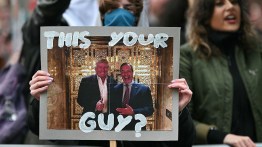
What do Nigel Farage, gender-critical feminism, masculinity, generalised homophobia and GB News have in common? All have been blamed in the past week or so for the pair of terror attacks in Berlin and Paris which left one dead and dozens wounded. Labour MPs (including the cabinet minister Chris Bryant), left-wing commentators and journalists have rushed to point the finger at a variety of bizarre targets. It must be hard being an Islamist. Imagine, you’ve gone to a great deal of planning and effort to commit an atrocity and make clear to the world that your motivations for doing so are your murderous religio-political creed.

How Reform and the Tories plan to fight Andy Burnham

Kemi Badenoch was in an upbeat mood when she addressed her troops last week. ‘This time last year,’ she said to the 1922 Committee, ‘people told me Jenrick was taking over the party, Starmer was steady, Farage would be the next prime minister. A year later, Rob is under police investigation, Starmer has resigned and Farage is not even an MP.’ It was a reminder of how quickly the wheel of politics can turn. Now the arrival of Andy Burnham has reset Westminster. The cabinet has been re-orientated towards Birmingham and the north. Members of the Co-Operative party – the standard-bearers of Labour’s collectivist tradition – have been given the business, energy and education briefs. Mutualism, more than Manchesterism, could define the new government. In his first speech at No.

The problem with the Widdecombe suspect’s ‘fair trial’

It’s hard to hold anyone responsible for anything today in British politics. That’s because no sooner have the facts emerged than everybody in Westminster has played another game of musical chairs. If the word ‘amusing’ can be used in the same paragraph as ‘attempted beheading’ allow me one amusing example. Last month, a 30-year-old asylum seeker from Sudan allegedly attempted to behead a local man on the streets of Belfast. The attack was apparently caught on video. Everyone was geared up to make their points. The left was preparing to argue ‘So you’re saying all asylum seekers are beheaders, are you?’, while the right was gearing up to say: ‘We must hold people accountable.

Kemi needs her centrists

Every time I begin to see Kemi Badenoch as a plausible leader not of the Conservative party alone, but of the whole nation, something crops up to spoil it. Don’t misunderstand me. She’s now an imaginable prime minister. Badenoch is beginning to impress not only old has-beens like me, who always wanted to admire her – though at first we struggled – but also a news media that had tended to dismiss the possibility of a strong Tory challenge. Many who weren’t fans can’t but notice a leader growing into the job. Opinion polling backs that up. While Badenoch speaks well and has been writing impressively for newspapers like my own, the emerging regard for her capabilities is so far owed mostly to her performance at Prime Minister’s Questions.

Put on a suit and tie, Prime Minister

A brass fanfare; a wide establishing shot of five men in three-piece suits, seated in a library of leather-bound tomes – this is Harold Macmillan doing informal. The scene is from a 1959 party political broadcast, which purports to show a ‘relaxed chat’ between Macmillan and four of his ministers, all of whom he refers to by their cabinet titles. Almost everything about it is artificial (including quite possibly the claim that it took place the day after the parliamentary recess). Watching it now is a reminder of two things, perhaps contradictory. First, that prime ministers have always played a clever and not entirely authentic game when it comes to informality; second, how far we’ve fallen. Can you imagine the equivalent today?

The hijacking of Ann Widdecombe’s death

I don’t know if you remember that old saw: ‘Always speak ill of the dead.’ I don’t recall being brought up with it myself, but a number of our fellow countrymen apparently were. After the brutal killing of Ann Widdecombe last week we saw some fine examples of people following this rule. Peter Tatchell – a prominent member of the ‘be kind’ brigade – took to social media to describe the death of Widdecombe in celebratory tones. He listed her crimes, such as her belief that marriage is a union between a man and a woman, and then ended his tweet by saying: ‘BIGOT!’ As though final judgment had been passed down from on high.

I was targeted by a killer – but I’m still against more security for MPs

Reason, David Hume noted, is a slave of the passions. Arguments, especially political crusades, are often rooted in emotional responses, with the evidence assembled to justify a position which is heartfelt but often wrongheaded. So it is with the cry, from politicians, for more steps to be taken to safeguard the personal security of politicians. The killing of Ann Widdecombe, like the deaths of Jo Cox and David Amess, has generated new demands for action, and legislation, to protect those in public life from risk and danger. The transparent nobility of Ann’s life and the grotesque tragedy of her death make it emotionally difficult to resist the call for strengthened perimeters around our politicians.

It’s time the Tory party got properly nasty again

In the 2024 American and British national elections, it was no mystery why the incumbents lost. Both the Democratic and Conservative parties had abandoned their core principles. Democrats veered so far left that they fell off the edge of the world. Tories squandered 14 years in power competing with the sopping opposition over who could be more wet, a strategy perfectly designed to alienate the entire electorate. Left-wing voters will not – surprise – vote ‘Conservative’. Conservative voters want – surprise – conservative representatives and instead got sheep in sheep’s clothing. Although I’m seldom keen on purity tests, Kemi Badenoch now heads a party that resembles Britain’s sewage-mucked rivers, and it could use some purifying.

Labour politicians make the pilgrimage to St Andy

Warm wine, small talk and curling canapés have long defined the Westminster summer scene. But regime change has added a certain frisson to the party circuit this year. As many of Labour’s finest toasted America’s semiquincentennial at the US ambassador’s house last week, the hostility radiating from Keir Starmer’s No. 10 team was unmistakable. ‘I’ve had them shooting daggers at me all night,’ complained one rebel MP, amid toasts to the revolution. ‘It’s over guys, you lost.’ As fireworks exploded overhead, another added: ‘The king is dead, long live the king.’ The Prime Minister’s decision to step down, paving the way for Andy Burnham’s coronation, has spared his party plenty of pyrotechnics.

How can we de-programme the police?

I’m not sure why I started following the photographer Alastair Hilton on X. He’s right-ish politically, so perhaps the algorithm just blew him my way. But through the rising tide of online bilge, I still seek out and enjoy Hilton’s posts, mostly because he talks about pubs and posts pictures of cold pints on hot days. Hilton has a narrowboat on the Thames in Chiswick and seems to half live in the bars along the river, so he was extremely cross about a recent proposal to remove the tables and chairs from the riverside, especially from his local pub, the Bell and Crown.

What Farage can learn from the anti-Trump playbook

In January this year Dominic Cummings – once of this parish – warned The Spectator’s editor and assistant editor that Whitehall and the establishment parties would ‘stop at nothing’ to prevent Nigel Farage from becoming prime minister. As Cummings told the Quite right! podcast: ‘The people around [Keir] Starmer and all through the upper echelons of the Whitehall system are looking at Donald Trump. They’re looking across Europe, and they’re saying to themselves: “The lesson is to strike early and strike hard and not let these people in… Let’s smash the absolute living shit out of Farage, and make sure that he doesn’t win, by fair means or foul.

We should fear drones, not invasion

A stray thought of my own while watching Iranian drones tracing fiery paths over the Gulf, a stray quote from Ukraine and the background rumble of uncertainty about Britain’s Defence Investment Plan, have set my mind racing. My conclusion is at the same time obvious yet unnerving. As a European power, we have been watching the Ukraine war from almost the front row, but it has seemed a world away. Nightly on television we’ve seen Russian and Ukrainian attack drones streaking through the sky, half-reminiscent of a grisly firework display. From our armchairs we’ve read about how this conflict is turning into a competition between drone capabilities.

Reform is right to fear the return of Boris

The man from Reform had barely sat down at our table at the French bistro when he leant forward conspiratorially and asked: ‘What’s Boris up to?’ The suspicion that Boris Johnson, Britain’s 55th premier, must be up to something is a familiar one. For the first time in several years, however, the question is interesting. And the fact that Reform is raising it gives a small insight into the current state of politics. The query came just hours after Johnson had taken to Instagram to mark the tenth anniversary of the Brexit referendum, the defining moment of his career and of our politics since. The 17.4 million voters who backed the Leave campaign were right to do so, he said, before going on to hail the freedoms of Brexit.

The confessions of J.D. Vance

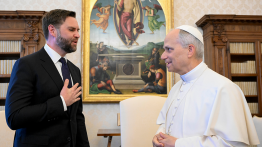
There were many reasons why 2016 was a strange year. One of them was the halfhearted effort by people on both sides of the Atlantic to try to understand why voters had voted the ‘wrong’ way in the Brexit referendum and the US presidential election. The book that was touted as an explainer for all of this was Hillbilly Elegy, a memoir by someone called J.D. Vance about his upbringing in rural Ohio. After the election of Donald Trump, Vance’s description of family breakdown, de-industrialisation, poverty and drug abuse was said to explain why so many Americans had voted for Trump. There was much that was patronising about all this – mirrored in France by the attention paid to Didier Eribon’s Returning to Reims.

I can’t remember when I was last so disgusted with Trump

You’d think when your country goes to war you’d want it to prevail, but these are topsy-turvy times. Thus the dominant American commentary on Donald Trump’s ‘excursion’ in the Middle East – or should we call it a ‘special military operation’? – has come from pundits who yearn for Epic Fury to fail. Close-up and personal antipathy for their President far outweighs theoretical distaste for a tyrannical theocracy in another hemisphere. For these critics, the glaring deficiencies of the ‘Memorandum of Understanding’, Trump’s already shaky negotiated peace deal, are gratifying. I’m not one of those people.

Non-hunting people will never understand the loss of a horse

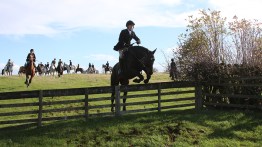
My favourite hunter has died and I am bereft. No disrespect to the myriad other horses I have known and loved over the years – Ianto, Alfie, Mr Darcy, Thurlow, Boris, Shannon, Etonia, Langford, Motown, Eddie Stobart, Foxy, Totto the polo pony, Sunshine, B.G., Barnaby and the legendary Spartacus. But Carpenter was in a league of his own. ‘You sound more upset about Carpenter than you are about Grandpa,’ said Boy, referring of course to my beloved late father Malcolm, whom I have just buried. ‘Yes, but Grandpa never carried me over hedges in life or death situations,’ I replied. This is the thing that non-hunting people will never understand. Your mount isn’t so much a horse as he is your closest wartime comrade.

How the right can fight Burnham

Andy Burnham has not yet entered No. 10, but the Conservatives and Reform are already preparing for the possibility of an early general election. Resources are being redeployed, attack lines sharpened and campaign plans drawn up for the aftermath of Labour’s coronation. Nigel Farage wants a snap showdown. Kemi Badenoch insists defence must be properly funded before the country is returned to the polls. The rapid elevation of the MP for Makerfield poses tricky questions for his opponents. Burnham has built a following without a clearly defined ideology or coherent policy programme, leaving strategists in Reform and the Conservative party – like much of Britain – unsure which version of him will walk into No. 10. Yet despite that uncertainty, preparations are being made fast.

Burnham’s worryingly vague vision for Britain

Once again the question occurs: ‘Why do they want it?’ Keir Starmer held a very important role in the legal profession before entering parliament, but for some reason he desperately wanted to be even more political. As soon as he became an MP it was plain that he was so keen to get the top job that he was even willing to go through the Jeremy Corbyn period – immiserating his reputation and presumably himself by spending years having to pretend that Corbyn was a suitable candidate for prime minister. Serving in Corbyn’s shadow cabinet was not something that any decent person would do – leading some of us to conclude either that Starmer was not a decent person or that he had such a surfeit of ambition it didn’t matter because it was a means to an end.

The death of two-party politics has been greatly exaggerated

Every twist in the winding road of our politics brings a latest thing to say. These wisdoms usually survive a season or two before succumbing to the new thing to say, which often asserts the opposite. This summer we have ‘Britain is moving into an era of multi-party politics’. Allow me, therefore, to leap ahead with my candidate for its successor: ‘Reports of the death of two-party politics are greatly exaggerated.’ I don’t say our current governing party and principal opposition must always be the two parties in question. Labour may be dying. The Tories may be showing signs of life. In both cases I fervently hope so. But whether or not these remain our two options in elections to come, the tendency will always be for the choice to boil down to two.