Cinema

Routine carnage

If you go down to The Cabin in the Woods today you can be sure of very little in the surprise department and an insufferably dreary time of it. It’s a comic horror film and although I do not like horror, comic or otherwise, it’s the only major release this week, so I felt compelled. Also, the website www.rottentomatoes.com, which aggregates film reviews, had given it a 95 per cent approval rating based on critics calling it both ‘hilarious’ and ‘frightening’ and ‘a game-changer’ even though it is none of those things. Still, at least it does go to prove what I have said all along: I am the only one you can ever trust, and the only one you should trust.

Booze and pews

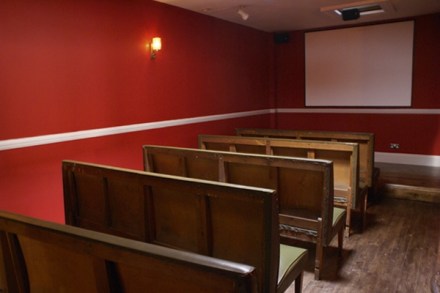
Home cinema equipment isn’t only for the home; in fact, home may not be the best place for it. If you really want to see the effect of a good digital projector and a set of surround-sound speakers, put them in the back room of a pub. An increasing number of publicans are doing so. There are at least four pub cinemas in my narrow slice of south London. They bring in regular custom on quiet nights, and can help landlords make good on the ferocious cost of their Sky Sports subscriptions. In the age of austerity and the £12 movie ticket, they make sense for viewers, too. My pub-cinemagoing has been done at the Montpelier, in Choumert Road, Peckham, which is at the more serious end of the phenomenon.

Twilight zone

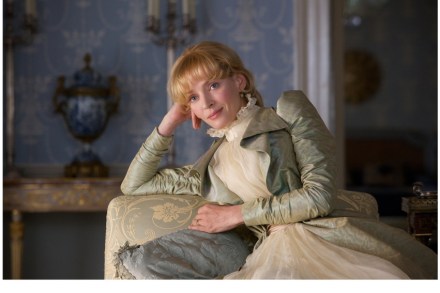
I’m not sure that everything wrong with the world can be blamed on Twilight — but most of it can. Ever since those oh-so-dreamy vampire stories first set hearts a-fluttering and cash registers a-ringing, Hollywood has been looking out for other fantasy yarns to strip down and hawk to 13-year-old girls. And now it has alighted on fairy tales. Last year we had a film of Red Riding Hood (from the director of Twilight). This year we have Snow White and the Huntsman (with one of the stars of Twilight). And there are also adaptations of Beauty and the Beast and Sleeping Beauty on the way (and if they don’t overlap with Twilight somehow, what’s the point?). Then there is this: Mirror Mirror, another version of the Snow White tale.

Defying logic

Switch is a French action thriller starring that lumbering wooden legend of French cinema, Eric Cantona, and it’s awful, but at least it is one of my favourite kinds of awful film: so awful it’s a triumph. If I were ever invited to lecture at film school — remarkably, I have yet to receive such an invite — the first thing I’d say is: girls, boys, although your narrative shouldn’t be predictable, it must add up in terms of what has gone before. Your characters shouldn’t change personalities overnight. Also, it always helps if the plot actually makes sense. This narrative follows no known logic: not internal, not external, and not even the sort of logic that dithers out on the patio and has a smoke while trying to make up its mind.

Bad habits | 31 March 2012

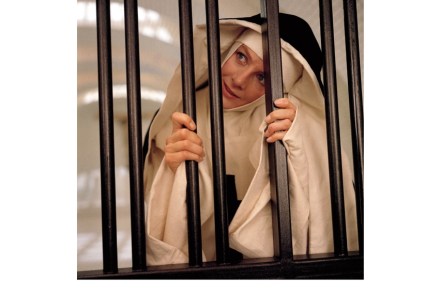
When the late Ken Russell published his autobiography in 1989, he called it A British Picture. That title could just as easily describe The Devils, his 1971 adaptation of Aldous Huxley’s The Devils of Loudun, relating the true story of supposed demonic possession among Ursuline nuns in north-west France in 1634. Here is a world-class film by a British director, with British stars and crew,  sets by Derek Jarman and a score by Peter Maxwell Davies. So why is it only now getting a DVD release? Combining sexual abandon, outright blasphemy and scenes of convent life unlikely to be mistaken for The Sound of Music, The Devils fought a notorious battle with the British Board of Film Censors that has been allowed to eclipse the quality of the film.

Man and boy

Totally unexpectedly, as I don’t like Brit gangster films particularly — so many sociopaths, so little time — I loved, loved, loved, loved, loved Wild Bill and, for those of you who are slow on the uptake, let me say four times more: I loved, loved, loved, loved it. It may not even be a gangster film proper, although it is certainly being sold as such, with a poster that’s all tattooed fist. This is a shame, as it’s actually a rather delicate and elegant piece of work combining great storytelling, a terrific script, and characters you can seriously care about, and do. It hits all the marks. You’ll laugh. You’ll cry. And you’ll love it as many times over as you can accommodate.

Redeeming creatures

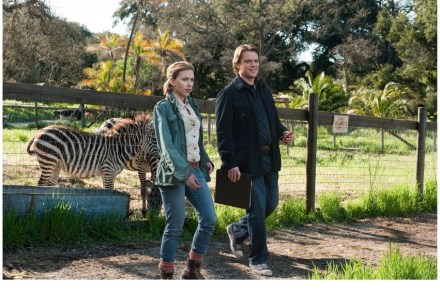
We Bought a Zoo — in which a family buys a zoo — does what it says on the tin and if you like this sort of film you will like this and if you don’t you won’t, and you have to ask yourself why you buy The Spectator every week? It’s for analysis like this which, I think you will find, is unavailable elsewhere. But do I like this sort of film? Actually, I rather do. There are no surprises. It is comfortingly straight up and down. It is heartwarming, to the extent you can buy it. There are animals: lions, tigers, a grizzly bear, and a funny little monkey. I found it a perfectly agreeable way to spend the two hours I would otherwise waste and you may feel similarly if this is the sort of film you like, but probably not if you don’t.

Running on empty | 10 March 2012

Bel Ami is based on Guy de Maupassant’s 1895 novel of the same name about a young man who sleeps himself to the top of Parisian society — I once slept myself to the top of Parisian society, but by the time I got there I was far too exhausted to properly enjoy it — and while it is lush and handsomely mounted and features copious sex scenes it lacks what it would absolutely have to have were it to work: erotic sizzle.

Going nowhere | 3 March 2012

The first and perhaps only thing to really say about Hunky Dory is that it is anything but. It is not hunky dory at all. Instead, it is half-baked and tiresome. I’d had rather high hopes for it. It’s a ‘let’s-put-on-a-show!’ film set in a Welsh comprehensive during the long hot summer of 1976 — the summer I turned 16, as it happens — so I expected at least some of it to resonate, but its characters are so unfinished and improbabilities so plentiful and narrative so unoriginal it’s like an extended episode of Fame, only worse.

People like us | 3 March 2012

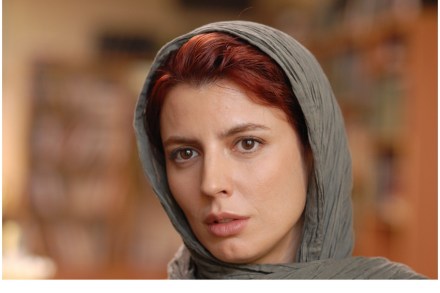
This week A Separation, Asghar Farhadi’s deceptively simple domestic drama, added the Oscar for Best Foreign Language film to its trophy case. Its success abroad has been attributed largely to its universally recognisable premise; unlike much Iranian cinema, Farhadi’s film feels modern, offering an intimate snapshot of social divisions in present-day Tehran. Most Western audiences will spend the first five minutes, in which we see a husband and wife asking a judge for a divorce, marvelling at just how like us these people seem. The film’s style feels familiar, too. As in Ingmar Bergman’s Scenes from a Marriage (which Farhadi openly admits to imitating), the camera is close-up, inquisitive rather than didactic. Morality, even the truth, seems to be subjective here.

Golden oldies | 25 February 2012

A young Indian entrepreneur, Sonny (Dev Patel), has a brilliant idea: to open a hotel that caters for the ‘elderly and beautiful’ British tourist. He plans, in other words, to exploit that pot at the end of the service industry rainbow, the ‘grey pound’. Sonny fakes some photographs depicting what he hopes his hotel will look like (one day in the future when the building works are done) and prints a brochure that hoodwinks seven gullible pensioners, each in a state of mental and/or physical disrepair, into booking their one-way ticket to The Best Exotic Marigold Hotel.

Terribly long & awfully sentimental

Unless I am Extremely Dim & Incredibly Thick, which is always a possibility — you think I don’t know? I do — this Stephen Daldry adaptation of Jonathan Safran Foer’s 2005 novel Extremely Loud & Incredibly Close just doesn’t seen to have any point, and is sentimental and banal as well as very, very long (or so it seemed). It may have worked as a book — I can’t say; I never read it — but as a film it’s a trial. Why has it been Oscar-nominated in the Best Picture category? No idea, although I would suggest it caters to America’s idea of itself as a nation that can triumph over anything, including 9/11, and to the notion that all scars can always be healed, which I’m thinking is patently trite nonsense.

It’s not easy being green

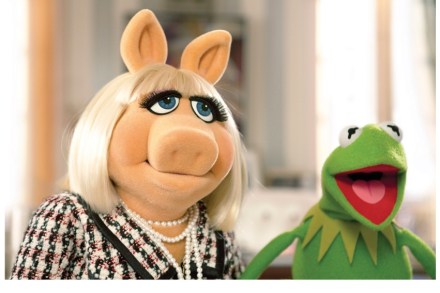
The Muppet Show was my favourite TV programme when I was growing up, but this film, the first in over a decade? Not so much, even though it is fun in parts. I liked it terrifically at the beginning, and loved seeing Kermit again, and Miss Piggy, with her ‘pork chop’ (‘Hi-yah!’) and Gonzo and Fozzie Bear and Animal, because they are all such distinct personalities, and have such presence, and when I heard the theme tune for the first time in years — ‘It’s time to play the music, it’s time to light the lights, it’s time to meet the Muppets on The Muppet Show tonight...’ — I felt I might actually burst with happiness, although luckily I didn’t.

The parent trap | 4 February 2012

Carnage is Roman Polanski’s adaptation of Yasmina Reza’s hit stage play The God of Carnage, in which two sets of parents get together to discuss an altercation between their 11-year-old sons in the hope that they can figure it out sensibly, and all hell breaks loose. I have my reservations. I’m not convinced the play was exactly begging to be filmed, particularly as Polanski doesn’t open it up and keeps it, more or less, to one suffocating room and hallway, and I’m not convinced it’s particularly deep or insightful, but there is some enjoyment to be had from watching four actors at the top of their game get to where they do get to, even though it’s not much of any place.

Crisis in Hawaii

The Descendants is a comedy-drama about a dysfunctional family — is there any other kind of family? I’ve yet to meet one — made by Alexander Payne, who also made About Schmidt and Sideways, but whereas I warmed to those films, I could not warm to this. I liked it. I enjoyed it. I did not resent the time I’d spent watching it, although that may just be because I seriously have nothing better to do. (I spent much of this morning removing the fluff from my keyboard with a pin, for example.) It’s already been heaped with praise and two Oscar nominations (for best picture and George Clooney’s performance) but it left me cold. I suppose at some level I just could not buy it or its basic premise that someone married to Clooney might have an affair.

Who does she think she is?

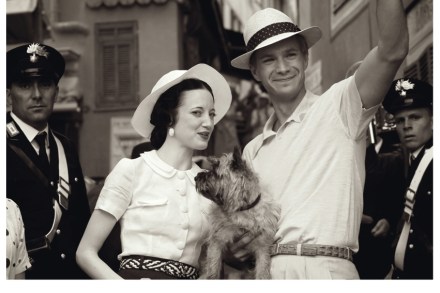
W.E. is Madonna’s second outing as a film director, and this tells ‘the greatest royal love story of the 20th century’ via two women separated by more than half a century: Wallis Simpson (Andrea Riseborough) and a modern-day New Yorker, Wally Winthrop (Abbie Cornish), a society wife who becomes obsessed with Mrs Simpson when her possessions come up for auction at Sotheby’s. These days, it is common practice to ridicule and deride Madonna — just who does she think she is? And so on — but I am not of this camp, believe this film has much to teach us, and the top ten lessons are as follows. 1.

No compromises

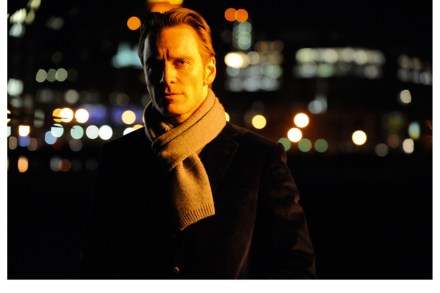
The latest film by the Turner Prize-winning artist and now acclaimed film-maker Steve McQueen is an electrifying snapshot of the life of Brandon, a sex addict, played by Michael Fassbender. Shame (released this week) is McQueen’s second feature and follows his 2008 debut Hunger, about the Irish Republican hunger-striker Bobby Sands, which also stars Fassbender. McQueen, 42, is west London-born and Amsterdam-based.

Lost in translation | 14 January 2012

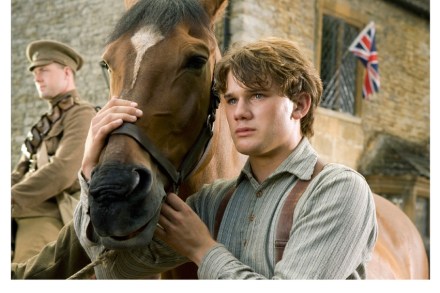
Steven Spielberg’s version of War Horse is like an extended Sunday afternoon episode of Black Beauty gone mad via the first world war, just so you know, and although it made me cry this is no endorsement. I rarely cry in real life but have been known to howl in the cinema, even when I’m aware something isn’t much good. It’s as if my brain and tear ducts are entirely unconnected so while, in this instance, my brain was saying this is a mediocre film, prosaic, plodding, over-sugared and with nothing like the power or imagination of the stage play, the tears still plopped. I wish there was something I could do about it. Is there a lead available to somehow connect my brain to my tear ducts? From Maplins, say? It would be good if there was.

Mixed blessings | 7 January 2012

Firstly, my review of 2011, which I was going to do in photographs until I realised I didn’t take any, and then in animal thumbprints, but they are quite rubbish. My dog, for example, looks nothing like a dog. So I will spare you my review of last year — my giraffe is getting there, but still needs work — and, instead, will give you our first film of 2012, Mother and Child, which is terrifically acted and affecting in part, but also peculiarly pat and unsatisfying. If you haven’t yet seen The Artist, I would put that way, way, way ahead in the queue, and if you’ve yet to see it, I would further ask you this: something wrong with you? My recommendations not good enough for you all of a sudden?

Unalloyed joy

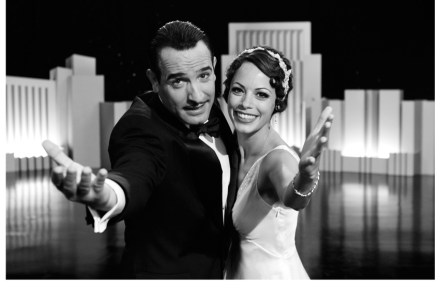
Every so often a film comes from the left field and plays a complete blinder and The Artist is such a film. It is also glorious, delicious and an unalloyed joy and if you don’t go see it you are a bigger fool than I thought you were, which is going some. It’s a film about silent films but not just a film about silent films because this is a silent film about silent films, and so beguiling and touching and funny and tender and clever without being cute it’ll warm the cockles of your heart. I loved it, adored it, delighted in every frame of it, would run off with it, if I could — right now, today — and as my cockles now say, ‘Thank you. We are warm. It’s nice.