Cinema

Plucky woman

The Iron Lady is a better performance than it is film, although I suspect the performance will carry the day. My good friend Meryl Streep, whom I have personally witnessed making pie with her very own Meryl hands, is awesome, flawless and magnificent, etc. but the film itself is peculiarly glib and superficial and somehow brushes over her actual politics. It is Thatcher without Thatcherism. It is Thatcher as a kind of Boadicea or Queen Elizabeth I. It is Gloriana of the kind that will please the Right and pleases Bruce Anderson (see feature pages) although, let’s be honest, anything that pleases Bruce Anderson does have to be a bit wrong somewhere. I hope Bruce will forgive me saying this, or what? Not sit on me, I hope. No one could be expected to survive that. (No, Bruce, no!

For your eyes only

Puss in Boots was the surprise hit character — the standout sidekick — of the second Shrek movie, and went on to tickle us in Shrek the Third and Shrek Forever After. Sleek, foolish, vain and blessed with the all-butter voice of Antonio Banderas, he was the roving ginger tom whom audiences wished to take home and make a pet of. His easy charm and roguish asides have earned the well-heeled moggy what every sidekick wants but few deserve: his own ‘origin story’. Puss in Boots is a full-length, computer-animated feature film which describes the making of the mouser. Several fairy tales are put through the scriptwriters’ mouli and served up where once upon a time and long ago a story might have been written.

A la recherche du temps perdu

Hugo 3D is Martin Scorsese’s first child-friendly family film and the first thing to say about Martin Scorsese’s first child-friendly family film is that it is a visual wonder: rich, lush, beautiful, gorgeous. But the second thing to say is nothing else is as exciting as the look of it and if there is a third thing it is this: Hugo himself is rather boringly bland and I didn’t much care for him. Honestly, you can wait ages for one thing to say and then three come along at once. Isn’t that always the way?

Choppy waters

As there were no invites this week from Hollywood movie stars — I thought Nicole Kidman might ask me over for a girls’ night in, to do face packs and nails and stuff, but not a squeak — I have to get back to the business of reviewing, and so here we are with The Deep Blue Sea. This is Terence Davies’s take on the Terence Rattigan play of the same name, and it’s awfully, awfully good — superb acting; superb sweeping crane shots; a superb evocation of postwar London in the Fifties — but it somehow fails properly to come to life. A new Davies film is, of course, a celebration, and this is his first narrative one for 11 years, but I think it may be too good for its own good, if you get my drift. (Don’t worry if you don’t.

My dinner with Meryl

Justice is a plodding and uninteresting revenge thriller starring Nicolas Cage and January Jones, and as I don’t have much else to say about it I’m going to fill the rest of the space by telling you about my dinner with Meryl Streep, who stars as Margaret Thatcher in the forthcoming The Iron Lady. This is all true, mad as it seems. And as I outstayed my welcome, as I always do — you can rely on it — I even caught Ms Streep washing up. ‘Meryl Streep washing up!’ I exclaimed. ‘Next, it’ll be Tom Cruise putting the bins out.’ She smiled graciously as she rinsed out a mug. God, she’s lovely.

Bleak and bold

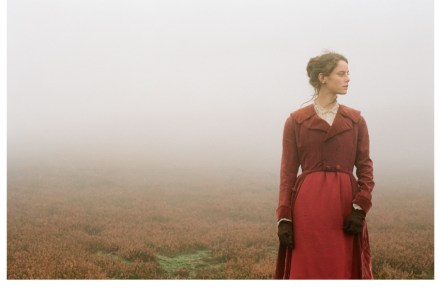
As a major admirer of all writer/director Andrea Arnold’s previous work — Wasp, Red Road, Fish Tank — I was looking forward to her version of Wuthering Heights more than I can say, and? Wow! Or, at least, mostly ‘wow!’ It is a ‘wow’ with a few reservations. It is two thirds of a ‘wow’, so perhaps a ‘wo!’? Wo! It is impressively bold. And brave. And brutish. It will rile the purists, which is always good, as riling purists is a particular hobby of mine, and I like to set aside at least half a day a week to do just that. (I favour putting them in a cage, and poking them with sticks every now and then.

Triple bill

Three films for you this week, amazingly, and they are all at the smaller, independent end of the spectrum because I’ve had my fill of mainstream blockbusters, at least for the minute, and probably know all I will ever need to know about evil villains who wish to take over the world. (Just take it and go, why don’t you? Here, borrow my Oyster card.) I’ll start with Sound It Out, which happens to be my favourite, and is at the very, very opposite end of the spectrum, having been made by a crew of one with a budget of around $0 million and, I suspect, no catering beyond the occasional Greggs meal deal. (Actually, I love a Greggs meal deal, but I think you get what I’m saying.

Anonymous

To see or not to see, that is the question, just as it is always the question with us — I believe our relationship may be caught in what is generally referred to as a ‘rut’ — but I shall answer all the same and my answer is this: Anonymous is a ‘not see’ and I would urge you to not see it at your earliest possible convenience. Shame, as it had looked such a prospect. It’s a big, fat costume drama set during the Elizabethan era which asks what some scholars have been asking for the past century or so: did Shakespeare actually write the works credited to him? It has a tremendous cast, and stars, among others, Rhys Ifans, Vanessa Redgrave, Joely Richardson, Derek Jacobi, Mark Rylance and David Thewlis.

We Need to Talk About Kevin

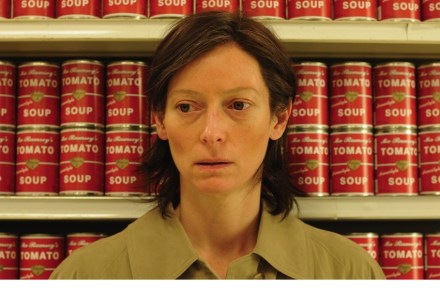
We Need to Talk About Kevin was a horrible book and this is the horrible screen adaptation of that horrible book, and whether you will want to see it or not will, I suppose, depend on how much you are prepared to revisit that horror. At this point I’d love to say you needn’t bother, skip it, there is absolutely no reason why you should upset yourself all over again, but this has been so skilfully executed and Tilda Swinton is so superb I don’t know if I can. It may be one of those pesky films that is awful to watch but is worth watching all the same. Oh, dear. The trouble with cinema is that it can sometimes be quite challenging and may even force you to think, which is exhausting.

Zilch to care about

So, The Three Musketeers, and one for all, and all for one, but I wish it were every man for himself, and they’d all decided to call it a day and go their separate ways. This is a film of no charm whatsoever and I’d advise you to steer clear, walk the other way, keep your money in your pocket, and do something else. Do your VAT return or change all the duvet covers or scour the grill pan that’s been ‘soaking’ for days and I promise you, not only will you have more fun, but one hour and 50 minutes will pass much more quickly, too.

Dare to care

Tyrannosaur is very much in the British working-class miserablist tradition in the sense that it is full of masculine fury and the women who take the brunt of it, and if this does not sound an attractive proposition, it’s because it isn’t, and never is, but, as far as these unattractive propositions go, this is powerfully affecting. I would also add that if, in the upcoming months, the actress Olivia Colman does not win every award going for her performance as a nice Christian lady with something to hide, I will be surprised, stunned, amazed, astonished and incredulous. I will also be dumbfounded, and flabbergasted, and will eat my hat, but not my thesaurus which, over the years, has proved handy, convenient and opportune.

Mind the gap | 1 October 2011

Ho-hum. Another week, another batch of secret agents, and while I have nothing against secret agents personally — they are generally willing to die for their country, which is nice, although probably quite tiring — The Debt never equals the sum of its parts. It has a blinding cast (Helen Mirren, Tom Wilkinson, Ciarán Hinds) and there are some good things to be said for it but it never fully compels or meshes as the emotionally driven, multilayered, grown-up thriller it yearns to be. Plus, it is certainly in the running for my annual, much uncoveted Most Preposterous Third Act Award.

I don’t get it

The basic problem with I Don’t Know How She Does It is that we are meant to sympathise with a rich woman who has an absolutely amazing life and great hair and is nannied to the hilt and I Don’t Know How To Do That. How do you do that? Can you take classes? If so, where? Actually, it’s a shame, and disappointing, and I sort of can’t help taking it personally. I had my son in 1992, when I was working on a national newspaper — stick with me; this anecdote almost has a point — and when I told the managing editor I would be requiring maternity leave, he sighed disappointedly and said, ‘I do wish you girls would keep your legs together.

Marvel of compression

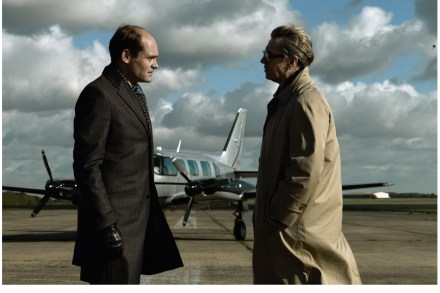
This adaptation of John le Carré’s 1974 novel is so beautifully executed and so visually absorbing and so atmospherically hypnotic that I wonder this: would it have been awfully greedy to have hoped to have wholly understood it, too? I thought the plotting might be an issue — what do I know about spying? Me, who is nervous travelling beyond Brent Cross? Me, who has never broken down in Budapest, spouting all I know about Moscow? — so I took my father to the screening, who is keen on le Carré, and he was able to debrief me. Although, you know what? It kind of didn’t matter, and I kind of didn’t care. I was transfixed by every frame anyhow.

There will be blood | 3 September 2011

Fright Night (3D, which we shall just ignore) is a remake of the 1985 vampire movie of the same name and, while it’s not the most fun I’ve ever had, it’s not the least either. Fright Night (3D, which we shall just ignore) is a remake of the 1985 vampire movie of the same name and, while it’s not the most fun I’ve ever had, it’s not the least either. I’ve just come back from a week in a Welsh holiday cottage with an octogenarian, a toddler, a teenager, a dog and lumpy polyester duvets, which isn’t something you ever read about in Condé Nast Traveller, for example. Anyhow, I’m not sure this Fright Night ever makes a proper case for its own existence.

Tale of the unexpected | 27 August 2011

When I know I’m going to see a film, I like to prepare. I’ll watch the trailer. Then maybe the second trailer. Sometimes a featurette. When I know I’m going to see a film, I like to prepare. I’ll watch the trailer. Then maybe the second trailer. Sometimes a featurette. I’ll read reviews, the director’s statement of intent, interviews with the cast. It’s a terrible habit, really, arming myself with this glut of information; it is difficult to avoid spoilers in among the noise and it makes me want to talk about it, often while it’s on. ‘Oh, this is the bit where that actress messed up her lines but they left it in because it was more “real”,’ is the kind of thing I try to stop myself saying. It irritates me.

Silly and sweaty

There is panic in the extraterrestrial markets. The Ursa Minor indexes are tanking, and slime-based lifeforms throughout the galaxy are dumping the Outer Space equivalent of Italian bonds and piling into something a bit safer — gold. But gold is running out, so aliens looking to diversify their portfolios with the universe’s most valuable metal are left with only one option: steal it from some backwater of a planet like, well, Earth. OK, I’m speculating here. But imagine this scenario playing out 150 years ago, and you pretty much have the backstory of Cowboys & Aliens — in which an intergalactic mining vessel thuds down somewhere in the New Mexico Territory with the intention of gittin’ it some bullion.

Monkey business

Apes have always made lousy movie stars. They never have front-page affairs with other celebrity animals; there’s no Most Emotional Grunt category at the Academy Awards; and teenage girls don’t lie in bed at night, dreaming of one day meeting the Right Orangutan. That’s why, if you going to make a summer blockbuster named Rise of the Planet of the Apes, with a primate in the starring role, you’d better cast a pretty damn good human foil: an actor of such prodigious handsomeness and talent, the audience will forget it has paid good money to spend two hours in the company of hominoids.

Project Nim

Project Nim is a story about man and chimp in which chimp comes out of it well, man does not and, I’m warning you, it’s fascinating, but not pretty. The starting point is an Oklahoma lab in 1973 when Nim, a male baby chimp, is taken from his mother at a fortnight old and sent to be raised by a human family as part of an experiment to discover if another species can learn to communicate with us. We follow Nim all the way, from the moment he is wrenched from his mother’s arms, through Seventies’ academia — a peculiarly hilarious time; Nim is fond of the odd spliff — and right to the end, by which time his helpless innocence has been fully exploited and science has lost interest.

Chaotic mishmash

Horrid Henry (3D, like we care) is the first big-screen adaptation of Francesca Simon’s bestselling children’s books, and if you would like to save yourself a trip to the cinema you can recreate the experience at home by tuning into some super-noisy, busy, brightly coloured Saturday-morning kids’ TV programme while simultaneously bashing your head between a pair of cymbals and wishing you were dead. This film is an agony from beginning to end. The plot is a chaotic mishmash of several others via a number of nonsensical detours, plus all the characters, without exception, are appallingly drawn. There is not a scintilla of truth in any of them. Not a sniff.