Any other business

Armageddon is coming: how real-life employers are preparing for life under Corbyn

Numerous readers told me they liked my recent tale — offered as an antidote to ‘media sniping at corporate capitalism’ — about the temporary school built by Porta-kabin after the Grenfell Tower fire. I’m on the lookout for other business stories that celebrate the positive, and I had it in mind to write about an entrepreneur I’ve known throughout his career who has built an international brand that pleases customers, creates skilled jobs and has carried him through tough times to a fortune. But when we spoke, our conversation took an unexpected turn. Did I realise, he asked, how he and his cohort are beginning to think in relation to the risk of an incoming Corbyn-McDonnell government?

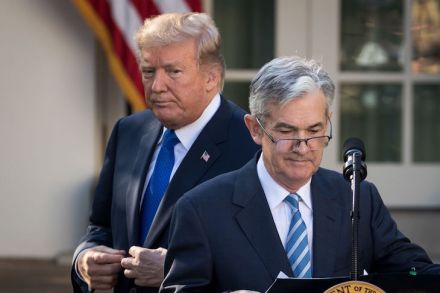
Yes, Jay Powell is the compromise candidate for the Federal Reserve – but not a bad one at that

Perhaps we should be relieved that Donald Trump has made a dull appointment to succeed Janet Yellen as chairman of the Federal Reserve, America’s central bank. He might have picked another alt-right wacko or Kremlin stooge — or his Las Vegas buddy Phil Ruffin, the casino owner he allegedly thought of sending as envoy to China. But in fact he has chosen Jerome ‘Jay’ Powell, an identikit lawyer-turned-banker who has been called the candidate of ‘continuity’ and ‘compromise’ after a late run to beat frontrunner Kevin Warsh, a former Trump adviser with more aggressive opinions on the need for monetary tightening.

Yes, the City needs new global clients – but should they include Putin’s pal?

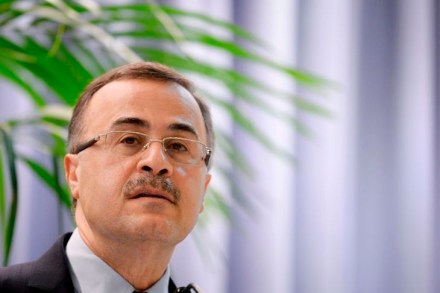
In connection with the receding possibility of a London Stock Exchange listing for Saudi Aramco, I wrote that the City authorities’ apparent eagerness to accommodate companies ‘from places not best known for their accounting standards, business probity or general attachment to democracy and the rule of law’ smacked of Brexit-driven desperation. Russia was one of the places I had in mind. Now along comes a listing candidate that rings more alarm bells than the secretive Saudi oil giant. The company concerned is called EN+ Group, and it is the first Russian entity to come to the London market since Russia’s aggression in Ukraine and Crimea provoked US and EU sanctions in 2014.

Up the Zambezi: why Rio Tinto’s colossal coal cock-up is going to court

Another week, another blue-chip in the dock. The US Securities and Exchange Commission has brought fraud charges against London-based mining giant Rio Tinto and two former executives in relation to an ill-starred coal venture in Mozambique. Whatever its legalities, this was a colossal corporate cock-up. In 2010, Rio paid $3.7 billion for Riversdale, an Australian company that controlled large coal deposits in the Tete region of Mozambique. The plan was to send coal by barge 400 miles down the Zambezi river to the coast, for shipping to Chinese power stations. But the coal reserves proved disappointing, while the Mozambique government refused to permit the barge operation and a rail link proved too expensive.

Are we really half a trillion poorer? No, but we’re not pulling in investors like we used to

How did we mislay half a trillion pounds? Revised data from the Office for National Statistics has just reduced the UK’s ‘net international investment position’ from a surplus of £469 billion to a deficit of £22 billion. Downing Street dismissed this as ‘a technical revision’ — and in truth it’s not as bad it sounds, since what it tells us is that we own fewer foreign assets, and foreigners own more British assets, than had previously been recorded. Does national pride not attach to the idea that the rest of the world sees us as an investment safe haven? So why worry? Well, past miscounting apart, actual current trends in this respect do not encourage optimism.

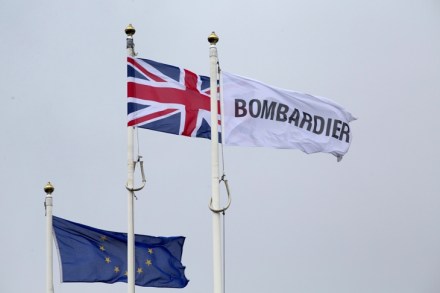
Bombardier says more about aircraft makers’ dirty tricks than the future of UK-US trade

‘Bombardier exposes post-Brexit realities’ was the FT’s headline after the Trump administration imposed a 300 per cent tariff on sales of the Canadian manufacturer’s C Series aircraft into the US, threatening 4,000 Bombardier jobs in Northern Ireland. Irish Taoiseach Leo Varadkar weighed in: ‘There’s been a lot of talk of a new trade deal between the UK and the US and how great that would be for the UK, but we are now talking about the possibility of a trade war.

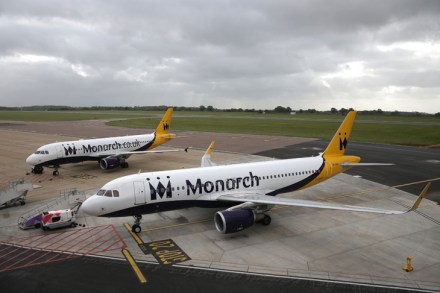
Monarch was an airline from an earlier era – but were its owners to blame for its demise?

Monarch Airlines was the ghost of an earlier age of holiday travel. When I used to see its planes lined up at Leeds-Bradford airport alongside those of Ryanair and its brash northern rival Jet2, I sometimes wondered why Monarch was still there. Now it has been brought down by a combination of the weak pound, too much competition on Iberian routes and too little demand for terrorist-threatened ones to Turkey, Tunisia and Egypt. Even the orderly repatriation of 110,000 Monarch passengers has had an old-fashioned feel to it (perhaps even a touch of Dunkirk, for those who have seen that excellent film), enhanced by the reassuring tones of Dame Deirdre Hutton, the veteran quango queen who chairs the Civil Aviation Authority.

Uber was the ugly snowplough that cleared the path but its dominance is bound to fade

An Uber insider tells me not to write off the ride-hailing giant too soon, because it’s a very smart company for all its faults — and because the numbers of drivers and users for whom it is part of daily life will make it difficult for Transport for London to uphold its licence withdrawal on appeal, so long as Uber makes gestures of humility. But the moral of the story, says my source, is that as a ‘tech disrupter’ invading a regulated sector, the company created by Travis Kalanick ‘relished the fight with governments and entrenched interests far more than was normal or reasonable’, rather than seeking to be part of the urban fabric through collaboration or partnership.

A rate rise in November? After years of dithering, don’t bet on it

It is more than three years since Bank of England governor Mark Carney was accused by Labour MP and Treasury Select Committee member Pat McFadden of behaving like ‘an unreliable boyfriend, one day hot, one day cold’ in his hints about forthcoming interest-rate rises. And it’s more than a decade since the last time the official UK bank rate actually moved upwards: the only shift since McFadden’s remark has been a cut from 0.5 per cent to 0.25 per cent in August last year. In fact there’s a palpable sense that the Bank, in common with other central banks, has all but lost the power to deploy interest rates as a monetary tool, having left them so low for so long.

The City still leads the financial world but faces a fight on all fronts

Should we place faith in a survey, conducted in June but published this week, that says London is still the world’s pre-eminent financial centre? Yes, in the sense that no one challenges that long-standing claim as of today; no, in the sense that complacency would be a huge mistake while every financial firm operating in the City, the West End and Canary Wharf is busy making contingency plans for a bad Brexit outcome.

Ten years after the banking crisis began, the unfairness of its aftermath still stings

Arguably it was Robert Peston’s breathless reporting of trouble at Northern Rock on the evening of 13 September 2007 that kicked off the crisis. The next morning, depositors were queuing round the block and the drama that would almost bring down the global banking system a year later had begun. Looking back after a decade, we can be grateful for the bailout interventions that shored it all up at the moment of cataclysm — but we can also observe the lingering and deep unfairnesses of the longer-term recovery.

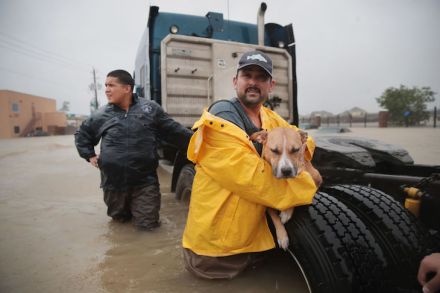
Hurricane Harvey is bigger news than the bankers at Jackson Hole

In Houston last November I spent an evening at the city’s industrial-scale food bank, where I heard a presentation on the Houstonian tradition of offering hospitality to refugees, including 200,000 displaced from New Orleans by Hurricane Katrina. We were also given some positive spin on the strength of co-operation, in time of crisis, between the region’s major oil companies and its state and city governments. Now Houston itself is the victim of Hurricane Harvey.

The truth about Brexit? One professor’s guess is no better than another’s

Removing all trade and tariff barriers as part of a hard Brexit would generate ‘a £135 billion annual boost to the UK economy’, according to Professor Patrick Minford on behalf of Economists for Free Trade — while those who claim his ideas spell economic suicide are ‘hired hands, they work for government, they work for big industry…’ Well maybe, as I frequently say: Minford talks of a 4 per cent GDP gain from free trade, 2 per cent from ‘improved regulation’ and more from reclaiming our net EU budget contribution and ‘removing the taxpayer subsidy to unskilled immigration’. All of which adds up to much more, for example, than the ‘best-case scenario’ of a 1.

Forget London’s ramshackle Garden Bridge: bring on Nine Elms-to-Pimlico instead

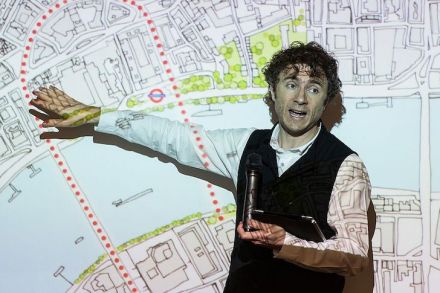
I can’t work up much indignation at the collapse of London’s Garden Bridge project, which has been strangled by the refusal of mayor Sadiq Khan to guarantee its continuing operational and maintenance costs — assuming its trustees, led by former banker and minister Lord Davies of Abersoch, would have succeeded in raising the £150 million of private capital required to build the bridge and plant its 270 trees in the first place. Promoted by Joanna Lumley and Sadiq’s predecessor Boris Johnson, this was a beautiful but whimsical idea, placed in an overcrowded stretch of the Thames and based on a ramshackle business plan.

Fudging Ireland’s border issue can only mean Troubles ahead

The question of what kind of border after Brexit will exist between Northern Ireland and the Republic will, I predict, become a very thorny one indeed as negotiations crawl into the autumn. Talk of ‘putting the border in the Irish Sea’ — somehow leaving the north inside the EU for customs and immigration purposes, but cut off from European funding — was a red herring that provoked DUP tantrums, but more significant was the weekend outburst from Taoiseach Leo Varadkar. As far as his government is concerned ‘there shouldn’t be an economic border… and we’re not going to help [the British] design some sort of border that we don’t believe should exist in the first place.

Cheating German car-makers are good news for Brexiteers

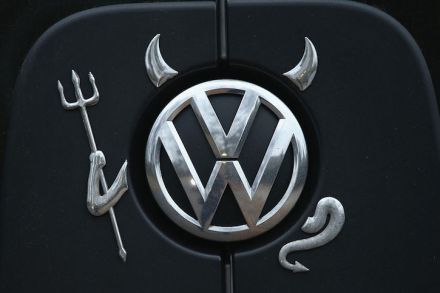
It came as no great surprise to learn that the EU competition authorities are crawling all over the three major -German car-makers, Volkswagen, BMW and Daimler, to investigate collusion via ‘secret technology working groups’ dating back to the 1990s. The most damaging allegation — reported by Der Speigel — is that the three groups colluded over the use of AdBlue, an additive that neutralises -diesel emissions, by agreeing to use small but inadequate AdBlue tanks in their cars when larger, more expensive ones might have done the job properly. (BMW denied that story, but the other two groups declined to comment.

Bending London’s listing rules to win Saudi favour smacks of desperation

Now here’s a tricky question. The world’s largest oil company, potentially worth six times as much as ExxonMobil and ten times as much as Royal Dutch Shell, wants to list its shares on a major stock exchange next year, and has indicated that the choice is between London and New York. The company’s initial public offering of just 5 per cent of its shares promises a $100 billion deal that will generate a fee bonanza for bankers, lawyers and PR men in the chosen marketplace, with several more tranches to come. Clearly London should go all-out to win this lucrative and prestigious piece of business, which would reconfirm the City’s pre-eminent place in the financial world.

The Taylor report is wrong to suggest cash in hand is fundamentally dishonest

Would a cashless world be a better place, morally or fiscally? Matthew Taylor, in his relatively uncontroversial review of work practices and the ‘gig economy’ published on Tuesday, proposed that the £6 billion ‘cash in hand’ economy of payment for window cleaning, gardening, leaflet distributing and similar simple tasks should be regularised and brought into the tax net through the use of apps and other digital payment platforms. Would that really be a good thing? The first point to be made is that it’s probably going to happen anyway over the next decade — at least if we go the way of Sweden. There, cards and phones are almost universally used, even for the smallest transactions.

Let’s make sure our fishermen are protected against Brexit tit-for-tat

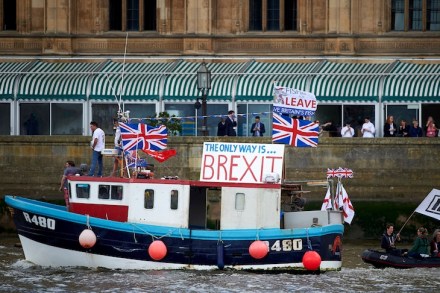
I voted Remain last year for two reasons. First, however irritating I found some aspects of the EU, I could not vote for the chaos I believed would follow a Leave victory. From the accession of Theresa May to the night of the general election, that looked like an excess of pessimism; now it looks like wise foresight. The second prong was an analysis of my own and my neighbours’ economic circumstances: in what sense was EU membership actually making us worse off? In my own case, not at all; local shops, hospitality outlets and tourist attractions, likewise. Subsidised hill farmers and fatter farming cats on the flatlands? Not really, even though broader frustration with Brussels made many of them vocal Brexiteers.

The next financial crisis is coming ‘with a vengeance’, says the expert. But when?

There’s a passage in Philip Larkin’s All What Jazz, the collection of his writings as the Daily Telegraph’s jazz critic, that imagines his typical readers. Husbands of ‘ageing and bitter wives they first seduced to Artie Shaw’s “Begin the Beguine”’ who take comfort from collections of ‘scratched coverless 78s in the attic’, they are ‘men whose first coronary is coming like Christmas’. The same sense of gloomy inevitability often pervades the so-called ‘dismal science’ of economic commentary, amplified by political uncertainty and traumatic events: the one thing we know for certain is that economic life is cyclical and that any run of benign signals can only ever be temporary.