Any other business

Is Mrs May’s industrial strategy just another misguided missile?

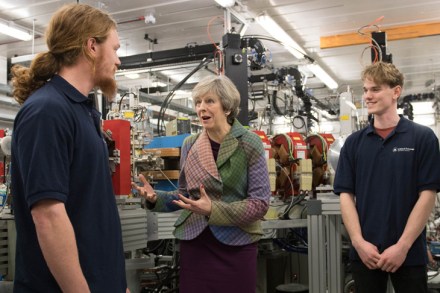
The Prime Minister’s heralded ‘industrial strategy’ was robbed of headlines by the story of the misguided Trident missile. But it was perhaps as well that the 132-page green paper — with its ‘ten pillars’ of platitude about ‘delivering affordable energy and clean growth’, ‘improving procurement’ and all the rest — garnered so little attention, because even the business voices who were waiting to welcome it were quick to spot it as no more than a wordy discussion draft, bereft of substantive ideas.
As the rich get richer and Trump takes power, Davos Man should be very afraid

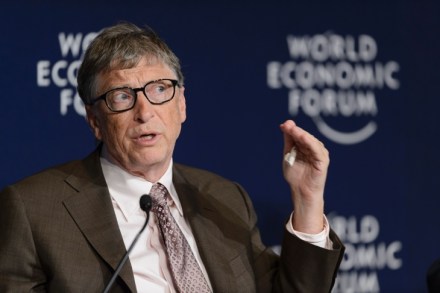
I’ve objected before to the fact that supporters of Oxfam shops are unknowingly funding not only an aid charity but also a left-wing thinktank that promotes its beliefs with considerably more zest and clout than Jeremy Corbyn does. Its latest paper, An Economy for the 99%, issued to coincide with the gathering of the global elite at Davos, offers a killer factoid: that whereas three years ago the richest 85 people on the planet ‘had the same amount of wealth as the poorest half of humanity’, today that equivalence applies to just eight mega-billionaires, led by Bill Gates, Warren Buffett and Amancio Ortega, founder of the Spanish fashion chain Zara.

Inflation creeps back like the forgotten whiff of cigarette smoke

From supermarkets to superyacht builders, sales figures are remarkably buoyant: consumer debt may be rising too, but no one can say the New Year economic mood is markedly downbeat. This column feels obliged to find something on the horizon to worry about, however, and my telescope is focused on inflation. If deflation was a real threat to developed economies in recent years, the pendulum is now swinging the other way. UK inflation is expected to hit 3 per cent by late 2017, what with higher import costs generally thanks to the weak pound, fuel-price rises as a result of Opec’s effort to restrict oil production, the pass-through to consumers of higher business rates in London and the south-east, and higher rail fares for no good reason at all.

Will disgruntlement prevail again in 2017? Who knows, but at least 2016 was quite fun

Most of my predictions for 2016 were wrong; so let’s not revisit them. But I was right, in January, to identify as a theme of the coming year an evident gulf between ‘the reinvigorated and the demoralised’. In small business sectors and provincial towns, as well as in the attitudes of millions of citizen voters here and abroad, the divergence between optimism and disgruntlement grew as the year went on. And when it came to elections and referendums, it was the downbeat that prevailed. So here we are, fearful of the craziness of Trump, the disintegration of Italy, the triumph of Marine Le Pen and the non-resolution of the Brexit muddle. My top prediction for 2017? We won’t feel any more prosperous at the end of the year than we do at the beginning.

Whatever happened to Sir George? A festive finale for an eventful year

Many (well, several) of you asked me what happened to George, the supermarket chairman who was the anti-hero of my Christmas fable last year. So I tracked him down, somewhere in the provinces, to bring you another episode… ‘Five minutes, Sir George,’ said a young man in black. ‘New boobs OK?’ George nodded, adjusted his embonpoint, and looked at himself in the full-length mirror. How the hell had it come to this? Actually 2016 had begun well. Readers may recall last December’s ‘Free Turkey’ incident, in which a boardroom invasion by carol-singing Santas, led by George’s student son Simon, coerced the supermarket group into giving Christmas fare to the poor in the spirit of King Wenceslas.

Workers on boards: red herring from the 1970s or useful negotiating card?

‘We’re going to have not just consumers represented on company boards, but workers as well,’ Theresa May declared in July. ‘I can categorically tell you that this is not about… the direct appointment of workers or trade union representatives on boards,’ she corrected herself in her CBI speech last month. ‘It will be a question of finding the model that works.’ But is there such a thing? The case was set out in a recent TUC paper, All Aboard, which argues that worker participation would encourage ‘a long-term approach to decision-making’ and ‘help challenge groupthink’.

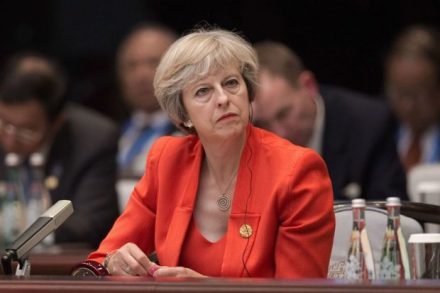
Soothing mood music from Hammond and May disguises challenges ahead

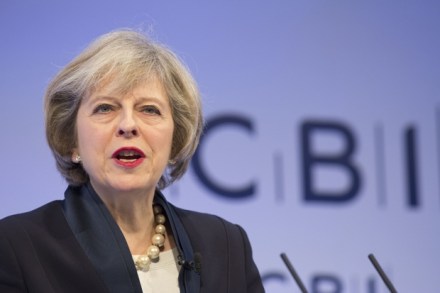
Theresa May likes to give a kitten-heeled kicking to conference audiences, even when they are police officers or her own party delegates. But at the CBI gathering at Grosvenor House in London on Monday, she was out to make friends with soothing (if essentially hollow) remarks about Brexit, and promises of the lowest corporate tax rates in the G20 and an extra £2 billion a year for research and development to help the UK stay close to the forefront of technology and bioscience. Assembled fat cats may still have been irritated by her commitment to binding annual shareholder votes on executive pay, but at least she backed away from putting workers’ representatives on boards, a threat that contributed to the anti-business tone of her Tory leadership campaign in July.

In Trump’s Texas, the oil men awaken to hope of new prosperity

 Houston, Texas It’s hard to find anyone in polite society here who admits to having voted for Trump, even among the oil men. But 4.7 million Texans did so, giving him 53 per cent of the popular vote. In redneck rural counties the Donald carried four fifths of the ballot, but Hillary Clinton was ahead in urban Houston, whose citizens pride themselves on good relations between white, black and Latino communities and on the welcome they offer to newcomers — including, a decade ago, a quarter of a million refugees from hurricane-hit New Orleans.

Should I pop a cheque in the post or brave the dangers of online banking?

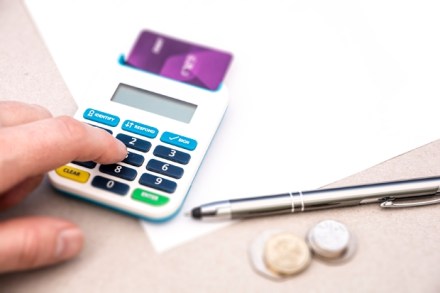
There’s an electronic device on my desk that looks — through its bubble- wrap — like a cheap miniature calculator. It’s still in the packaging a month after it arrived because I’m irritated by the idea that I have to master a new gadget specifically designed to complicate a familiar action. The thing is a debit-card reader, and I gather I must activate it whenever I want to send money from my bank account via the internet to a new payee.

It’s time for Hammond to send a ruthless hit squad into RBS

The new series of The Missing is surely the gloomiest television of the year. But it has nothing on the endless saga of RBS, which seems to use the same disturbing time-shift device: whenever there’s a horrible new plot twist, you have to spot whether we’re in 2008, 2011 or today. The crippled bank, still 73 per cent state-owned, has lost £2.5 billion in the first three quarters of this year, having just paid out another £425 million in ‘litigation and conduct’ costs chiefly relating to mortgage-backed securities hanky-panky in the US. Since its bailout eight years ago, it has lost considerably more than the £46 billion of taxpayers’ money that was pumped into it, and has never reported a full-year profit.

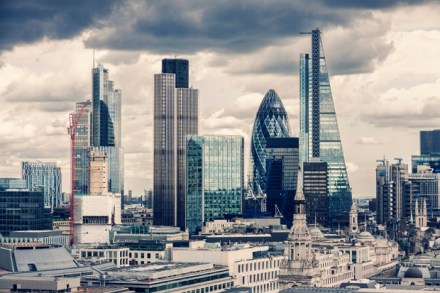
Despite what Big Bang destroyed, there’s still nowhere quite like the City

As the 30th anniversary of Big Bang loomed, I found myself back at the scene of my City demise. Ebbgate House — headquarters of BZW, the investment banking arm of Barclays where I worked until one fateful morning in 1992 — fell deservedly to the wrecking ball a decade ago. It was replaced by Riverbank House, and there I was last week, hovering above where my desk used to be, talking about ‘why no one listens to the City any more’ and reliving the P45 moment that released me into the happier world of journalism. Personal echoes apart, this was also a moment to revisit Big Bang, the Thatcherite reforms launched on 27 October 1986 that allowed banks such as Barclays to buy stock-exchange firms, create BZW and its ilk, and compete against Wall Street’s giants.

The Nissan test: can we really negotiate Brexit sector by sector?

I wrote last month that a key test of Brexit success will be whether Nissan is still making cars here in ten years’ time. A few days later, Nissan chief Carlos Ghosn issued a warning that ‘If I need to make an investment in the next few months and I can’t wait until the end of Brexit, then I have to make a deal with the UK government.’ The investment decision he referred to — expected by Christmas, which means before Brexit talks even begin — is whether to build the next Qashqai model at Sunderland or in France, to avoid tariffs on exports when we leave the single market. And the deal he was fishing for was a promise of compensation if tariffs are imposed. What’s at stake is huge: the wider UK automotive sector supports 800,000 jobs.

Hard Brexit, soft sterling and a glimpse of the Night Manager across the water

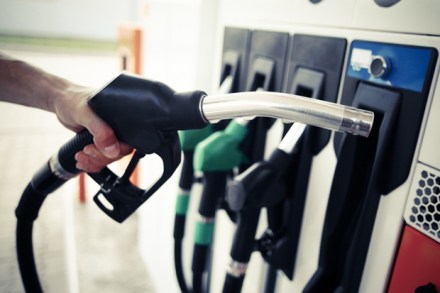
This column comes from Puerto Pollensa in Majorca, my favourite off-season watering-hole. The hotel is full of elderly Daily Mail readers intent on making their gin-and-tonics last longer as they contemplate the news from home. Brexit is highly likely to mean ‘hard Brexit’ — departure without residual access to the single market or meaningful new trade deals with the EU or anyone else — and HM Treasury thinks that could cost £66 billion a year in tax revenues. The FTSE’s new all-time intra-day high was consoling for those with a portfolio tucked away, but an uptick in bond yields suggests equities are due for a sharp sell-off soon. And petrol prices are about to jump thanks to the weak pound and a belated Opec move to limit production.

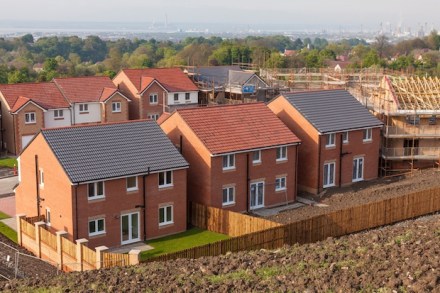
Brexit spooks the markets, but the housing crisis will swing more votes

‘I rang and said can I have a council house, I’ve nowhere to go, an’ the bloke said no you can’t, we need them all for t’Romanians,’ was a remark offered by a fellow patient, known to me as Fat Lad, when I was hospitalised three years ago. ‘I’m telling you, I’m the biggest Ukip supporter there is…’ he went on, illuminating how — unnoticed by the comfortable classes — a shortage of social and affordable housing was helping to fuel the national mood that eventually led to the Leave vote. Belatedly, Communities Secretary Sajid Javid has had a Damascene moment: ‘Tackling the housing shortage is not about political expediency,’ he declares. ‘It is a moral duty.

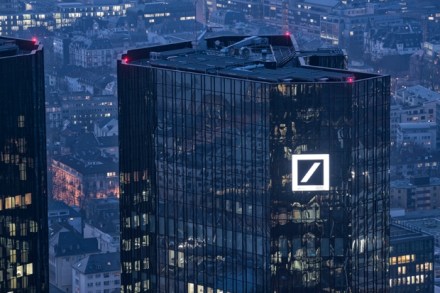
If Deutsche Bank goes down without a bailout, I really will eat my hat

'Can anyone seriously imagine the German state and corporate establishment allowing the bank that bears their country’s name to go down?’ I asked in February, adding rather bravely, ‘Of course they won’t.’ And that, I fear, makes my next question, ‘Am I about to eat my hat?’ Shares in Deutsche Bank have plunged to their lowest level since 1992 as the US Department of Justice seeks to impose a $14 billion fine relating to Deutsche’s issuance of mortgage-backed securities before the 2008 crisis, and rumours say Chancellor Angela Merkel has ruled out a state bailout. Deutsche boss John Cryan says the bank hasn’t asked for her help to fight its US battle and is in compliance with all its capital ratios, both of which may be true.

A free vote on the Heathrow runway? Don’t be so wet, Prime Minister

Hinkley Point — for all its flaws and the whiffs of suspicion around its Chinese investors — has finally received Downing Street’s blessing. Meanwhile, ministers hold the party line that High Speed 2 will go ahead according to plan, backed by news that the project has already bought £2 billion worth of land; and investors hunt for shares in the construction sector that might benefit from the multi-billion-pound infrastructure spree widely expected in Chancellor Philip Hammond’s autumn statement. But still no decision on a new airport runway for London — the one piece of digger work, short of tunnelling under the Atlantic, that would signal Britain’s raging post-Brexit appetite for global business.

The new world of work is a jungle but don’t call workers ‘animals’

The TUC general secretaryFrances O’Grady doesn’t get a lot of airtime. Compared with predecessors a generation ago, such as Vic Feather and Len Murray, she is all but invisible. But in her Congress speech at Brighton on Monday, she struck a note that must have resonated with many of the public who have no idea who she is when she spoke of ‘greedy businesses that treat workers like animals’. She was referring to zero-hours contracts, below-minimum-wage rates such as those effectively paid at Sports Direct’s Shirebrook warehouse, and rock-bottom fees per delivery offered to self-employed Hermes parcel-van drivers and Deliveroo fast-food couriers. And of course anyone not fundamentally opposed to free markets will take issue with her choice of words.

Mrs May the ‘Student Killer’ should count the cost of her visa crackdown

In the post-Brexit landscape whose shape was barely glimpsed in G20 discussions at Hangzhou, one thing is clear: soon we’ll have to stop waffling about trade deals and start pushing British products the world wants to buy. One such is education, at our universities, independent schools and English-language colleges — an export sector calculated in 2011 by the now defunct Department for Business, Innovation and Skills to be worth £17.5 billion. Not only does this sector attract foreign exchange, plug funding gaps for cash-strapped universities and support thousands of jobs, it also lays the ground for future relationships with students who return home to embark on business careers.

Stalled EU-US talks offer a reality check for our own post-Brexit trade hopes

Should we care two hoots whether negotiation of the Transatlantic Trade and Investment Partnership (TTIP, pronounced ‘Tee-tip’ by cognoscenti) has ‘de facto failed’? That’s what German economy minister Sigmar Gabriel said this weekend, pointing out that since talks between Brussels and Washington began three years ago, no agreement had been reached under any of the 27 headings tabled. European Commission spokesmen rushed to claim the deal was still alive, but no one would bet on it reaching a conclusion in this decade — nor on that conclusion, whatever its shape, being greeted with joy by Europe’s citizens. ‘So what?’ I hear you ask.

Oil prices will drift down again as Opec fails to get its act together

How many Olympic medals did Opec win? The answer (though I’ll bet no one else has bothered to work this out) is 15, or an average of 1.07 medals per member of the world’s leading oil-producer cartel. That result — boosted, I should add, by the five-medal triumph of the Iranian wrestling team — compares with the now notorious aggregate figure of 325 for the EU, including Team GB’s 67. I highlight the contrast only to make the point that, as power blocs go, resource-rich Opec is piss-poor at managing its affairs to advantage: the indolent leadership of the Saudis (Rio medals: zero) and their permanent stand-off with Iran means timely and co--ordinated decisions rarely happen.