Any other business

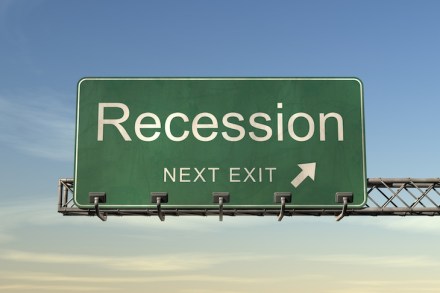
Ten years after Lehman’s fall, how close is the next crash?

Our cinema is showing Mamma Mia! Here We Go Again and I’m reminded of a remark attributed to Mark Twain, that ‘history doesn’t repeat itself but it often rhymes’. On 3 October 2008, three weeks after the bankruptcy of Lehman Brothers, treasury secretary Hank Paulson’s $700 billion bailout for the US banking system was passed into law at the very hour when I was watching the original Mamma Mia! movie and observing the impact of a mass inoculation of feelgood on a crowd battered by frightening financial news. And it was early the following Wednesday that I heard of chancellor Alistair Darling’s de facto nationalisation of RBS and Lloyds-HBOS and his emergency liquidity scheme to keep the nation’s cash machines working. ‘See Mamma Mia!
Why can’t Britain hang on to its best new companies?

Costa, in my opinion, sells a decent cup of coffee. It employs polite youngsters who seem happy in their work. If you’re desperate for caffeine, even its petrol-station vending machines are not too bad. And unlike the UK operation of Starbucks, whose coffee is vile, it pays tax on its profits at close to the full rate of corporation tax. Founded by two Italian brothers in London’s Vauxhall Bridge Road in 1971, it’s a triumph of brand development — and a credit to its current owner Whitbread, which acquired Costa as a diversification from its own traditional brewing business in 1995. Now Costa has been sold to Coca-Cola for a handsome £3.9 billion: no wonder Whitbread chief Alison Brittain called the deal ‘absolutely stonking’.

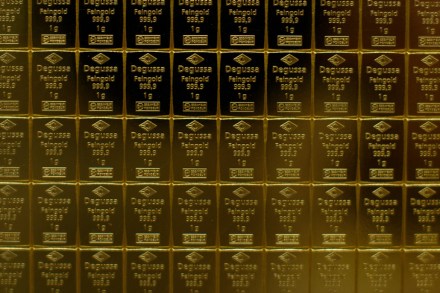
The record bull run must end soon. So is it time for a return to gold?

All good things must come to an end, including summer holidays and bull markets. The bull run in US shares that began in the aftermath of the financial crisis in March 2009 has now officially passed the previous record of 3,452 more-up-than-down days from October 1990 to March 2000. This time round, the S&P500 index of US stocks has risen by more than 300 per cent — and that rise has continued throughout Donald Trump’s reign, despite his trade war threats and other follies. But it has not been reflected in major European markets, which have drifted sideways, and has been increasingly sustained by a small number of top tech stocks that have outperformed everything else on the planet.

Decent broadband is a public right. Get on and kick BT, minister

As I set to compiling your email responses into our ‘broadband dossier’ to send to BT chairman Jan du Plessis, the government issued its own evaluation of the ‘economic impact and public value’ of the superfast broadband roll-out programme launched in 2010. Compiled by outside experts, this document from the Department for Digital, Culture, Media and Sport (DCMS) estimates that the additional economic activity and ‘wellbeing’ generated by spending public money to subsidise connections for remote and difficult locations: 5.3 million customers will eventually benefit at an estimated unit cost of £211, creating a total bill for the taxpayer of just over £1 billion.

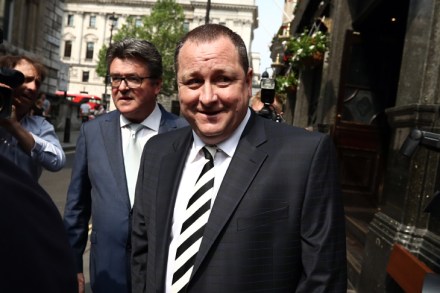
A peerage for Mike Ashley if he can bring House of Fraser back to life

This column has consistently stood up for Mike Ashley, even when the lonesome billionaire’s notions of corporate governance at Sports Direct and staff welfare at its Shirebrook warehouse made that a challenging position to sustain — not to mention his troubled ownership of Newcastle United. Ashley has grown his core business over 35 years from one outlet in Maidenhead to a remarkably robust retail empire by doing the detail, taking shrewd bets and swallowing competitors.

We fume at Amazon’s tax trickery as we marvel at its one-click convenience

‘There has to be a level playing field so that… Amazon cannot undercut domestic booksellers by using the tax advantage of booking in Luxembourg a sale to a UK customer that is fulfilled from a UK warehouse.’ I wrote that five years ago: since then, no government anywhere has effectively addressed the issue of global tax minimisation by online giants and multinational consumer brands. As Amazon’s merchandise range has expanded, it has gone on undercutting not just our last surviving bookshops but every other business-rate-burdened local retailer. Meanwhile, as its market capitalisation soars towards $900 billion, its founder Jeff Bezos has become the richest man ever, with a $150 billion hoard. And now we learn that Amazon paid just £1.

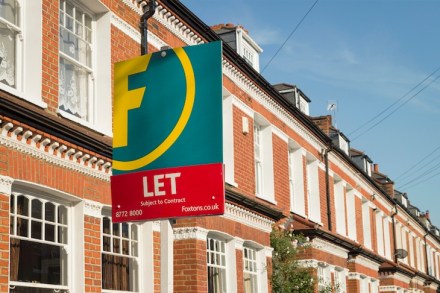
What’s bad for slick estate agents is good for working Londoners

Those twice-weekly sales emails from Foxtons that the recent GDPR clean-up has failed to stop have lately been spattered with the words ‘recent price reduction’ in big red capitals. Hence no surprise that the glossy estate agent and bellwether of London residential property has just reported a first-half loss of £2.8 million, compared to £3.8 million profit in the first half of last year and reflecting a sharp drop in sales revenues. Chief executive Nic Budden says his marketplace ‘is undergoing a sustained period of very low activity levels’.

Full-fibre broadband by 2033? I wish I could believe you, minister

I bought BT’s offer of an upgrade to ‘superfast’ broadband because the standard service seemed to be deteriorating just as the daily quota of sales calls from India was increasing. But the improvement is barely perceptible. The blue light that tells me the hub is working turns orange to tell me it’s not with irritating frequency, while the sales calls keep coming. Am I pleased with new service? ‘No, not really.’ But wouldn’t I like to buy an even more elaborate contract? ‘Click.

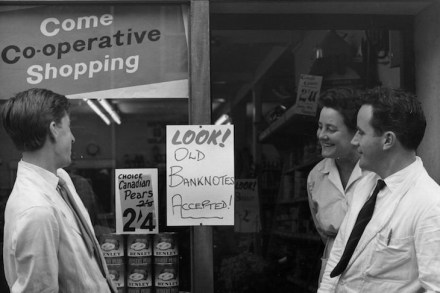
An amoral money world needs ethical campaigners more than ever

When I first visited Canary Wharf in the early 1990s, I was struck by a set of black-and-white posters in the shopping concourse advertising the Co-op Bank’s ethical banking stance: essentially, no lending to arms, tobacco, gambling or oil companies, or to regimes that disrespected human rights. A cynic might have argued that it was all about virtue signalling (before we learned that phrase) in the sense that no landmine manufacturer or brutal Third World dictator had ever been known to pop into a Co-op branch, ask for a loan and be met with a polite refusal and a copy of the policy. But it was a smart exercise in market positioning that won many new customers at the time — and a bold statement to buy poster sites beneath Canary Wharf’s burgeoning towers of finance.

Data breaches show we’re only three clicks away from anarchy

An IT glitch afflicting BP petrol stations for three hours last Sunday evening might not sound like headline news. A ten-hour meltdown of Visa card payment systems in June was a bigger story — as was the notorious TSB computer upgrade cock-up that started on 20 April, which was still afflicting customers a month later and was reported this week to be causing ruptures between TSB and its Spanish parent Sabadell. Meanwhile, what do Fortnum & Mason, Dixons Carphone, Costa Coffee and its sister company Premier Inn have in common with various parts of the NHS? The answer is that they have all suffered recent large-scale ‘data breaches’ that may have put private individuals’ information at risk.

Enjoy your feelgood summer – there may be trouble ahead

I’ve been on a mini-tour, full of echoes and warnings. First, to the Grange Festival in Hampshire, where we might still have been enjoying the summer of ’87: a moneyed audience in a Barings mansion laughing at funny foreigners in John Copley’s retro Seraglio (see Richard Bratby’s crit last week). Then to Oxford, to show an American friend the gardens of my alma mater, Worcester College, and recall the sweltering heat of ’76 that distracted us from revising for finals or noticing the Labour-driven economic crisis that would blight the start of our careers that autumn. Then to London, to make light of Trump with other American friends — and back home to Helmsley, of which more in a moment.

Carmakers are an undeniable voice in the Brexit debate

The voice of business has been all but silent in the Brexit debate ever since former Marks & Spencer boss Stuart Rose made such a hash of trying to lead the pre-referendum ‘Britain Stronger in Europe campaign’. Now suddenly there’s a business cacophony: Airbus, BMW, Siemens and the heads of the CBI, the Institute of Directors, the Federation of Small Businesses, the British Chambers of Commerce and the Engineering Employers’ Federation, all saying roughly the same thing: never mind the politics, all we ever asked for is clarity, preferably accompanied by ‘frictionless trade’.

For Pester of TSB, like Patterson of BT, the only way is exit

Should he stay or should he go — or will he already have gone by the time you read this? These are frequently asked questions about chief executives whose businesses hit troubled waters. It’s true that the higher you rise, the higher the risk if you don’t deliver, but it’s not always true that bosses should walk the plank whenever something major goes wrong: sometimes it makes more sense to stick around, take the flak and solve the problem. However, in the cases of Gavin Patterson of BT (ousted a week ago) and Paul Pester of TSB (still in post as we go to press), it would be fair to say the only way is exit.

Let’s hope we get a better RBS when it’s finally back in the private sector

At last the government has restarted the process of selling its stake in Royal Bank of Scotland. A first £2 billion sale in 2015 (of 5 per cent of the bank’s shares) took place at 330 pence per share, against a purchase price of 502 pence in the 2008 bailout. Those numbers looked so embarrassing for George Osborne that the sell-off file was consigned sine die to a Treasury basement; but now that RBS has returned to a slim profit after nine years of losses, Philip Hammond sold another £2.5 billion tranche on Monday, ahead of what his advisers evidently think will be a weaker stock market after the European summit, but at an even worse price of 271 pence.

WH Smith was once a clever new thing: now it’s ripe to be disrupted

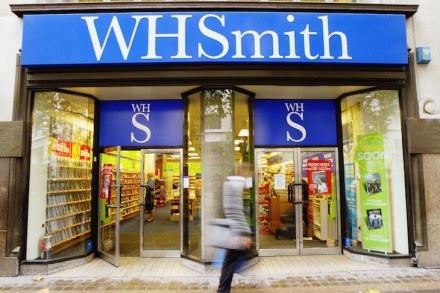
I’m not in the least surprised to learn that WH Smith has been voted Britain’s worst high-street retailer in a Which? survey of more than 10,000 consumers: this is the eighth year in a row that the newsagent and bookseller has come bottom or second-to-bottom in the same poll. These days its cramped shops give more shelf space to bottled water than to books, but if you do pick a paperback from the narrow choice of ‘bestsellers’ on offer — or a copy of The Spectator, if you can find it behind Men’s Health and Closer — you’re channelled into a dehumanising encounter with a self-service till, usually followed by an ill-tempered encounter with the staff member whose job it is to stand near the machines to make them work and calm the customers.

Broadbent’s faux pas puts the focus on female candidates to follow Carney

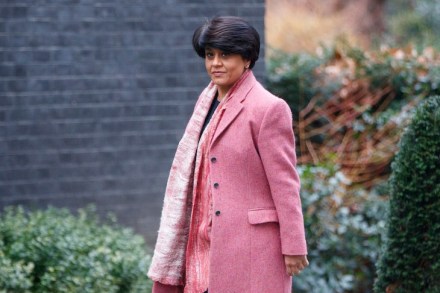
If Ben Broadbent’s Daily Telegraph interview last week was the launch of a bid for the governorship of the Bank of England, then it spectacularly misfired. The deputy governor’s use of ‘-menopausal’ to describe an economy past its productive peak — damned by the Guardian as ‘un-abashed misogyny’ even though his awkward metaphor, on closer inspection, was also about loss of male potency — has significantly lengthened the odds on Broadbent succeeding Mark Carney in June next year. Indeed, even though he has the golden qualification of a decade at Goldman Sachs, I hear he’s no longer the favourite even among the four current deputy governors and their immediate predecessors.

Hooray for a British industrial hero at the top of the Rich List

It’s heartening to see an authentic British entrepreneur heading this year’s Sunday Times Rich List, the industrial-ist Jim Ratcliffe, who has overtaken a coach-load of oligarchs as well as the Duke of Westminster with an estimated £21 billion fortune. This column has long admired Ratcliffe, whose Ineos chemicals conglomerate was built by buying up businesses his major competitors did not want. During his stand-off with the Unite union at the Grangemouth Refinery in Scotland in 2013, I called him ‘an industrial hero’ who deserved to be made a Knight of the Thistle for his willingness to invest in such an unpromising site.

A hot weekend for takeover deals and cycle racing

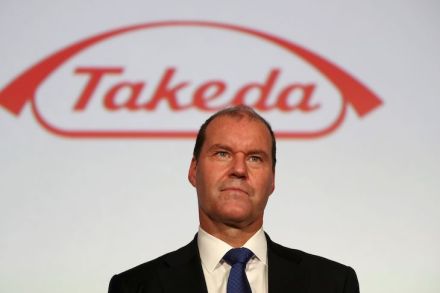
The bank holiday turned out to be a hot one, not least in the takeover arena. First, Shire Pharmaceutical accepted a £46 billion offer from Takeda of Japan — though the stock market did not seem wholly convinced that the deal will proceed. If it does, should we care? Shire is a FTSE100 company that began in the UK and ended up stateless. As a start-up in Basingstoke in 1986, it made calcium-based treatments for osteoporosis; since then it has grown by acquisition to become ‘the world’s leading global biotechnology company focused on serving patients with rare diseases’. In 2008, when it was the UK’s third biggest drug manufacturer, Shire shifted its domicile to take advantage of Ireland’s ultra-low corporate tax rates.

TSB’s new owners should have seen this computer catastrophe coming

The systems breakdown at TSB is not (yet) the worst UK bank computer cock-up of all time: that prize is held by RBS, whose problems in 2012 afflicted customers for a month and attracted a £56 million fine. But the failure of TSB to migrate four million customers’ accounts from systems bequeathed by its former parent Lloyds to a streamlined IT structure, designed by new Spanish owner Banco Sabadell, is surely the fiasco that has been longest foreseen. It dates from 2009, when Brussels insisted that Lloyds dispose of part of its branch network as a condition for the bailout that followed its acquisition of HBOS during the financial crisis.

Bank AGMs are an opportunity to shout about branch closures

The season of high-street banks’ annual general meetings is with us and I urge you to turn up and make trouble. When I say ‘you’, I don’t mean the likes of New York ‘activist’ Edward Bramson — who holds 5 per cent of Barclays and may or may not agitate for a boardroom seat at next Tuesday’s gathering. I mean you, dear reader, the modest shareholder-customer who suffers rotten service, too-frequent computer glitches and negative returns on savings while directors on the platform congratulate themselves on the spurious performance measures that underpin their bonuses. This is your annual chance to make them squirm.