Any other business

I’m an optimist for trade despite the idiocies of politicians

I’m proud to be a member of the 661-year-old Company of Merchant Adventurers of the City of York, having qualified on the strength of a first career spent trying to sell British financial services around the globe from Hokkaido to Gdansk. Before our annual feast last week we prayed optimistically for the discovery of ‘a better world’ from which we might bring back treasure, spiritual and material — and I couldn’t help thinking that UK trade prospects are a lot less straightforward today than they were in 1357, when the known world was eager to buy woollen cloth from English mercers as often as their little ships could cross the choppy North Sea.


The US shows London how to cold-shoulder Putin’s cronies

A decade ago I commissioned an article about Vladimir Putin’s business cronies. Among other lines of enquiry, it sought to finger ‘a coterie of wealthy and politically influential industrialists, many believed to be former or current secret service officials’ who allegedly had shareholdings in Russian companies which, if we or anyone else had been able to prove that they were controlled by the president, might have evidenced a personal Putin fortune of tens of billions. Sensibly, The Spectator’s lawyer would not let me publish — but the US Treasury has now done its own version of the job by imposing sanctions on seven oligarchs and 17 senior Russian officials who are believed to form the innermost presidential clique.

A US-China tit-for-tat hardly amounts to a serious trade war

‘Stocks plunge as China hits US goods with tariffs,’ said a headline after the long weekend, and the FTSE100 duly dipped below 7,000. But I wonder what a serious trade war would look like — and how markets would respond if the White House and Beijing took the gloves off. Last year, China exported $500 billion worth of goods to the US, while US exports to China amounted to $135 billion. Last month, President Trump announced import tariffs on $50 billion worth of Chinese steel and aluminium, 10 per cent of the total import bill.

Toys ‘R’ Us: the predator that became the prey

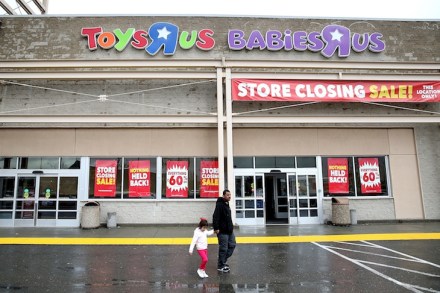
I remember the arrival of Toys ‘R’ Us in Britain, because as a young banker in 1984 I was tasked with devising a menu of exciting financial products to offer a brash American retailer that was clearly going to take a bite out of our sleepy — and in those days still Christmas-seasonal — domestic toy market. How we sneered at that childlike reversed R in the logotype; likewise the Guardian, commenting on insatiable demand for Cabbage Patch dolls, derided the chain’s huge stores as ‘-cathedrals to kiddie gratification’. But however tacky its image, this was the ultimate ‘economic disruptor’, to use The Spectator’s current favourite phrase: a business that utterly transformed its marketplace.

We were never going to take back control of our fishing waters

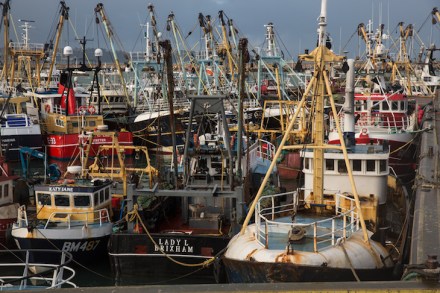
My decision to vote Remain was driven in part by an exercise in which I tried to identify anyone close to me in Yorkshire — family, neighbour, business owner, farmer — who was worse off as a result of UK membership of the EU. The only people uncontestably in that category, I concluded, were the east-coast fishermen whose livelihoods have been eroded by 45 years of punitive quotas and unfair competition. So I felt for them on Monday, when their interests were traded away yet again as part of the Brexit ‘transition’. Instead of being released from the Common Fisheries Policy in March 2019, as Environment Secretary Michael Gove proclaimed barely a week ago, our diminished fleet is stuck with the status quo until the end of 2020.

Advice from the Institute of Directors: be prepared for the scandal tornado

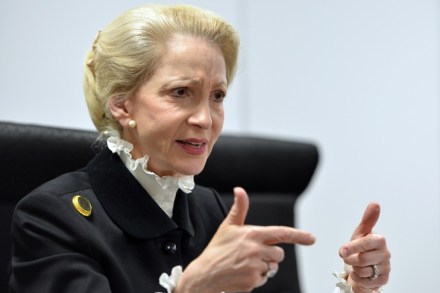
As ‘business lobby groups’ go, the Institute of Directors has always struck me as worthy but unexciting: a more authentic voice of mid-sized corporate Britain than the fat-cat smugfest that is the CBI; a fount of sound advice on governance, gender equality and ‘mental health at work’; and a handy Pall Mall watering hole for business folk up from the provinces. But as the storm of revelations about personal behaviour topples one pillar of respectability after another, the IoD has suddenly been reduced to reputational rubble following allegations of racism and bullying against its chairman, Lady Judge — who resigned in fury last Friday, shortly after being suspended by the IoD’s Council.

Can Theresa May really find time to be her own housing supremo?

Theresa May has belatedly taken the advice I offered her here last May and named a supremo to tackle the housing crisis — which has been getting steadily worse since her campaign promise to ‘fix the broken market’. But the supremo isn’t Sajid Javid, the Communities Secretary who is, the prime minister says, doing ‘incredible work’ in this area; so incredible, she might have added, that she and the Chancellor have had to bin Javid’s more radical ideas. And it isn’t Boris, who was my own cunningly crafted suggestion for the job.

Running a bank’s tough. That’s no reason to start handing capital back

A mixed bag of annual results from the big banks. RBS, still 73 per cent owned by the taxpayer, recorded a small profit for the first time since 2008 but took flak for a newly released report on the outrageous behaviour of its Global Restructuring Group, the team that mistreated struggling business customers in the post-crash phase. No wonder chief executive Ross McEwan looked tired, irritable and homesick for New Zealand. Lloyds, having served its time in the sin bin alongside RBS, is now by contrast the sector’s comeback star, with profits up 24 per cent to £5.3 billon (despite another hefty charge for PPI mis-selling) and promises of more lending to start-ups. No wonder chief executive António Horta-Osório — whose pay last year rose to £6.

Investors were right to sell Carillion shares when they spotted trouble ahead

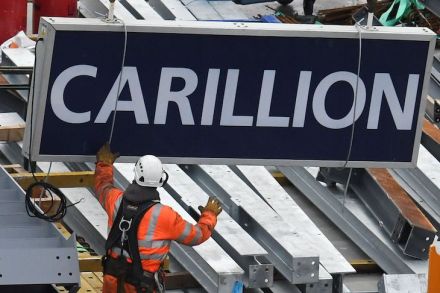
The fallout from Carillion’s bankruptcy spreads in slow motion — just as the outsourcing and construction giant’s finances gradually stretched to breaking point over the months before it went down in January. The company’s auditor, KPMG, was rightly under the spotlight this week. But the impact on the ground seems to have been less disruptive than early reports predicted. Receivers have made 1,000 redundancies but have re-let many contracts, securing thousands of other jobs. Construction of the £335 million Royal Liverpool Hospital — one of the overrunning contracts that contributed to Carillion’s cash crisis — won’t now be completed this year, but outsourced services in many other places have been seamlessly reorganised.

Could the SFO put an end to Barclays as we know it?

The Serious Fraud Office has upped the stakes in the case of the controversial $3 billion Qatari financing that saved Barclays from a taxpayer bailout in 2008, by extending the charge of ‘unlawful financial assistance’ to the operating company, Barclays Bank plc, as well as the parent, Barclays plc. Four senior former Barclays employees, including the then chief executive John Varley, are already due to stand trial early next year on the same and other fraud-related charges. The significance of the SFO’s move is that Barclays Bank plc stands in danger of losing its licences to run banking businesses, including branch networks, in the UK and elsewhere if convicted of a serious criminal offence.

Falling US shares tell us only that investors were overexcited in January

If you were the incoming or retiring chairman of the Federal Reserve, you might be quietly pleased to see stock markets plunge on the day of the handover. As Jerome Powell was sworn in on Monday to succeed Dr Janet Yellen as head of America’s central bank, the Dow Jones index of leading US stocks was falling by a one-day record of 1,175 points, with Asian, European and London markets following overnight. But this wiping out of recent gains does not reflect badly on Yellen, whose steady hand leaves behind US inflation at just 2 per cent, unemployment barely above 4 per cent and a strongly recapitalised banking system.

The real reason hospitals threw back that Presidents Club cash

I visited St Thomas’ Hospital on Monday, to discuss fundraising for a cardiology research project. On the way in, I spotted an acquaintance taking her little boy for tests; she was busy explaining why the doctors needed to do what they were about to do, so I didn’t interrupt. I also spotted a block on the map labelled ‘future site of Evelina Children’s Hospital’, and my thoughts turned to the £650,000 pledged for Evelina at the Presidents Club dinner: £400,000 of it in an auction bid from the restaurant tycoon Richard Caring to secure naming rights on a high-dependency unit.

Forget a Channel bridge and celebrate Crossrail

This column has long been a sucker for a grand projet. ‘Time for a trip to Boris Island,’ I gushed in 2010 when London’s then mayor came up with his much-mocked (though in engineering terms not unfeasible) wheeze to shift Heathrow to a giant man-made landing strip in the Thames estuary. But even I could see no merit in the Foreign Secretary’s equally unscripted suggestion, during the recent Sandhurst summit with President Macron, of a bridge across the Channel — which would play havoc with vital shipping lanes and cost upwards of £120 billion. If the objective is to facilitate continuing trade with Macron’s compatriots after we leave the EU, as one expert observed: ‘It would really be cheaper to move France closer.

Carillion’s crash is not a parable of the evil of outsourcing

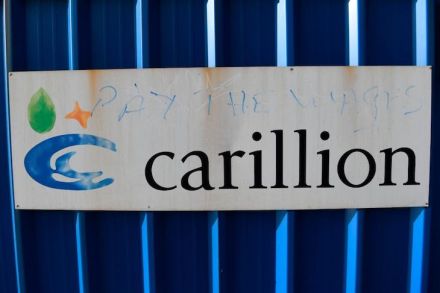
Carillion is a disaster on all fronts, but my sympathies go first to the fallen contracting giant’s sub--contractors. Upwards of 30,000 smaller firms were already facing 120-day payment delays and may now have to fight court battles to get paid at all, driving many hard-pressed entrepreneurs to bankruptcy. But the political spotlight won’t help them, because Labour spokesmen who despise small business as well as large will merely use the case to attack the concept of outsourcing public services for private-sector profit.

Wolff told us the US awaited a president who could cast a spell on markets: now it has one

I once commissioned Michael Wolff —currently the world’s most talked-about journalist as the author of the White House exposé Fire and Fury — to write for The Spectator. It was just before the 2004 presidential election in which Republican incumbent George W. Bush looked set to see off the Democrat challenger John Kerry, and I invited Wolff to tell us the implications for the stock market. His thesis was that the Democrats had become ‘the party of wealth and Wall Street’ while the Republicans had become ‘non-players’, Bush having turned his back on business to be ‘a God-squad cheerleader’. America was waiting in vain for a president who could ‘cast a spell of optimism over consumers and markets’.

Is it possible to defend the Persimmon boss’s nine-digit bonus? Well, let me try

New Year’s Eve was certainly a day for celebration in the household of 53-year-old Jeff Fairburn, chief executive of the housebuilder Persimmon. He was due to receive the first £50 million tranche of shares under a bonus scheme that has won him total entitlements of £110 million. He must have done a terrific job, you’ll be thinking, if shareholders value him so highly. But in fact his winnings (plus £400 million shared by 150 other Persimmon executives) are the freak outcome of a 2012 scheme that was tied to the company’s share price and dividend record but failed to include a cap on how high rewards might go.

Instead of schmoozing at City parties, I’m Sarah the Cook in a Yorkshire panto

Last Christmas I offered you a cruel satire about a boardroom big-shot whose career went so awry that he ended up as a pantomime dame. So perhaps there’s justice in the fact that this year, that’s what’s happened to me. Instead of schmoozing the City’s festive party round, I’m cross--dressing nightly on a Yorkshire stage as Sarah the Cook in Dick Whittington and His Cat. The original Whittington, four times Lord Mayor of London between 1397 and 1419, was a mercer who exported English cloth across the North Sea, importing silks and velvets in return. But in panto, Dick and his crew turn their backs on our European partners and sail in search of new trade deals ‘on stormy seas where rough winds blow/ to the sandy shore of Moroc-co!

The LSE’s skulking assassins are a terrible advert for the City’s global aspirations

The revenge tragedy at the London Stock Exchange whose plot I outlined last month has reached its third act, but the carnage may not be over. Chief executive Xavier Rolet has left the building, rather than staying one more year as the LSE first announced, and declared that he won’t come back under any circumstances. Despite whispers that ‘aspects of his operating style’ sparked this row in the first place, Rolet is due a £13 million golden farewell — which the Daily Mail called ‘obscene’ but his fans see as fair reward for all the value he has delivered. Chief among those fans is LSE shareholder and hedge-fund princeling Sir Chris Hohn, who agitated for Rolet to stay and LSE chairman Donald Brydon to go.

A sound industrial strategy and stronger banks. What could go wrong?

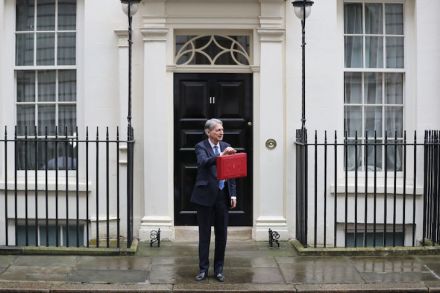
One week you’re fighting to survive the dance-off amid vicious backstage rivalries, the next you’re scoring a perfect ten from Bruno Tonioli for your shimmering tango. As it was on Strictly for Debbie McGee, so it was — well, almost — for Philip Hammond at the despatch box. Unlike many of the Budgets of his predecessors Osborne and Brown, this one did not unravel immediately or prove full of black holes and political tricks. Clear in its analysis, frank in its forecasts, limited in its objectives, it took modest steps to ease the housing crisis and encourage entrepreneurs — and not much else.

The very simple reason why Hammond’s housebuilding target is pie in the sky

The Chancellor sounded purposeful when he declared that he’ll do ‘whatever it takes’ to boost the rate of housebuilding — including pushing developers and councils to use up land banks and act on existing planning permissions — with a view to hitting a politically symbolic target of 300,000 units per year. But I wonder whether the post-Budget small print will reveal any sort of plan to overcome the most basic obstacle to achieving this objective, which is a critical shortage of bricks? When housebuilding went into sharp decline after the 2008 crisis, many British brick factories closed down. To build even half of Philip Hammond’s target, the industry needs more than 2.