Any other business

Why I’m sad to see Barclays in the dock – and astonished to see John Varley there

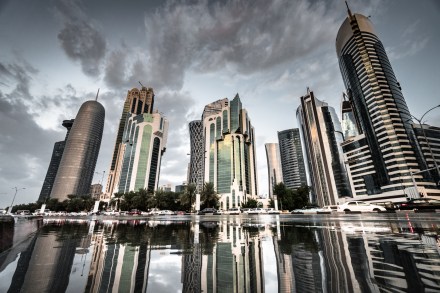
Regular readers know I have an umbilical connection to Barclays, because my father spent his working life there, I was on the payroll myself for a decade, and I wrote a book about the bank’s modern history, called Falling Eagle. So I cannot react objectively to news that the Serious Fraud Office has brought charges against Barclays’ holding company and four former executives in relation to the £7 billion fundraising from Middle Eastern investors, including Qatar Holdings, that saved it from a taxpayer bailout in 2008. On behalf of the extended family of Barclays folk, I cannot feel anything but sadness to see a once-respected institution brought into the dock.
Let’s have a dose of business sense in Downing Street before it’s too late

Take no notice of the resilience of the FTSE100 index, which, having reached record pre-election highs, shed barely 100 points at its opening last Friday and recovered most of them by Monday. Dominated by multinational companies, it is being sustained by global market sentiment and the relative weakness of the pound, which makes our blue chips look good value; it is not offering a signal that investors think all is well. But do take notice of the Institute of Directors, speaking largely for mid-sized businesses, when it says that confidence among its members has crashed since polling day: from 34 per cent optimistic vs 37 per cent gloomy last month, to 20 per cent upbeat against 57 per cent ‘quite or very pessimistic’ now.

The Board of Trade won’t boost exports if business conditions aren’t right at home

The last limp gambit of the Tory campaign was a promise to revive the Board of Trade. As a way of grabbing attention and diverting the ‘Corbyn’s not such a bad bloke’ tendency, you’d have to say it lacked oomph. But was it a good idea? First formally constituted in 1696, the Board itself ceased meeting long ago but the title of ‘President of the Board of Trade’ persists: Michael Heseltine relished using it when he was trade and industry secretary, and it was held before the election by the invisible Liam Fox in his role as would-be negotiator of the trade deals Britain isn’t allowed to negotiate until Brexit is complete. Now Theresa May proposes a network of nine UK trade commissioners dotted around the world.

BA’s disaster plan failed as soon as the smoke started coming out of its servers

The science of ‘disaster recovery planning’, together with the related art of ‘crisis PR’, is a core discipline of 21st-century management, both in the corporate world and for agencies of the state. Business schools teach it; consultants sell it; hospitals role play it; the Cabinet Office runs a college in Yorkshire devoted to it; every company board worth its salt has a risk committee demanding bulletproof evidence of it. So a disaster on the scale of the computer breakdown that caused much distress to British Airways passengers last weekend is not just unusual: it is completely bizarre, and nothing said by BA chief executive Alex Cruz has come close to explaining it.

We’d all like to see Fred on the hook but RBS investors will be wiser to settle

‘Fred Goodwin off the hook again,’ declared the Scottish Daily Record. That neatly summed up one strand of sentiment behind the RBS Shareholder Action Group’s battle for compensation for losses incurred in the bank’s £12 billion rights issue in 2008 — preceding its £45 billion taxpayer bailout, in which any remaining shareholder value was largely wiped out. Investors who believe they were misled by RBS’s directors and the rights-issue prospectus have been campaigning for their money back ever since.

Here’s who should be Mrs May’s cabinet supremo to tackle the housing shortage

Who should be housing supremo in what we all assume will be Mrs May’s new administration? Brandon Lewis and Gavin Barwell, recent junior ministers with that brief, achieved nothing — if we also assume the brief was to procure an adequate supply of new homes, in the private sector or ‘social’ one, which the ‘just about managing’ could afford. The number of affordable homes built in 2015-16 was just 32,000, half that built in the previous year and the lowest since 1992. But action is coming — apparently. ‘We will fix the broken housing market,’ declares Mrs May, mustard-keen on fixing broken markets, ‘to build a new generation of council homes right across the country.

The economy isn’t all roses, but that’s no reason not to vote for Mrs May

As the election campaign goes into full swing, we hear surprisingly little about the state of the UK economy — because the Tories can’t (and probably don’t need to) promise that they can make it any better in the medium term than it is now, while almost no one takes seriously what Labour has to say about it. The truth is, against the odds and for the time being, that it’s ticking along nicely enough not to be a top concern for most voters. Are we right to be so complacent? After a slowdown in growth to just 0.3 per cent in January to March, most analysts expect a pick-up in the current quarter, and the IMF now agrees with the Budget forecast of 2 per cent for 2017. The construction, services and manufacturing sectors all reported rising activity in April.

Why binding shareholder votes on pay should be a manifesto promise

Will executive pay pop up in Theresa May’s manifesto? An objective of her snap election is to secure a larger majority on the basis of a smaller burden of manifesto promises than she inherited from David Cameron. But in her only leadership campaign speech last July, her reference to ‘an irrational, unhealthy and growing gap between what those companies pay their workers and what they pay their bosses’ was one of the phrases that caught the most attention. Back then, she was in favour of imposing annual binding shareholder votes on boardroom remuneration, as well as spotlighting the ratio between chief executives’ and average workers’ pay, and even forcing companies to accept workers’ representatives on boards.

Capping prices to win votes is no substitute for a serious energy strategy

Is capping domestic energy prices an equitable way to help the ‘just about managing’, or an electoral gimmick with a whiff of anti-free-market ideology? When it was Ed Miliband’s idea, it was certainly the latter. Now it’s likely to be included in Theresa May’s manifesto, offering a potential £100 saving for millions of homes on ‘standard variable tariffs’, it is defended by the ever-plausible Sir Michael Fallon as a matter of ‘intervening to make markets work better’. And that, after all, is what the Prime Minister said she would do, wherever necessary, in the interests of fairness.

Disaster versus chaos for France’s economy? My village neighbours don’t seem bothered

The lovely Dordogne village of St Pompon that is my holiday hide-away has only 350 voters, but is a perfect predictor of presidential elections. It voted heavily for Jacques Chirac against Jean-Marie Le Pen in 2002, marginally for Nicolas Sarkozy against Ségolène Royale in 2007, and 59-41 for François Hollande against Sarkozy in 2012. So I’d love to tell you who’s going to win this time on the strength of the chatter at the Good Friday market. But the only national event the locals seemed interested in was a mountain bike championship just up the road.

A whistleblower mystery that illuminates the inner turmoil of the banking sector

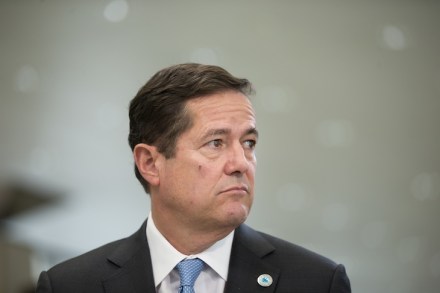
What troubled places banks have become, I thought as I listened to two news stories, one concerning a formal reprimand for Barclays chief executive Jes Staley after he tried to uncover the identity of a ‘whistleblower’, the other trailing new revelations about the Libor scandal. But both, I’m afraid, were so badly explained that the majority of listeners must have been none the wiser. The Staley episode is mysterious. Anonymous letters to Barclays directors made allegations about a recently recruited senior executive: Staley felt this was an ‘unfair personal attack’, believed ‘honestly but mistakenly’ that it was permissible for him to identify the author, and tried to do so with the help of a ‘US law enforcement agency’.

Does the truth about Trump’s art of the deal really matter?

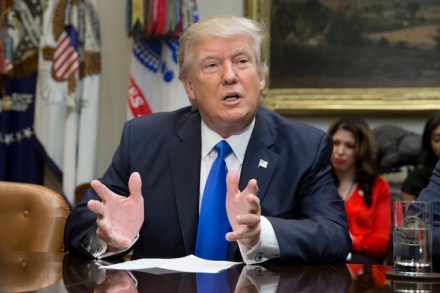
How good a businessman is Donald Trump? Maybe the answer doesn’t matter, since barring death or impeachment he’ll be the most powerful man in the world until January 2021, or even 2025, come what may. Or maybe it does matter, in the sense that the only positive spin to be put on his otherwise ridiculous presidency is that the irrepressible cunning of the real-estate tycoon will eventually win through for the good of America — and thereby, we must hope, the good of the free world — against opponents who have smaller cojones and less dealmaking prowess than the Donald does. ‘He’s the closer,’ declared White House spokesman Sean Spicer, shortly before his boss failed to close his biggest political deal so far, the American Health Care Act.

Google still needs to try a lot harder to do the right thing

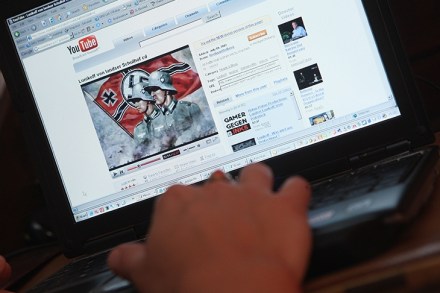
Shortly before agreeing, early last year, to pay token back taxes on a decade’s worth of UK-generated profits, Google also abolished its global slogan ‘Don’t be evil’. Instead it adopted a code of conduct that urged employees to ‘do the right thing’ — but at least in one important respect, they didn’t. Marks & Spencer, HSBC, Audi and numerous other top brands found their banner adverts displayed alongside a variety of YouTube hate videos which Google had failed to exclude, apparently because it did not have sufficient resources to monitor all the video content that was being uploaded at the rate of 400 hours per minute. For fear of losing a chunk of its UK ad revenues, the company has apologised and promised to do better.

Spot the endangered species: white men grab the chairs while Hogg loses her job

Tesco chairman John Allan provoked feminist fury by telling would-be non-exec directors, ‘If you’re a white male, tough: you’re an endangered species’ — then claimed he was really trying to make the opposite point, that ‘it’s a great time for women’. But to the contrary, this was a week in which tough white males grabbed the corporate prizes, while one high-flying woman from an oppressed minority was hounded out of her job. First, the blokes. HSBC announced, for the first time in its history and to the satisfaction of governance zealots, the appointment of an outside chairman.

New European giants? Standard-Aberdeen looks a better bet than Peugeot-Vauxhall

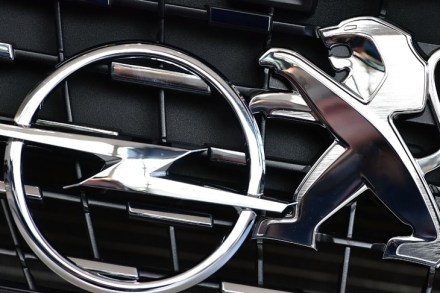
Budget week also turned out to be a week of notable deals. PSA, French owner of Peugeot and Citroën, went ahead with its €2.2 billion takeover of Vauxhall and Opel from General Motors, creating ‘a new European giant to challenge Volkswagen’, according to the spin, and new fears for those who foresee post-Brexit attrition of the British motor industry. By way of reassurance, PSA boss Carlos Tavares said a hard Brexit is an ‘opportunity’ — to beef up the domestic supply chain while reducing component imports from the EU — and that ‘I trust Vauxhall workers’ to improve their productivity. That last bit sounded to me more like a threat to their jobs.

London Stock Exchange picked a bad year to join a pan-European project

The marriage of the London Stock Exchange and Deutsche Börse may not be stone dead but that’s the way to bet, as Damon Runyan would have said. This so-called ‘merger of equals’ — with the Germans holding the larger stake and the top job but with the head office in London, at least to begin with — has foundered over a demand from EU competition authorities that the LSE should sell its majority stake in MTS, an Italian bond-trading platform. Having had its alternative proposal (to sell a French clearing operation) rejected, the LSE refused to comply, allegedly without first consulting its German partners.

Why I’m glad that Unilever saw off predatory robot Kraft Heinz

I was sorry Kraft Heinz’s £115 billion bid for Unilever collapsed so fast — unveiled on Friday, it was dead by Sunday. Not that I saw the aggressor as a worthy potential victor; but a longer battle would have provided great material for column-sermons on good and bad capitalism. Aha, I hear you ask, but which side is which? Unilever is the Anglo-Dutch maker of Dove soap and Magnum ice creams. With its dual headquarters in London and Rotterdam, its multi-layered bureaucracy and its bosses who bang on about social responsibility, it might be seen as a big fat corporate proxy for the European Union — in urgent need of a shake-up.

My survey of bank closures suggests a new purpose for the tarnished Co-op

Many thanks to the stampede of readers who sent news of bank branch closures. There’s certainly a national pattern, and possibly an epidemic, with HSBC, NatWest, Clydesdale and Yorkshire Bank closing outlets as fast as they can, and only the Nationwide building society making a virtue of offering an undiminished service. Counter staff still in post are praised for their kindness, particularly to readers’ elderly mothers, but sham ‘consultations’ on closures that are faits accomplis are a frequent cause of irritation. It’s clear that many towns will soon be left with no more than a single ATM plus, if they’re lucky, a post-office counter — making life particularly tough for small businesses.

In this digital age, should we worry about bank branch closures? Yes we should

Almost a decade after the financial crisis loomed, our high streets and town centres are full of life again: who ever thought consumers could sustain so many cafés, bakeries and nail bars? But the revival is being undermined by yet another wave of bank branch closures, leaving small businesses adrift and personal customers at the mercy of call centres and insecure, ill-designed online platforms. More than a thousand branches have closed over the past two years, and another 400 or so are scheduled to go soon. HSBC is showing the way with a savage cull of its network.

Will Trump halt the hounding of UK and European banks? Don’t bet on it

President Donald Trump is demolishing his predecessor’s legacy as fast as he can sign executive orders, but one thing for which the Obama administration will be remembered is its zest for imposing fines on UK and European banks. In a flurry of Department of Justice activity ahead of the transfer of power, Deutsche Bank agreed to pay $7.2 billion and Credit Suisse $5.3 billion for misleading investors in mortgage-backed securities before 2008, while Deutsche also copped a $630 million penalty (from UK as well as US regulators) for alleged money-laundering on behalf of Russian clients. Meanwhile, Royal Bank of Scotland set aside another $3.8 billion, making a total provision of $8.