Bill Kauffman
Luther Martin: a voluble and drunken Maryland attorney who walked out of the Constitutional Convention of 1787 after warning his fellow delegates that their handiwork provided the framework for a centralized and militaristic empire that would efface regional distinctions and erode the liberties for which American patriots had fought and bled a decade earlier. An unheeded prophet who breathed the Spirit of ’76.
Lionel Shriver
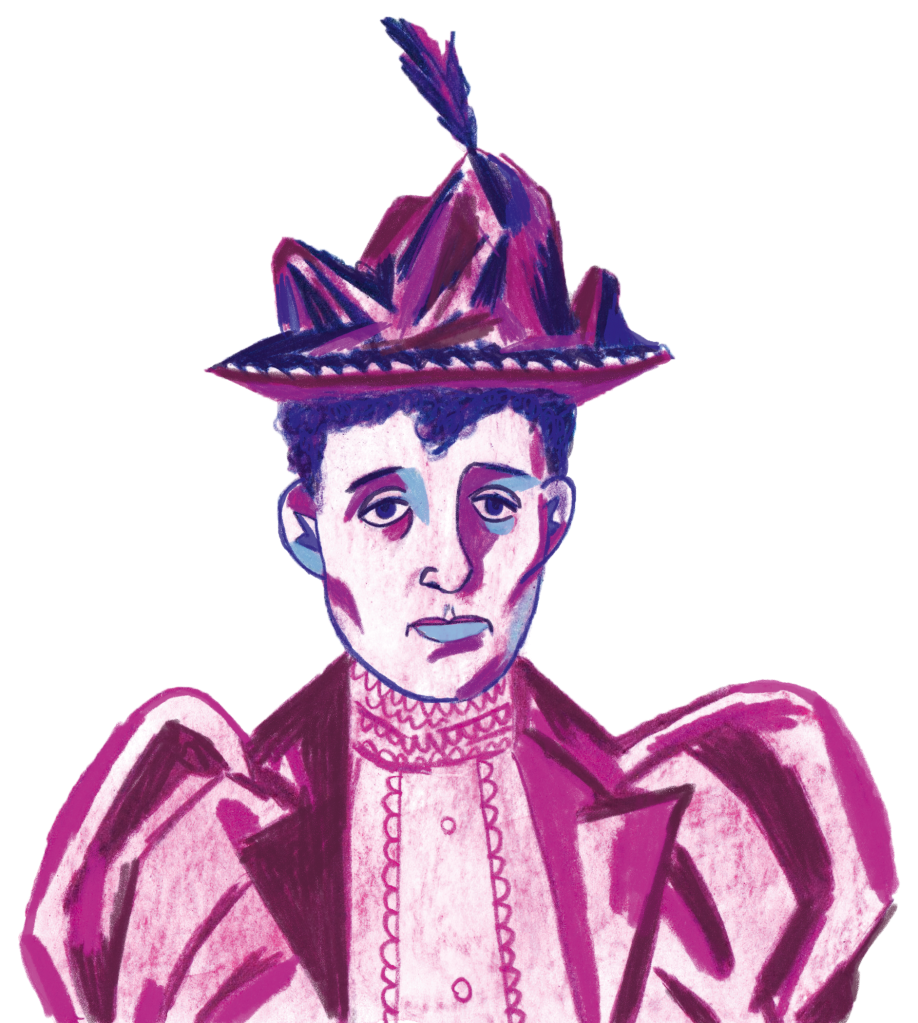
Edith Wharton. Hardly unrecognized, but under-taught and too little familiar to the international literary readership (e.g., in Britain). A spectacular stylist, she wrote novels that still sound modern and perfectly accessible 100 years later – and she was a real feminist before the days the word meant humorless pill.
Grimes
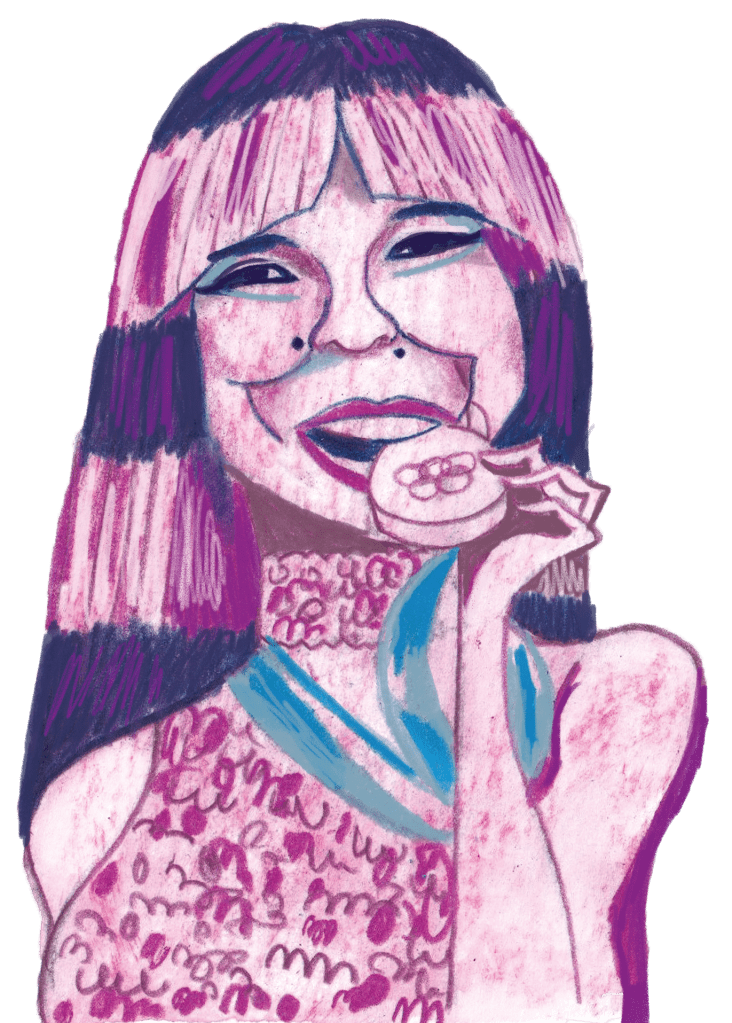
Even though she’s very highly rated, I think the figure-skater Alysa Liu is still underrated. When the world couldn’t seem darker, she just enjoyed it. Many have tried and failed to challenge the nihilism consuming society, which she did effortlessly – by laughing at it. As general morale was spiraling into a desperate, hyper-competitive scarcity mindset, I didn’t realize how deeply I missed watching someone do it for the love of the game, as satisfied with a win as a loss. Simply grateful for a stage.
You could argue that she is the Nietzschean Übermensch. Sheer excellence driven not by competition, but pure joie de vivre. A rebellion rendered imperceptible by its lightness and beauty. After a million Substack posts about self-improvement, all we needed was to see a dancer unburdened by the Spirit of Gravity (both figuratively and literally, in her case). Nietzsche’s ultimate philosopher is a dancer. The adage “show, don’t tell” is the only way out of an information landscape as degraded as ours. Alysa embodied her ethos and we all understood it. Where words cannot reach, dance can teach.
Colleen Shogan
Mercy Otis Warren was one of the most insightful and creative thinkers of the Revolutionary era, yet she is rarely remembered alongside the men of her generation. At a time when women were expected to remain outside politics, she used her writing to influence public opinion. She penned biting satires, plays and a comprehensive history of the American Revolution. Even after the war was over, she remained a stark critic of concentrated power. She spoke out against early American political leaders when they strayed from the republican principles she fiercely espoused. Warren didn’t just witness the American Revolution, she interpreted it and held leaders to account. In doing so, she exhibited qualities essential to the American experiment in liberal self-government: intellectual courage, vigilance against power and a willingness to speak when conscience demands it.
George Santos
Tom Anderson is one of the most underrated pioneers of the internet age. While today’s tech moguls fight for headlines, Tom built MySpace, gave millions their first taste of online community and then gracefully exited stage left without provoking any controversy. Before influencers, algorithms and blue checkmarks, there was Tom, smiling in everyone’s Top 8 – the site’s default first friend – as he launched an online revolution. Now he lives a quiet life, traveling the world and taking photographs, after sellingMySpace for $50 million in 2005. But the dawn of social media would not look the same without him. Tom walked so Zuckerberg, Musk and the rest could run.
Katherine Dee
It’s a tough race between the Bakkers, Jerry Springer, Art Bell and Phil Donahue for me. But Donahue takes the cake – without his talk show, many of the people you’re reading in this very magazine wouldn’t have careers. He invented the media ecosystem we all occupy.
John R. MacArthur
The most underrated American in US history is Eugene J. McCarthy, the senator from Minnesota who forced Lyndon B. Johnson to renounce reelection in 1968. McCarthy’s courage and perspicacity in bucking the Democratic establishment were extraordinary, but he was also a poet, so his manner and use of language were almost as influential as his politics, a combination of talents very rare in this country. He was a man of peace, but he declared war on the system at exactly the right moment, and we haven’t seen a comparable politician since.
Priscilla M. Jensen
The enslaved West African called Onesimus was given to the Puritan divine Cotton Mather of Massachusetts in the early 18th century. When Mather asked whether he’d had smallpox, Onesimus showed a scar on his forearm, saying, as Mather recorded it, “People take juice of the Small-Pox; and Cutty-skin, and Putt in a Drop.” Onesimus was describing variolation, used for centuries in Africa and Asia to induce a mild form of the disease and confer lifelong immunity. When an epidemic arrived in Boston in 1721, Mather vigorously promoted inoculation. By the time of the American Revolution, advocates of smallpox vaccination included George Washington, who mandated it for his troops, and Abigail Adams, who saw to it that her family was inoculated. Onesimus is an American to remember at a time of such dangerous skepticism of the science of disease.
Roger Kimball
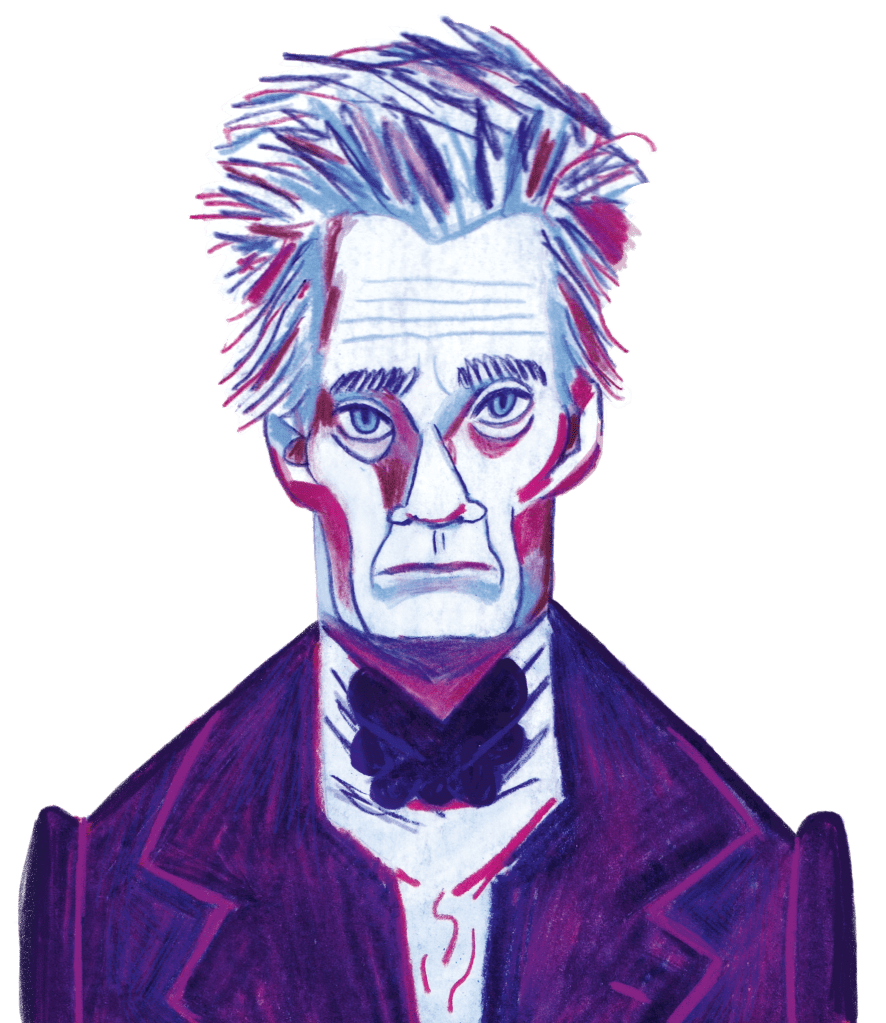
In the encyclopedia of underrated Americans, there is no more unfairly reviled figure than John C. Calhoun, Yale valedictorian, representative and senator for South Carolina, former secretary of war, secretary of state and vice president. Calhoun was one of the greatest orators of the age. His Disquisition on Government is one of the most powerful admonitions about the tyranny of the majority ever penned. Unfortunately, he was also a supporter of slavery. And unlike many of his Southern contemporaries, he regarded slavery not just as a necessary evil but as a positive good because it provided for slaves better than they could provide for themselves. You might, like me, think Calhoun was wrong about that. But for the great engine of moral denunciation, Calhoun’s many virtues count for naught.
Heather Mac Donald
Granted, John Singer Sargent was the consummate cosmopolitan, born in Florence in 1856 to peripatetic expats from Philadelphia, educated in Europe’s museums and ateliers, fluent in the primary European languages. Sargent visited the US over the course of his career less as a native son and more as a perpetual seeker of new vistas and visual challenges. But Americans should claim him.
Sargent’s portraits astound with the spontaneity of their brushstrokes, the luxuriousness of their textures, the pearly mysteries of his sitters’ flesh, the psychological depths of his sitters’ gaze, the daring asymmetries of their formal composition. But his watercolors are his crowning achievement. No one has captured more breathtakingly the elusive non-color of water, the brilliance of sun on stone, or the mauve depths of foliage.
Many would nominate the New England-born and bred Winslow Homer as the quintessential American painter. They could well be right. Sargent comes to us like Mozart, a natural genius, effortlessly strewing beauty with whatever he creates.
Joseph J. Ellis
If we could somehow reach the Founding Fathers in the hereafter, they would all ask us why John Jay is missing from their most celebrated number. The answer is that a distinguished historian at Columbia hoarded the Jay Papers for nearly 30 years, so the story of his achievements has only recently begun to be published. Jay was considered by his peers to be the epitome of what they called “virtue” and was on the shortlist of candidates who should succeed George Washington as president. He insisted that American independence was non-negotiable, the western border of the new American nation was the Mississippi, not the Ohio River, and the Americans should violate their treaty with France and make a separate one with Britain. Jay did all this single-handedly, crafting in the Treaty of Paris what is generally regarded as the greatest triumph in American diplomatic history.
Michael Brendan Dougherty
John Quincy Adams: a failed presidency. But as secretary of state he created the Monroe Doctrine, making America premier in the western hemisphere. As a congressman, he named and defined the Southern slave power’s threat to the Constitution.
Kelly Chapman
I have two, both of whom affirm human dignity – a concept whose stock is rapidly declining with the rise of AI – from opposite directions. First, a collective: the Dominican Sisters of Mary, Mother of the Eucharist, the Ann Arbor-based, frisbee-playing nuns who have charmed TikTok with their video podcasts where they sweetly affirm each other (“and Sister, you are so good at that!”). They model a joyful, positive form of relating and living in community. The second is the American artist Joel-Peter Witkin. His work is confrontational and obsessed with mortality, forcing us to look beyond weakness, disfigurement and our own discomfort to find beauty and humanity in the grotesque.
Matt Labash
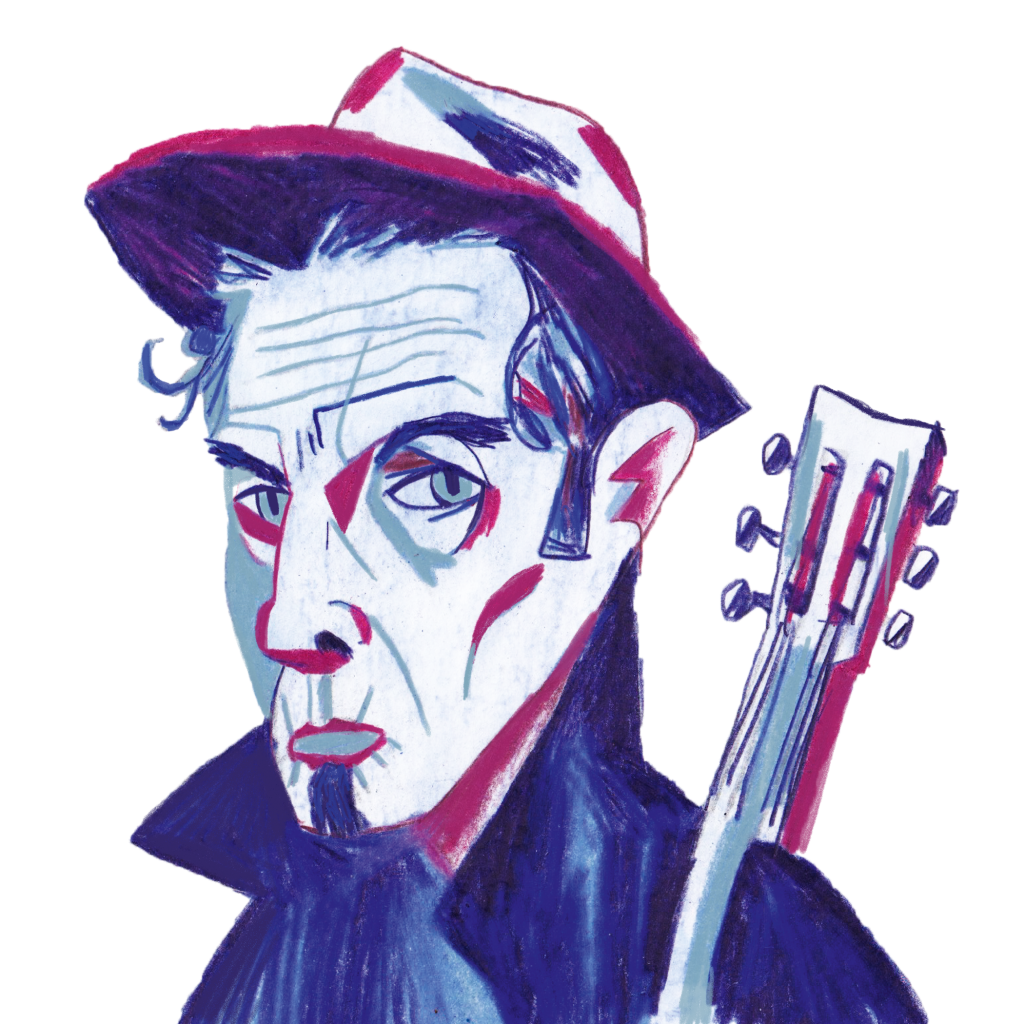
Tom Waits. He’s never had a Hot 100 hit. He’s not big on TikTok. But anyone capable of putting such wisdom into circulation as “the world is a hellish place and bad writing is destroying the quality of our suffering,” or “I like beautiful melodies telling me terrible things,” or “you have to keep busy, after all, no dog’s ever pissed on a moving car…” Well, there’s a man who should be mandatory reading in school. Or mandatory listening, since the kids can’t be bothered to read.
Curtis Yarvin
Claremonsters celebrate Abraham Lincoln as the last 18th-century American statesman. Actually, he was the first 20th-century American politician. But the real last statesman was James Buchanan – whose 1866 book, The Administration on the Eve of the Rebellion, is the first pill you need to clear your head of Civil War hagiography.
Michael P. Gibson
As one of the most underrated Americans I salute Robert Noyce, the quintessential startup Prometheus who established the culture of Silicon Valley, co-inventor of the microchip, co-founder of Fairchild and Intel, captain of the “Traitorous Eight” and the first to award stock options to employees, thereby generating the engine of innovation that has changed the world in ways we still do not understand and cannot predict.
Tucker Carlson
I’d argue the most underrated American is Richard Leader, an English immigrant who built the world’s first cast iron wood stove in Massachusetts in the 1640s. No technology before or since has done more to improve the world. Sadly history remembers the ghouls who created pointless and destructive gadgets like nuclear weapons and AI, while a true genius like Richard Leader is mostly forgotten.



Comments