Laurie Graham

Laurie Graham is a novelist and scriptwriter. Her latest book is Anyone For Seconds?

AI killed the Easter Bunny

From our UK edition

On the grounds of advancing age, I had decided to ignore all the chatter about artificial intelligence and devote my remaining time to things I could properly understand. Then I discovered that one of my own copyrighted properties, the fruit of a year’s work, had been scraped into the AI maw without so much as a by-your-leave, and it became personal. I wrote to my MP who responded with template blandishments. This government… committed to blah blah… exciting prospects… safeguarding… potential opt-out system… a close watch, yadda yadda… Feeling impotent and no further forward, I returned to my knitting. It took the murder of the Easter Bunny to rouse me from the torpor of denial.

Best of 2024 with Dominic Sandbrook, Mary Beard and Harriet Harman

From our UK edition

75 min listen

This week is a special episode of the podcast where we are looking back on some of our favourite pieces from the magazine over the past year and revisiting some of the conversations we had around them. First up: the Starmer supremacyLet’s start with undoubtedly the biggest news of the year: Starmer’s supermajority and the first Labour government in 14 years. In April, we spoke to Katy Balls and Harriet Harman about just what a supermajority could mean for Keir Starmer. Listening back, it’s an incredibly interesting discussion to revisit. The aim of Katy’s piece was to communicate the internal problems that could arise from such a sweeping victory and, crucially, how Starmer might manage a historic cohort of backbenchers.

Trump’s debate woes, how to catch a paedo & the politics of the hotel breakfast buffet

From our UK edition

39 min listen

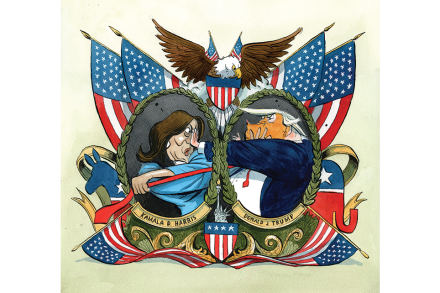
This week:  The US election is back on a knife-edge. Republicans hoped this week’s debate would expose Kamala Harris’s weaknesses. ‘They forgot that, when it comes to one-on-one intellectual sparring matches with candidates who aren’t senile, Donald Trump is very bad indeed,’ writes Freddy Gray. ‘A skilled politician would have been able to unpick Harris’s act, but Trump could not.’ Harris is enigmatic to the point of absurdity, but Trump failed to pin her down and may well have squandered his narrow lead. To discuss further, Freddy joined the podcast alongside Amber Duke, Washington editor at Spectator World.

Are you a hotel buffet bandit?

From our UK edition

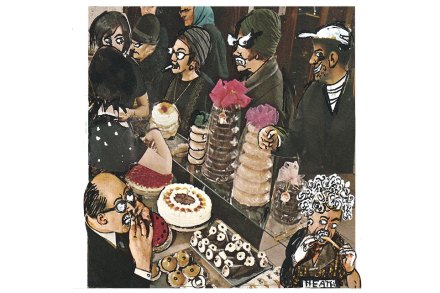
Last week, on a Swedish train somewhere between Linkoping and Mjolby, as I struggled to open a bag of cheesy doofers that was to serve as my lunch, my travel companions began unwrapping their own picnics. Some, like me, had made hasty and unappetising purchases at the station. Others had carefully curated lunches, assembled earlier in the day from our hotel’s lavish breakfast buffet. Well-filled rolls, pieces of fruit, pastries. In they tucked. Germans may be on the march at dawn, annexing sun loungers, but it’s the Brits who secrete breakfast goods I was suddenly aware of a frisson of stance-taking rippling through our group. There were those who regarded buffet plundering as theft and those who defended it as plain common sense.

Matthew Parris, Laurie Graham, Rachel Johnson, Laura Gascoigne and Angus Colwell

From our UK edition

32 min listen

This week: Matthew Parris questions what's left to say about the Tories (00:57), Laurie Graham discusses her struggle to see a GP (07:35), Rachel Johnson makes the case against women only clubs (13:38), Laura Gascoigne tells us the truth about Caravaggio's last painting (19:21) and Angus Colwell reads his notes on wild garlic (28:58).  Produced by Oscar Edmondson, Margaret Mitchell and Patrick Gibbons.  Presented by Oscar Edmondson.

I want to see a doctor – not do another NHS survey

From our UK edition

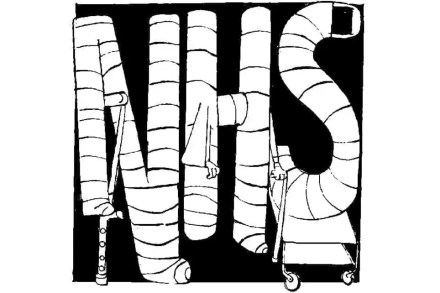
Nye Bevan did not make old bones, and perhaps that’s just as well. According to a recent British Social Attitudes survey, 52 per cent of those polled are dissatisfied with the NHS, in particular with the difficulties in getting a GP appointment, with long A&E trolley waits and with huge delays for hospital appointments. All this, in spite of ever more money being chucked into its maw. If invited, I could immediately save the NHS a packet by dialling down the thermostat that has turned hospitals into Hotel Tropicana for bacteria, and by asking, wherever possible, patients’ relatives to provide food, thereby reducing the amount of unappetising slop that goes straight from plate to bin while the sick go hungry. But that is not my theme today.

The truth about ‘living with obesity’

From our UK edition

It’s been brought to my attention that it is no longer done to describe a person as fat. Better, apparently, to say that they are ‘living with obesity’. This weasel construction makes obesity sound like a malevolent squatter who refuses to be evicted. Or like a bit of genetic bad luck, such as ‘living with ginger eyelashes’. It’s someone else’s fault. The western world has undoubtedly lost the plot with regard to diet, but before I say more, full disclosure: I am, according to the flawed metrics of BMI, obese. I reject the label, not because I’m in denial but because an index that ignores age, sex and muscle and bone mass isn’t really worth a light. I’ll stick with the Tightening Waistband Indicator.

Christmas Special 2023

From our UK edition

70 min listen

Welcome to this festive episode of the Edition podcast, where we will be taking you through the pages of The Spectator’s special Christmas triple issue.  Up first: What a year in politics it has been. 2023 has seen scandals, sackings, arrests and the return of some familiar faces. It’s easy to forget that at the start of the year Nicola Sturgeon was still leader of the SNP! To make sense of it all is editor of The Spectator, Fraser Nelson, The Spectator’s political editor Katy Balls, and Quentin Letts, sketch writer for the Daily Mail. (01:06) Next: The story that has dominated the pages of The Spectator in the latter half of this year is of course the conflict in Gaza.

The hell of putting on a Christmas play

From our UK edition

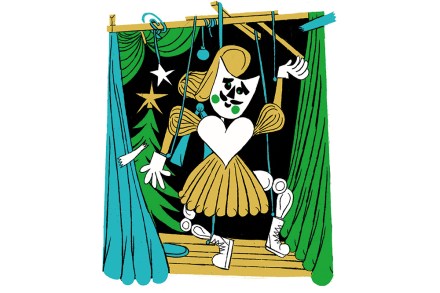
In July, when I was asked to confect ‘another Christmas entertainment’ for my community, I viewed such a distant elephant with equanimity. Like memories of the pain of childbirth, the nightmares of amateur dramatics soon fade. Besides, I’d done this many times and survived to tell the tale. All I needed was to reassemble last year’s cast and then write something for them to perform. A piece of cake.  By October I was seeing things differently. The steepness of the gradient we had to climb was becoming all too clear. Amateur dramatics are held together by string and paperclips. There are no understudies Very few of this year’s cast are seasoned performers.

Why I’m happy being a Brother

From our UK edition

Two years ago, without being ennobled in any Honours list or recourse to surgery, I gained a new title. To the list of Mrs Graham, Mum and Nonna, I added Brother. It signified that I had become a resident of the Charterhouse almshouse.  The title is, if nothing else, a conversation piece. If I’m required to attend a party where I’m unlikely to know any of the other guests, I now wear my Charterhouse badge. It catches the eye and, at the age of 75, having my right breast scrutinised is no longer open to misinterpretation. ‘Brother Laurie?’ they say. ‘How intriguing. Do tell.’ Comrade? Too Leninist. Citizen? I hear the creak of tumbril wheels. Messer? Too military. Friend?

Elf and safety: are child protection guidelines killing Santa’s appeal?

From our UK edition

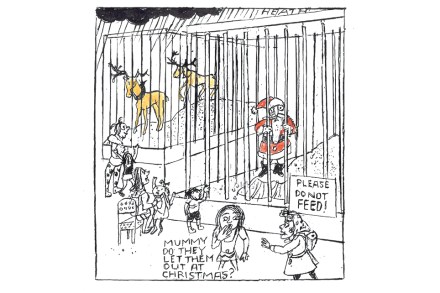
Santa Claus is coming to town. I know this because I recently spent an evening gift-wrapping empty boxes to decorate his grotto at an upcoming Christmas fair. With most of my grandchildren now in their teens, it’s been a while since I endured the grotto experience and I was interested to know how such a thing is managed in 2022. How does one navigate between overbearing safeguarding guidelines and the jaded palate of today’s pre-school sophisticate? Is it even worth the bother? Father Christmas must nowbe accompanied at all times byone or more vigilant adults  Like anyone who volunteers for a role that will place them in the company of children, our Santa will undoubtedly have been subjected to a Disclosure and Barring Service background check.

Open alms: how I came to live on charity

From our UK edition

A year ago, I moved into what I hope will be my home for the rest of my life. I became an almshouse resident. The announcement of my implied reduced circumstances provoked some interesting responses: from family, joy that my recent hard times were over; from acquaintances, a range of reactions: embarrassment, shocked disbelief, scepticism. Even some thinly veiled envy. Who’d have thought? What kind of person ends their days in an almshouse? The key word is need. It might be financial, it might be social, perhaps both. Some people are quite alone in the world. Some reach old age with a negligible pension, or no roof over their head.

The pernicious creep of Big Nanny

From our UK edition

Waiting at a coach station recently, in the space of seven minutes I was cautioned three times by the disembodied voice of Big Nanny. No smoking or vaping was allowed. Cycling was prohibited. Pedestrians were directed to use only the designated crossings. I almost wished I’d opted to travel by rail, but then I remembered that Big Nanny rides on trains too. In a quieter era of rail travel the only announcements, apart from service cancellations, used to be the one about refraining from urination when the train was in the station, and advice not to poke your head out of the window of a moving carriage. Which some dimwits nevertheless did with tragic consequences and so removed themselves from the gene pool. Now, though, Train Nanny never shuts up.

The untimely death of the landline

From our UK edition

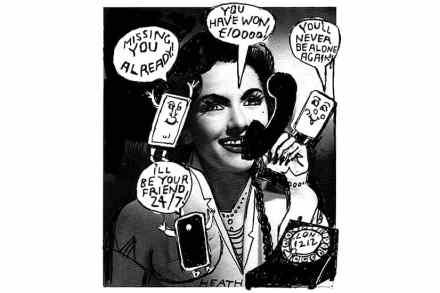
I can count on the fingers of one hand the people I know who still have a landline telephone, and I am not among them. Getting one installed in my new home is feasible but why, my children ask, would I bother? I have a mobile phone, albeit a very basic one, and what more can a person need? To anyone under the age of 50, retaining a landline seems like a fogey-ish affectation. Indeed, one of my daughters has a rotary-dial handset, not as a back-up phone but as an ironic décor item. Because if you’re wearing a belt, why have braces? For mobile users there’s the back-up possibility of something called a cloud. Otherwise, nothing. You entrust your appointment diary, address book and photo collection to one device: your mobile phone.

Martin Vander Weyer, Laurie Graham, Michael Mosbacher

From our UK edition

15 min listen

On this week's episode, we’ll hear from Martin Vander Weyer on the crash of crypto. (00:47)Next, Laurie Graham on the difficulties of downsizing. (04:20)And finally, Michael Mosbacher on the history of the fur industry. (12:20)Produced and presented by Sam HolmesSubscribe to The Spectator today and get a £20 Amazon gift voucher:spectator.

The difficult decisions that come with downsizing

From our UK edition

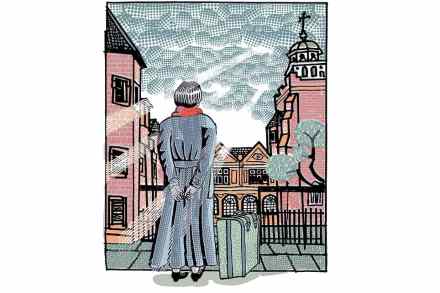
I’m perched on the bed reading an old Mothering Sunday card. It’s just one item in a box of miscellanea that I must sort and prune and I really can’t afford the time to linger. That box contains a fraction of what I have to deal with before I move house and I need to crack on. But I am sweating the small stuff. I’m sure I’m not alone in this. One of the legacies of lockdown has been a longing for more space. Across the UK, families with children are falling over themselves to find bigger places. It’s a downsizers’ market right now for those of us who feel ready to let go and to set about the sorting and binning of things. It’s good for us, they say. It’s liberating, they say. My home-moving history is not an unusual one.

Why cash is still king to me

From our UK edition

I recently set out on a simple mission: to break the £10 note in my purse so I’d have a five to put in the church collection plate on Sunday. My first attempt backfired. The café, where my order was delivered with an eye-roll of metro disdain, no longer accepted cash payments. I sat at one of their pavement tables, drinking the single macchiato I’d neither wanted nor needed, and considered my next move. I’m aware that cash is now regarded as a grubby anachronism. All those hands it passes through! Eww! Of the two churches I attend, one has stayed ahead of this trend and installed payment terminals in the nave: tap and give. I can offer no rational objection to this. I simply don’t like it.

Leading article, Fiona Mountford, Laurie Graham and Isabel Hardman

From our UK edition

24 min listen

On this week's episode, Fraser Nelson starts by reading our leading article: the Prime Minister promised 'data, not dates', so should we reopen before 21 June? (01:15) Fiona Mountford is on next, saying she's had enough of corporate faux-friendliness. (07:20) Laurie Graham reads her piece afterwards, wondering what to put in her Covid time capsule. (13:00) Isabel Hardman finishes the podcast by reading her notes on Dandelions - perhaps the 'cheeriest of wild flowers'.

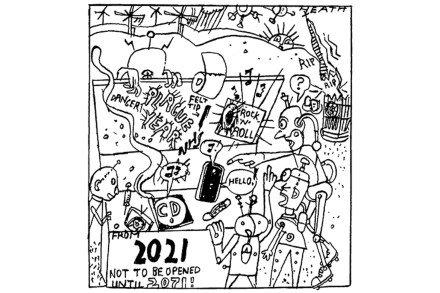
What should we put in our time capsule of the plague year?

From our UK edition

The ladies of my church knitting circle (note, we are open to those who identify ‘-otherly’, and to practitioners of diverse crafts) are an enterprising bunch, and no techno slouches either. Unbowed by Covid, we have continued to meet via Zoom, bringing along our own tea, cake and creative endeavours. We love a project, and we now have one: a time capsule of the plague year. This idea is so far proving to be more a feasibility study than a done deal. There are so many decisions to make. What size should the capsule be? Where will it be stored? When will it be reopened, and by whom? And what will they find when they do?

The power of cold showers

From our UK edition

Hippocrates prescribed it to allay lassitude, James Bond favoured it as a token of his manliness, and in less indulgent times Gordonstoun school insisted on it: the cold shower. And now it’s having a moment with the wellness brigade. (The very word ‘wellness’ used to send me screaming from the room: a Californian import, I was sure. Then someone pointed out that the word has been in the English lexicon since the 17th century, so that told me.) The proven physical benefits of exposure to cold water are impressive. A boost to the immune system, improved circulation, and a wake-up call to the body’s brown fat, which is apparently A Very Good Thing.