Books & Arts

Books and Arts

Digging it

Censorship is censorship, whether it is the firing of a libidinous cartoon skunk or the starting of yet another Satanic panic over music videos that don’t promote Christian dogma. But when an authoritarian, militarist government imposes the censorship, it is far worse, making “Cancel Culture” look like Champagne problems. Tunnel 29, a podcast that chronicles a harrowing and heroic story of an escape underneath the Berlin Wall, renders hyperbolic any comparison of Soviet censorship to current American censorship, be it left-wing or religious. You don’t have to dig an underground expressway to watch old episodes of Looney Tunes while refilling your now-vintage bottle of Aunt Jemima with new syrup.

tunnel
symphony

Get with the program

It was Rust Belt versus Sun Belt. Over the holiday season, I visited Pittsburgh’s Heinz Hall, located in the heart of the city, and Miami’s New World Center, a concert hall in South Beach. The former, a one-time movie theater built in 1927, looks like an oversized jewel box stuffed with red velvet chairs and glitzy chandeliers. The latter, a spectacularly intimate venue designed by Frank Gehry, serves as the home of the New World Symphony, a local outfit that operates as a final training ground for musicians who have graduated from conservatories and want to go on to play in major orchestras. In their own way, each of the carefully executed performances underscored that the obituaries repeatedly pronounced for classical music as a preserve of elitist white males are so much bosh.

Returning to live gigs

Gigs. Remember them? They were awful. You’d get to some dump of avenue, in a bad part of town (if a small capacity) or out in some apocalyptic wasteland (if an enormo-dome). You’d arrive too early and have to try and dodge some mediocre support band (who’d bought their way on to the tour) or queue for seven hours for a beer in a plastic cup. If you dared to speak while some awful act was plodding away, some goody-goody would hold a finger up to their lips, glare and shoosh you. An hour and a half later in the back of the venue, you’d stand gratefully nearer to death’s beckoning cold hand. “Ever get the feeling you’ve been cheated?” Yes. When Covid rampaged through the world like a Viking raid of death-cult realtors, the world was suddenly shorn of live music.

gigs
doubtfire

Nanny bait

Was Mrs. Doubtfire a children’s movie? You might think so after seeing the new musical version, which opened at the Stephen Sondheim Theatre in early December. The 1993 Robin Williams classic hails from that glorious era of made-to-end-up-on-TV blockbusters at the end of the twentieth century — the movies that so many millennials first came to know piecemeal, catching a scene or two with dad while mom clucked disappointment from the other room. In films like these, each scene is designed to stand on its own, which may explain why the creators of the Doubtfire musical thought they could drop so many of them, barely laundered, right onto the stage.

Serve and volley

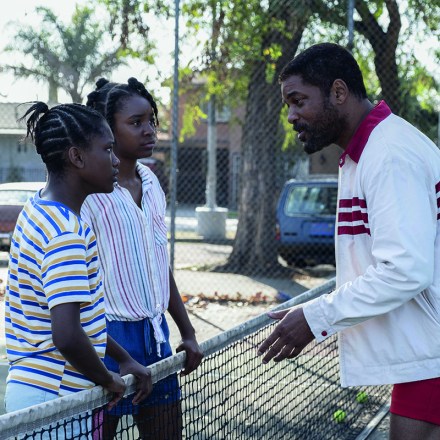
Richard Williams, the mercurial father of the tennis superstars Venus and Serena, is the subject of the wonderful new biopic King Richard, starring Will Smith in an Oscar-worthy performance. Williams is a fascinating figure who, as longtime tennis fans know, planned out the careers of his daughters before they were even born, telling anyone who’d listen that the Compton-bred girls were destined for superstardom. It was a preposterous statement, all the more so since it was made by a man who knew next to nothing about tennis. Yet as we now know, Williams’s vision became reality.

Richard
Wayne

John Wayne behind the blue line

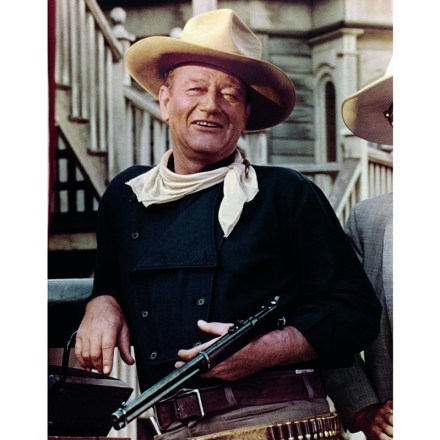
Stars don’t sell movies anymore. They’re even becoming hard to distinguish. Which Chris is in Guardians of the Galaxy and which one plays Captain America? Is Emma Stone in Harry Potter or Cruella? Interchangeable entertainers are nothing new, and I’m sure moviegoers in the 1940s got the Roberts Walker, Taylor, Young and Montgomery mixed up, but those names still sold the movie. Why would anyone pay money to see something called The Clock in 1945 unless it starred Robert Walker and Judy Garland? Could a movie really be that good unless it had Bette Davis or Marlon Brando, Eddie Murphy, Bruce Willis or even Adam Sandler?

Hogarth framed

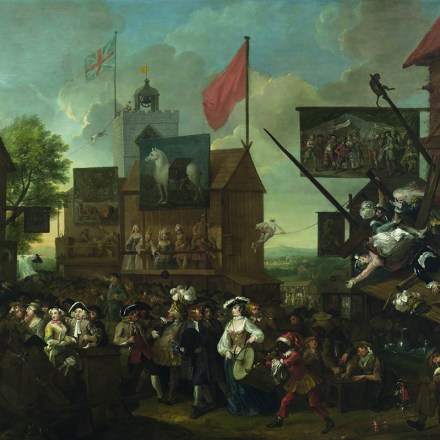
Visiting public art galleries has become a dangerous undertaking — at least if one wishes not to be accosted by ludicrously woke signage and unnecessary trigger warnings. In the past, one might have, justifiably, seen warnings before entering a room exhibiting, say, the garish and pornographic sculptures and photos of Jeff Koons going hard at it with Hungarian-Italian “actress” and part-time politician Ilona Staller, aka Cicciolina. Today, such warnings are found outside galleries exhibiting not such ephemera but the greatest works in the Western canon. Last autumn’s Titian show at the Isabella Stewart Gardner Museum in Boston warned visitors before entering that “Titian: Women, Myth and Power explores themes of sexual assault and violence.

Hogarth
heiresses

Poor little rich girls

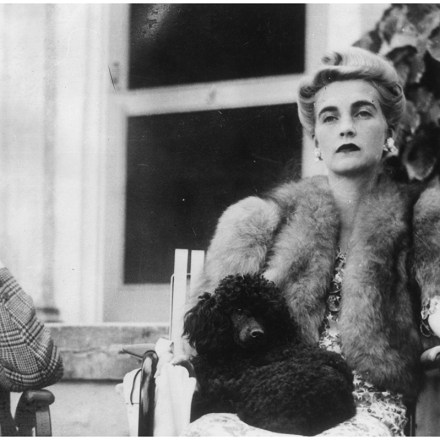
But why did she marry him? That is the question so often asked of heiresses who have, it would appear, the chance to marry anyone on whom their fancy alights yet so often make bad choices. And it’s the question reverberating through this funny, insightful and extremely modern look at an age-old problem by the British author Laura Thompson. “Why, when one had the power of near-limitless choice, would one choose so badly?” she asks. Taking this as her challenge, she examines dozens of (mostly ghastly) marriages over the last four centuries before concluding that it was a rare heiress who triumphed over her ordained fate as a victim, but it was indeed possible.

Sex and the city

Coco Mellors’s lively, involving debut novel begins on New Year’s Eve in New York, with Cleo and Frank meeting in a descending elevator. It’s a sure sign that their future relationship will not end well. Cleo is British, young, golden and an artist; Frank is American and old (well, he’s in his late thirties), and he has taken the devil’s dollar by working in advertising. Cleopatra and Frankenstein deals primarily with the indistinct boundaries between commerce and art, set against a backdrop of neurotic New Yorkers, glitter, drugs and booze. As Frank walks Cleo home through streets full of hedonists, swapping one liners and teasing each other, they fall in love (or at least, into a clinch on the stairs of her dingy apartment).

Mellors
argument

Picking a fight

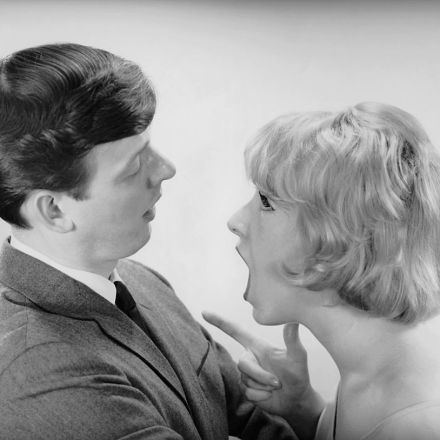
Lee Siegel’s defense of argument in the latest volume of Yale’s “Why X Matters” series is original, provocative and frustrating, which isn’t bad for a book on argument. Siegel is less interested in what argument does than in what it is. An “expression of a universal longing for a better life” is how he puts it initially. It is also a justification for “ways of living,” something that“ flows from our intuitive certainty that our right to exist is the most fundamental truth,” and an expression of our “unique, particular existence.” Albert Camus stated in The Myth of Sisyphus that the only serious philosophical question is suicide, “whether life is or is not worth living.” Siegel therefore writes “To exist is to argue your existence.” You get the idea.

Reading gaol

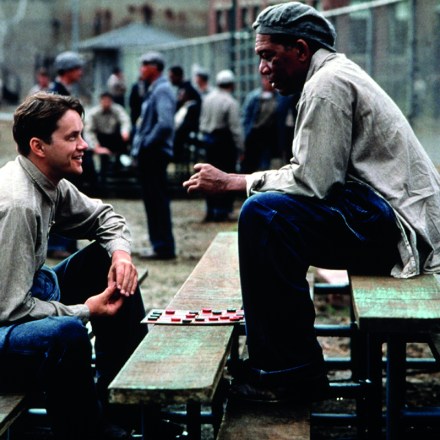
In my more whimsical moments, when I’m worried that I don’t have the time and opportunity that I once had to read great works of literature, I have occasionally wondered about committing a minor felony of some sort. I would then be incarcerated for a couple of months and aim to use the time as a reading retreat. All I would need was earplugs, comfy bedding and a prison library card. Now there’s precedent, too. The author Daniel Genis used his time inside jail to read more than a thousand books during his ten years’ incarceration, and this memoir, Sentence, is his account of his education inside, both literary and (un)sentimental. But by the time I finished reading it, any idea of straying from the straight and narrow had well and truly left my consciousness.

genis
reality

Reality bit

If a single television genre defines the twenty-first century so far, it is the reality show. These relatively low-budget and therefore lucrative unscripted programs often feature people competing to survive in the most hostile environments imaginable — and those are just the series about the Kardashian family. Many such shows are lowbrow entertainment at its most bingeable, the visual equivalents of a bag of potato chips: “I can’t believe I watched the whole thing.” Danielle J. Lindemann, a sociology professor at Lehigh University and an avid reality television fan, would probably agree with at least some of that description, but she would add that these shows are also quite instructive.

Getting the jokes in Proust

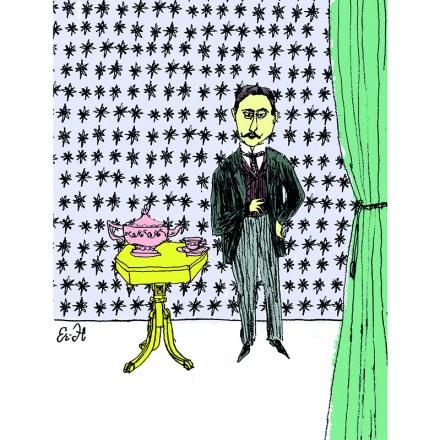
Did you read Proust in lockdown? Lockdown, it seemed, offered the eons of vacancy apparently required to finally get around to À La Recherche Du Temps Perdu, aka “The Big One”: a book to be attempted only by the pretentious one percent in the discharge of their services to intellectual snobbery. I did. I read it twice. I read it because it’s always a pleasure and a novelty, and because I want to get it made as a long-form television series. Proust is perfect for TV: better than anything else, the format can show the passage of time. This is the sine qua non of any Proust reckoning, and it has defeated all attempts so far to make the book into a feature film. We are doing well.

proust