Nicola Shulman

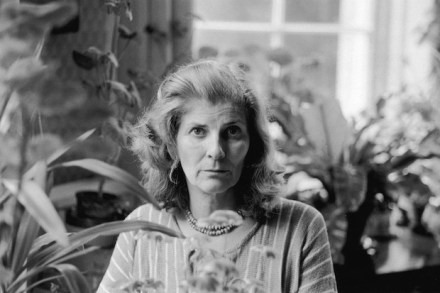
Nicola Shulman is a British biographer, former model, aristocrat, and the author of Graven with Diamonds.

Douglas Murray, Mary Wakefield and Nicola Shulman

From our UK edition

29 min listen

On this episode of Spectator Out Loud, Douglas Murray starts by explaining why C. S. Lewis was right about war. (00:56) Mary Wakefield is up next, looking at the founding myth that Russia and Ukraine are fighting over. (10:18) Nicola Shulman finishes the podcast, reading her piece about Philip Larkin's big problem.

This be the curse: Philip Larkin’s big problem

From our UK edition

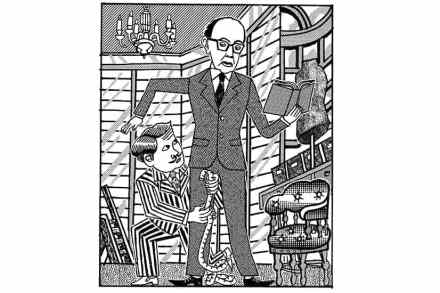
In matters of sex, Philip Larkin was late getting away. On his 23rd birthday, he wrote defeatedly to Kingsley Amis: ‘I really do not think it likely I shall ever get into the same bed as anyone again because it is so much trouble, almost as much trouble as standing for parliament.’ His 2014 biographer, James Booth, adds that Larkin was ‘still effectively a virgin… [and] Amis was puzzled that his friend failed to follow through his pursuit of sexual satisfaction’. There is no join-the-dots explanation for what Larkin called the ‘sex-fear and auto-erotic fantasies’ that beset him all his life. But in the centenary of his birth, it’s time to bring in the anatomical peculiarity incarnating his trouble with sexual fulfilment: his penis.

Getting the jokes in Proust

Did you read Proust in lockdown? Lockdown, it seemed, offered the eons of vacancy apparently required to finally get around to À La Recherche Du Temps Perdu, aka “The Big One”: a book to be attempted only by the pretentious one percent in the discharge of their services to intellectual snobbery. I did. I read it twice. I read it because it’s always a pleasure and a novelty, and because I want to get it made as a long-form television series. Proust is perfect for TV: better than anything else, the format can show the passage of time. This is the sine qua non of any Proust reckoning, and it has defeated all attempts so far to make the book into a feature film. We are doing well.

proust

Should Elizabeth Jane Howard have brought back the Cazalets?

From our UK edition

Some years ago, a woman wrote to Dear Mary, at the back of this periodical, with an unusual problem: she was a keen follower of new fiction but felt guilty to be seen lying around on sofas reading novels in the presence of her domestic staff. Mary advised that she should let it be known she had taken up fiction reviewing. If there is anything in publishing to melt the realities of book reviewing into this delicious scene it’s the prospect of a new Cazalet novel. Not only do I get to read it in plain sight, but the 19-year break since the last one necessitates a re-read of the whole lot. Days and days, that means, immersed in the lives of that many-petalled flower of the home counties, the Cazalet family.

Poet of the middling sort

From our UK edition

‘If you cn rd ths msg, you cn bcm a sec & gt a gd jb’. So ran the advertisement for the Brook Street Bureau employment agency. It was the ubiquitous ornament of tube trains, buses and escalators in the 1970s, now seen no more and forgotten, at least by me, until Andrew Hadfield’s biography of Edmund Spenser whistled it back from the void. Here is Spenser’s career in a nutshell, according to the emphases of Hadfield’s study, a phenomenal work of scholarship and insight, if not itself a nutshell at almost 600 closely- printed pages.

Method in her magic

From our UK edition

Bring Up the Bodies, as everybody knows, is the sequel to Wolf Hall, Hilary Mantel’s fictional re-imagining of the life and times of Henry VIII’s most effective servant, Thomas Cromwell. We have long been banging our spoons and forks for it. Speaking for myself, I finished the first with an almost unbearable curiosity to find out what was going to happen next — a strange result, when you think of it, because we all know perfectly well what is going to happen. Mantel is comprehensive with her sources. Every scene is secured, like a piano key to its hammer, to the corresponding page of the great 21-volume Calendar of State Papers of Henry’s reign.

King of spin

From our UK edition

Draw two two-inch triangles, tip to tip, one on top of the other. A little way down the left flank of the upper triangle, take a perpendicular line out to an inch, then turn your pencil at a right angle and continue another inch. Repeat on the other side. Next, draw two short, splayed lines down from the base of the lower triangle. Finally, put an acute accent, an inch long, about two inches above the whole. What have you got? According to Dr David Starkey, who performs this trick at schools all over the country, Henry VIII in 13 lines. Apparently he is recognisable in this form as far afield as Japan, America, and even France. Each generation makes history in its own image and we, preoccupied with spin and profile-management, are impressed anew with Henry for his genius in this field.