Books & Arts

Books and Arts

Carry that weight

You feel a weird twinge, and your doctor doesn’t have an opening for four months, so it’s almost inevitable you’ll go looking for more information on the internet. You know it’s not a good idea, that it can’t possibly end anywhere good, and yet you feel compelled. The result is usually the same: WebMD and Yahoo Answers will tell you it’s cancer, YouTube will tell you your bowels need flushing, some guy calling himself a fitness guru with very white teeth will try to sell you capsules of some exotic sounding herb for $125, and soon your Google ads are filled with prescription medication designed to fight Alzheimer’s or lymphoma.

health weight
lester

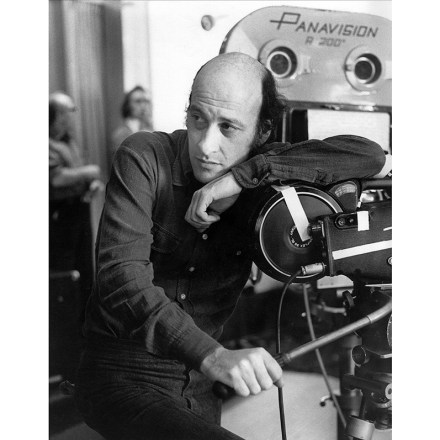
Richard Lester at ninety

No matter how many years have passed since they first hit American airwaves, or how many of its members have died, or how aged its surviving members have become, the Beatles will always be, in our minds, forever young. To a large extent, the public perception of John, Paul, George and Ringo as personifications of youth, zest and zeal was a byproduct of their classic faux-documentary musical comedy, A Hard Day’s Night, released in the summer of 1964, just months after their appearance on The Ed Sullivan Show. It comes, then, as something of a shock to note the ninetieth birthday this month of the film’s prodigious and gifted director, Richard Lester. The maker of the Beatles movies (he also directed 1965’s Help!) a nonagenarian? It can’t be! But so it is.

Jake Gyllenhaal is guilty

Jake Gyllenhaal is losing it. As with so many of his films — Demolition, Southpaw and Nightcrawler, to name a few — the actor’s latest, the unconventional crime thriller The Guilty, finds him yet again portraying a troubled man, beaten down and about to crack up. Joe Baylor is an LAPD cop relegated to working at the 911 call center as the result of misconduct some eight months before. Surly and apathetic, Joe answers the nightshift calls, ranging from drunken mishaps to carjackings, with a disgust he doesn’t care to contain. He longs to return to the streets. The night turns, however, when Joe fields a call from a woman (voiced by Riley Keough) who’s been abducted and is being held in a white van.

guilty
north country

Truth in Duluth

The Venerable Bede writes of a pagan priest in seventh-century England who, sizing up the meager life of man, compares it to a sparrow flying through a well-warmed dining hall on a stormy winter night. The priest admits to knowing nothing about the cold darkness before or after the brief passage. He can only speak to the time the bird spends in the light. In Girl from the North Country (open run at the Belasco Theatre), the season is the Great Depression in 1933, and the dining hall is a flophouse in Duluth, Minnesota, where down-and-outers blow through like so many birds on the wind. The innkeeper, Nick Laine (Jay O.

How did Walt Disney learn from Ancien Régime decoration?

"Make it pink! Make it pink!” says the chubby fairy Flora, aiming her wand at Princess Aurora’s new ball gown in Walt Disney’s Sleeping Beauty (1959). A few magic sparks must have fallen on the walls of Disneyland’s Sleeping Beauty Castle in Anaheim, California, which have been painted (and repainted) in several shades of cotton-candy pink since the faux fortress opened in the summer of 1955, well before the film itself was completed. Two centuries earlier, in 1757, Jean Hellot, the general inspector of the porcelain factory at Sèvres, invented the slightly deeper “rose Pompadour,” a ground color named in honor of Louis XV’s chief mistress and the factory’s most important patron. This pink appears on the scallop-patterned lids of two large Sèvres vases (c.

disney
Marsalis

Wynton’s works

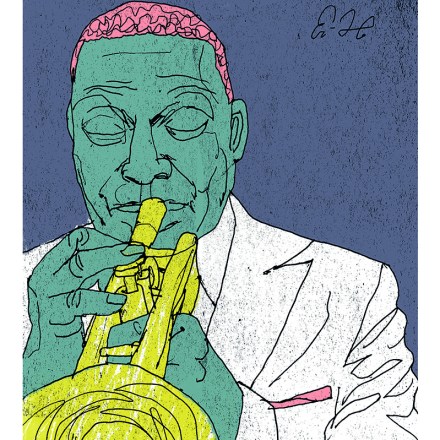
Jazz has periodically seen the rise of so-called “young lions.” The phrase was first used in 1961 as the title of a Lee Morgan LP put out by Vee-Jay Records, a black-owned company, with cover art that sports a photo of four lions lounging on a stone ledge. Then, in 1983, Elektra Records released an LP that was also titled The Young Lions, featuring Wynton Marsalis, Bobby McFerrin and a number of other young musicians who were focused on reclaiming the bebop tradition. Now, in late November, as Marsalis celebrated his sixtieth birthday with the Jazz at Lincoln Center Orchestra at the Rose Theater, his baritone saxophone player Paul Nedzela (as the New York Times reported) called out during a rehearsal, “It’s the Young Lions!

Kandinsky’s colors

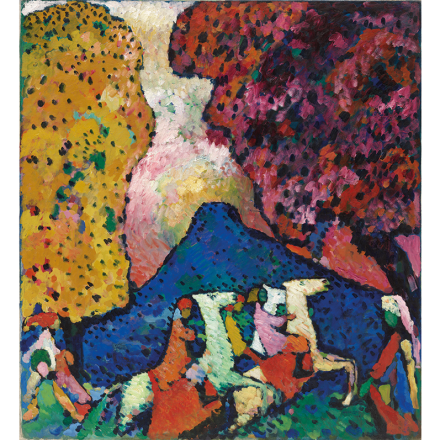
The paintings of Vasily Kandinsky (1866-1944) have never looked quite as good as they do, right now, at the Solomon R. Guggenheim Museum in New York City. It’s worth mulling why that is. I mean, Kandinsky is old news, right? He’s a mainstay in the common consciousness of those who make art their livelihood, and the paintings remain on view at any institution that presumes to untangle the story of Modern art. Given the current vogue for politics and inclusivity, Kandinsky seems an unlikely figure for reappraisal: he’s a tough nut to enlist for this or that cause. As for excluding him from the canon — forget it. Dead white male though he may be, Kandinsky is immovable. Granted, his status as the first abstract painter has been called into question.

kandinsky
substack

Stacking up

"It feels almost like there is money in writing again.” So the historian and New York Times bestselling author Dan Jones tells me. Is he referring to increased book sales, or lucrative adaptation deals? Not this time. Instead, he’s discussing Substack, which launched in 2017. It has now become the platform of choice for writers to develop their careers on their own terms, without having to give substantial percentages away to agents, publishers and lawyers. For years, authors have felt that they have been little more than galley slaves, flogging themselves and their wares for the profit of multinational corporations. Now, finally, they have been given an opportunity to take back control of their own careers and destinies. The format is a simple one.

Style and substance

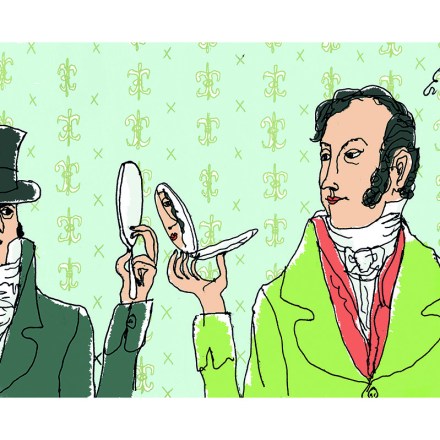
In Ravelstein, Saul Bellow’s thinly disguised account of the final years of the University of Chicago professor Allan Bloom, the narrator Chick and his close friend Abe Ravelstein go on a shopping spree in Paris sometime in the 1990s. For all their highfalutin philosophical talk about Athens versus Jerusalem and the like, Bellow makes it clear that there is a Dionysian as well as Apollonian cast to the bond between Chick and Abe. After departing the Hôtel de Crillon, their first stop is Lanvin. There, Abe is smitten by a beautiful flannel jacket retailing for $4,500. He buys it.

de mans
literary

On literary cross-dressing

When Carmen Mola won Spain’s Planeta literary prize for her crime thriller, The Beast, it was widely assumed that she was a female professor with a hardboiled literary style. Think again, mis amigas. Mola was the pseudonymous literary creation of three men: Jorge Diaz, Antonio Mercero and Agustin Martinez. The three scriptwriters smirkingly accepted the million-euro prize at a ceremony in October, and the literary world, home of uppity puritans and shrill wokesters, immediately found itself enmeshed in a scandal highlighting issues relating to authenticity and authorial freedom.

One hundred years of Ulysses

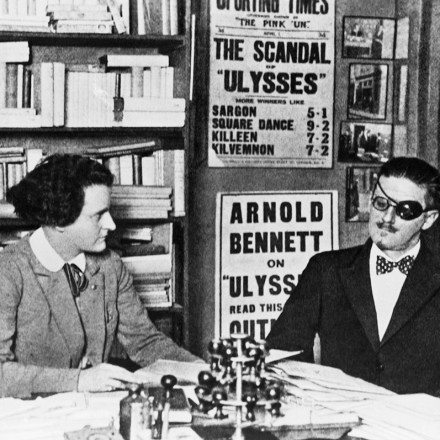
A few years ago, the private school where I teach asked me to offer an evening class on James Joyce’s Ulysses to adults. The idea was to remind alumni, parents and other community members what it feels like to be in one of our enriching classrooms. For over a decade, my Ulysses senior elective had been a major feature of our course catalogue; now, a few adults were about to pop the hood on this infamous tank of a book. As course registrations began to trickle in, I recognized the surnames of current and former students. Then an administrator joined the course, and I had a flutter of nerves at the realization that one of my bosses was actually going to read Ulysses and encounter the disreputable content that lurks within. My cover was blown.

Ulysses
maid

The invisible hand

Few of us like cleaning our own homes, so it’s scarcely surprising that the cleaner, or maid, occupies a particular place in our imagination. To those who resent the imposition of domestic hygiene as an intrusion on privacy, cleaners can be sinister and even vengeful presences — as famously depicted in Jean Genet’s play The Maids. For those who feel guilt over the structural inequalities of capitalism, Kathryn Stockett’s The Help added an extra dose of racism and feminism. But to those who see only the relief of having their dirt lifted by someone else, the cleaner is a bringer of joy who deserves everything from a Dior dress (Paul Gallico’s Mrs 'Arris Goes to Paris) to a rich husband (the J.Lo vehicle Maid in Manhattan).

Who killed Bambi?

It never occurred to me that one day, I would review Bambi (the novel). If it had, I would not have expected that its story and backstory would, among other surprises, include the Nazis, a communist, pornography and talking leaves. In fact, I didn’t even know that the film had been preceded by a novel. Felix Salten wrote Bambi: Eine Lebensgeschichte aus dem Walde in Vienna, where it appeared as a newspaper serial in 1922 before being published in book form in Germany the following year. It debuted in America in 1928 as Bambi, a Life in the Woods, translated by none other than Whittaker Chambers, already a communist, but not yet in the Soviet agent phase of his astoundingly protean career.

bambi