Spectator Life

Spectator Life

An intelligent mix of culture, style, travel, food and property, as well as where to go and what to see.

Zabar’s is still thriving

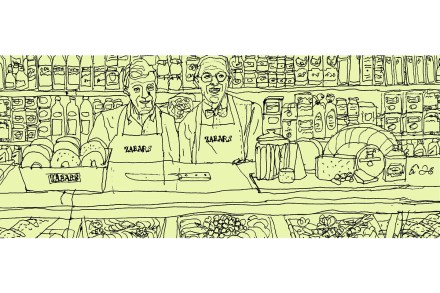
You might expect Zabar’s, the world-famous “appetizing” store on Manhattan’s Upper West Side, to have become a shadow of its former self. This seems to be the case for most of New York’s other independent specialty shops. Fairway, Balducci’s, H&H Bagels, Dean & Deluca: the food purveyors of my youth have gone kaput. They were bought, leveraged, expanded, overextended and oversold. They expired past their sell-by dates. But somehow Zabar’s survived. For the Upper West Sider, Zabar’s is our Yale College and our Harvard. Like many I make my way down to 80th Street and Broadway most weekends for continuing education. I head to the appetizing counter and take a number.

zabar's
greek horiatiki

Let’s hear it for horiatiki

Time to send your kitchen knives out for sharpening. The hot weather is coming, and you know what that means: Greek salad, or horiatiki as the Greeks call it. Is there any pleasure in life quite like dicing tomatoes, cucumbers and peppers with a knife that balances properly in the palm, whose blade possesses just the right steely flex and strength, and — above all — that is properly sharpened? With the right edged tool, it is hard to stop cutting things up for Greek salad. With the right ingredients, it is hard to stop eating it. This is why Greek salad is the perfect dish to make for a dinner party. As your friends buzz about the kitchen, drinks in hand, you can chop away on autopilot, chatting merrily as your cutting board fills with heaped tomato chunks.

snakes

Swimming with the snakes

Perhaps being a Pisces gives me a natural affinity for water. Not all water, mind you. I’ve never liked to swim where I can’t see what’s beneath me. I prefer to believe that my love of water comes from spending so many early summers in our swimming hole in Weston, Connecticut. When my father was making a barn into our house and the surrounding fields into gardens, lawns and terraces, using boulders and rocks from the notoriously rocky Connecticut soil for foundations and borders, he was intentionally creating an unusual home. When he used more rocks to make a swimming hole for dipping his sweaty body, he unintentionally created a watery playground for the family — a summer haven.

Against the ‘concept restaurant’

My wife and I live in Northern Virginia, in Fairfax County. Whenever we go out to eat, we almost always go somewhere in the suburbs. Fairfax, along with neighboring Montgomery County in Maryland, is home to a wealth of restaurants serving cuisines from all over the world. Just last January, Bon Appétit wrote that “to travel DC’s Beltway is to sample the flavors of the world,” and the New York Times declared that “America’s next great restaurants are in the suburbs.” You could argue that the suburban food scene in the DC metro area surpasses that of the city itself. Nonetheless, DC is widely seen as a “foodie city,” and its restaurants generally get more coverage and hype than their suburban counterparts.

The assorted joys of nasturtiums

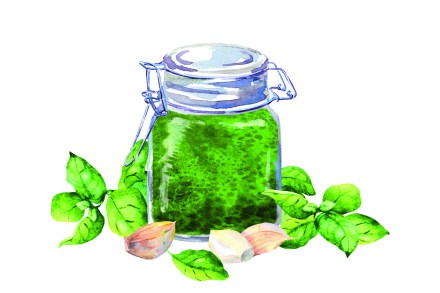
It’s still amazing to me how Instagram photos can bring such unexpected responses. And instantly! It happily happened to me last May and my creative juices — green, yellow, orange — started flowing. I had just posted a photo of the nasturtium pesto I’d made from the flowers and leaves in a nod to the exigencies of Covid-19: self-quarantining, fear of food shopping and the constant barrage of advice for oldies like me to not mix or mingle. I was going to forage for food, fool about with flavor and fun. Within minutes, Caroline, the flower girl at my Swiss wedding fifty years ago, commented, “Do you remember that you and Maman would take me foraging in the meadows above Lausanne for wild nasturtiums for salads?

nasturtium
country

In praise of the country store

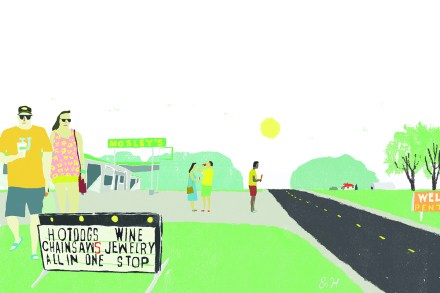
In our age of branded everything, I suppose it should not surprise that the country store, that artifact of an older rural landscape, should have gotten the treatment too. Play the word-association game with Americans today and for “country store” you’re likely to get “Cracker Barrel™,” the publicly traded chain of folksy restaurants/retail emporia strung along the interstate system and specializing in a long menu of so-called comfort food, clean restrooms and rockers on the porch. Do not be deceived. Lunch at Mosley’s Store in Pintlala, Alabama, sixteen miles south of Montgomery on US Route 31, the old Mobile Road, bespeaks a different reality. It has to do with food, tangentially.

The real food of Venice

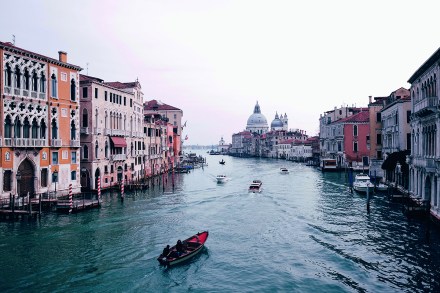
A few years ago, I moved to Newlyn, a fishing village in west Cornwall. I didn’t understand why I moved to Newlyn until I returned to Venice. I take almost all my holidays in Venice, and it is a cliché that Venice only slowly reveals her mysteries. You must fight your way past a mass of Renaissance portraiture and mirrored palaces but the mystery it showed me this time is this: like Newlyn, Venice is a fishing village. Venice got rich in the thirteenth century, monopolized the trade routes to the east for two centuries and covered itself in Istrian stone, which Newlyn didn’t. But it’s still a fishing village, founded by people running away from barbarians, into the mud flats of a lagoon to fish for crabs. It is easy to forget that — unless you look for Venetian cuisine.

venice
table

Table talk

I grew up in rural Connecticut, in a remodeled cow barn where my family sat at an antique hutch table for meals. The table with four comfortable Windsor chairs fit into a niche. My sister Christina and I weren’t allowed to join my parents for dinner at the table until we could hold a conversation. For me, that was at five. The rule came from my father, as that was how he’d been brought up. Once, when we were in our early teens, I whispered to Christina, “It’s King Arthur’s round table” — our father’s middle name was Arthur. I must have learned some British history and was probably showing off. My firm but gracious father wasn’t a king.

lamb

Spring’s perfect roast

When I first moved to the country, I was intrigued by the sight of people walking sheep on a leash round and round the front garden of a neighboring farmer. City girl that I am, I wondered if they were receiving some kind of special therapy. Equine interaction is supposed to help with certain anxiety disorders, why not sheep-walking for, say, insomnia? It turned out, however, that the sheep-walkers were members of the local 4-H club preparing to show their market lambs at the fair, an event I was later privileged to witness. But I was put to the blush when the judge, a tall, competent-looking man in a checked shirt and green boots, commented loudly on the fine chops displayed by the winning entrant.

The sad demise of Amish family-style restaurants

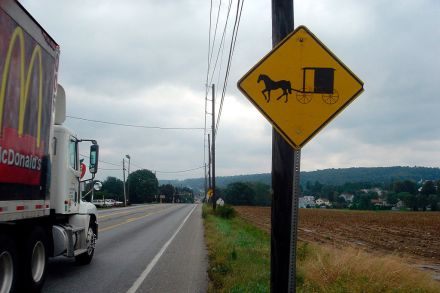
Every time I visit Pennsylvania Amish Country, it feels a little less like Amish Country. My parents were aghast when, in the mid-2000s, they visited for the first time since the 1980s (and for the first time with me) and found a massive outlet center along the main commercial drag. When my wife and I visited in 2017 — my first time since that childhood family trip — I was dismayed to see that the field in front of the Amish Farm and House had become a Target and its attendant parking lot. (I was only a little less dismayed when the landmark Congress Inn, with its out-of-place capitol-dome sign, met the wrecking ball.

Be my Valentine

I don’t know when my father showed André Fleuridas, a friend, the chunk of jade he’d brought back from Burma, where my father was based as a war correspondent during World War Two. Nor do I know how my parents’ friendship with Bonnie and André Fleuridas began. I can only guess. It might have been through art, as both my father and André were artists, and in Weston, Connecticut, where I grew up, artists occasionally gathered in each other’s studios to draw or paint from live models. Or they might have met at the Weston firehouse where artists, writers, musicians, actors and TV news anchors made up, along with farmers, Weston’s all-volunteer fire brigade.

valentine
waffle

Welcome to Waffle House

"Snack bar,” “coffee shop” and such phrases once signified small eateries where customers sat on stools at a counter or in simple booths. Their orders were taken and served by waitresses in white aprons, and prepared by a short-order cook in a white paper cap. Hotel lobbies, railroad-station waiting rooms and airports all had them: private enterprises in public spaces purveying a cup of coffee and a donut, bacon and eggs, ham and cheese on rye, a hot dog, a hamburger, maybe a milkshake or an ice cream sundae. Little of this (for most were mom-and-pops) traveled well into the age of industrialized, assembly-line, eat-on-the-go feeding signified by the phrase “fast food.

pan

The pan handler

I have become a pan handler — a handler of cast-iron pans. I can think of few hobbies that are as rewarding as collecting and cooking on cast iron. Skillets, griddles, muffin tins, Dutch ovens, waffle irons, corn-stick pans and much else: there was a time when America produced the finest cast-iron cookware in the world. The iron ore was abundant. So was the coal to melt it. Foundries went up across this great land. American cuisine developed around it. From fried chicken to cornbread, the American menu should still be cooked on cast iron. Southern cooks never forgot this. The same goes for soul food; black America has always prized its cast-iron inheritance. Now I find I have little need to cook on anything else.

The restaurant that set Miami ablaze

You’d think that a restaurant named Café Habana would be a perfect fit in Miami. But when it emerged this week that the New Yorker-owned joint specializing in Cuban/Mexican fusion was “inspired by a storied Mexico City hangout, where legend has it Che Guevara and Fidel Castro plotted the Cuban Revolution,” all hell predictably broke loose. The restaurant, slated to open in downtown Miami in the spring, has since scrubbed the Castro and Che reference from its website. But no amount of damage control will appease commie-hating Miamians, many of whom are surely cooking up protest plans, pots and pans at the ready. The original Café Habana opened in New York in 1997, and like so many other restaurants before it — the famed Carbone, etc.

A load of old crêpes

Eat crêpes on Candlemas, enjoy a year of happiness, says a traditional French-Canadian proverb. Happiness isn’t as easy as eating crêpes on February 2, the cynics will sneer — but then, the cynics haven’t tried dark chocolate crêpe cake filled with hazelnut cream and garnished with golden spikes of candied hazelnut as per Martha Stewart’s show-stopping recipe, have they? Of course they haven’t. Cynics don’t like sweets. But if you can trap a couple (good choices for bait include arugula, dandelion greens and Allen’s double-strength cleaning vinegar) and force-feed them chocolate crêpe cake, you’ll see the cynicism melting away like snow in April.

Crêpes
marmite

Marmite man

Marmite is one of very few manufactured foods to have become an idiom. British people think of the black stuff as a national idiosyncrasy, entirely unknown to horrified foreigners: there are many videos on YouTube in which outsiders have Marmite inflicted on them for the first time. In fact, there are a large number of pastes based on yeast extract in different countries, each with its passionate devotees. British Marmite may have been the first to go into production, but it did not stay unique for long. A German chemist, Justus von Liebig, influential in the propagation of meat essences, discovered that yeast could be concentrated.

millennial

The millennial kitchen

However else we may criticize the late 90s and early 00s — its politics, its fashion, its music — this was undeniably the golden age of the celebrity chef. Barefoot Contessa, 30-Minute Meals and The Iron Chef franchises all debuted in the first decade of this millennium, minting stars like Bobby Flay, Guy Fieri and Nigella Lawson. I once found a collection of my brothers salivating over Giada de Laurentiis making meatballs on Everyday Italian, though they’d never demonstrated more interest in cooking than microwaving the odd Hot Pocket. The mid-aughts brought on the glory years of the “hands and pans” videos: the aerial-view clips of disembodied hands assembling cheeseburger pretzel balls or eighteen-layer taco dip.

How to survive eating out

Tennis — as the New England poet Robert Frost remarked in defense of formal verse — is more fun with a net. Creativity does indeed flourish within constraints. Soviet censorship brought about samizdat. Prohibition brought about bathtub gin and any number of fabulous cocktails designed to mask its unsubtle notes of paint thinner. The greatest human spirits would view the new era of show-your-papers dining not as a hardship, but as an opportunity. In our brave new world, some don’t mind handing over papers in exchange for a mess of restaurant-prepped pottage. And yet there are ancien régime sticklers for propriety who think that the use of QR codes to gain access to food indoors is not quite comme il faut (if you’ll pardon their French).

dining

Making a raclette

Cheese, potatoes, sausage and bacon for dinner? Let’s just throw in bread and heavy cream for the sake of it. Sounds like a recipe for a heart attack or stroke? Why do the Swiss and French then double up — or even triple up — on these carbs and calories when cold weather comes? The answer is easy and old; the combos are delicious, divine and de rigueur, filling the body’s need for cozy food and energy to shovel snow and ski. The French and Swiss still argue about which country invented raclette.

cheese raclette

Talking turkey with William F. Buckley Jr. on Quemoy

Sixty years ago, as a college student, I spent Thanksgiving on the island  of Quemoy off Formosa (as Taiwan was still called) eating Taiwanese turkey with Taiwanese generals, William F.  Buckley, Jr.  and chopsticks. Present-day college students — or even their parents — may not have heard of Quemoy — or its twin island, Matsu — until now. Or even Buckley, the highly articulate founder of modern conservatism, for that matter. Xi Jinping has been taking a hard and measured look at President Biden and our Department of State since last March when the Chinese Communist Party had Andrew Blinken and Jake Sullivan all but kowtowing to the CCP’s foreign affairs chief, Yang Jiechi, at a summit in Anchorage, Alaska.

quemoy

What’s good from the goose

One of the more curious habits of the British is their tendency to publish opinion polls in national newspapers about their own food habits. Which way round, for example, are you meant to dress your scone? Is it clotted cream first, then jam — or jam first and cream second? Well, the Queen does it jam first, so that must be the way. Or that other national debate, tea and then milk, or the opposite? When I first arrived in the UK thirteen years ago, I was amused to see how worked up the British get about such questions. Try asking them sometime and see what happens. A new poll reveals that 58 percent of the British public admit to preferring roast potatoes over turkey. “How could you?” we’re supposed to gasp. “Everyone knows Christmas dinner is about the turkey!

goose
kidneys

I ate Audrey Hepburn’s kidneys

It was late November when Diana called, telling me her butcher would soon kill the “fatted calf.” Sharing a butchered calf once a year with a Swiss friend meant you both had a freezer-full of veal at half price. Being asked to share a calf was also a sign of a deep friendship — akin to using tu instead of vous and locking arms in a toast over shot glasses of white wine. Both could take ten years, which was about as long as I’d known Diana. I had long since gotten over what butchers did. I liked meat — most meat. But I didn’t want to see lots of blood. Growing up, I always asked my father for the outside slice of a roast or his charcoal-grilled steak. Now, I drew the line with rabbit. Rabbit is not normally on an American menu.

In defense of the English original sandwich

Hannah Moore’s June Spectator piece on sandwiches made me hungry. Then it made me think. Ms Moore makes a sound distinction between modern Britain’s plastic-boxed, triangular ‘sandwich’ and the custom-made, piled-high, endlessly imitated, seldom-matched product of a good New York or Chicago delicatessen. Why, one wonders, do the Brits put up with it? Landing in countless foreign ports over the years, for business or pleasure, I’ve always wondered, pretty much before wondering about anything else, ‘What’s the food like?’ Almost always, I’ve liked what it was like. In the age of real borders and undiluted ethnicities, food was a powerful expression of locality.

sandwiches
chrysanthemum

Mums the word

In early October I bought three chrysanthemum plants to brighten my front doorstep during the gloomy days here in Montecito, California. The outdoor plant stand at Trader Joe’s, overflowing with a panoply of colored mums, reminded me how I love seeing French flair flourish when decorating with these seasonal blossoms. How, for a decade, I’ve been sharing and creating recipes with my daughter, a wine executive, with chrysanthemum flowers from her local organic épicerie and leaves discovered in a Burgundian marché. In Burgundy, as in the rest of France, mums are displayed for Toussaint (All Saints’ Day) on November 1, and for Armistice Day, to mark the end of World War One.

Burrata inamorata

Wise men say only fools rush in. But in this particular instance, I really couldn’t help falling in love on the spot. Like a zillion others, the story starts on a night out. When my party, dripping with rain, arrived at the restaurant, our table wasn’t ready, and they ushered us to wait at the bar The bar was a happening kind of place. Instead of looking up at shelves of bottles and bartenders mixing drinks, it looked down onto the kitchen area, which was built around a giant wood fire over which five or six cooks labored frenetically. The flames blazed openly, fed from the picturesque log stack that lined the back wall of the dining area.

burrata

Bread is the staff of life

I cannot claim the gift of prophecy, but early in 2020 — before lockdown panic-buying and the warnings of a dire wheat harvest causing bread-price rises — I became a bread-maker. I dug around on the internet for a good recipe for sourdough, and found one padded out with the usual bloggery and waffle. Absent the philosophy and the pious musings, it gives a clear, sensible route to bread self-sufficiency. Sourdough doesn’t need bought-in yeast, only a ‘starter’ of flour and water. This is often called a ‘mother’, and attracts wild yeasts as it develops; after five days in the jar it is a gently bubbling ferment of living yeasts, and you keep it going by adding flour and water to it day by day.

bread
French

In search of lost French restaurants

Readers of a certain vintage will recall when any listing of fancy restaurants in a big city had a heavy French accent. Look at the ‘Let’s Eat Out’ section at the back of an old issue of Gourmet magazine from the 1970s for the evidence, at least for New York but, if memory serves, it was true for London as well. (The Italians probably ran second, then the Chinese, then a big falloff to other countries but still mostly European ones.) The way it worked at Gourmet — you got a listing if you bought an ad — only understated things. Lots of good places never advertised at all or simply did not aspire to the tony status that association with the likes of Gourmet conferred. Names like Le Chamberlin, La Caravelle, Le Chantilly, Mon Paris, announced their sole culinary allegiance.

The American dream has no time for offal

You can get goat in parts of New England. Consumers of Portuguese origin create a market unparalleled elsewhere in the US. In Boston, as I recall, Savenor’s used to sell camel and kangaroo. Few meats are too un-American for New York City. Ottomanelli, purveyors to whatever is left of the Four Hundred, still has venison of the quality they sold to the Upper East Side in the Gilded Age. Los Paisanos in Brooklyn stocks alligator, turtle and caribou. But the great days of the 1950s, when a club in New York served porcupine, caribou, muskrat and armadillo, are fled. With the closing of the American mind has come the narrowing of American appetites. Americans’ self-image is of enterprise, pioneering, innovation, adventure and the call of the wild.

offal

Lessons from a lobsterman

Willard Nickerson was about as Cape Cod as you could get. Chatham locals even gave him the nickname ‘The Codfather’. Willard was a 12th-generation member of the Nickerson family, his ancestors having arrived on the Mayflower. He was also a Chatham lobsterman/fisherman and on July 4, 1976, Willard led the annual parade down Chatham’s Main Street in my father’s 1952 Woody car. My father was rightly proud to chauffeur one of the town’s most revered residents. Willard was not just a local treasure because of his profession, he also played the trombone during Chatham’s summer band concerts. If you happened to be a year-round resident, Willard would come and find leaks in your roof during a blustery nor’easter.

lobsters