Spectator Life

Spectator Life

An intelligent mix of culture, style, travel, food and property, as well as where to go and what to see.

The best cooking podcasts

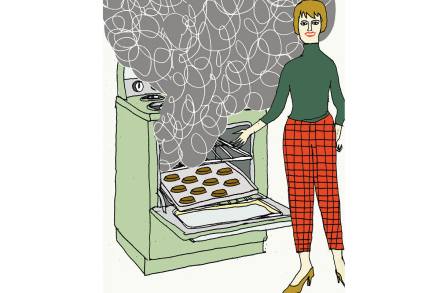
There comes a time in every home cook’s life when she is separated from her craft. This may be due to illness, incapacity, repairs, renovations or, worstof all, moving house. This month, I moved from Texas to Pennsylvania. Between packing up my utensils and appliances, waiting for the moving truck to make its halting way across the nation, and finally unpacking and reorganizing my tools, I lost my kitchen for four weeks. But benched cooks like mehave a surprisingly satisfying alternative: cooking podcasts. The first podcast I tried is most similar to traditional cooking shows: Food 52’s Play Me a Recipe. Chefs and cookbook authors host episodes in which they introduce a favorite recipe and talk through its ingredients and method, encouraging listeners to pause and rewind as needed.

podcasts

Girlbossing with the Ambitious Kitchen

I occasionally come across a social media account — usually run by a conservative male — claiming to great fanfare that young women these days don’t know how to cook. They’ve been too busy girlbossing to learn. In my experience, this is wrong. The ambitious women I know are ambitious in every part of their lives. They get the promotion while moving up the Peloton leaderboard, planning their dream wedding and creating flavorful, photogenic meals that Betty Crocker hadn’t dreamed of. For these women, there’s the Ambitious Kitchen. The Ambitious Kitchen was created in 2011 by a Chicago woman named Monique Volz. It has since amassed more than 700,000 followers on Instagram and a cookbook deal for 2024.

ambitious
flour

Flour power: a single ingredient can be life-changing

Growing up in a “mixed” American household, of Indian, Puerto Rican and Italian descent, was deeply confusing during my formative years. I came of age in a mostly white suburb just outside New York City. In addition to my foreign-sounding name, I looked nothing like any of my classmates or the kids around the neighborhood. My olive skin, bushy eyebrows and curly hair were more reminiscent of children you’d find in the more ethnically diverse neighborhoods of Queens or the Bronx. My family spent most of our weekends visiting family and doing our grocery shopping in such areas. The array of ingredients that my Puerto Rican and Italian-American mother, Loretta, was searching for didn’t exist in our local Pathmark.

Camari Mick is making pastry, not solving crimes

"I was really fascinated with the process, the science behind everything,” recalls Camari Mick, the now twenty-nine-year-old star pastry chef, who studied anatomy in high school. “I love true crime: I was very into Snapped and crime junkie podcasts.” When she approached her parents, however, they asked her to reconsider. “My dad looked at my mom, looked at me, looked back at my mom and looked at me, and said: ‘Are you sure?’” At the time, Mick was running a mini-business from home, making baked goods to sell to friends, teachers and neighbors. “You’re doing really well, you clearly love being an entrepreneur, why don’t you go into this avenue?” her father asked her. His advice paid off.

mick

Road-trip picnics are a casualty of our interstate system

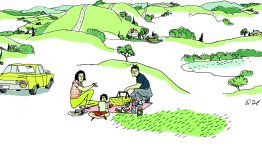
Signs announcing roadside picnic tables once peppered America’s secondary roads and highways. Or so we call those byways now. Before the limited-access interstate system arrived in the 1960s, these roads were primary. America then was laced with a tangle of serviceable two-lane, hard-surfaced highways. Look at an old oil-company roadmap, if you can find one, to get the idea. Some roads were federal, some state, but all were emphatically open-access: get on anywhere, pull over wherever you like. They led through cities and towns, not around them; they traversed the countryside more than they cut through it. They required two-hands-on-the-wheel alertness in drivers, who got to know and respect the lay of the landscape.

roadside

The rise of avocado anxiety

When the gastronomes of the future come to choose the food that best represents our age, they will choose the avocado. The ubiquitous fruit is everywhere: in smoothies, on toast, served at breakfast, lunch and dinner, on t-shirts and all over social media. It represents our ingenuity in supplying exotic fruit to every corner of the globe all year round, our obsession with “clean” eating, our aspiration to eat brunch and our love of anything that — even passingly — tastes a little bit like butter. But it also represents our greed, our hypocrisy, our vanity and our overwhelming anxiety.

avocado

Cooking with a country music star

A few years ago, I came across a delightful bit of Americana in Hobart Book Village in the Catskills: Naomi’s Home Companion, a 1997 cookbook/ scrapbook from Naomi Judd, the late matriarch of the famous country music family. Because I’m not a country listener and I don’t eat a lot of meatloaf, I didn’t buy the book, its kitsch appeal notwithstanding. Nineties fashion may be back, but its nutritional standards are permanently out of style. Right? I thought of that old Naomi Judd book when a new cookbook landed on the New York Times bestseller list: Y’all Eat Yet? Welcome to the Pretty B*tchin’ Kitchen by country music star Miranda Lambert. The book purports to share recipes from Lambert’s downhome roots and humble upbringing in East Texas.

Lambert

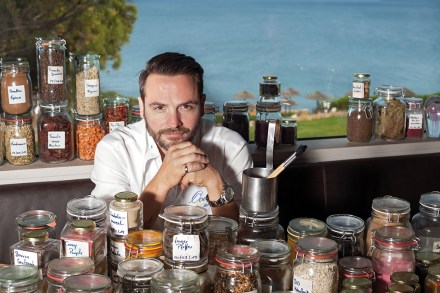
Open a bottle with… two-Michelin-star chef Hans Neuner

Quizzed on how best to assimilate a new culture, travel writer and celebrity chef Anthony Bourdain once uttered the famous line: “Drink heavily with locals whenever possible.” I never met the man, but still I miss him and his deft writing. The Opening a Bottle series is about getting pickled with people far cooler than I am, in whatever city I’ve washed up in.  “What is it, love?” A British lady, tanned deep walnut, is curious, as are most passersby. I’m standing outside the imposing red façade of Red Chalet in the sleepy town of Armação de Pêra, in Portugal’s Algarve. She’s the third septuagenarian to greet me since I touched down. I smile to myself — some stereotypes exist because they’re true.

Chef Hans Neuner (Vila Vita Portugal)

When vegans are worthy of our disdain

Celebrity chef John Mountain made headlines last week for banning vegans from his restaurant, Fyre, citing “mental health reasons,” reportedly because a vegan customer complained about Fyre’s lack of plant-based menu options. Meanwhile, a vegan landlord in New York City forbids tenants from cooking meat in his $5,750-a-month apartments. What’s the deal with vegans? Are they all self-obsessed, birdseed-eating eco-warriors who are only able to wash down “cheese” made of arrowroot with a massive dose of ego? Or are they disciplined, clean-living champions whose commitment to the cause merits our admiration and imitation? Had you asked me my opinion of vegans a few years ago, I would have scoffed and made a soy boy joke.

A dispatch from the olive oil capital of the world

It was an extraordinary sight. For three days, and about seventy kilometers of hiking, there were just endless olive trees covering the fields, hills and mountains stretching to the horizon of the small Spanish province of Jaén. Tucked away in the southern region of Andalusia, this is the country’s powerhouse of olive-oil production. Many people assume Italy or Greece are the largest producers of olive oil. That’s a result of good branding and name recognition, a Jaén-based olive grower told me. After he pulled up alongside me in his dusty car, we walked through the endless olive groves as I was given a tutorial on olive oil production. Spain is the world’s top producer of olive oil.

olive oil
Swanson

Heidi Swanson, the whole food revolutionary

Heidi Swanson started her vegetarian food blog, 101 Cookbooks, in 2003. At the time, the Atkins Diet was sweeping the nation, even as schoolchildren still learned the carb-heavy Food Pyramid. It would take another year for a landmark study to link high-fructose corn syrup to the obesity epidemic, and another fifteen for the FDA to ban trans fats. Back then, granola was for tree-huggers, like organic produce, Whole Foods Markets and the Pacific Northwest. Times have changed. These days, everyone outside the Lion Diet community agrees that a plant-based diet is best, preferably free of hormones and artificial sweeteners. 101 Cookbooks is still active and popular, if less countercultural than at its inception.

Where to eat in Denver

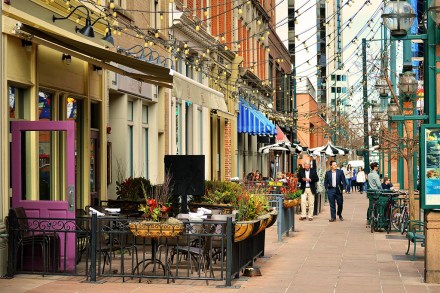
To beat the killer combination of jet lag and altitude on arrival in the Mile High City, use the tools at your disposal — or local dispensary. I advise newcomers to: Jog around Cheesman Park and the Botanic Gardens in bright sunshine, or thick snow (likely both) Buy up all the melatonin in Walgreens Drink copious local beers Have a smoke, if that’s your jam Grab a meal Hit the hay Repeat as necessary Denver’s bursting with shiny new concept restaurants and kitsch little nooks to drop into; so my muddled brain was grateful for any steer. I hounded discerning friends for recommendations, downloaded Stoned Appetit (a genius app full of the best spots to satisfy the munchies), and took aim at anywhere with a James Beard nod.

denver

Opening a bottle with: Lime Wood Hotel’s Luke Holder

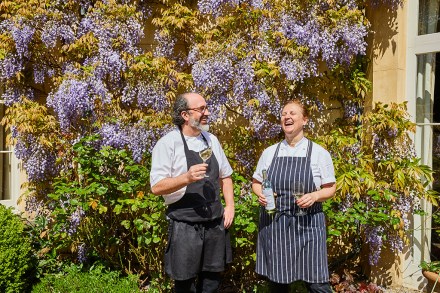
Quizzed on how best to assimilate a new culture, travel writer and celebrity chef Anthony Bourdain once uttered the famous line: “Drink heavily with locals whenever possible.” I never met the man, but still I miss him and his deft writing. The Opening a Bottle series is about getting pickled with people far cooler than I am, in whatever city I’ve washed up in.  It’s my first proper day of spring on home soil, and it’s a blinder. Not a cloud in the sky, and a glorious cool breeze wafting the scent of mown grass across Lime Wood Hotel’s sumptuous gardens. They’re bursting with color, flowers blooming in every direction. White stone walls are awash with lilac wisteria. I’ve driven down to rural Hampshire from London to meet lauded resident chef Luke Holder.

Italian cooking lessons in the home of a Venetian chef

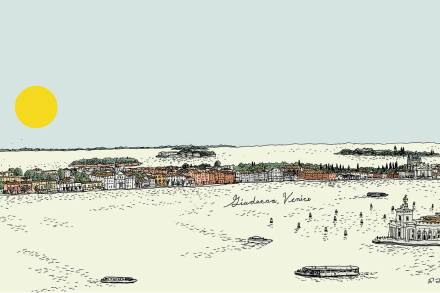
My mother advised that I get a plain wedding ring. Diamonds, she said, interfere with a woman’s ability to knead dough. “But I don’t knead dough,” I protested. “You will when you’re married.” I guffawed. And yet there I was, four days into my marriage, in an Albanian chef’s Venetian home, being told in no uncertain terms that while my husband Nick could keep his ring on, mine would need to come off. We had arrived in Giudecca, an island in the Venetian lagoon, by water bus, having spent the day in Padova. There, we’d visited the Basilica di Sant’Antonio, home to first-class relics of the great saint — bones, lower jaw, incorrupt tongue and cartilage from his larynx.

Venetian
salad

How to become a ‘salad freak’

Imagine a summer morning in Southern California. You rise with the sun in a palm-shaded bungalow and stroll to a nearby farmers market, where the tables spill over with heirloom tomatoes, sweet corn and cartons of juicy strawberries. Your canvas tote filled with the season’s bounty, you return to your sun-dappled kitchen to prepare a farm-to-table feast for all your friends while listening to your favorite vintage records. Sigh. This is the dreamy lifestyle purveyed by Salad Freak: Recipes to Feed a Healthy Obsession by Jess Damuck (Abrams, 2022). I’ve always aspired to be the kind of woman who can “just toss something together,” making a light, fresh, delicious dish with ease, rather than worrying that something will catch fire if I leave my post by the stove.

restaurants

The quest for child-free dining

The people who follow my social media know that I’m not kidding when I say that restaurants should ban children. You can’t avoid kids in certain fast-food or large outdoor-patio situations, but on the whole, children in restaurants are a horrible war crime. So when Nettie’s House of Spaghetti, a red-sauce joint in Tinton Falls, New Jersey, announced in February that it would be banning kids, my inbox flooded with the story. “We love kids,” the restaurant wrote. “We really, truly, do. But lately, it’s been extremely challenging to accommodate children at Nettie’s. Between noise levels, lack of space for high chairs, cleaning up crazy messes and the liability of kids running around the restaurant, we have decided that it’s time to take control of the situation.

Where’s the beef? Eric Adams wants to force New Yorkers to be vegetarian like him

New York City mayor Eric Adams is on a quest to cut the city’s “food-related emissions” by 33 percent by 2030, and not by making Gas-X free to residents. Adams, whom the New York Times reports is “a self-described vegan who sometimes eats fish,” has expressed support for the city reducing the amount of meat it serves at schools, hospitals and in other government-funded capacities. “It is easy to talk about emissions that are coming from vehicles and how it impacts our carbon footprint,” Adams said. “It is easy to talk about the emissions that’s coming from buildings and how it impacts our environment. But we now have to talk about beef. And I don’t know if people are really ready for this conversation.

beef meat eric adams

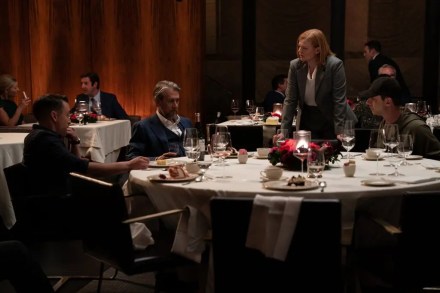
Succession is a foodie’s nightmare

What does the man who has everything really want for dinner? A humble hamburger — at least, that’s what Succession seems to be telling us. In the season four opener, Murdoch-esque media mogul Logan Roy slips away from his lavishly catered birthday party and decamps to a low-key diner, where he mulls the meaning of life in the company of monosyllabic bodyguard Colin. “What are people?” asks the tycoon, before concluding, depressingly, “Economic units.” This existential crisis with a side of fries is (spoiler alert) Logan’s on-screen Last Supper, and it reveals more about him and his ilk than a disdain for canapés. Food is everywhere in Succession — yet rarely is anybody enjoying it much.

Succession

Making a home through food

At the age of sixteen, chef and restaurateur Forough Vakili, now forty, left Iran to meet a brother she barely knew, eventually settling in America. She didn’t return for eleven years. As a member of the minority Baháʼí faith, which teaches the value of all people, regardless of gender or religion, Vakili had hit a wall in her homeland. “I came here so I could continue my education,” she says, when we speak over Zoom. “We didn’t have many rights back in Iran — there wasn’t a lot offered for us after finishing high school.” It was in Vienna, waiting for her American visa, that Vakili reconnected with her brother for the first time since she was a toddler. Six months later she moved in with him, his wife and three daughters in Atlanta.

Vakili

Surviving the summer with no-bake desserts

Summer comes early to San Antonio. I moved here in January, dodging the worst excesses of the northeastern winter, but by March, the temperature had already reached into the nineties. By the time you read this column, summer will be approaching the rest of the country as well. It’s no-bake dessert season. I’ve always been intrigued by this genre of dessert recipe, which involves a vast spectrum of quality. The worst can be appalling — think of gelatin salads, gloppy pudding pies, packets of flavored powders and demeaning names like “mess” and “fool.” On the other hand, some no-bake desserts are transcendent: for example, panna cotta and the Magnolia Bakery banana pudding.

no-bake

In praise of burnt Basque cheesecake

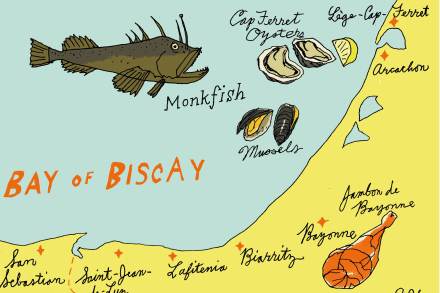
Spring, as Chaucer pointed out, occasionally has the curious effect of making people “long on pilgrimage to go / And palmers to be seeking foreign strands / To distant shrines renowned in sundry lands.” The May morning may come when you find it in your heart to pick up the pilgrim’s staff and wend your way along the paths of olden Spain to Santiago de Compostela. There are several ancient ways to reach the distant shrine of St. James, and if you are a lover of the road less traveled, you may find yourself drawn to the Camino del Norte, which begins in the western Pyrenees of the Basque country, then hugs the long beaches and jagged cliffs of the Atlantic shoreline through Cantabria and Asturias before curving inland through Galicia to the Apostle’s tomb.

Basque

The trouble with food porn

Food porn, an exaggerated photographic representation of how food supposedly looks, has been with us since the 1970s. Today, it is as ubiquitous as “traditional” porn and just as sad. It disorders our senses. Food tastes and smells, only thirdly does it look. Youthful gazing through the bakeshop window is one thing; seeing food mediated through the photographic image is quite another: it titillates but does not nourish. It has been a steep fall from the innocent old days of “Oh boy, that looks good!” exclaimed in the real presence of home-prepared meatloaf or macaroni-and-cheese, not in response to a picture of it. This disordering of our senses manifests in two ways.

food porn

Don’t spare us the asparagus

Asparagus inspires gentle thoughts, or so said Charles Lamb in an essay about grace before meals. Other vegetables had come to pall on him, but a noble affection for asparagus still lingered in his heart, a reminder of simpler and more innocent times. One can only surmise that he didn’t much care for the vegetable. Who feels melancholically virtuous when eating greens? People who don’t really like them, that’s who.

asparagus

The wonder and mystery of Mexican cooking

Mexican food is my comfort food. My devotion stems from memories of my mother’s enchiladas. I used to love watching her fry the tortillas in oil. They would bob about like lily pads, sizzling gently. Then when the bubbles formed with little pops, Mom would lift each tortilla out of the hot oil and place it on a paper towel. At the same time, she’d be heating salsa roja on the gas stove and, when it was ready, she would dip a spoon in the pan and put a dollop on a tortilla, swirling the spoon to coat the whole tortilla, then turn it over and do the same on the other side. She was such a careful cook, and neat. The bowls of fillings sat ready and waiting on the kitchen island, each with its own spoon.

mexican

Cost-cutting in the kitchen with Budget Bytes

Have you heard about the latest food trend sweeping the nation? It’s called “whimpering over your grocery bill.” In the early days of 2023, Americans are spending 70 percent more on eggs than one year ago. Chicken, dairy and bread prices outpaced inflation as well, increasing by double-digit percentages. What’s an adventurous home cook to do? The answer is Budget Bytes, a website I first turned to as a broke twenty-two-year-old with a galley kitchen in Queens. I didn’t know, before an acquaintance tweeted a link to a coconut vegetable curry, that you could make a tasty, filling meal, complete with leftovers, using almost entirely canned or frozen goods. Budget Bytes taught me to cook.

budget

Jimmy Kelly’s Steakhouse keeps a simple, good thing going

I have written before in these pages about declining standards in the restaurant world, which has less to do with the food than with the whole “experience” of dining out: the lack of tablecloths, the napkin-wrapped silverware, the to-go boxes, the slovenly informality of staff and customers alike. I stand by every word of it, which is why discovery, or rediscovery, of rare holdout occasions, in this diner-out, is sheer joy. One such exception, long known to me, Jimmy Kelly’s Steakhouse in Nashville, is exceptional in another sense, too. It has been in operation without interruption and under the same family ownership for eighty-nine years.

Nashville jimmy kelly's

Three cheers for guacamole this Super Bowl Sunday

Everyone loves guacamole, even food puritans. It’s like ice cream or donuts ­— but healthy and good for you. (No need to ask about the fried tortilla chips or calories.) On Super Bowl Sunday, it is estimated that Americans will eat 120 million pounds of avocados, mostly in the form of guacamole. It’s the brownish-green fruit’s big day. Not by accident, Mexico’s avocado trade association runs elaborate ads each game. "The fruit that can change the world, alter history, and make everything better" is its 2023 Super Bowl offering promises. Avocados are a happening food item worldwide, and Mexico leads in sales. Valued at $3 billion last year, its avocado exports were greater than tequila or beer.

Dips: Chef Andrew Gruel’s answer to your Super Bowl party food dilemma

Does it seem these days that everyone you know suffers from a food allergy, sensitivity or intolerance (don’t ask me to explain the difference)? It seems inevitable that eating out in a group entails someone in the party requesting a menu item be made vegan, keto, gluten-free, dairy-free, tree nut-free, sulfite-free, etc. (I usually just hope the meal itself is free). Blame it on seed oils, soil depletion, genius marketing, the Liver King — whatever. The fact is that our toxic world makes party-planning a royal pain. How do you accommodate a bunch of people whose dietary restrictions turn menu-making into a culinary Sudoku puzzle? Fortunately for you, The Spectator associates with a lot of cool, accomplished, clever people — one of whom is Chef Andrew Gruel.

andrew gruel

Eating from Lisbon to London and back again

Six months of the year, I’m a (wannabe) Lisboeta, “a person from Lisbon.” A peripatetic British food and travel journalist somewhat scuppered by Brexit, I’m allowed in the Schengen Area for up to ninety days in any 180-day block. I max them out before I’m sent packing. I’ve come to think of these moments in time as “chapters,” in a half-hearted attempt to romanticize the loss of my border privileges. Lisbon is the object of my affections — and has become my base for European chapters from which I breathlessly ping between countries. I try new dishes and try not to fall in love with anyone before I’m ordered home (rather inconvenient: "getting married for the visa" jokes grow less and less funny).

lisbon gunpowder