Spectator Life

Spectator Life

An intelligent mix of culture, style, travel, food and property, as well as where to go and what to see.

How to eat well for less

Inflation is (if you’ll excuse the pun) biting. So how can you keep down the cost of the weekly shop and get maximum bang for your buck in the kitchen without compromising? I have always shopped by the yellow sticker and the discount aisle. When I first started getting creative in the kitchen as an early teen, I wanted to try searing scallops and practice filleting Dover sole, French-trim a rack of lamb, and prepare artichoke hearts – and none of that comes cheap. So, I went to the supermarket an hour before closing and bought from the man in the hairnet who I knew and who I liked to think knew me: I took home whatever was most reduced from the fresh counter and then tried to work out how to cook it.

How the Michelin Guide went green

Michelin, alone within the hospitality industry, possesses the ability to provoke elation or tears in professional chefs. If you thought the victims on the receiving end of an expletive-laden tirade from Gordon Ramsay were a sorry sight, just imagine the faces of the poor broken chefs who lose one of their coveted Michelin stars. Some may claim that they are an outdated measure of excellence and that they do not give a jot about them — the enfant terrible of the British restaurant scene, Marco Pierre White, even famously returned his, citing the crippling pressure they brought— but Michelin retains the power to reduce grown men to sobbing infants with one sprinkling of their stardust.

The joy of sticky toffee hot cross buns

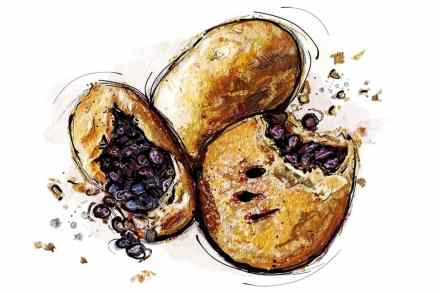
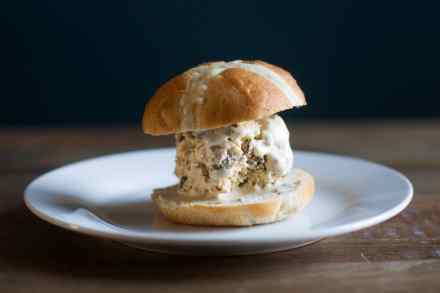
When it comes to cooking, I make no secret of the fact that I’m something of a traditionalist: I like old-fashioned steamed puddings, I like the classic and the heritage. I like blancmange and rice pudding and suet. I am unashamedly unfashionable. I’m not sure whether I chose the Vintage Chef recipe writing life, or whether the Vintage Chef recipe writing life chose me. I just don’t see the point in reinventing the wheel, or injecting unusual flavours and twists just for the sake of it. But, as I look back through recipes I’ve written, Easter has always been my exception: hot cross bun ice cream sandwiches, hot cross bun bread and butter pudding, cakes topped with mini eggs.

What makes the perfect pint?

‘Always order your Guinness first in the round,’ Aaron begins ‘when you get it, let it settle before your first sip – half the pleasure is in the patience.’ He’s pouring a pint at Homeboy, his bar in Nine Elms where he and his business partner Ciarán Smith serve some of the best Guinness in London. These words of wisdom were first bestowed on him by his father Liam Wall. ‘If you drink it in less than three sips, you’re a pig. If you drink it in more than seven, you don’t deserve it and if you take so long to drink it the head goes yellow, then we’ll take it off you.’ This is how a well-served pint of Guinness makes people feel. More-so than any other beer, it carries a sentimental connection.

The strange case of the oligarch and the French vineyard

Fancy a dabble in the wine business, at a knock-down price? The Prieuré of Saint Jean de Bébian, a trophy asset owned by a sanctioned Russian oligarch, is set amidst 32 majestic hectares of artfully tended vines nestled in a beautiful corner of southern France. A brand-new climate-controlled production hall has all the mod cons. There’s even a Michelin-starred restaurant on the premises where you might entertain clients. A château within a walled park in a nearby village may be available by separate negotiation. And it’s just 20 minutes away from Béziers airport where you can land your jet.

The magical kitschiness of Black Forest gateau

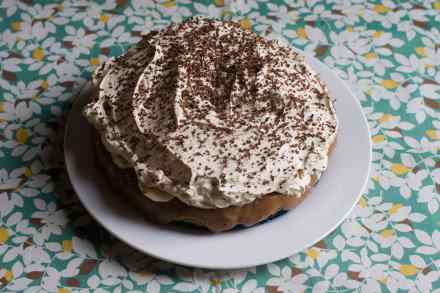
Kitsch is something of my stock-in-trade. And it doesn’t get more kitsch than Black Forest gateau. Pots of cream, pints of cherry schnapps, a storm of chocolate shavings and some very baroque decoration: it ticks all my old-school boxes. Of course, we are very familiar with the Black Forest gateau’s – BFG to its friends – punchy flavours. Chocolate, cherry, cream. What a trio! Now so classic that we barely give it a second thought. But where did this particular combination of ingredients first come from? I like the (unsubstantiated)theory that it harks back to a traditional costume worn by women in the Black Forest: dark chocolate for their black dresses, cream for their blouses, cherries for the red pompoms on their hats. But then I’m a sentimental soul.

With Mitch Tonks

18 min listen

Mitch Tonks is an award-winning restauranteur and chef. He runs the Rockfish restaurant group in Devon and Dorset, and the Seahorse restaurant in Dartmouth. He has written six cookbooks. On the podcast, he tells Lara and Liv about playing cards after dinner, enjoying his school’s ‘bright green custard with chocolate pudding’, and inventing his own fish curries.

A St Patrick’s Day guide to Irish whiskey

In the fifth century, Ireland suffered from a reptile dysfunction – it happens to the best of us. Pesky pagan snakes were everywhere, slippery anti-Christian evangelists making a nuisance of themselves, shedding their skin, swallowing hamsters whole and sticking their tongues out at everyone. But then the great Irish hero St Patrick came along. Except, Patrick, who had an Irish name (anglicized from Phádraig), was actually English. When he was 16, he was kidnapped and taken to Ireland as a slave, held there for six years before a brave escape back to England. Then, rather surprisingly given that ordeal, he decided to go back and preach Christianity. And now he’s a saint. Well done him.

My dangerous flirtation with veganism

I have a confession to make to Spectator readers. It’s not something I’m proud of, but it’s time to come clean (no, I haven’t become a Labour voter – the Tories have been bad, but not that bad). I’ve been experimenting with using meat and dairy substitutes. Hear me out. I’m not proud of what I’ve done. As a right-of-centre comic, indulging in anti-woke sentiment, eating animal products is a badge of honour – the unspoken custom of our movement. Ceasing to do so is the kind of thing which could raise alarm within the ranks, like a bite on the neck in a zombie film. My main motivation for this possible lifestyle change is that my tour shows start at 7:30pm and I am 45.

How to bake a no-chocolate chocolate cake

This week’s recipe is for a chocolate cake that is not a terribly traditional chocolate cake. But that is its charm. It uses only one egg, no butter and, most magically, absolutely no chocolate. Instead, it uses cocoa powder and boiling water: the boiling water releases a deeper, rounder flavour from the cocoa, which is enhanced by vanilla, a little strong coffee, and a pinch of salt. The cake’s flavour is a little like that of a packet mix of brownies – which is not to diminish it, but to signal its fudgy darkness. Feel free to swap the sugar for whatever you have: caster, granulated, even dark brown sugar would work here, or a mixture of whatever’s in your cupboards.

Add Sake to Taste – perfect seafood and sake pairings in London

As JFOODO’s ‘Add Sake to Taste’ campaign continues, we want you to continue to enjoy the perfect combination of sake and seafood. London is known for some of the best restaurants in the world and we have paired up with 20 of them for your enjoyment. Each restaurant has created a specific dish that matches with a specific sake to open your palate to umami. Some of these restaurants will continue to serve sake after the campaign. By the time you’ve visited each site, you’ll be an honorary sake ninja and an ambassador to everyone you know. Sake is sophisticated, unobtrusive, delicious and fun. Visit https://sake-jfoodo.jetro.go.jp/uk/taste/index.html to learn more about the restaurants, seafood and sake pairings.

The trouble with boycotting Russian food

As the war in Ukraine worsens, the horrific scenes filling our screens have prompted a visceral reaction from the British public: 78 per cent now support Russian sanctions – up from 61 per cent in late February. Economic sanctions have undoubtedly hit the Kremlin’s spending power ­– and that’s to be encouraged. But what should we make of the broader cultural boycott of Russia that is rapidly gaining pace? So far, Britain's boycotts have had a peculiarly culinary bent. While Putin continues his onslaught, British shoppers have been encouraged to shun vodka and caviar. Lockdown revived an intense interest in cooking amongst the house-bound middle classes.

The ultimate spaghetti and meatballs

Spaghetti and meatballs is an iconic dish: whether it’s Lady and the Tramp that springs to mind at the name, cosying up over a shared bowl of the stuff, facilitating their canine kissing, or Henry Hill describing the prison meatballs that they make to remind them of home in Goodfellas, while Paulie slices garlic paper-thin with a razor blade, there’s no denying that this pasta dish is one which has taken on significance beyond the sum of its parts.

Add Sake to Taste – discover seafood and sake pairings in London

JFOODO has brought together the most sought-after Japanese sake varieties with London’s top restaurants to create food pairings to enhance and delight your palate. The campaign is designed to introduce, educate and make London fall in love with sake. We will be focusing on the harmony of sake and seafood, one of the best pairings that enhances the umami, which translates in Japanese as the ‘essence of deliciousness’. This campaign will run until 18 March, giving you the next few weeks to explore the world of sake with some of the best restaurants in London. This melting pot of British, Japanese, French and, well, any cuisine you can imagine helps us explore new ways of experiencing your food.

How to cook with wild garlic

In British cooking we have traditionally had a complicated relationship with garlic. Let the french use it to their hearts’ content: fine in a Toulouse but no thank you in a Cumberland. Suggestive of this wariness is wild garlic’s many names – ‘devil's garlic’, ‘gypsy's onions’ and ‘stinking Jenny’ amongst others. But in recent years British cooks have taken to wild garlic with unabashed relish (and indeed it makes rather a good one, as seen here). Food always tastes better having foraged or hunted for it yourself and so it is with wild garlic. The leaves appear in March and you will find them throughout spring but they are best picked early in the season.

London’s most unusual dining spots

With around 15,000 options to choose from, how can a London restaurant stand out? Some have pulled out all the stops – setting up kitchens on water, in the air or offering something completely new. Here is our selection of the venues that best combine uniqueness with top-notch cuisine. Hawksmoor Canary WharfHawksmoor's newest opening This new East London joint sits on a floating pontoon that softly rises and falls with the tide. Diners must walk the plank (well, bridge) to enter the sleek lounge, which is complete with the 1920s-style sconce lighting, leather banquettes and marble-top bar we’ve come to expect from Hawksmoor’s restaurants.

The giant pancake that feeds everyone

With Shrove Tuesday upon us, I am forced to face my annual pancake day gripe. It is, inevitably, the cook’s gripe: standard crèpe-like pancakes should be eaten as soon as they are cooked, each doled out to waiting mouths as soon as it’s ready. Yes, recipes tell you you can keep them warm in a low oven, but doing that tends them towards the rubbery and luke-warm. This means that the cook is standing at the stove ladling batter while everyone else eats. As a greedy cook, I resent this. But there is a pancake solution: the Dutch baby. The name does not point to a Holland heritage: instead, the dish is named after the Pennsylvanian Dutch, a group of German-speaking immigrants to America.

A victim of its own mythology: Langan’s Brasserie reviewed

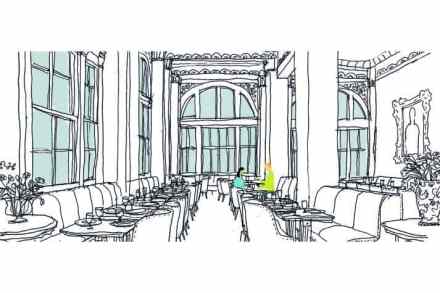
Langan’s, a brasserie off Piccadilly with curling orange neon signage calling its name, is under new management after it fell into administration in 2020. It is a famous brasserie — London’s version of La Coupole — once owned by Michael Caine, a famous actor, and Peter Langan, a famous drunk, who would crawl across the floor and bite customers’ ankles and who once put out a kitchen fire with champagne. It opened in 1976 on the site of Le Coq d’Or and was treated by the diary columns as a person in itself, as famous as Annabel’s, Peppermint Park and the Ritz Hotel. Lucian Freud and David Hockney and Princess Margaret came here.

The trick to making blueberry muffins

I don’t quite know how the Americans got away with it: convincing first their own people, and then the rest of the world that a muffin is a suitable breakfast food? A foodstuff which is, let’s be honest, cake. But then, we are quite happy to sprinkle our worthy porridge liberally with demerara sugar, to use yoghurt in our overnight oats or alongside granola, to combine butter and flour in any manner of breakfast staples from toast to pancakes, what’s so different about combining all those things?

Sumptuous winter drinks to serve at home

What better way to mark the action in Beijing than a thematically appropriate Winter Olympic cocktail. These recipes feature alpine liqueurs and cold-weather flavours to keep you fortified throughout the event. Norwegian WoodImage: Nuet Aquavit With Norway set to top the medal table once again, it seems fitting that our Winter Olympic cocktail party feature a bottle of aquavit. This traditional Scandinavian spirit is distilled with caraway and other botanicals, which makes it a close relative of gin without the juniper. It’s tasty on its own but even better in a Martini.

Steak Diane: the perfect date-night dish

Cooking for romance is no laughing matter. The stakes are high. Get it right and woo the love of your life — lifelong happiness, marriage, kids. Get it wrong, and who knows what will happen? At best, you’re serving up a disaster sometime around midnight. You’re not getting lucky. You may be poisoning your intended. Romantic meals should be for all year round, not just for Valentine’s Day — but there are a few rules that it’s wise to follow. Date night is not the time to try shucking oysters for the first time (unless you’re willing to risk a trip to A&E). Chocolate fondants, as dozens of disappointed MasterChef contestants will attest, are hard to pull off in a panic. What you need is something fun, something fast, something flashy.

Why restaurant food at home beats eating out

‘The opposite of a correct statement is a false statement. But the opposite of a profound truth may well be another profound truth.’ That’s Niels Bohr. Or, as Oscar Wilde put it: ‘In art there is no such thing as a universal truth. A truth in art is that whose contradictory is also true.’ Like physics and art, many other fields require that you embrace contradictions — because you can’t avoid them. Take innovation. Yes, a great deal of progress is combinatory: two or more technologies are combined to accomplish some hitherto impossible task. But, as the Soviet-era scientist Genrich Altshuller noticed, much innovation follows the opposite path, separating things which were previously combined.

Add sake to taste

Seafood has been at the centre of the Japanese diet for more than 10,000 years, with the Japanese consuming an amount that’s more than triple the world average. But it’s not just about food — sake is also an integral part of this seafood culture. Japan’s national alcoholic drink has a 2,500-year history, but its quality, style and variety have evolved to give a marvellous selection of perfectly balanced options. Sake as umami enhancer One of the unique characteristics of sake is its rich umami, which translates as ‘essence of deliciousness’. Sake contains amino acids such as glutamic acid that give a mellow, mouth-coating sensation, helping to enhance other flavours.

London’s best restaurants for British food

There was a moment, about 20 years ago, when Londoners began to realise, and then boast about, the transformation in our food scene. No longer deserving of mockery compared to other global centres, our restaurants were suddenly producing delicious food every bit (well, almost) as good as that associated with the likes of New York. The revolution began with fresh takes on exotic cuisines, especially South and East Asian, Spanish and Italian. But soon another, delightful development emerged: the reinvention of British food. Gastropubs began taking ploughmans and sausage rolls and roasts very seriously indeed, and posh restaurants began to show that homegrown food, when it comes from domestic seas and soil, can be sophisticated, innovative and richly satisfying.

Eggs en cocotte: the perfect Valentine’s breakfast

There’s something inherently romantic about eggs: whether you’re preparing them for another person, or being served them, they always strike me as a little act of love. Maybe it’s that they suggest breakfast in bed. Breakfast in bed is not about flirting or seduction, it’s more than that. You don’t make breakfast in bed for someone in whom you’re uninterested. Breakfast in bed is not a collaboration, it’s a gift from one person to the other, reserved for those you wish to impress, or to whom you wish to signal your love. That said, while in theory I like the idea, in practice I can feel a little allergic to breakfast in bed: the prospect of crumbs dropped and discovered the following evening is about the least romantic thing I can imagine.

Pass on Piggy’s, head to Hide: central London breakfasts reviewed

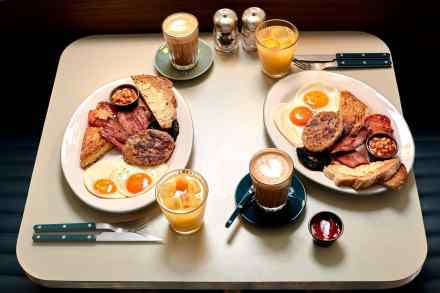
The centre could not hold, at least for Piggy’s. The drama of being the only greasy spoon in the West End — in Air Street, of all places — was too much, and it swelled, panicked, and fell apart. Yesterday I ate a mean sliver of almost cold bacon inside hard white supermarket bread. The butter had fled, possibly in the night, possibly with its luggage. There is a good, cheap bacon sandwich — I would argue the cheap bacon sandwich is the only good bacon sandwich — but it must have soft bread, crispy bacon, and butter as plentiful as a lover’s heart. This wasn’t it.

London’s best Japanese bars

Japan’s influence on the way we drink cannot be overstated. An entrenched culture of artisanship and craft combined with a love of the good life has made Japan a force to be reckoned with in the noble field of boozing. As a fellow island nation with a similar appreciation for the hard stuff, we Brits have taken a serious interest in how our Japanese cousins get their drink on. In London today, traditional fare like sake and shochu, as well as finely honed interpretations of single malt and gin, feature prominently on our cocktails lists. There’s never been a better time to drink Japanese-style in the city and these are some of the best places to do it.

A drinker’s guide to the Six Nations

Let’s face it, rugby can be a bit confusing. No-one really understands the rules. For huge swathes of an 80-minute game, the ball disappears under a pile of bodies; scrums look like a load of fat fellas looking for a set of keys dropped in the mud and the rest of the time it’s just a giant cartoon brawl – a massive Beano-esque cloud of dust with assorted fists, feet and colloquial expletives emerging from it at various angles; after which a pint-sized 'bloody good bloke' kicks a penalty through some posts after an alleged offence no one understood in the first place. That’s why rugby fans are allowed to drink in the stadiums because, if they weren’t, no-one would bother.

London’s most romantic restaurants

Get your credit cards out lads, it's that time of year again when we demonstrate our love via the medium of grub. Because this year the big day falls on a Monday many restaurants have extended their Valentine menus to cover the whole weekend. With any luck, this should free up tables for those naughty boys who forgot… (to book I mean). With so many London restaurants vying for your romantic dollar, here is a selection that manages to combine an amorous aura with adventurous cocktails and food fit for wooing. L'Oscar For those who like their romantic restaurants oozing with velvet and gold trim, L'Oscar, a boutique hotel on the fringes of Covent Garden will have you drooling before you've even sat down.