Spectator Life

Spectator Life

An intelligent mix of culture, style, travel, food and property, as well as where to go and what to see.

How to make the most of asparagus

It is hard to think of a vegetable which is as eagerly anticipated as that of home-grown asparagus. Partly it is because the season is so short: St George’s Day traditionally marks the start of the season which typically lasts for just eight weeks. Absence makes the heart grow fonder and, so long as we resist the temptations of year-round flown-in asparagus from foreign climes, the arrival of the first spears of this vegetable grown on home soil is as exciting a moment as any in the culinary calendar. There are occasional disruptions to nature’s rhythm: last year frosts ruined large parts of the British crop forcing supermarkets to stock asparagus from abroad.

Why I’m wild about Waldorf salad

You don’t see Waldorf salad so much nowadays. It’s a simple dish: raw celery, apple, grapes and walnuts, tossed in a mayonnaise-based dressing. Although you might still find it packaged in the bigger supermarkets, it’s fallen off dinner tables and restaurant menus alike. We wrinkle our noses at the prospect of combining fresh fruit and mayonnaise: the combination always makes me mentally place the Waldorf salad in the 70s, alongside big platters of dressed salmon, covered in wafer-thin cucumber scales, and a host of other mayonnaise-coated, tricky-to-identify bowls purporting to be salads, possibly involving tinned mandarin oranges.

A taste of la dolce vita in Tuscany

Amid the grandeur of old Edinburgh, in the lee of the castle, is one of the finest buildings in Scotland: George Heriot’s School. But Heriot’s is more than an architectural gem. It is an epitome of Scotland as it used to be, before the Scottish esprit de corps succumbed to kailyard grievance-mongering under the rule of Sturgeon the tricoteuse and her Nationalist administration. George Heriot, ‘Jingling Geordie’ as he was nicknamed after the coins supposedly jingling in his pockets, was one of many Scotsmen who went south to make their fortune after the Union of the Crowns in 1603. ‘The noblest prospect a Scotsman ever sees is the high road… to England’ applied then as well as in Dr Johnson’s time.

The secret wine destinations that rival France

Wine tourism is booming. France alone attracts 10 million oenophile tourists each year, generating almost $6 billion (£4.6 billion) annually, according to CNBC. But with places like Bordeaux, Champagne and Napa Valley in the US suffering increasingly from overtourism and rising prices, many wine lovers are seeking more offbeat destinations. From tiny islands to primordial forests and buzzing metropolises, here are the surprising places which make excellent wine breaks. Budapest, HungaryThere's more to Hungarian wine than Tokaj For most people, Hungarian wine starts and ends with the golden syrupy nectar that is Tokaj. But the country’s wine culture is far more nuanced than this lets on.

With Ameer Kotecha

20 min listen

Ameer Kotecha is a British diplomat, pop-up chef and food writer. His first cookbook the Platinum Jubilee Cookbook, in which he chronicles 70 recipes related to the Royals, Diplomacy and the Commonwealth comes out on April 28th. He has also launched alongside Fortnum & Mason's the Platinum Pudding competition, which hopes to discover the next best British dessert. On the podcast, Ameer talks to Lara and Liv about how his childhood was the perfect blend of British food with Indian influences, how he ran a school-wide campaign for seconds and how in all of his years as a diplomat, he has never been offered a Ferrero Rocher. For more recipes and recommendations, sign up to The Spectator’s free monthly food and drink email, The Take Away, at spectator.

In praise of British beef

Beef is one of our proudest national exports. Though showcasing British beef to the world has at times had its challenges, one story raises a smile: as a result of BSE, British beef was banned in France during Lord Jay’s tenure as our ambassador in Paris. He and his wife Sylvia made a principle of serving only British ingredients at ambassadorial functions wherever possible – and, as a result, they felt they could not serve beef at all. As I recount in my forthcoming book, they did, however, have one triumph. Lord Jay recalled: 'Just as the ban was beginning to be lifted the French said that British beef could be imported to the great agricultural show at SIAL, provided that when the show was over the British beef was either burned or taken to the British Embassy.

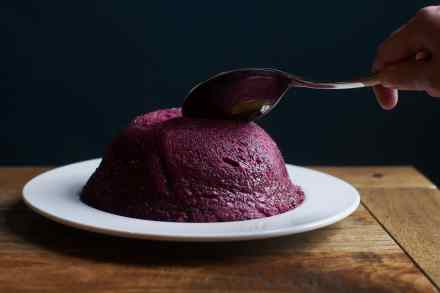
The delicious silliness of pink lemonade jelly

The onset of summer makes me feel giddy. And it seems from those piling into beer gardens and loading up their hampers for picnics in parks, I’m not alone. Perhaps this is because it is of course too early for summer, I’m not ready for it. And to be fair, it’s barely arrived. Spring is still stamping its feet with April showers, and shaking its blossom filled trees to remind us of its presence. But those hot hazy golden days are creeping in, even on bank holiday weekends, the traditional domain of miserable, dreary weather, which we bravely brazen out, so determined are we to make the most of the one day vacation from work. No need this year: sunshine and giddiness prevails. Such giddiness calls for something silly, something bright and zippy, and maybe a bit childish.

The linguistic ingredients of ‘salmagundi’

‘It makes me hungry,’ said my husband when I mentioned the word salmagundi. That is his reaction to many words. But he liked the sound of it. I think in its sound, suggestive of something impossible to pin down, it resembles serendipity. The obscure French original of salmagundi, a dish of chopped up meat and whatnot, must have become known in English through Rabelais’s gluttonous epic. Thomas Urquhart’s translation of 1653 speaks of the ‘Lairdship of Salmigondin’. Various rationalising respellings emerged, such as Sallad-Magundy (1710). Salad, by origin something salty, was not limited to raw greenery.

The Harrods disadvantage: Em Sherif reviewed

I am never bored with Harrods, only disgusted, and it is disgust of the most animated and exciting kind. It is Nabokov’s fish-tank of a department store, but with lampshades, not hebephilia. Its wares have surpassed its beginnings, which were haberdashery. Charles Harrod’s first shop was at 228 Borough High Street when George IV, who would love Harrods, was king. His second was at Stepney. Harrod came west for the Great Exhibition of 1851 and now we have this: the most crazed example of a crazed aesthetic, which is imperial Edwardian. Or Disney pinnacles the colour of blood. Harrods used to have a boutique in which almost-normal children could be transformed into Disney princesses. I await the cryonics department with ecstasy.

The art of postal baking

When life moved to Zoom in March 2020, I quickly found myself with a lot of time on my hands. With events and weddings off the cards indefinitely, I needed to pivot my baking business and realised that if people couldn’t go out to eat cake, I needed to get the cake to them. Overnight, boxes and packing tape were ordered, recipes chosen, and my postal bakes business was formed. Thanks to the power of Instagram, demand was overwhelming. People ordered boxes for their households – their arrival a mini event to look forward to amid the monotony of lockdown – but most ordered for others. Boxes were being sent to say everything that I was feeling, too – I love you, I miss you, I’m here for you, we will be together again.

Britain’s best foodie pitstops

Savvy planning can negate succumbing to a sad Ginsters sandwich and insipid service station coffee as you hit the road and criss-cross your way around the UK this spring. Of course, there are the A-grade service stations run by the Westmoreland family (at Gloucester on the M5, Cairn Lodge on the M74 and Tebay on the M6). This trio has revolutionised our expectation of a motorway stop and are worth letting your petrol gauge hit the red for: no Burger King, proper coffee and farm shops heaving with local pies, pickles and preserves. But plot carefully and there are other lesser known foodie stops that make the prospect of a day spent in the car a little more enticing, from fish trucks and bakeries to hidden cafes and upmarket diners, all on the road or just a short diversion away.

How to use up your spare hot cross buns

It always feels criminal to throw away hot cross buns. Hot cross buns are marked by their scarcity in my house: no sooner do they cross the threshold than they are pounced upon and demolished. Assuming that you are capable of more restraint than me, this recipe deals with the unlikely scenario of how to use up those leftover buns. The ravenous will be relieved to hear that only two buns are required. And if you have more willpower than I do, you can even hold back a couple more hot cross buns and serve the ice cream between two halves of a bun, as a particularly Eastery ice cream sandwich. This is a bit of a cross between traditional brown bread ice cream and my a spice-infused ice cream. It has a custard base, infused with cinnamon and nutmeg.

My Easter recipe: Greek-style marinated lamb

This is a delicious way to cook lamb with a distinctly Mediterranean feel. It’s super fresh, easy to prepare and would be perfect for Easter Sunday. I would serve it with pitta bread and chilli sauce. It pairs well with a chilled bottle of Sangiovese.

The secret to baking the fluffiest hot cross buns

What makes a hot cross bun a hot cross bun? Is it in the bun: the spice, the dried fruit and citrus peel, or even the type of dough? Is it the way you eat it – hot! – sliced in half, toasted and dripping with butter? Or is it the cross itself? Hot cross bun purists will tell you that it’s all of the above, and that any deviation from the classic is, well, deviant. And more-over, that the buns should be eaten only on Good Friday, never before or after. But if recent examples are anything to go by, the rules are very loose. Each year, as soon as Christmas is over, unorthodox hot cross buns line our supermarket shelves and cause opprobrium among the sticklers.

The wine of the Wild Geese

The Irish rarely understate their achievements. Yet there is one exception. Over the centuries, the links between Catholic Ireland and the Bordeaux wine trade have been fruitful. O’Brien (Pepys’s Ho Bryan, now Haut Brion), Lynch, Barton and many other names: these are enduring memorials to a fruitful relationship. But the best-known Hibernian exiles were warriors. From the 16th century onwards, Irish soldiers served with distinction in continental armies. Their numbers increased after the Battle of the Boyne. London wanted to break the power of Gaelic, Catholic Ireland for all time, and one way of doing so was to expropriate the native landowners. Many of them decided to repair their fortunes elsewhere. They became known as the Wild Geese.

The finest pasta in London

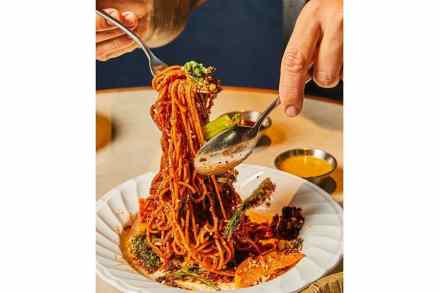
Why was it that when lockdown haunted our doors we all rushed out to buy pasta? Dry wheat in a bag in a funny shape. Cheap, yes, and ridiculously easy to cook. And, if the supermarket cheddar didn’t run out, very good with cheese. But still, pasta. Shouldn’t we have thought of something more inventive? Yet a spate of restaurants popping up round London with new enthusiasm now that we’re out and about again suggests that the Italian carb is enjoying a gourmet renaissance. Stevie Parle, founder of the fresh pasta restaurant Pastaio, speaks of pasta-making as an 'obsession'. The satisfaction of 'extruding pasta through bronze dies' and 'slow cooking delicious ragu' that he refers to when we speak sounds practically religious.

With Michael Heath

35 min listen

Michael Heath is a British strip cartoonist and illustrator and has been working nonstop since the 1950s. He has been cartoon editor of The Spectator since 1991. On the podcast, he talks to Lara and Liv about carrying German bombs into the local pub like milk bottles during the second world war, being given chewing gum by American soldiers, and how during the heyday of Soho, the focus was a lot more on the drinking than the eating.

How to roast Easter lamb

Easter is almost upon us and with it comes the mouth-watering prospect of roast lamb. It has become increasingly fashionable in recent years to eschew the leg and do a slow-cooked, meltingly tender shoulder of lamb for a Sunday roast. Rightly so, for the shoulder meat is rich and delicious, but when it comes to Easter there is something suitably grand and evocative of the new season about a whole leg brought to the table, pink in the middle and surrounded by spring veg. Rubbing it all over with olive oil, sea salt, garlic and rosemary is a classic preparation – adding some lemon zest too gives a welcome freshness.

This year’s best Easter eggs

Here to separate the good eggs from the great eggs, we’ve tasted the Easter treats from the UKs favourite retailers. The 2022 eggs range from the innovative to the slightly baffling but the good news is there’s great options here for every taste and budget. Autore Milk Chocolate Egg with Pistachios, £19.70 – Delicaro Upper crust food merchant Delicario is selling a selection of eggs made by Campaian cocoa ultras Autore Chocolate. This is the sort of website where you can buy Japanese beef that was pampered to death and special tuna fed exclusively on truffles (probably) so expectations are high. The thick, milk chocolate comes with a generous pebble-dashing of Bronte pistachios, nuts of protected origin grown on the slopes of Mount Etna.

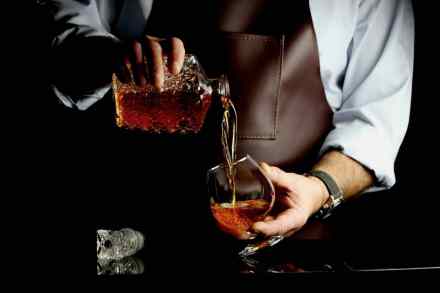
Whisky syrup sponge: the perfect pick-me-up

Bringing something golden, sweet and uplifting into your kitchen and life is exactly what is required at this time of year. And it doesn’t get more golden, sweet or uplifting than a syrup sponge. A syrup sponge is a steamed pudding, laced with golden syrup. The pudding itself is made by pouring a cake-style batter into a basin or bowl, sealing it with paper and foil, and then placing it in a half-filled pan of water, where it is gently cooked by the steam, until the sponge is light and risen. Golden syrup is an inverse sugar, which means it is created in the process of refining sugar, or after a sugar solution has been treated with an acid. Its flavour is distinctive: lighter than honey, like the palest of caramels, with a clean sweetness which tastes almost metallic.

The art of chocolate pairing

The Mesoamerican Mayans exchanged it as currency; botany boffin Carl Linnaeus christened it ‘food of the Gods’; and fictional fatso Augustus Gloop loved it so much he ended up in a river of the stuff. Yes, if Easter is about anything, then we’re pretty sure it’s about chocolate. And just as chocolate triggers serotonin, so too will a sip of a sophisticated spirit release a dose of dopamine. So, what with all the relentless gloom in the world, we suggest you double down on the indulgence this Easter and pair your favourite sweet treat with a delicious and discerning distillate. Chocolate contains over 600 flavour compounds, which is a lot, but there’s also incredible aromatic and flavour complexity in various spirits, particularly those aged in wood.

My love affair with the Wolseley

I was sitting alone at a small table in the Wolseley, Piccadilly, waiting for my supper and feeling a sense of absolute contentment. The evening buzz in that theatre-set of a restaurant has always been slightly more subdued than the lunchtime one. The lighting is lower; there are candles, there is calm. On my right, a duke dined with his family; on the left, two celebrated actors next to a young rising star. There were elderly couples from New York who believed in dressing for dinner in glitter and diamonds; there were discreet lovers, old friends. The waiter was perfectly attentive – not too little, nor, importantly, too much. Wolseley waiters do not gush. My smoked salmon arrived, with thin brown bread and butter, half a lemon wrapped in gauze. I sighed.

£120 steak that looks like a M&S meal deal: The Maine reviewed

Last week Chris Corbin and Jeremy King lost control of the restaurant group they founded: Corbin & King, which made the Wolseley, the Delaunay and Brasserie Zédel under Piccadilly Circus where, if they were lucky, tourists would tumble as if into a fairy pool. Corbin and King understand that a superb restaurant looks after its staff, and its staff look after its customers. It’s called love, and it matters, but that is gone now. Central London is ever more flinty, unimaginative and grasping: a playground for people who do not deserve it. Russians stripped their state and spent the proceeds in London. I saw them do it. Each luckless duck and bottle was a piece of a potential Russian state to be digested. Now their only currency is blood.

Why vinegar could be the key to losing weight

We all know about the perils of sugar. 90 per cent of us suffer from glucose (blood sugar) spikes every day. You may have even contended with the symptoms without recognising the cause: fatigue, cravings, mood swings, poor energy, bad sleep, acne and, crucially, weight gain. But what if you could mitigate the effects of glucose without forgoing sugar and carbohydrates completely? Starchy and sugary foods turn to glucose as we digest them. The resulting glucose then enters our blood stream. If too much glucose arrives too quickly in the bloodstream it causes a glucose spike. These spikes bring with them consequences: inflammation, premature ageing and fat storage. Many diets suggest cutting out sugar and carbohydrates completely.

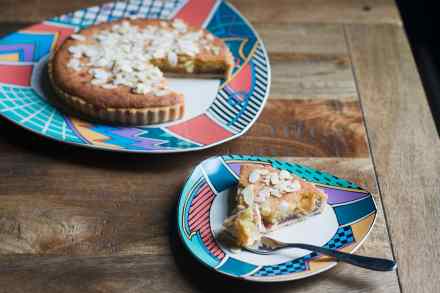
Rhubarb and custard cheesecake: a true romance of flavours

Sometimes, when I am planning a pudding, it can feel like there is a hitch in my brain, a little sticky spot that I catch on, and have to release myself from before I can move on. That hitch, that sticky spot, is rhubarb and custard. I know that there are other pudding bases, sweet dishes that are more original, more popular. I know that there exist other marvellous fruits that deserve the spotlight, that there are chocolate concoctions that will ooze and impress, bitter caramels that will shock and delight. But in order to get to them, I have to move past my first instinct which is always: rhubarb and custard. It’s not simply that it is a default combination in my mind.

Crunch time: how to make the perfect crisp sandwich

A crisp sandwich is a private and personal endeavour. In my experience (and I have considerable experience in this particular area) it is usually eaten alone in the kitchen, often over the sink. It is deliberately unsophisticated, the ultimate fast food: simple, salty, satisfying. It is a snack that speaks of the person you are, rather than the person you want to be. I firmly believe that no food should be a guilty pleasure, but I’ll concede that crisps sandwiched between two heavily buttered slices of bread does not scream nutritional balance.

War, wine and the brilliance of Beychevelle

If only toasts and good wishes were weapons of war. At every serious repast I have attended since the invasion began, someone has raised a glass to the heroes – and heroines – of Ukraine. The rest of us have responded with a blend of solemnity and moist-eyed emotion. One’s emotions are strange. I can read about the deaths of warriors on the battlefield, now riding with the Valkyries on their way to Valhalla, and merely respond with a dry-eyed salutation.

My £50-a-week chocolate habit

As I’ve got older my tastes have generally become less refined. During my youth I dutifully slogged through Kafka, Camus and Sartre, but my current bedtime reading is Sharpe’s Trafalgar by Bernard Cornwell. With movies, I used to feel obliged to watch subtitled masterpieces like La Règle du jeu and Le Salaire de la Peur, but now I’m perfectly happy with the latest Marvel blockbuster. However, when it comes to food and wine, I’ve become more snobbish – insufferably so. My last meal on death row would be the twice-baked cheese soufflé from Le Gavroche washed down with a bottle of Corton-Charlemagne Grand Cru. For some reason, this is particularly true of my taste in chocolate.

With Lance Forman

22 min listen

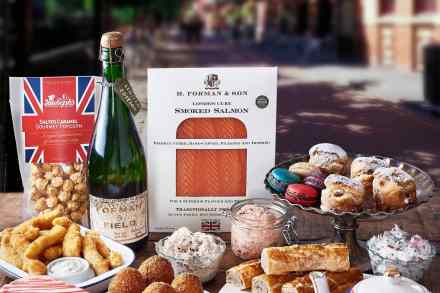
Lance Forman is the owner of H. Forman & Son, Britain's leading salmon smokers and author of Forman's Games. He was elected a Brexit Party MEP for London in the 2019 European election but quit the party to endorse the Conservatives.On the podcast, Lance reflects on his childhood in a traditional Jewish upbringing, eating smoked salmon sandwiches every day for his packed lunch. Lance brings in some of the foods made by his gourmet food delivery company, Forman & Field. This included smoked salmon blinis with cream cheese and their latest creation, a Victoria sponge ahead of the Queen's Jubilee. Come to the East End to learn all about curing and smoking salmon with Lance Forman of H. Forman & Son, suppliers of our celebrated Spectator Winemaker Lunches.