Spectator Life

Spectator Life

An intelligent mix of culture, style, travel, food and property, as well as where to go and what to see.

What to drink at Thanksgiving

This is a tricky column. It’s still hot and humid where I am, which inclines me to tell you about some summer wines. But you won’t be reading this until just before Thanksgiving, which means something robust and cockle warming is in order. A fork in the road rises up before me. Which path should I take? Both! Why be an either-or sort of chap when both-and are available? Let’s start in Sicily, on the slopes of Mount Etna, one of the world’s most active volcanoes and, as it happens, a splendid igneous spot for growing grapes, especially Nerello and Grenache. I split a bottle of the 2019 SRC Etna Rosso Crasà with a couple of serious thinkers and we were all delighted. The small family-owned winery lies a thousand windswept meters above the Mediterranean in eastern Sicily.

The joys of combat food

Combat food seems to prove particularly divisive. It is the Marmite of culinary preparation:you either love it or loathe it. I’m firmly in the former camp. Combat food isn’t specifically military, though there is a link. It refers to simple, no-nonsense, hearty fare, whose ingredients – typically from tins – can easily be thrown into a pot and quickly mixed, cooked, then poured into a large bowl (combat food doesn’t tend to work with delicate plates). As I said, apparently divisive stuff. I once made the mistake of getting in touch with a then recent ex-girlfriend, thinking there was a chance of patching things up.

London’s best jazz bars

When jazz music arrived on our shores in 1919, with the first British tour of the Original Dixieland Jazz Band, it received a frosty welcome from many. Other performers tried to get the group kicked off theatre bills, and the tour ended abruptly – with the Original Dixielanders being chased to Southampton docks by a lord who had just found out the lead singer had been trying to seduce his daughter. Happily, in the subsequent 100 years or so, jazz has gone on to earn a firm place in our hearts and record collections. With the return of London Jazz Festival, which runs from today until 20 November, we hunted down the capital’s best jazz bars where you can dine and dance the night away.

The ultimate American comfort food: how to make meatloaf

Meatloaf has some obstacles to overcome: it has an unprepossessing appearance, and an uninspiring, slightly off-putting name, which it shares with the famous singer. And it wasn’t a compliment when it was given to him: the singer’s father took one look at his newborn son and said he looked like ‘nine pounds of ground chuck’, before persuading the hospital staff to put the name ‘Meat’ on his crib (which is real commitment to a joke). I can’t speak for baby Meat Loaf, but when it comes to the dish, the name is at least an extremely accurate description. Meatloaf is made up of ground meat (often beef, sometimes pork, occasionally veal, or a mixture thereof), cut with bread or other carbs, and bound together with egg.

The wartime roots of Italian Pinot Noir

Wine-making can have a tragic dimension, and rarely more so than with Italian Pinot Nero: that is, Pinot Noir. It is often made amid blood-soaked landscapes, where tragedy regularly arose out of pretensions to grandeur. If you wish to read an overview of modern Italian history in order to understand why, the place to start is David Gilmour’s The Pursuit of Italy. Despite the quality of the prose, mention Sir David’s book even to thoughtful Italians, and you might be surprised by the lack of enthusiasm. He applies a revisionist scalpel to national myths, without benefit of anaesthetic.

I’ve found the only gastropub worth eating at

The gastropub, an invention of the early 1990s, is a terrible idea. They burst on to the scene when breweries were made to sell off many of their pubs for a song to make way for competition, encouraging Marco Pierre White wannabes to snap them up and replace cheese sandwiches and pork scratchings with kidneys on toast and anything that could be put together in a kitchen the size of a shoebox. Many of them have food prepared off-premises but charge restaurant prices. There are no proper tablecloths, the glasses are made to survive if dropped on concrete floors and it all feels a bit like going round to your friend’s house for a substandard dinner party.

In defence of instant coffee

The past is a foreign country; they do things differently there. Ten or 20 years ago no one would have thought twice about enjoying Nescafé or its equivalent. There is soothing ritual in spooning, pouring, stirring and sipping the mud-brown concoction in a mug. But nowadays, for a generation nourished on slow-roasted Colombian cashew-milk cortados, instant coffee seems as primitive as campfire cookery. I recently stayed at Brownsover Hall, a grand Gothic mansion house near Rugby: a place where you can sit for a whole weekend in a Georgian wingback chair, gazing out at Warwickshire. In a wood-panelled bedroom, with ceilings loftier than millennial expectations, by the mini kettle and the branded writing paper, was the familiar tray of Nescafé sachets, PG Tips and milk thimbles.

How to master mezcal

Long before there was tequila, before there was a state of Mexico, there was mezcal. The agave plant – which is roasted, fermented and distilled to produce this traditional spirit – has been a part of life in the region for millennia. When the first stills arrived there in the 16th century they were quickly set to work distilling the local fermented agave wine, and mezcal was born. Today, these intensely characterful spirits are being embraced by bartenders, natural wine types and foodies of every stripe across the world. This is partly due to the fact that mezcal offers a fascinating connection to the place it was made. A good bottle is the sum total of a single species of agave, grown in a single region, and shaped by the hand of a single master distiller.

Theme of despair: Drop’N Chicken at Chessington reviewed

Chessington World of Adventures sits in a bowl near the A3. I went in the 1970s when it was a zoo, home to some unhappy orangutans who lived in a cage which made me scream. Being a lonely sort of child, I hugged concrete dinosaurs in the rain. Now it is owned by Merlin Entertainments – a sort of National Trust for people who prefer rollercoasters to country houses – which is owned by a hedge fund that employs teenagers. We are here to feel fear because my son, who is nine, has never really felt it, which is a good thing: and Merlin Entertainments monetises this, offering fear for a price, with parking. I am Jewish, and queuing for fear isn’t my thing, but I like to consider myself a loving mother so here we are.

In defence of booze

Once upon a time, well within living memory, a free-born Britisher could drink as much as he or she liked and smoke with a carefree abandon – all within working hours, and even without leaving their desk. You may remember elevenses – immortalised in those moments when M briefs Bond in the 007 films and the decanter comes out. That’s how people did a business meeting once, before Starbucks and 15 types of coffee. And then there was lunch. This could begin with a pint of beer or a steep gin and tonic, before some wine, and then perhaps a glass of port or brandy. Water? Kah! That’s for rinsing the glasses, not going in them. Nowadays, if you suggest having a glass of wine at a work lunch people will look at you like you’ve just offered their toddler a line of cocaine.

The Eton vs Winchester of the wine world

A few days ago, when everything looked black, a small group of us were consoling ourselves over a couple of good bottles. ‘In politics,’ said I, ‘things are never as bad as you fear, or as good as you hope.’ ‘I entirely agree,’ replied one friend. ‘At the moment, things are not as bad as I fear. They are worse.’ That was before Bojo lost his mojo. Has his curse now finally been lifted from the Conservative party? It would be foolish to offer a swift and complacent ‘yes’. Among the political figures Boris resembles, we must include not only Alcibiades, Silvio Berlusconi and Donald Trump. There is also Rasputin. Can we be certain that Mr Johnson has been given the full fatal dosage: icy Neva, silver bullet, poisoned cake, stake through the heart?

Hot, cold, sweet, salty, boozy, spiced: Bananas Foster has everything

I’m a sucker for a challenge. I absolutely cannot resist a little competition. Throw down a gauntlet, and I am compelled to pick it up. That’s probably one of the reasons that I love bananas Foster so much: it owes its existence to a challenge. In the 1950s, New Orleans was a major port of entry for bananas shipped from Latin America. Owen Brennan, owner of the eponymous French-Creole restaurant Brennan’s, was no fool: his brother Joe’s produce firm, Brennan’s Processed Potato Company, was running a large surplus of bananas and he wanted to make the most of these readily available fruit. He challenged one of his chefs to come up with a banana dish that could be served at his restaurant.

Why we should be tucking into tongue and turnip

It seems our course is set. Food prices are rising at the fastest rate in more than 40 years, taking the average family’s yearly grocery bill over £5,200 – and there’s no relief in sight. Lord Woolton would be rubbing his hands at a situation so ripe for his ingenuity and optimism – and perhaps his namesake pie and the national loaf might find themselves resuscitated before long. But his 1945 call for ‘a simpler diet’ of bread, potatoes and vegetable oils won’t help much in 2022. According to the Office for National Statistics, ‘low-cost’ everyday staples are seeing the greatest price rises of all, with the average cost increasing by 17 per cent in the past 12 months.

With Capri Cafaro

23 min listen

Capri Cafaro was a member of the Ohio Senate for 10 years before becoming a political commentator. She can often be found on American television news channels and also hosts her own food podcast, Eat Your Heartland Out. On the podcast she talks to Lara and Olivia about memories of cooking Italian-American classics with her Grandma, how she got into politics and why she doesn't have a sweet tooth.

The comfort and joy of a treacle tart

‘Come along, kiddie-winkies! Come and get your treacle tart,’ the Child Catcher trills in Chitty Chitty Bang Bang, to lure children away. The youngsters are particularly taken with the idea of treacle tart, and it’s not difficult to imagine why: unapologetically sweet and sticky, it’s irresistible to small, greedy hands. It’s easy to dismiss treacle tart as a nursery food. But that, of course, is part of its charm. It’s the Platonic ideal of a childhood treat, and a byword for comfort. In Harry Potter, the love potion Amortentia smells of whatever someone loves most in the world; to Harry, it smells of broomsticks, Ginny Weasley’s hair and treacle tart, the first dessert he ever ate at Hogwarts.

Echoes of John Lewis: Piazza at Royal Opera House reviewed

The Piazza is not a piazza – a realisation which is always irritating – but a restaurant in the eaves of the Royal Opera House, now restyled and open to those without tickets to the opera or ballet. If it were honest, Piazza would name itself Attic or Eaves, but the Garden, as idiotscall it, has long been a slave to delusions of the most boring kind. (It is no longer a garden in the wreckage of Inigo Jones’s square. I wish it were.) I would be happy to dine in a restaurant called Eaves – my favourite hotel is a hole in a wall by the Jaffa Gate in Jerusalem and my favourite restaurant was a man with a fish in Jamaica – but, in London, even attics are not what they ought to be.

Has the Aga had its day?

A whole chicken, not so much roasted as burnt to a crisp. Charred potatoes. Carrots so blackened they were welded to the pan. And don’t even get me started on the Yorkshire puddings, which resembled lumps of coal, still smoking amid the debris. Only once have I failed (catastrophically I might add, and in front of my entire extended family) to cook an edible roast dinner. And I blame the Aga. Long a middle-class status symbol, Agas – in varying shades of duck-egg blue and volcanic red – can be found in country piles, cosy cottages and even the odd city kitchen. Devotees rhapsodise about the cast-iron cookers, which cost upwards of £10,000, stay on 24/7 gobbling up energy and require specialist cookbooks to conquer their idiosyncratic ways.

Roger Scruton’s philosophy of wine

The philosopher Roger Scruton died in January 2020 just a few weeks shy of his 76th birthday. He left behind a large circle of admirers and a correspondingly large shelf of books in a variety of genres – novels, opera libretti, volumes of occasional journalism, cultural and architectural criticism, and various philosophical works, popular as well as technical. He wrote and wrote about music, hunting to hounds and politics. He also wrote about the subject that brings us together: wine. Roger was a gifted teacher, always on the lookout for opportunities to educate the ignorant, enlighten the benighted and expand the horizons of those cramped by bigotry and parti pris. His missionary work extended to the pages of the New Statesman, in whose pages his wine columns appeared.

Old Fashioned values: a cocktail recipe to live by

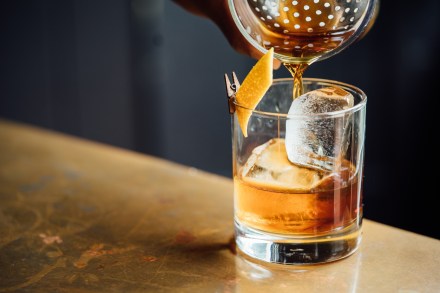
Take your time. Measure twice. Finish what you start. How will you have time to do it again if you don’t take time to do it right the first time? Work hard at work, then come home. Loosen your tie and relax. Make a highball or mix a cocktail for your wife and yourself. Share the end of the day. We are brothers and we write here of a drink and the man who taught it to us, our father. Teaching us how to make it, he also taught us something of how to live. He was a chemical engineer, and so the formula was important. The drink was the Old Fashioned (or Old Fashion; it doesn’t matter), and this is how he made it.

Hard to swallow: the unjustified hype around Japanese food

Tokyo After 23 years in Japan, having tried everything from yatai (street food) to deep-fried globe fish in a kaiseki (traditional) restaurant, I have come to the conclusion that Japanese food is overrated. It is rarely less than perfectly presented, and it can be superb – but it can also be bland and homogenous. Part of the problem is that much of what delights the Japanese about their food is unrelated to its actual taste. If British food, in the bad old days at least, was simply fuel, Japanese food has always been, to some extent, art. A high-end Japanese meal is the equivalent of a Wagnerian gesamtkunstwerk, with the colours, the choice of bowls, utensils, tablecloth, room, and tinkling water from a nearby stream, if available, part of the all-encompassing sensory experience.

Moules mouclade, as big a hit as Beyoncé

Mussels were probably the first thing I ate as a child that I knew at the time was ‘an acquired taste’. They made me feel impossibly grown up, coming with a brigade of bowls, one for the mussels themselves, one for chips, one for bread, one for empty mussel shells, and a little lemon-scented bowl of water to dip my fingers in. My dinner alone must have taken up half the table. From then on, I ordered mussels every time they were on the menu, knowing they would transform me from a gawky 12-year-old girl wearing cargo pants into a veritable sophisticate. But I never once tried moules mouclade. Like Socrates, Casanova and Beyoncé, mouclade is usually known only by its first name, la mouclade – the ‘moules’ implied by the ‘mouclade’.

The beauty of a Wetherspoons pub

The J.D. does indeed come from J.D. ‘Boss’ Hogg in The Dukes of Hazzard. But Tim Martin’s reason for ‘Wetherspoon’ is slightly different from the commonly told version. Yes, it was the surname of one of his schoolteachers in New Zealand. But Mr Wetherspoon didn’t tell Martin he would never amount to anything – rather he struggled to keep control of his class. And when Martin opened his first pub in Muswell Hill in 1979, he feared a similar problem. More than 40 years and nearly 900 pubs later, the fear seems ill-founded. Yes, the chain was in the news last week for its slow recovery from the pandemic, with Martin blaming the ‘drink at home’ culture acquired during lockdown.

A wine company after Roger Scruton’s heart

‘Golden’ is often used to describe the hue of some wines in the glass. But there is another resemblance. Gold is a beautiful metal as well as a store of value. Wine, covetable for its taste, can also be a store of value, at least for many years. So it inevitably attracts the attention of investors, the best of whom want to deploy expertise partly in order to finance their drinking. The late Roger Scruton, no less, once wrote a piece explaining how it was possible to drink Château Lafite free. You estimate your future needs and then buy twice the quantity. Within a few years, you should be able to sell half your bottles for the cost of the whole. I never asked him whether he had tried this out. But there is a firm based in London which is run on Scrutonian lines.

The delicious joy of cooking for one

I like to think of myself as the hostess with the mostest. A combination of my Type A personality, Jewish feeder tendencies and coming of age at the peak of Nigella’s Domestic Goddess era means I can’t resist pulling out all the stops if I'm having people over. (A theme! Welcome cocktails! Ingredients sourced from far-flung corners of Waitrose!) And yet the truth is, there’s no one I’d rather cook for than myself. It wasn’t until my late teens that I properly learnt my way around a kitchen. My mum always did all the cooking at home, so it was only when I moved 100 miles up the M1 to university that I finally had the impetus to explore.  My early attempts were pretty dismal; raw-in-the-middle jacket potatoes stand out as a particular low point.

With Ayesha Hazarika

21 min listen

Ayesha Hazarika is a journalist, broadcaster, stand-up comic and former advisor to three Labour leaders. On the podcast, she discusses memories of her mother's chicken curry, navigating bacon sandwich-gate with Ed Miliband and why all cooked orange coloured food is 'minging'.

How the coffee subscription ruined Pret

I have a deep-seated hatred of the hospitality QR code. It ripped through the industry as part of questionable social-distancing initiatives during the pandemic, taking the place of menus and human interaction – and has stubbornly refused to disappear, making my heart sink when I find one sellotaped to the table of a bar or restaurant. However, there’s one hospitality QR code that I found myself developing a fondness for – the one that comes with Pret a Manger’s coffee subscription. Launched in September 2020, the scheme is a financial godsend for coffee addicts.

The return of the speakeasy

A global pandemic, a booming stock market giving way to painful economic shock, a technological revolution… there are many parallels to be drawn between the 1920s and the 2020s. But if you look very closely, you might find there is another thread linking the two eras: the rise of the speakeasy. These clandestine drinking holes rose to prominence during America’s Prohibition era (1920-33). Following the hardships of the first world war, speakeasies provided a sense of raucous escapism – where jazz music boomed and genders and races mixed freely.The same search for escapism (and nostalgia) is what draws drinkers to them today, says Marco Matesi, bar manager of Downstairs at The Dilly, one of London’s newest speakeasies.

If Blairism were a carvery: the Impeccable Pig reviewed

Labour is 30 points ahead, and in honour of this I review the Impeccable Pig in Sedgefield (Cedd’s field), a medieval market town and pit village south of Durham. It is Tony Blair’s former constituency and Camelot, but nothing lasts for ever. Blairism had pleasingly flimsy beginnings. Sedgefield had yet to choose a Labour parliamentary candidate when a young lawyer sat in a borrowed car outside the house of John Burton, head of the Trimdon Labour Club, on 11 May 1983, thinking he should drive back to London.