Spectator Life

Spectator Life

An intelligent mix of culture, style, travel, food and property, as well as where to go and what to see.

What to eat in game season

Game is a perfect refutation to the sort of militant vegan campaigners who go around placing floral tributes on packaged meat. So long as shoots are responsibly conducted, game is as environmentally sustainable and ethical as meat-eating gets. But this year looks set to be a tough one for parts of the industry. Chiefly because of a severe outbreak of avian flu in France, gamekeepers in the UK have struggled to source enough birds to rear (90 per cent of partridge eggs and 40 per cent of pheasant eggs are imported from or through France). By some estimates up to 70 per cent of partridge shoots and nearly a third of planned pheasant shoots may be cancelled this year.

In praise of farm shops

As a city-dweller for 34 years, I am used to the hustle and bustle of other people. Cars, sirens, strangers chatting in the street: it’s the background noise of everyday life, a comforting reminder that you’re never alone. So when I moved to the Suffolk countryside in April last year, I found it a bit of a shock. Pregnant, freelance, with a husband often in London for work, I had a two-year-old for company, few friends and a big empty house overlooking fields, sky – and not much else. It's a 20-minute drive to the nearest town, and there’s nothing but a ramshackle pub in walking distance. We switched to online shopping for convenience, so I didn’t even have the weekly trip to the supermarket to fall back on.

Why the dry martini is the finest cocktail of all

We were discussing bourbon and whether American whiskey could ever rival Scotch. I recalled the first time I ever tried the transatlantic spirit. It was more than 50 years ago, in an undergraduate room in Oxford. The occupant was an ingenious fellow. At the beginning of one term, he wrote to Jim Beam, the whiskey makers. He informed them that he had discovered their wonderful product in the States, but it appeared to be impossible to come by in Oxford, which was a pity, because it deserved to be better known (in truth he had never tasted it and had never been to the US). A case shortly arrived, followed by another at the beginning of next term, and so on. He sent enthusiastic letters of thanks, assuring the Beam-ites that his friends were developing a lifelong taste for the stuff.

The sweet satisfaction of a burnt Cambridge cream

If a rose by any other name would smell as sweet, then a Trinity or Cambridge burnt cream must taste as sweet as its French twin, the crème brûlée. The two cooked custard dishes are essentially identical: an egg yolk-rich baked custard served cold and topped with a layer of hard caramel. Both are similar to the crema Catalana you find throughout Spain (known as ‘crema cremada’ in Catalan cuisine), but Catalana is made with milk rather than cream. It means it is lighter, and tends to have a thinner, paler caramel layer. Lemon or orange zest and a cinnamon stick are often used as flavouring for the Spanish pudding, whereas a burnt cream or crème brûlée is traditionally only flavoured with vanilla.

With Andy Burnham

24 min listen

Andy Burnham has served as Mayor of Greater Manchester since 2017. Before this he held prominent positions in Gordon Brown's cabinet, including health secretary and culture secretary.On the podcast he recalls Friday night 'chippy teas' as a child, the oddity of having food items named after him and discusses his work tackling food insecurity in Greater Manchester.

A chef’s tips to cut food waste – and your bills

Food waste is suddenly the subject on everyone’s lips. A combination of environmental concern and biting inflation has propelled an issue that was already rising up the public consciousness on to centre stage. Some supermarkets are dropping ‘best before’ labels on fresh produce, and this month the British Frozen Food Federation launched a campaign to highlight the virtues of freezing to save money. The issue even gained a mention in the first televised debate of the Tory leadership contest at the end of July, when Liz Truss stated: ‘I am naturally a thrifty person. I like saving money and it also helps the environment. It’s about using less, wasting less, particularly food waste which I think is a massive problem in this country.

Fit for a king: kedgeree is the most regal of all Anglo-Indian dishes

How does the saying go? ‘Eat breakfast like a king, lunch like a prince and dinner like a pauper.’ Well, if you’re looking for the highest possible status of breakfast, then kedgeree is the dish for you. Bran flakes just don’t quite scratch the same itch. Kedgeree cannot be casual; it requires time, both for preparation and enjoying, and it makes breakfast an occasion. It came to our breakfast tables (or mahogany sideboards) in Victorian times, brought back to Britain by returning colonial officers. It was served in silver chafing dishes, set alongside steaming urns of porridge. Kedgeree is a rice-based dish, flavoured with curried spices and cooked with smoked haddock, onions and boiled eggs.

Fine food in a sinister Weimar wine cellar: Bardo St James’s Restaurant reviewed

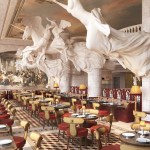
Bardo St James’s Restaurant – a name which reads like a map – is a vast new Italian restaurant in one of the pale imperial palaces off Trafalgar Square, near Pall Mall and The Phantom of the Opera, which goes on because snobbery and sado-masochism are among the many things that never die. You might think Bardo (I am not typing all that again) would fold down and fold up in a night, like Cinderella’s coach – it feels flimsy – but these restaurant palaces by Pall Mall are surprisingly robust. The last time I ate in this district it was at the Imperial Treasure, a gloomy and magnificent Chinese restaurant where a performative duck was £100. I thought it wouldn’t last – it was just us, the waiting staff and the duck – but it did.

The truth about cooking with an air fryer

The phone rang, and on the other end of it was my father. ‘We’ve been thinking,’ he announced before we’d even exchanged pleasantries, ‘you need to get an air fryer. It’s the solution to these energy hikes.’ As a chef and writer with a couple of bestselling cookbooks under my belt, I was of course already familiar with the air fryer phenomenon. The countertop gadget, billed as more energy efficient than regular ovens, has been much hyped as a cost-saver as we face a winter of rocketing bills. But I’d quickly dismissed it as a fad.

Try them while you can: London’s best pop-up restaurants

There’s something quite delicious about a deadline. The prospect that if you don’t book now you might never get to try the dish of the moment is enough to pull in queues and queues of customers. But in most cases the attraction of a pop-up eatery is not solely hype. Some of these temporary dining rooms offer the chance to sample the oeuvres of up-and-coming chefs – often those at the cutting edge of cuisine but without the resources for a permanent gig yet. Others give seasoned chefs an opportunity to test new concepts outside the constraints of an established space. Plenty of pop-ups have popped up in London this year as rising costs and post-Covid uncertainty deter some chefs from opening permanent locations.

With Oliver Woodhead

24 min listen

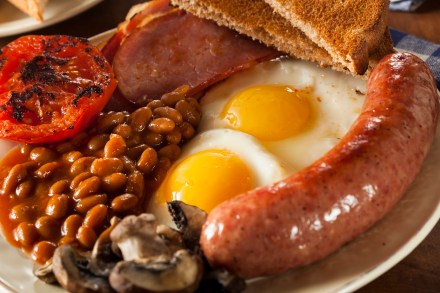
Oliver Woodhead is founder of L'Entente, the British brasserie in Paris. On the podcast, he tells Lara and Liv about what the French think about a traditional English breakfast, explains how he was inspired by London's St. John restaurant, and asks what our hosts' favourite ingredient is.

The ultimate chicken pie recipe

Laurie Colwin wrote: ‘No one who cooks, cooks alone. Even at her most solitary, a cook in the kitchen is surrounded by generations of cooks past, the advice and menus of cooks present, the wisdom of cookbook writers.’ It is one of my favourite quotes about cooking, mainly because it feels true: everything you cook is informed by other dishes, those that you’ve cooked, those that you’ve tasted or read about, the successes and the failures. In quiet moments of kitchen solitude, it is reassuring to know that there is an army of cooks behind me, each offering their experience, their recipes and books, a hand to hold when I feel uncertain. I never feel the truth of Colwin’s words more than when I’m making a chicken pie.

A toast to absent friends

There have been few more momentous weeks in British history, or indeed in world history. This commentator must plead guilty. To draw on George Bush Jr, I mis-underestimated Liz Truss and appear to have made the same mistake about Ukraine. That said, we should all be relieved when the war is over on favourable terms, and tactical nukes have remained an item in Russian military doctrine, without becoming part of military practice. Another mis-underestimation has now been corrected, one hopes permanently. Though I was never guilty, the former Prince of Wales had not received the respect that was his due. That is not true of King Charles III. Throughout the United Kingdom, his first coronation has already taken place, in his loyal subjects’ hearts. The Queen is dead.

I’ve finally learned to love baked cheesecake

I used to be a baked cheesecake sceptic: I didn’t feel they were worth the effort when other cheesecakes required you simply to stir together some ingredients and bung them in the fridge. My thinking was: why waste your time? Was the result really worth the extra effort? In turns out that yes, it was. It is. I just hadn’t ever eaten a really good cheesecake. That changed on a visit to San Sebastián. La Viña is a small bar and restaurant serving pintxos (the Basque version of tapas), but it is best known for its ‘burnt’ baked cheesecake. Inside, you feel as though you’re in a cheese shop that has recently suffered a fire: the walls are lined with shelves on which sit rows of cheesecakes, slowly cooling in their charred baking-parchment wrappers.

What Soho House has got right: Electric Diner reviewed

Electric Diner is from the Soho House group, which has done terrible things to private clubs, luckless farmhouses, domestic interior design and even its own restaurants. The Ned, its City hotel with ten restaurants, is genuinely insane, like Thorpe Park for people who are scared of roller-coasters; and no restaurant for adults should sell fishfinger sandwiches, even at Babington House, a Soho House hotel which is Clown Town for grown-ups but near trees. But Electric Diner is much finer: the sort of restaurant that attacks its parent with a spade, like Oedipus.

Order, order: MPs’ favourite restaurants

Westminster is often described as a village, and like most villages it has a clutch of good pubs and a decent curry house down the road. But beyond that the area isn’t overly blessed with places to eat, drink and be merry. There’s little in the way of bars (except in hotels and the Palace of Westminster itself), let alone nightclubs. The closest of those is in Embankment – Players and Heaven are favourites (though such is the paucity of choice that Michael Gove clearly felt the need to go all the way to Ibiza to bust his moves). As for restaurants, the slim choice means there is a small group of favoured haunts, and you can be confident that there’ll be a table of political friends (or rivals) a mere onion bhaji’s throw away.

In praise of British lamb

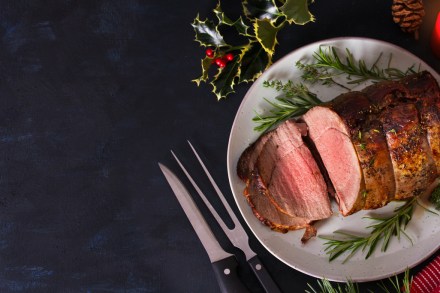
In one of Roald Dahl’s lesser-known short stories, ‘Lamb to the Slaughter’, the guilty Mrs Maloney tempts police officers into enjoying a spot of supper while they’re at her house hunting for the weapon used to kill her husband. That's the hell of a big club the guy must've used to hit poor Patrick, one of them was saying. The doc says his skull was smashed all to pieces just like from a sledgehammer.That's why it ought to be easy to find.Exactly what I say.Whoever done it, they're not going to be carrying a thing like that around with them longer than they need.One of them belched.Personally, I think it's right here on the premises.Probably right under our very noses. What you think, Jack?

How to make a true apple strudel

It’s possible that, like me, your first encounter with the Grande Dame of the Austrian pastry world, the apfelstrudel, was not in fact in one of the famed Viennese grand cafés, but rather from the freezer aisle at the supermarket. If it was anything like mine, it was probably a latticed, puffed version; the one I remember from childhood had blackberries mixed into the apple, which peeked through the holes in the pastry. I have no interest in denigrating our Sunday lunch pudding staple. In fact I loved it, served with thick, cold custard, straight from the carton. But it is fair to say that a true apple strudel is a little different. Strudels – meaning a filled, enclosed layered pastry – can be sweet or savoury, but the apple version is by far the most famous.

A toast to the field marshals

August may not be the cruellest month but it is often the most dangerous one. Now that it is over, and rosé is giving way to grouse, we can console ourselves. There has not been a world war. We merely face a number of middle--ranking crises. Over fortifying bottles, I was chatting about such matters with friends who had known the late Peter Inge, a dominating figure even by field marshal standards. It was said that in his company, brigadiers’ coffee cups would rattle with tension. I once taxed him with the contrast between his reputation as a martinet’s martinet and his geniality in private life.

How to eat and drink your way around the Dubrovnik Riviera

‘I hope you’re hungry,’ crows a fisherman, setting down a plate piled high with freshly shucked oysters. They say you should face your worst fears head on. Well, here I am addressing mine – but I never thought it would be done in quite so idyllic a spot. I’m in Mali Ston, a small, picturesque town on Croatia’s Pelješac peninsula, about an hour’s drive from Dubrovnik. It’s 9.30 a.m. and many shops are still shuttered, but already Game of Thrones fans are out in force, taking selfies along the hillside’s 14th-century network of towers and fortresses. (The three-and-a-half-mile walls doubled as King’s Landing and the Eyrie in the fantasy drama.

With Al and Kitty Tait

25 min listen

Al and Kitty Tait run the Orange Bakery in Watlington, and are the authors of Breadsong: How Baking Changed Our Lives. On the podcast, the father-and-daughter pair explain how cooking changed their relationship, why baking helped Kitty out of depression, and why Watlingtons make such great customers.

London’s best tasting menus

Once the preserve of only the fanciest of fancy restaurants, the tasting menu has come into its own post-pandemic. Set menus make economic sense for cost-cutting restaurateurs and their harried staff, of course – but customers benefit too, with no nasty surprises or bust-ups when the bill arrives. And for those of us who suffer from perennial food envy, tasting menus remove the gut-wrenching anxiety of having to choose between the 'succulent hand-glazed cod' and the 'succulently foraged kobe beef' – both it is. But pairing multiple dishes with distinctive wines and then placing them in some kind of coherent order takes real skill – so who does it best?

Why George Orwell’s ‘perfect pub’ deserves to be saved

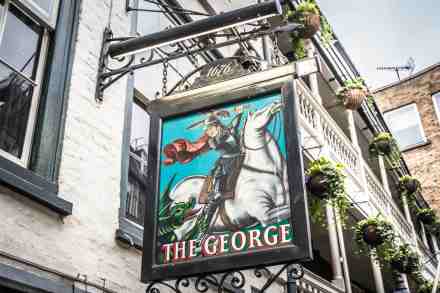
Eleven days after turning 45, I sent my first ever letter of complaint to the council. A real coming of (middle) age. The topic of my complaint? My local pub. I followed the British protocol for complaining – I made it clear I’m ‘dismayed’ and ‘appalled’ and hope people can ‘see sense’ – about an issue that has instilled such rage in me that a stiff drink is required. You see, my local, the Compton Arms in Islington, north London, is under threat of closure. This is no ordinary pub. Tucked away from the busy stretch of Upper Street, on a picture-perfect back road, is an establishment that has been serving the public since the 16th century, open near continuously since the 1800s.

The politics of butter

Butter was not a major part of my childhood. In fact, I don’t remember it ever being in our fridge. My parents were subject to the saturated fat scaremongering of the 1980s, and consequently believed that butter was the enemy. Instead, we had spread: margarine, rebranded as a cholesterol-busting alternative to heart-clogging butter. But spread wasn’t so bad. It lubricated my sandwiches and melted on my toast. Spread was everyday. Butter was for high days and holidays. Otherwise, we were all certain to die young. Butter has always been a bellwether of the British psyche. We want luxury, but only every so often, and only so much – and we don’t want to pay too much for it.

Among the best puddings I’ve ever eaten: Richoux reviewed

Cakeism is offering the voters everything they desire, knowing you will never give it to them because you live in a haunted mirror in which the only thing that matters is your survival. This duplicity is important to understand, because the road from Cicero to Caesar is so short it may lack potholes. Cake is less urgent, but at least cake won’t lie to you. And here is Richoux, still filled with cake, if you can afford it. It is, for many people, marvellous and theoretical cake. Richoux was a cake shop on Piccadilly – a street I can never eat in without thinking of Alexander Litvinenko sitting, doomed, in Itsu, when it still pleased Vladimir Putin to kill people individually – for so long it was forgotten. It is 113 years old, or one seventh of Yoda.

Wiltons vs the Ritz: who wins the great grouse race?

‘Bang! Bang! …Thud.’ It’s Friday 12 August, better known to tweedy types as the Glorious Twelfth, and the inaugural grouse on the West Allenheads estate in Northumberland has met its maker. The 26°c temperature yields a slow morning, with the moorland birds reluctant to come out of the shade and the beaters and guns mopping their brows, yearning for elevenses. After the first drive, the bagged game is slung in the back of a Defender and divvied up in the gun room. And now the real challenge begins. Imagine a sort of Beaujolais Run, except instead of getting Gamay wine from France to Fleet Street, our mission is to dispatch grouse from Hadrian’s Wall to SW1. The destination for ten brace – i.e. 20 birds – is Wiltons on Jermyn Street.

The complicated history of English wine

Hugh Johnson’s classic World Atlas of Wine, first published in the early 1970s, is now up to its eighth edition. My edition, the sixth, was published in 2007. It is 400 pages long and has exactly one page devoted to the wine of the United Kingdom. The latest edition is 16 pages longer but it, too, devotes only one page to British wine. Wine has a long history in the British Isles. Like so many good things (q.v. Monty Python’s Life of Brian), wine was brought by the Romans, who planted vines wherever they could grow (and some places they couldn’t). The Domesday Book, William the Conqueror’s big tax-planning guide, lists 40 vineyards in England.

Sole Véronique: there’s no need to fear fish and grapes

One of the joys of writing about old-fashioned food is coming across dishes that are new to me, and turn out to be such a delight that they gain a recurring role in my cooking. Of course, some I’ve encountered were already among my established regulars – boeuf bourguignon, coq au vin. Others were childhood staples – shepherd’s pie, proper rice pudding. But a few of the dishes I take into my kitchen to work with I’ve never even tried before. The first recipe I wrote for The Spectator was for blancmange. Having grown up during the brief period when milk jelly was fashionable, I’d avoided blancmange like the plague. I was sure it must be rubbery, flavourless and a bit, well, creepy.

At least we still have wine

Even in recent heat, the English summer can be magical. As long as there is shade, a pool and a steady supply of cooling wine, there is so much to enjoy. Trees, flowers, songbirds, butterflies: dolce far niente works here too. But thinking can be the snake which insinuates itself into Eden. Susan Hill’s Simon Serrailler books are always excellent train reading and the latest was no exception, even if the principal character always puts one in mind of Turner’s supposed reply to someone who said that they had never seen a sunset like the one which he had painted. ‘But don’t you wish you could?’ It is hard to believe that there are many actual policemen like Simon Serrailler – more’s the pity. There are other reasons for pity.