Spectator Life

Spectator Life

An intelligent mix of culture, style, travel, food and property, as well as where to go and what to see.

Why do Zoomers ape old age?

When I was in my teens and twenties, older people told me that they were exhausted just watching how I lived my life. I careered through my youth in a fog of football matches, protest marches, pubs, clubs and raves. I treated sleep as an inconvenience and I’d increasingly arrive home at daylight, not quite sure how the evening ended or where that bruise came from.  ‘Wait until you’re our age,’ oldies would say. ‘You’ll slow down too. Then it’ll be your turn to look at the young with bewilderment.’  Well, I did the slowing down part. After we were all locked down in 2020, I never fully unlocked again.

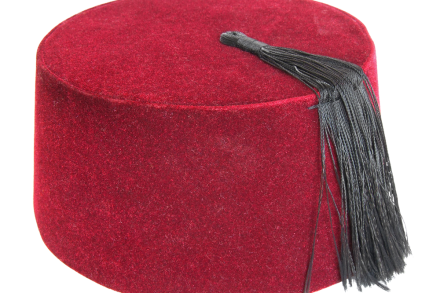
Make the fez great again

Ireturned from a recent holiday to Morocco with three mementos: a bright red pair of swimming trunks (teenager-sized; the largest the supermarket had), a bright red nose (thanks to my unscientific aversion to sun cream) and a bright red fez.  I’ve always wanted to own a fez and since purchasing it in a Marrakesh souk – ‘For you, sir, special price’ – I have been besotted with it. I’ve worn it on the Tube, to a pub quiz and around the Spectator offices, to variable enthusiasm from colleagues. As far as practicality goes, it is a useless hat. It  doesn’t keep the sun off. Its finest Moroccan cardboard will wilt in its first brush with the rain. But that won’t keep it off my head.

Britain would never host the Met Gala

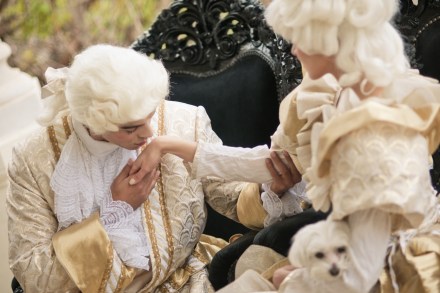
So, the Met Gala has rolled around again, with the predictability of death, taxes and the knowledge that some of the world’s most tedious celebrities will be photographed wearing some frankly bizarre outfits. As with the Oscars, the gala is a display of how deeply unfair it is to be a woman at these events. Men turn up, traditionally, in inoffensive displays of black tie, although this year’s theme of ‘costume art’ saw Colman Domingo appear in what looked like a Wetherspoons carpet and the 32-year-old Bad Bunny decided to anticipate old age by dressing like a man in his late seventies, complete with silver hair and grandfather make-up. God knows why.

The martini is making a comeback

In P.G. Wodehouse’s Cocktail Time (1958) the characters are frequently ‘lapping up martinis like a vacuum cleaner’. Wodehouse was living in the US at this point, and this was the era of the three-martini lunch. In the ensuing decades, the classic cocktail took a bit of a back seat. But the martini has made a mighty comeback.   Not put off by Sir Raymond ‘Beefy’ Bastable denunciation of the modern youth endlessly sitting around drinking cocktails, I went therefore to find London’s best.  They are not always where you imagine. Archive & Myth is, ominously, underneath Leicester Square’s Hippodrome Casino.

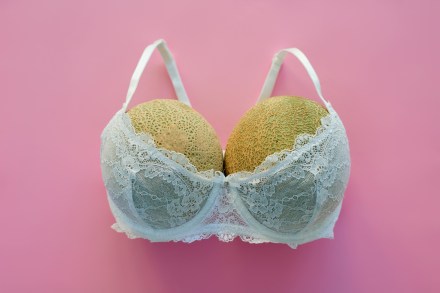
Do women really need breast reductions?

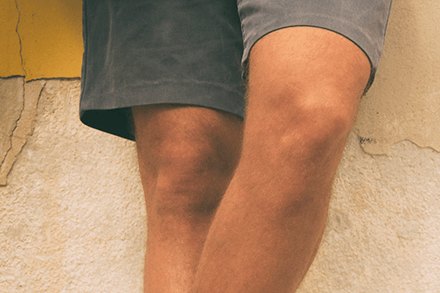
When I became wheelchair-bound at the end of 2024, the biggest change I had to deal with was not being able to walk any more on my lovely long legs. But, as I surveyed my poor ruined body in the cold light of 2025, I was dismayed to see that there were a multitude of minor indignities which had vandalised my youthful looks since my spine went under the knife.  My lovely, glossy, dyed dark hair was now thin and greying. My teeth were mostly missing. My bingo wings could have flown me to the Moon. My lovely legs were like an old man’s. My bum had disappeared. My lovely vulva was vandalised with an unspeakably common plastic catheter. My stomach was crenellated from rapid weight loss.

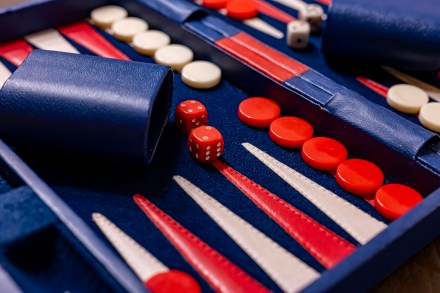
The romance of backgammon

To my mind, there can be few more perfect games than backgammon. Equally at home in an Iraqi teashop or played atop a fur in a plutocrat’s ski chalet, it is a game punctuated with bitter glares, bemused chuckles, and outrageous reversals of fortune. For those not yet initiated, the aim is to race all your men (pieces) to your home section and off the board first, avoiding their being knocked off the board and sent back to the beginning, while delaying your opponent’s men as much as possible. It blends luck and skill, and is at times infuriating, but always fun.  The name we know dates to 1635, but it has been played under other names and variants for at least 1600 years – 5000 if you think The Royal Game of Ur is close enough.

Why gingers have more fun (genetically at least)

Contrary to what we redheads have been led to believe, we are not disappearing. Our numbers have increased in the past 10,000 years, according to a recent Harvard study. What’s more, researchers found, being ginger may actually be desirable as far as natural selection is concerned because ‘having red hair was beneficial 4,000 years ago’. The reason why has yet to be discovered. But it’s good news for the class bully, producers of sunscreen and those – like me – who’ve had a love-hate relationship with the variants in their MC1R gene which leads to red hair and pale skin. I was an extreme redhead as a child; not one of the beautiful ones with long, auburn curls and green eyes.

Why British toilets are revolting

First things first, as this is an article about toilets, we need to establish if the word ‘toilet’ is an acceptable word. Here at The Spectator, editorial opinion on this crucial point is deeply divided. Some have expressed a preference for ‘bog’. Others opt for 'john', 'jakes', or lavatory.

The curious life of an antique dealer

Over ten years ago years ago, I made the transition from auction house ‘expert’ to antiques dealer. And it came as a rude shock. Nothing like a healthy dose of comeuppance; deference vanished overnight.   Auction houses are open to the public for consultation, even the grander ones in London’s West End; or that is how it was in the early 2000s. Back then, anyone could turn up (without an appointment) and ring a buzzer on the front counter. And, as an auction specialist, you played the part. Keep ‘em waiting for ten minutes, then a star-like descent down to reception, where a forelock-tugging hopeful awaited with Tesco bag and fake Fabergé frog in ‘resin’ — a useful auction house term to describe plastic.

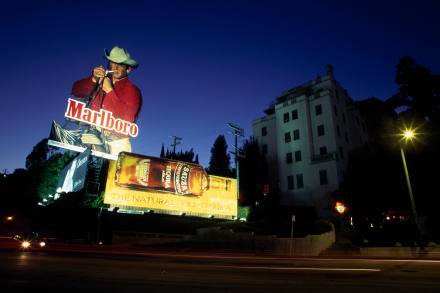
The empty escapism of ‘cowboy core’

Last week I dreamt I was a cowboy. My name was Billy ‘Toothpick’ Pickett, and I was the fastest pistolero east of Whiskey Row. I dreamt of robbing stagecoaches. I dreamt of playing three-card monte with Toothless Dan down by Granite Creek. I dreamt of owning a Smith & Wesson and shooting buffalo. I dreamt of riding a buckskin stallion named Tex. I dreamt of vintage Americana. And then I woke up.  This was the third cowboy dream in a fortnight. Once again, I had fallen asleep watching videos of cowboys on Instagram and paid the price. For months, my algorithm has been inundated with visions of a neo-Wild West. Videos of Monument Valley and the sandstone rocks of Utah. Young men with mullets camping in the Sierra Nevada.

Should men wear jewellery?

In times past, any self-respecting man of a certain class would have been dripping in jewellery. Henry VIII is said to have owned no fewer than 700 rings – almost as many rings as wives. Ruby rings, gold necklaces, diamond earrings, you name it: jewellery was not just reserved for noblewomen and Queens of England, it was fair play in Tudor England for both sexes. Fast forward to the 21st century and, as a rule, you won’t find the English upper-class males sporting emerald knuckle dusters. But that’s not to say their jewels are lying rusty in a stately home attic. Take a look at any recent red carpet and you’ll see ‘bling’ is finding a new audience among modern alpha males.

The Bentley Continental GT is a car for the upper-middle classes

Bentley’s Continental GT has a name to suit it: four voluptuous syllables then two emergency stops. This is the first car I reviewed, and it is still my favourite. I think this is because I grew up in Esher, and this is the car of the functional aspirant upper-middle class. It is important to remember that the state limousines – the pair of sinuous maroon sharks that transport the monarch from one demonstration of public magic to the next - are Bentleys, based on the long-gone Arnage, elongated for majesty. The Bentley is for people who work hard: the still responsible. Just enough flash. Not too much. If Aston Martin is British romance and Rolls Royce British violence in lambswool, Bentley is British functionality and taste.

In praise of the gilet

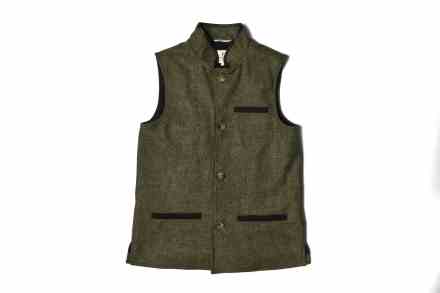
Every self-respecting gent these days is sporting a gilet. Don’t laugh. The gilet has come along leaps and bounds; you can’t tar it with the same brush as the Schöffel ‘Chelsea Life Jacket’ which is worn by the Hooray Henrys who guffaw at dinner parties twinned with their strawberry corduroy trousers.  The gilet is the height of sophistication. It is worn by the finance bros, the best-looking dad on the school run, the recently retired silver fox barrister you met at the ‘locals’ drinks party last Christmas and the gruff farmer who is so rich he really shouldn’t be that dour for goodness' sake.

Farrow & Ball is finished

In PR terms, it’s a such a well-worn trajectory, it has its own name. ‘Doing a Burberry’ is the term for when something once exclusive and favoured by those in-the-know is appropriated by the hoi polloi and its standing slips inexorably downwards. The Ivy — now a chain of naff provincial cafés — is a notable victim. Marbella, now ‘Marbs’ thanks to the cast of TOWIE is another. So is the name Samantha, once terribly Sloaney, now associated only with a former page 3 girl and some really filthy double entendres on I’m Sorry I Haven’t a Clue on Radio 4.

Why don’t we wear proper shoes any more?

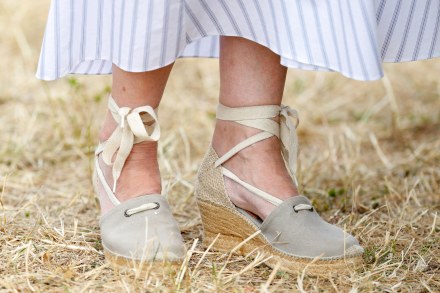
People can seem completely normal, until you look at their shoes. Particularly men. There they are, appearing sane: natty haircut, ironed shirt, non-psychotic trousers. But then: oh, horror! Terrible shoes. Slimy-looking Docksides, or Toms espadrilles, or something shiny and pointy. Or tremendous show-off brogues like Mr Noisy, with those execrable metal tap things, worn only by bounders and con men.  I was once, aged 23, struck silent with horror by the shoes of a boy who accompanied me to a beach: a pair of dusty brown lace-ups it seemed he’d had since Upper Sixth. I now understand this to be tremendously posh but at the time it turned my stomach. I am too suburban for that kind of thing.

Meghan is a woman much misunderstood

Lying in bed with a swollen face, I decided that the best thing to do was nothing, so I ended up watching the Duchess of Sussex make smoothies. I don’t know why everyone is so mean about her Netflix show because it hit the spot for me. As I took to my bed after surgery to take out the old screws and plates in my long-ago broken jaw, everything put me on edge apart from watching Meghan and her lovely way of smiling and smiling as she expressed wonderment at a bunch of grapes, or the way a liquidiser whirred.

‘Art is not born in nice conditions’ – on the runway at Ukrainian Fashion Week

Flitting between runway shows, new collection previews and cocktail receptions under the blaring sound of air raid sirens is now the norm at Ukrainian Fashion Week. Following Russia’s full-scale invasion of Ukraine on 24 February 2022, Ukrainian brands travelled abroad to fashion weeks in cities including London, Berlin and Budapest to exhibit collections, before coming home to Kyiv in September 2024.  After covering international fashion weeks for almost a decade, attending the return of Ukraine Fashion Week to Kyiv for British Vogue was naturally unlike any other fashion happening.

The dying art of the kimono

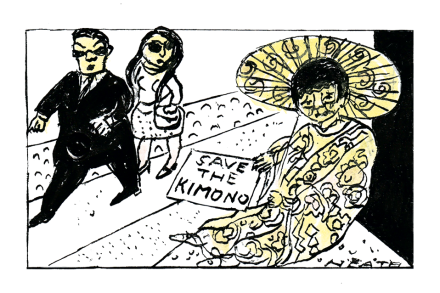
‘The road was frozen… Komako hitched up the skirt of her kimono and tucked it into her obi [broad sash]. The moon shone like a blade frozen in blue ice.’ When I think of the kimono (literally: ‘a thing to wear’) my thoughts turn to Yukiguni, the 1948 book by Nobel Prize winner Yasunari Kawabata. The novel is set in a city close to Minakami Onsen, a spa town where I used to rent a mountain cabin. For me, Kawabata’s images of kimono-clad women scurrying about in the snow were very real. However, my best memories of kimonos were in the epicentre of the craft, Kyoto, where I would dine with geisha at traditional wooden machiya houses in Gion, Kyoto’s pleasure quarter. By the 1980s kimonos were a dying fashion.

We’re all ‘sapiosexual’ now

What do you think of when you think of Jameela Jamil? (I realise that I may be talking to the wrong demographic here, but bear with me, and I promise I’ll broaden it out.) I think of hair – lots and lots of shiny, black, beautiful hair. Personally – and I thought this long before telogen effluvium, caused by the trauma of spinal surgery, made half of mine fall out and turn the rest grey – I don’t believe I’ve ever seen hair as lovely, not even on the great stars of Hollywood like Veronica Lake. If ever anyone had ‘pretty privilege’ (a term which I find censorious and covetous; attractive people should get prizes, just like brainy ones do) it’s Jamil.

Electric cars aren’t sexy

Does everyone fantasise about having sex in a Porsche? Or is it just middle-aged men? The middle-aged women I know are much more interested in having sex in grand hotels rooms than on the backseat of a sports car but then perhaps that’s because they haven’t considered the Porsche Macan, which is as sleek, luxurious and sexy as a Porsche but as practical and spacious as an SUV. I invite a man for a spin and he instantly agrees. Then I deliver the bad news: it’s electric.

We don’t need Islamo-fashion

When the ghastly Lynda Snell of The Archers ‘did’ fasting last year at Ramadan to suck up to the new Muslim family in town, I thought this kind of thing had got about as silly as it was possible to be. But reading about what happened last week at London Fashion Week took the gluten-free cake.  Non-Muslims either choosing or being compelled to celebrate Muslim holidays has been going on for some time. Understandably if disagreeably, with its Muslim mayor, London splurges on the celebration of Ramadan, decorating Piccadilly – the heart of the city – with 30,000 (sustainable) lights.

The decline of Oxford University’s sartorial traditions

The Black Death tore its way through Europe between the years of 1346 and 1353, believed to have killed half of the continent’s population. The Great Plague came in 1665, wiping out nearly a quarter of all Londoners. 1918 brought the Spanish Flu, infecting roughly one-third of the global population. And now, in the aftermath of Covid-19 — spreading through the streets of Oxford with a virulence that none of the above could rival — comes the latest instalment in highly infectious diseases: the college puffer jacket.  Historically, Oxford's sartorial traditions have been (Bullingdon Club attire aside) relatively understated. The college scarf was a go-to, and whose demise is worth mourning.

The joy of a launderette

A broken-down washing machine is generally regarded as definitely a Bad Thing. There is the expense and hassle of repairing or replacing the machine, the prospect of a flooded kitchen, and the sudden realisation that your underwear stock is … less abundant than you hoped.   But when our washing machine expired recently, I was secretly thrilled because it gave me an excuse to go to one of the few places on the planet that always makes me happy: the launderette.  I feel soothed from the moment I walk into one of these womb-like environments. I love the warmth, the smell of detergent and the air of cleanliness.

The curious case of the Fabergé egg theft

The story must have been a sub-editor’s dream. The Telegraph could barely resist with its headline, ‘Bag snatcher poaches £2 million Fabergé egg’, while the Times opted for the less playful: ‘Police on a Fabergé egg hunt after pickpocket strikes at West End pub.’ Frankly, I’m disappointed: a story about a stolen Fabergé egg appears during Lent and that is the best they come up with? Pressure on The Spectator’s sub-editor for this article aside, the story is glorious clickbait, teasing as it does with the terms ‘Fabergé’, ‘millions’ and ‘theft’. One can’t help but think of Octopussy, museum heists, fast car chases and suitcases full of cash. The public is crying out for the glamour of it.

‘It was making me think like a Latin American dictator’: why my moustache had to go

Iloved my moustache. Unfortunately, my fondness for it seemed inversely proportionate to its popularity among my peers. After much unsolicited feedback from friends (‘You look like a young Peter Mandelson’) and online strangers (‘You look like a 1970s porn star’), I put a poll on my Instagram asking my followers whether or not I should scrap it. Four-fifths said I should. After a brief consideration of my options (ignore the results? Rerun the vote? My moustache was making me think like a Latin American dictator), I reluctantly shaved. God how I miss it. There is something intoxicating about a moustache – a small hedgerow on his top lip can convince even the dowdiest man that he looks like a Battle of Britain pilot.

Why are Parisians so awful?

I have recently returned from a fleeting visit to the City of Light. As usual, Paris itself was a delight. It is an architectural and historic marvel that nevertheless manages to offer the best food and wine in the world at all kinds of prices, and somehow also has a respectable number of quirky and interesting independent shops and boutiques amidst the more anticipated international names. In other words, any trip to the French capital should be an alloyed pleasure. So why, when I arrived back at St Pancras, did I all but sink to my knees in gratitude that I was once back in rainy old Blighty, and that the land of the Belle Époque was a distant memory?

Driving isn’t fun any more

It is almost inconceivable that we used to live in a world where people would ‘go for a drive’. Not to get to a destination, but simply for the pleasure of driving. Sunday afternoons were the time of choice for this activity and would see car owners take to the road simply because it was good fun to be behind the wheel. The idea that driving was anything other than functional now seems absurd.   That world has vanished, partly due to the sheer volume of cars. In 1971 (the year my dad learned to drive), there were roughly 15 million cars on UK roads. Today, on those same roads, there are 34 million.

No, the Southbank Centre is not beautiful

What is it about the left and their fascination with ugliness? Placing Lord Mandelson to one side, you’ve probably noticed that in so many areas of life, radical progressives appear to revel in anything that deviates from traditional notions of beauty whether in art, music, literature or architecture. Punk chose shrill discordance to rail against conservative values while left-leaning directors such as Jude Kelly have taken great pleasure in coarsening the works of Shakespeare to fit a narrow political agenda. Architecture has become a particularly divisive cultural lightning rod. Take the recent kerfuffle around the decision to bestow listed status on London’s Southbank Centre, famously dubbed 'Britain's ugliest building' in a 1967 Daily Mail poll.

Why is Greggs trying to sell me a matcha latte?

Last week I was in a branch of Greggs, in the small market town in north Wiltshire where I live. Behind the sausage rolls, steak bakes, corned beef pasties and trays of vanilla slice was something that almost made me drop my Tesco meal deal in shock. A machine dispensing matcha lattes.  Greggs, the last bastion of brown food in the post-Ottolenghi era is now retailing aspirational green, radioactive TikTok slurry … in Wiltshire. A cheerful, democratic, brute-force provider of cheap calories in culturally legible form has collided with a beverage whose main function is performative wellness. It felt less like innovation than a stitching error. Two incompatible worlds roughly bolted together, animated despite never quite cohering.