Spectator Life

Spectator Life

An intelligent mix of culture, style, travel, food and property, as well as where to go and what to see.

Great British Bake Off’s move to Channel 4 is a recipe for disaster

The Great British Bake Off (GBBO) is like a steaming spotted dick, moist and dense and delicious, and speckled with dried fruit. Paul Hollywood is the flour. He binds it all together. Mel and Sue are the milk and butter. They’re rich and creamy, and maybe a bit naughty in their comedic charm. Mary Berry? She’s the sugar, of course. Were she not there, the pudding wouldn’t be a pudding at all. It would just be a mound of carby sadness. Spotted dick is a fine pudding. And so terribly British, just like GBBO. Yesterday, gasps were heard when it was announced that the show will, as of the end of series seven, move to Channel 4. The maker, Love Productions, could not agree a deal with the BBC. Shockingly, the disagreement between the BBC and Love Productions is over money.


Map reveals where in Scotland Lyme-infected ticks are most likely to get you

Researchers can now predict where in Scotland you are most likely to encounter ticks that carry Borrelia burgdorferi, the bacterium that causes Lyme disease. If that wasn’t enough to make you reconsider those picnic plans, then they have also forecast that this risk will increase as global temperatures rise. In a recent paper, the researchers predicted that people were more likely to come into contact with an infected tick in the months of August and September. They also identified both the Highlands and Tayside as areas of particular risk. Their map can be viewed in full here.

Universities’ war against truth

Young people today are very reluctant to assume that anything is certain, and this reluctance is revealed in their language. In any matter where there might be disagreement, they will put a question mark at the end of the sentence. And to reinforce the posture of neutrality they will insert words that function as disclaimers, among which the favourite is ‘like’. You might be adamant that the Earth is spherical, but they will suggest instead that the Earth is, ‘like, spherical?’ Whence came this ubiquitous hesitation? As I understand the matter, it has much to do with the new ideology of non-discrimination.

Labour’s next great battle

In February, a member of John McDonnell’s team accidentally forwarded his diary to a Labour party colleague. The errant email has been a source of gossip among Corbynistas ever since. Among the mundane schedule of meetings were a series of slots allocated for something rather out of the ordinary: ‘Transition planning.’ McDonnell’s aides swear up and down that these meetings are nothing untoward and warn against ‘putting two and two together and coming up with a million’. But the fact that it even raised eyebrows is telling.

Is Lewisham really so ’orrible?

When we said we were thinking of moving to Lewisham four years ago, the locals in our pub in Bethnal Green thought we were mad. ‘It’s fuckin’ ’orrible,’ one of them said. Coming from people who’d lived all their lives in the East End, this was worrying. Nevertheless, swayed by a cheap ex-council flat, we moved to a hill that runs between Blackheath and Lewisham station. A good way to imagine Lewisham town centre is as the village in Asterix, surrounded on all sides by the forces of gentrification. Hither Green, Ladywell, Forest Hill and Brockley have delicatessens and artisan bakeries. Deptford has hipsters whereas Blackheath is proper posh, the Hampstead of the south. Even grimy old Catford has a gastropub. But Lewisham central resists.

A School of Anti-Semitism?

As a teacher and lecturer, I’ve had a fair amount of indirect contact with Soas — the School of Oriental and African Studies at London University. I first met one of its doctoral students in 2001, around the time I began to send my A-level students to join its impressive list of alumni, which includes government ministers, ambassadors, diplomats, judges and a Nobel laureate. It has also produced impressive research tomes of international renown and is always high up in the university league tables. A sea of diversity under one scholastic sky, with so much to learn through intercultural exchange. For many, the Soas library is a place of pilgrimage. But I’d now think twice before writing a Ucas reference to send one of my young students there.

Even hungry migrants won’t eat the food in Italy

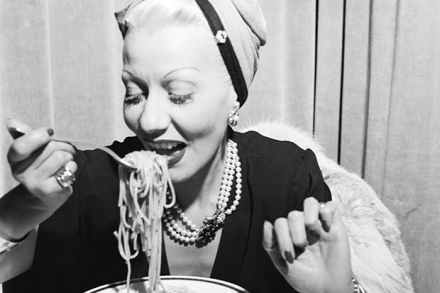
A few months ago, Nigerian migrants housed at a government hostel in Milan suddenly refused to eat any more of the free food on offer. Italian food is monotonous and indigestable, they explained. Then they went berserk. This was not a one-off case. Far from it. There have been hunger strikes, demos, sit-ins and the odd riot in protest at the stuff. Recently, a group of mainly Pakistani migrants based in a Reggio Emilia hostel were given their own taxpayer-funded chef ‘specializzato in piatti pachistani e africani’. They had complained that Italian food was making them ill. Many migrants en route from Libya to who-knows-where are marooned in Italy for now, and they are getting fed up. They know that other EU countries have better food.

Blancmange is either ignored or despised: here’s how to make one that’s neither slimy nor bland

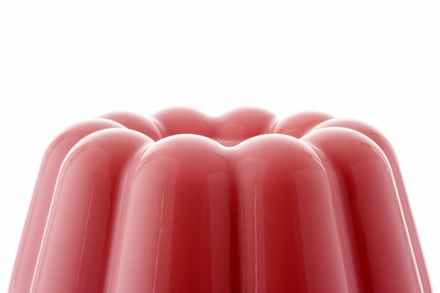
Blancmange. Poor, maligned blancmange. The slimy, over-set staple of children’s birthday parties and school dinners, destined to be pushed around a plate and loathed for life. Blancmange has become shorthand for an age of blandness: the dessert equivalent of Chris de Burgh. Even its name sounds heavy on the English tongue. But we do the blancmange a grave disservice. It is, after all, essentially a panna cotta. Shouldn’t a milk jelly by any other name taste as sweet? It is slightly lighter than its Italian counterpart, yes, but that’s all to its credit. So why the bad reputation? The culprit, I think, is packet blancmange. No amount of careful preparation can mask the cornflour. In theory, English blancmange is set with cornflour and French with gelatine.

Warts and verrucas go away by themselves. Here is how to survive them

Being a family doctor is sometimes the least glamorous job in the world, dealing with the unpleasant, mundane and sometimes just downright boring health issues that exist. However, for the patients suffering from these problems, it’s a big deal and one of the typical common currencies of minor problem I see almost every day in my surgery is the issue of warts and verrucas. These are caused by a harmless viral infection in the skin called the human papilloma virus (HPV). HPV causes keratin, a hard protein in the top layer of the skin, to grow too much, giving the typical roughened texture of a wart. There are more than 60 different types of viruses known to cause warts.

My life as a Gogglebox star

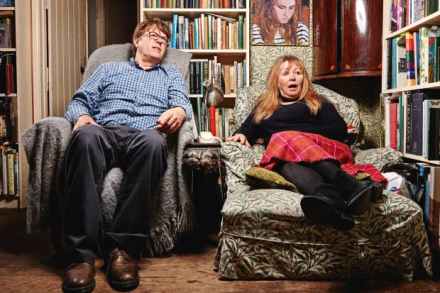
Thanks to Stephen Fry I had never wanted to be on television. Around the time Fry made the transition from print to screen, and hence real fame, he wrote a piece lamenting the irreversible step he had taken. Now, as a result of his face being familiar, he explained, he could never again complain in a restaurant without being accused of throwing his weight around. To put his bins out risked snoopers going through the contents. He even feared cutting his toenails, he said, in case someone got hold of them and knocked up ‘an army of clones’. Joking aside, Fry knew he had lost the precious gift of privacy and would never regain it. ‘If only I’d stuck to radio,’ he said. His words had a terrible ring of truth and I’ve always remembered them.

Why will so few shops sell me at three-button suit

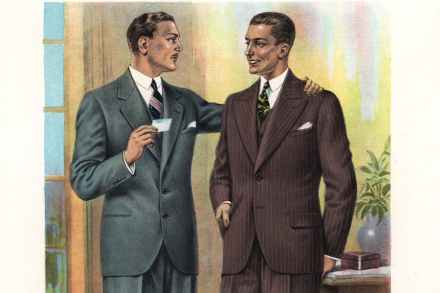
Last week I walked along Jermyn Street, spiritual home of the gentleman’s suit, and noticed something shocking. The jackets in the shop windows had lots of materials — tweed, cotton, wool — in all colours, shades and checks. But every single jacket had two buttons. When did tailors get so boringly uniform? Why has the three-button suit — the classic style that dominated the 20th century — been wiped off the map? As a diehard three-button man, am I a fogeyish dinosaur, a walking Bateman cartoon: ‘The Man Who Wore a Three-Button Suit in the 21st Century’? I seek solace (and a new three-button suit, in storm- grey, 13-ounce birdseye wool) from Tina Loder, a tailor for more than 30 years, and one of the few women tailors on Savile Row.

The evidence shows that chiropractors do more harm than good

One of my teachers in medical school kept saying: ‘A treatment that has no side-effects is already a good one.’ These seemed to be wise words worth remembering. But today I think he may have been not entirely correct: there is no therapy that does not have potential to cause adverse effects. What really counts, in life as in medicine, is a reasonable balance between risk and benefit. Chiropractic treatment is an excellent example of the importance of this balance. Chiropractors rely heavily on manipulating their patients’ spines, and the benefits are not at all clear. Practitioners usually insist that their manipulations are effective for a bafflingly wide range of conditions.

Why have all my boyfriends turned gay?

Until August last year, I’d pretty much been in back to back relationships for the previous seven years. The guys I dated varied in height, race, age, style and personality. But one thing linked them together. What? Almost all turned out to be gay. And the few that weren’t would rather sleep in their jeans than sleep with me. There was the boyfriend that broke down crying in the car after we’d been to see a drag queen cabaret. During a song about the struggle of coming out to parents on a London council estate, my ex had given my hand a meaningful squeeze. Little did I know how much he empathised with the performance. Three days later I was the one crying in Soho, when he broke up with me citing communication issues.

Lunch with the future leader of the Labour party

On 2 September 1939, as Neville Chamberlain sat down after trying to explain away his latest bout of sucking up to Hitler and the deputy leader of the Labour party, Arthur Greenwood (standing in for his absent boss Clement Attlee), rose to reply, the infuriated Tory MP Leo Amery shouted: ‘Speak for England, Arthur!’ It’s telling that it took the threat of imminent fascism to make a member of Parliament a) speak plainly, and b) offer support to a member across the floor. To this day, such incidents are rare, to say the least. Instead, Parliament is plagued by a ceaseless cacophony of casual cat-calling, rising to a pitch of parasexual excitement when one side smells blood.

I’m no Katie Hopkins!

I’ve been accused of many things since I ventured on to Twitter. Appearing on shows like Question Time and Have I Got News For You, you learn to expect a certain amount of criticism and name-calling. For a woman in the public eye it goes with the territory. According to the good folk of Twitter I am, variously, a Tory lickspittle (despite having no party affiliation), a harridan, a snob, snotty, posh, gobby, fat and ugly (of course) and — my own personal favourite — a rape-apologist. There’s also a fair smattering of B-words and C-words which are all par for the course for women who dare to — gasp, shock, horror — voice their own opinion.

The strange world of Evgeny Lebedev

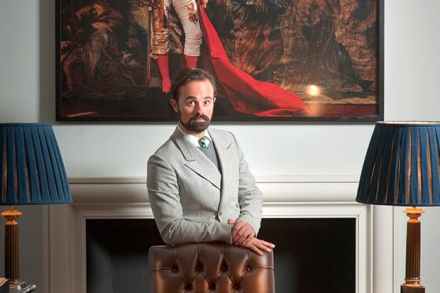
Evgeny Lebedev’s famous friends are eager to tell you what a darling he is. Piers Morgan says that he is ‘one of the most charming, well-connected, exotically attired and fascinating figures in English society right now’. Stephen Fry says that ‘for a man of his power, status and wealth, he is endlessly teaseable and humorous’. Boris Johnson says that he is ‘a major force for good’ and ‘a very generous soul’. And Boris’s sister Rachel calls him ‘a wise old beard (or two) on young shoulders. He’s much smarter and funnier than people think.’ You get the picture. Evgeny likes to be ribbed, especially if the person doing the ribbing is a celebrity.

The SNP run riot at Westminster

Standing on chairs in Parliament’s Sports and Social bar, a band of portly gentlemen are bellowing out Scottish folk songs. A young barmaid, only in her early twenties yet a seasoned veteran when it comes to turfing out unruly Westminster soaks, approaches a new SNP MP and politely asks him to pack it in. Words are exchanged. Multiple witnesses allege a drunken ‘f— you’ is uttered. Defeated, the barmaid retreats behind the bar to mocking male laughter. So upset is she by the incident, she will leave her job a few weeks later. ‘They’re only just getting started,’ sighs a Labour wag as he reaches for his coat. The conquering horde of Scots Nats have come to town and they are making themselves heard.

Alan Yentob’s crumbling empire

Weeks before the Kids Company scandal erupted, I had a message from someone deep inside New Broadcasting House saying there were ‘Jones-esque fights’ going on ‘inside the BBC’ about a story which was going to be unpopular with managers. He meant ‘me-esque’: it was a reference to my battle with BBC mandarins about the decision not to show the Newsnight film I had made with Liz MacKean exposing Jimmy Savile as a paedophile a year before he died. That error of judgement and the McAlpine scandal which followed eventually led to the resignation of George Entwistle as director-general.

Eton’s recipe for success

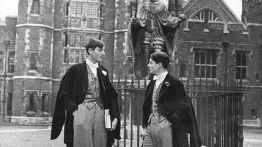
One of the first things you realise on arriving at Eton is that while you may be at arguably the best school in the world, you’re also possibly among Britain’s most hated. It’s great being surrounded by 15th-century quadrangles and Georgian boarding houses, and your uniform is as dapper as it gets (so long as you don’t mind dressing like a penguin). But you can’t walk into Windsor wearing a college crest, for fear of being mugged, and the papers are filled with stories claiming you’re overprivileged or not actually that clever. It’s a double-edged sword. You have the advantage of a brilliant education, but bear a stigma that can’t be removed no matter how many times you pretend to your friends that you vote Labour.

Adventure on the menu

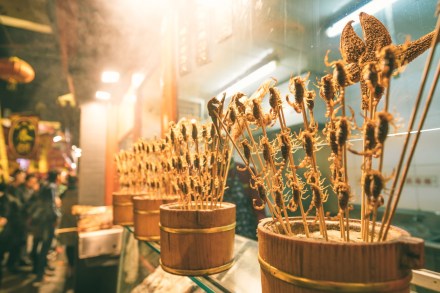
I think of myself as an adventurous eater. I’ve had kangaroo in Australia, crocodile in Cambodia, deep-fried Mars bar in Scotland… but not much could have prepared me for my trip to China. In the narrow, brightly lit streets of Beijing, street vendors start early, preparing the day’s delights: steamed buns filled with pork, prawns or vegetables (known as baozi); spicy lamb kebabs (chuan’r) cooked on roadside barbecues; and tanghulu, ‘fresh’ fruit on bamboo skewers covered in sugary syrup. The tanghulu sellers cycle their wares around the city, the fruit becoming steadily less fresh in the heavily polluted air, until by nightfall it’s best not to look too closely. Wangfujing and Donghuamen night market is where you will find the more exotic menus.