Spectator Life

Spectator Life

An intelligent mix of culture, style, travel, food and property, as well as where to go and what to see.

How long will political and public patience last?

11 min listen

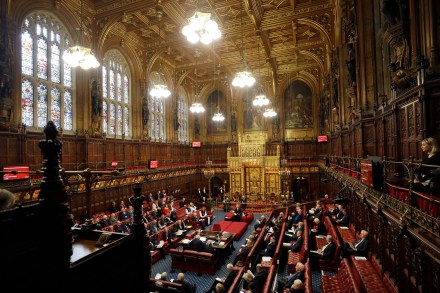
It seems Freedom Day is no longer June 21st. The writing was clearly on the wall this morning, but now the Prime Minister has officially told the public, it is likely to be another four weeks of restrictions. 'Conservative MPs are getting really agitated by this moving of the goal posts' - Isabel HardmanBut after so many backtracks how much credibility does Boris have left?  'I think the real problem with him and the public though, will come if this July 19th date is not met' - James Forsyth Katy Balls is joined by James Forsyth and Isabel Hardman to discuss.

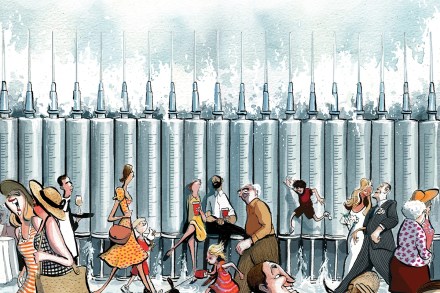
The third wave: it’s here – but it shouldn’t delay our reopening

39 min listen

Experts are saying we are now officially in a third wave but how concerned should we be? (00:56) Also on the podcast: What will the mood be like when Boris meets Biden (14:33)? And are UFOs no longer a laughing matter?(23:00) With Scientist Simon Clarke, mathematician Philip Thomas, spokesperson for Republicans Overseas UK Sarah Elliot, Spectator World editor Freddy Gray, astrophysicist Tim O'Brian & author Lawrence Osborne Presented by Lara Prendergast. Produced by Cindy Yu, Max Jeffery and Sam Russell.

Richard Dobbs, Tanya Gold and Rory Sutherland

17 min listen

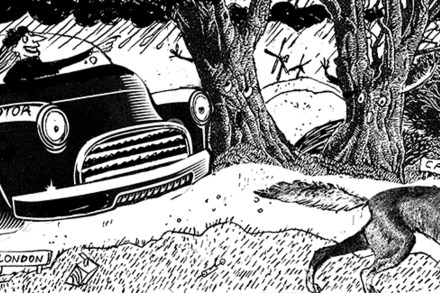
In this episode, Richard Dobbs reads his piece on why he's considering giving up his second vaccine for people more in need (00:55); Tanya Gold reports from her Kent road trip in a Ferrari (07:50); and Rory Sutherland on the unexpected joys of lockdown and why we may miss it when it's gone.

Is there a link between Asperger’s and genius?

The world's richest man – who, beyond Tesla and Space X, is known for naming his first child X AEA-12 – generated more headlines this week, when he announced on the American television show Saturday Night Live that he has Asperger syndrome. ‘I know I sometimes say or post strange things, but that’s just how my brain works,' he explained. Asperger syndrome, first described in 1944 by the Austrian paediatrician Hans Asperger, is a lifelong condition that is part of the autistic spectrum. As a child, Hans Asperger appears to have exhibited some features of the very condition named after him, such as remoteness and talent in language.

The problem with Hugh Fearnley-Whittingstall’s war on obesity

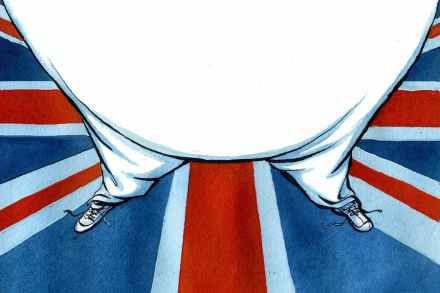
With his little round spectacles and earnest expression, Hugh Fearnley-Whittingstall is the Penfold to Jamie Oliver’s Dangermouse. Both men have been largely forced out of the restaurant business due to public indifference and now spend their time writing endless cook books and lobbying the government for tougher laws on food that is deemed high in salt, sugar and fat. This is a dangerous game for chefs to play since they use a great deal of salt, sugar and fat at work, but Oliver’s been getting away with it for the last twenty years and neither he nor Fearnley-Whittingstall do much cheffing these days in any case.

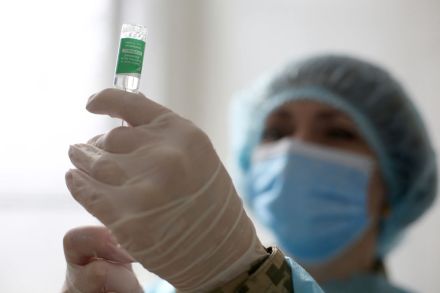
Is the Oxford AstraZeneca vaccine safe? A doctor’s view

One of the few positives to have come out of the Covid-19 pandemic has been the remarkable speed at which vaccines have been developed and rolled out in months, rather than the many years that was the previous norm. Their effectiveness is being increasingly proved as more people are vaccinated, and they appear to be extremely well tolerated in terms of side effects.  In the UK at least, vaccine hesitancy does not appear to be as great a problem as was initially feared and no new potential side effects have been reported that were not already known about from the vaccine trial data.

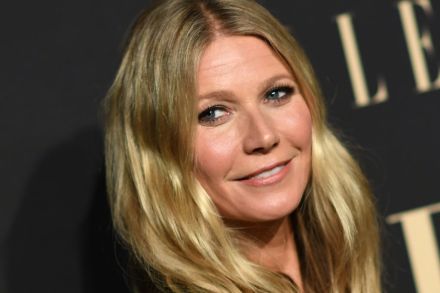
What Gwyneth Paltrow gets wrong about long Covid

As the Covid vaccination continues to roll out across the country with impressive speed and daily numbers of cases continue to steadily fall, the allure of the gradual release of lockdown restrictions into the sunlit uplands of something resembling a more normal existence grows stronger by the day. Unfortunately for many people – latest estimates suggest up to 200,000 in the UK – the long term effects of having been infected with the virus continue.

How to channel your inner karate kid

'I don’t wear a headband. If you want to, you can!' says karate World Champion Jordan Thomas. 'Don’t disillusion me, Jordan!' I bark, perhaps a little aggressively. I’ve watched three seasons of Cobra Kai in a week and I am all about a karate headband / floppy fringe combo. Kick-ass comedy drama Cobra Kai is a spin-off of ’80s classic The Karate Kid. Resurrecting the original actors, it follows underdog Daniel LaRusso (now 'chopping prices' and 'kicking the competition' as the owner of a successful car dealership) and his high school nemesis, sneering country club bully Johnny Lawrence (now knocking back beer for breakfast).

Biden time: can he stop America’s ‘uncivil war’?

35 min listen

Can Joe Biden unite America? (01:05) Why is the UK's vaccine rollout its most important economic policy? (12:10) And how can re-enactments bring history to life? (22:15)With The Spectator's economics correspondent Kate Andrews; US editor Freddy Gray; political editor James Forsyth; Capital Economics chairman Roger Bootle; re-enactor Chris Brown and historical consultant Justin Pollard.Presented by Lara Prendergast.Produced by Max Jeffery, Alexa Rendell, Sam Russell and Matt Taylor.

What have we learnt from this pandemic?

So great have been the government’s failures over Covid that it would be easy to forget to give credit where it is due. The fact that Britain was the first country to begin a public vaccination programme — and this week became the first to have two vaccines in use — did not come about by chance. It happened because the government had the foresight to pre-order large quantities of promising vaccines and because Britain’s medicines regulator, the MHRA, worked fast and effectively to assess the data from the trials of those vaccines. The vaccines from Pfizer and AstraZeneca underline the lifesaving role played by an often-maligned pharmaceutical industry. But Britain’s head start will count for little if the momentum cannot be sustained.

My cure for the common cold

You really don’t want to know about my coughs and sneezes, particularly during the festive season, but bear with me because this it isn’t really about my sniffles. My argument applies to everyone, and it’s cheerful. All of us have a lifetime of experience of seasonal colds and flu, starting with the fact that they don’t always happen in winter. Mine is typical of many. Every year, often about this time, I get a fairly bad cold. Sometimes two in a year. I call it ‘flu’ and women call it ‘man flu’ but let’s not bandy names: it starts with a sudden sore throat and one or two uncomfortable nights. Within a few days this has passed and I feel better — but left with a hacking cough.

Covid-19: where to get tested

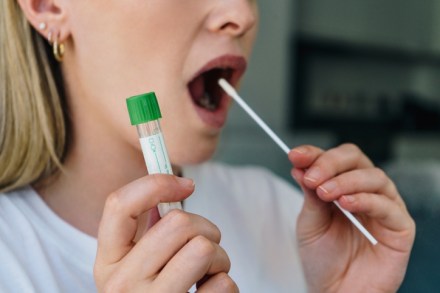
It remains the case that for most people free NHS tests are only available for those taking part in pilot schemes, who have been asked to have one by health professionals, or in people or families showing symptoms of the virus. This means that some people are now looking to private providers to get tested before seeing loved ones and although many such providers are offering tests for a fee now, how do you know which are high quality and which should be avoided? For a start, always look for a home test kit that is CE-marked as this shows it meets the European standards for medical testing and is also approved for sale in the UK – do not use any test without this approval mark.

Boris in a spin: can the PM find his way again?

36 min listen

After two of Boris Johnson's most influential advisers left Downing Street last week, can the PM reset his relationship with the Tory party and find his way again? (00:58) Lara is joined by the Spectator's deputy political editor, Katy Balls, and former director of communications for David Cameron, Craig Oliver.A coronavirus vaccine seems to be the only way out of continued lockdowns, so should everyone be forced to have the jab? (13:49) The Spectator's literary editor, Sam Leith, joins the podcast with Professor Mona Siddiqui, who sits on the Nuffield Council on Bioethics.And finally, should we start referring to people by their surnames again? (25:30) Historian Guy Walters thinks so, and he's joined by the Spectator's etiquette expert, Mary Killen.Presented by Lara Prendergast.

The great alcohol cover-up: how public health hid the truth about drinking

The text below is the basis of a talk given by Christopher Snowdon, head of lifestyle economics at the Institute of Economic Affairs, at the Spectator annual health debate 2016. The debate was entitled: ‘Can we trust health advice?’ Before answering the question of whether we can trust health advice we must first ask: ‘Which health advice?’ It varies so much over time and between countries. In 1979, the government advised men to drink no more than 56 units of alcohol a week. This was later reduced to 36 units, then 28 units and then 21 units. Last month, the Chief Medical Officer reduced it once again, this time to 14 units.

10 ways to keep fit at home

If you’re avoiding the gym because of coronavirus and you want to shake up your exercise routine then it’s easy enough to work up a sweat and torch those calories, either in a park or in your garden. Some of these exercises can even be done inside. Team Be Military Fit have created the ultimate bodyweight workout to keep you fit even as you skip the gym or work from home. You don’t need any expensive kit; simply pop on your running shoes and find your nearest green space. Exercise 1 Curb steps Curb steps are a great way to ease yourself into the workout by elevating your heart rate. Jogging on the spot simply touch the curb with your toe on every stride whilst ensuring your arms are moving in sync with your feet!

Sex and Relationships: the seven sexual ages of men

In As You Like It, Shakespeare suggested that there were seven ages of man. Sadly, he himself didn’t experience all of them; he shuffled off this mortal coil at the age of only 52, precisely 400 years ago. You could also say that the human male has seven sexual ages, marked by a gradual decline in activity. But can we stress that word ‘gradual?’ The fall-off over several decades really is very slow. Even some doctors don’t appreciate this. Only recently one of us acted as an expert witness in support of a man who had wrongly been told by a surgeon that ‘males can’t expect erections after the age of 40’. So let us look at these seven sexual ages. The future may be brighter than you think… 1.

Can the NHS cope with Covid?

25 min listen

At Thursday's coronavirus press conference, Sir Simon Stevens, chief executive of the NHS, said a second wave 'is real and it's serious', as he warned that 11,000 people were already in hospital with the virus. Is the NHS able to cope with another spike in infections, and has the government adequately prepared for winter? Kate Andrews speaks to Fraser Nelson and Dave West, deputy editor of the Health Service Journal.

A military guide to surviving lockdown

“Wire your booze cabinet up to the mains so you can’t get into it!” says Jason Fox, the former Royal Marine Commando and Special Forces Sergeant who’s best known for barking orders on Channel 4’s SAS: Who Dares Wins. With wine o’clock starting earlier each day for many of us, as we crawl the walls in isolation, I’ve asked Jason for his take on lockdown drinking. “It’s not the answer really. It’s great fun and I enjoy having a drink, but I won’t allow myself to drink all day. It doesn’t make you feel better about yourself.

It’s time we were honest about obesity and Covid-19

Difficult facts can be conveyed in a sensitive, non-judgemental and compassionate manner; indeed, this describes the daily practise of medicine. When obesity rears its head, however, a significant number of my colleagues in the health professions display a cognitive dissonance and determination to deprive patients of the unvarnished facts that they would not dare hide with conditions such as cancer. Prioritising their own “feelings”, they patronise the obese by taking offence on their behalf, preferring to virtue-signal, accusing those “ insensitive “ enough to want to state the facts of “fat shaming” or victim-blaming.

Warts and verrucas go away by themselves. Here is how to survive them

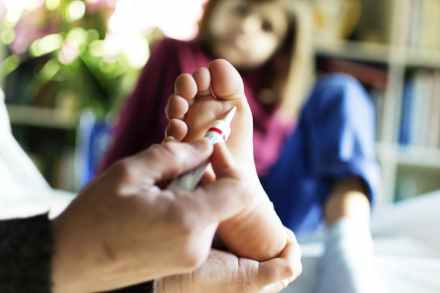
Being a family doctor is sometimes the least glamorous job in the world, dealing with the unpleasant, mundane and sometimes just downright boring health issues that exist. However, for the patients suffering from these problems, it’s a big deal and one of the typical common currencies of minor problem I see almost every day in my surgery is the issue of warts and verrucas. These are caused by a harmless viral infection in the skin called the human papilloma virus (HPV). HPV causes keratin, a hard protein in the top layer of the skin, to grow too much, giving the typical roughened texture of a wart. There are more than 60 different types of viruses known to cause warts.

The best fitness trackers: from FitBits to Garmin running watches

With the spring almost upon us, now’s a great time to up your fitness game. Whether you’re in training for a race or sticking to a new year fitness drive, it makes sense to track your progress and keep reminding yourself of how well you’re doing. Mentally, it can be hard to keep at it, so why not employ a bit of tech to help you along the way? Along with their generally more featured and app led cousins smartwatches, these pieces of technology have come a long way in recent years, and with ever evolving health technology, they’re only likely to get more sophisticated and better tuned to your needs. What kind of fitness tracker is for me?

How to avoid catching coronavirus on the tube

The epicentre of coronavirus – now more correctly called COVID-19 – remains in mainland China, and concerns about a global pandemic occurring have fortunately not been realised although in this fast-changing story this still remains a possibility in the coming weeks. The first death in Europe was recently reported in France, with nine documented cases in the UK. The advice from Public Health England if you have been in Wuhan or the Hubei Province in the last 14 days is that you should stay indoors and avoid contact with other people, like you would for flu, even if you do not have any symptoms. If you develop symptoms, call NHS 111 and inform them of your recent travel to the city.

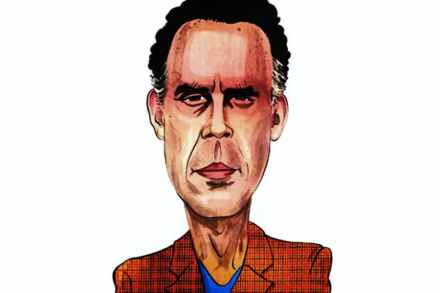
Does Jordan Peterson’s carnivore diet work?

Jordan Peterson has spent much of the past few years eloquently torpedoing all that the liberal progressives hold dear, and he’s not done yet. Citing a profound health transformation, the bolshy Canadian psychologist is now piling into the opinion-saturated arena of diet, and the vegans aren’t happy. But Peterson’s latest revelation is not about culture wars or the eroding of free speech. This is about his own mental health, which has at times been unspeakably grim. Controversial as ever, Peterson is now claiming to have beaten away his regimen of antidepressants through the excessive consumption of a rather more rudimentary substance: meat.

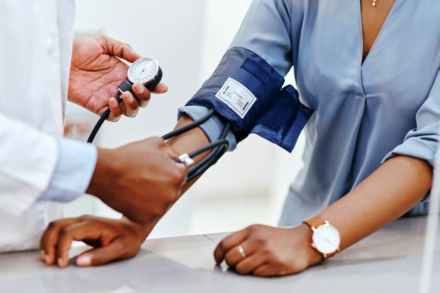
Common medical conditions explained: high blood pressure

The condition High blood pressure is also called ‘hypertension’. Blood pressure is recorded in two numbers – the high number is called systolic and this is the pressure when the heart has just pumped. The low number is called diastolic and this is the pressure when the heart is at rest. The pressure is measured in ‘millimetres of mercury’ or mmHg. Ideal blood pressure is between 90/60mmHg and 120/80mmHg. High blood pressure is considered to be anything above 140/90mmHg. The problem with high blood pressure is that although in the long term it can be deadly, there are often no symptoms at all, so people can have it for years without realising.

Map reveals where in Scotland Lyme-infected ticks are most likely to get you

Researchers can now predict where in Scotland you are most likely to encounter ticks that carry Borrelia burgdorferi, the bacterium that causes Lyme disease. If that wasn’t enough to make you reconsider those picnic plans, then they have also forecast that this risk will increase as global temperatures rise. In a recent paper, the researchers predicted that people were more likely to come into contact with an infected tick in the months of August and September. They also identified both the Highlands and Tayside as areas of particular risk. Their map can be viewed in full here.

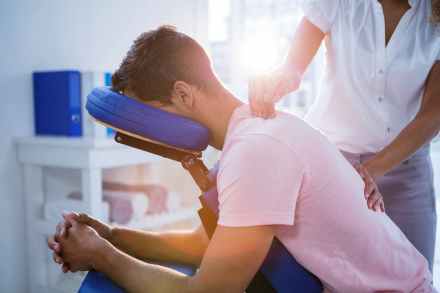
The evidence shows that chiropractors do more harm than good

One of my teachers in medical school kept saying: ‘A treatment that has no side-effects is already a good one.’ These seemed to be wise words worth remembering. But today I think he may have been not entirely correct: there is no therapy that does not have potential to cause adverse effects. What really counts, in life as in medicine, is a reasonable balance between risk and benefit. Chiropractic treatment is an excellent example of the importance of this balance. Chiropractors rely heavily on manipulating their patients’ spines, and the benefits are not at all clear. Practitioners usually insist that their manipulations are effective for a bafflingly wide range of conditions.