Tarek S Arab

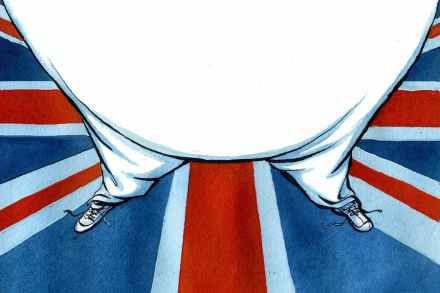
It’s time we were honest about obesity and Covid-19

From our UK edition

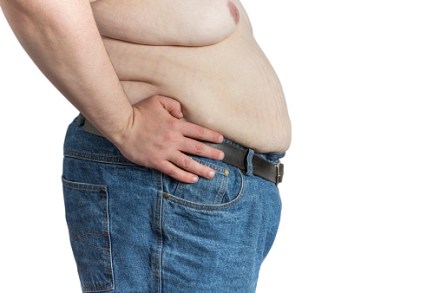
Difficult facts can be conveyed in a sensitive, non-judgemental and compassionate manner; indeed, this describes the daily practise of medicine. When obesity rears its head, however, a significant number of my colleagues in the health professions display a cognitive dissonance and determination to deprive patients of the unvarnished facts that they would not dare hide with conditions such as cancer. Prioritising their own “feelings”, they patronise the obese by taking offence on their behalf, preferring to virtue-signal, accusing those “ insensitive “ enough to want to state the facts of “fat shaming” or victim-blaming.
Cameron’s seven-day GP service is a mad promise straight out of ‘Yes, Prime Minister’

From our UK edition

I love the series Yes, Minister and Yes, Prime Minister for many reasons, among them the timeless, elegant dialogue that can be applied to today's politics. Hearing the pledge emanating from Number 10 that very soon the UK will enjoy a 'seven-day a week GP service', conveniently devoid of any details as to how that service will be funded, staffed or brought to fruition, I am reminded of the following exchange: “Humphrey, I’ve been thinking.” “Good.” “I’m sure you will agree that so far my Premiership has been a great success” “Oh indeed!” “Yes, and I’ve been asking myself what I can do to continue this run of success.” “Have you considered masterly inactivity?” “A PM must be firm.

Hormone ‘halves risk of premature birth,’ says the Mail. But its report is wildly inaccurate

From our UK edition

As a gynaecologist, I was appalled to read this story about a supposedly 'groundbreaking' treatment to stop premature births in the Mail (I read it on the online Mail site but in fact the culprit is The Mail on Sunday). Let me quote from it before telling you what it gets utterly wrong. Note my emphases in bold: A hormone treatment that can help prevent premature births could be made more widely available to thousands of at-risk mothers-to-be. The groundbreaking treatment, not yet widely available on the NHS, sees women given a daily dose of progesterone. This is dubbed the ‘pregnancy hormone’ by doctors, and levels naturally rise during pregnancy to help prevent the cervix from opening too early.

Why GPs are the London cabbies of the NHS

From our UK edition

GPs are the very personification of the description 'jack of all trades, master of none'. Following so-called 'specialist' training, they emerge as the ultimate generalists, requiring additional input to manage any kind of medical complication, lacking the in-depth knowledge and experience required to manage comprehensively many of the common medical conditions. And they're a drain on the public purse thanks to their six-figure salaries. They barely spend more than a few minutes with each patient, don't usually work nights or weekends and then complain when those patients express dissatisfaction with said service.

Most doctors seem to time-travel to the 1800s when it comes to nutrition

From our UK edition

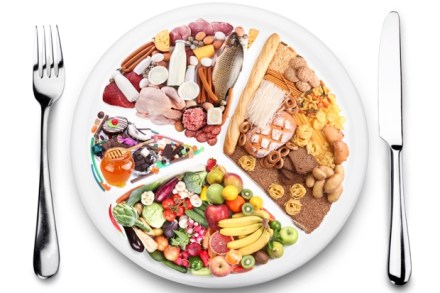
For over 30 years, dietary fat has been seen as a major cause of heart attacks, strokes and cancer. This has been a health catastrophe. Ancel Keys's 'Seven Countries’ study, first published in 1970, brought about the widespread idea that we should all eat a low-fat, high-carb diet for optimal health. Had Keys used the entire data set covering 20 countries, his landmark paper would never have been published. The data did not support the hypothesis. UCL’s Professor John Yudkin valiantly argued against this demonisation of fat based on bad science, citing his own experiments and data that showed excess consumption of refined carbohydrates to be the true culprit; he regrettably lost the ideological battle.  Later, the late Dr.

Obesity a disability? Only lawyers will benefit from the ECJ’s farcical classification

From our UK edition

Real disability is humbling for those who have to live with it and those who care for the disabled. A true disability — degenerative neurological disease, for instance — involves the equivalent of a daily war to live in the way that most of us take for granted. We shouldn’t mock the truly disabled by misusing the word. Yet the European Court of Justice has classified obesity as a disability, meaning that we are all now expected to view those who, in the majority of cases, attained morbidly-obese status by determined and unrelentless bad-lifestyle choices as deserving of our understanding and admiration as those who battle real disability everyday.

When the NHS is treated like a religion, is it any wonder whistleblowers are considered pariahs?

From our UK edition

I will start by publicly apologising to Professor Meirion Thomas; in a moment of folly, I erroneously signed a petition decrying his alleged 'disrespect' of colleagues, in the wake of one of his articles in the Daily Mail. In my defence, my newborn was crying at the time and I was sleep deprived. Now, however, I believe that the undignified manner - see the abuse and attacks against him, as detailed in last week’s Spectator - in which members of his own profession reacted to his views speaks ill of the medical profession and says a lot about how public discourse has deteriorated. I have read Professor Thomas’ articles.

Surgical league tables: no, thank you

From our UK edition

After the Bristol Heart Scandal in the 1990’s, the speciality of cardiac surgery rose to the occasion, leading the way in publishing individual surgeon’s mortality figures and self-audit, which made it perhaps the most transparent speciality in the UK, and thus consolidating its long-held position as a world leader in the training of surgeons and patient safety. Professor Bruce Keogh, head of NHS England, recently announced that NHS surgeons will now be asked to submit their mortality data online to public scrutiny, and failure to do so will result in medical purgatory. The cardiac surgery experience suggests that 'league tables' will improve outcomes; I disagree. The public deserves competence from their surgeons, something prevalent in the NHS 99.9% of the time.

Criminalising mothers: the beginning of the slippery slope

From our UK edition

The recent case reported in the press of a 17 year old mother who deliberately binge drank alcohol during her pregnancy, resulting in a baby with Foetal Alcohol Syndrome (FAS) and who now stands accused of administering a 'noxious substance' to the baby and criminal negligence, represents the beginning of what may subsequently morph into the repudiation of some of the rights women have achieved in the last two centuries. FAS occurs in 1 in 3000 births and is characterised by growth deficiency, facial abnormalities and impaired cognition. Adult complications involve psychiatric issues, drug addiction and cognitive deficits. Financial societal costs of FAS are over $300 million dollars in the US alone. It is irreversible and caused by heavy, frequent alcohol consumption in pregnancy.

Overpaid, underworked, ineffectual – the myth of the NHS doctor

From our UK edition

[audioplayer src="http://traffic.libsyn.com/spectator/TheViewFrom22_15082013.m4a" title="Andrew Haldenby and Sean Worth join Sebastian Payne to discuss NHS reforms."] Listen [/audioplayer] GPs enjoy the salary of bankers, regularly pulling in £100,000 for a five-day week, with no on-call or weekend duties and a lovely taxpayer-funded holiday every year. I know this because it says so in the papers, so it must be true. Stories of GP largesse are far from accurate, and bear testament only to the media’s desire for sensationalism. GPs are the true medical heroes of the NHS, the soldiers in the trenches, too loyal to the metaphorical army to revolt, protest or express opinions, lest such opinions serve as an indirect abrogation of their oath to heal and comfort the sick.

Uterine transplantation is the final gynaecological frontier

From our UK edition

The successful transplantation of a uterus represents the last major surgical goal in the field of reproductive gynaecology. This feat has recently been achieved by a team at the University of Gothenburg in Sweden. The 36-year-old patient was born with a condition called Mayer-Rokitansky-Küster-Hauser (MRKH) Syndrome. The condition occurs in one out of every 4,000 babies, and presents as the absence of a uterus and sometimes a vagina. The absence of a kidney may also be a feature of this condition. MRKH Syndrome usually manifests in late puberty. Because these women appear outwardly normal, the absence of a vagina or uterus will only be suspected after examination, and subsequently confirmed by an MRI.

It’s up to each woman to decide whether the pill’s benefits are worth the risks

From our UK edition

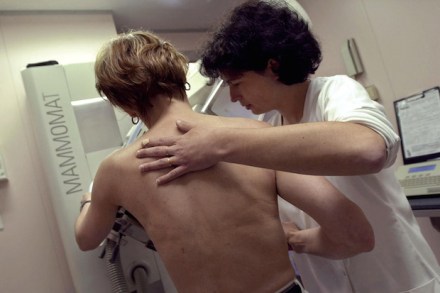
According to a new paper published in the journal Cancer Research women taking combined oral contraceptive pills (COCP) have a 50 per cent increased risk of developing breast cancer. Frightening stuff – or is it? Oral contraceptive pills have many benefits; they provide excellent contraception, decrease pain and bleeding during periods, they can help towards restoration of normalisation of hormones in women with polycystic ovary syndrome and they significantly decrease the risk of ovarian cancer, endometrial cancer, colon cancer and rheumatoid arthritis. They do have risks, however, among them an increase in the risk of breast cancer. This risk needs to be put into perspective in order to fully assess whether the benefits of the pill outweigh the risks.

Stop blaming doctors for antibiotic abuse

From our UK edition

According to the World Health Organisation’s latest report into antibiotic resistance we are facing a ‘problem so serious that it threatens the achievements of modern medicine… A post-antibiotic era, in which common infections and minor injuries can kill, far from being an apocalyptic fantasy, is instead a very real possibility for the 21st century.’ Bloody frightening stuff if you ask me. Naturally the prime suspects in this whodunnit are the much-maligned medical profession, guilty of giving out antibiotics like sweeties in a tuck shop while the human race barrels toward a future in which we are going to die of diseases at which–thanks to antibiotics–we barely bat an eyelid today. Are they truly the culprits in this case?