Spectator Life

Spectator Life

An intelligent mix of culture, style, travel, food and property, as well as where to go and what to see.

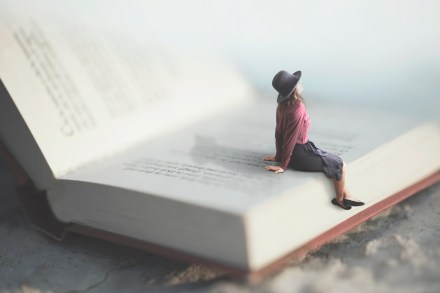
Books to cheer you up: from P.G. Wodehouse to Kingsley Amis

The days are short, the nights are dark and the temperature is freezing. Oh, and in case you hadn’t noticed, we’re in an indefinite lockdown that shows no discernible signs of coming to an end. With most other pursuits thus denied to us, now is the perfect time to immerse yourself in a good book. But sometimes, the improving but ‘difficult’ literary novel or the tense crime thriller isn’t entirely what you want. Instead, here are seven recommendations for a purely entertaining read. Most, if not quite all, are laugh-out-loud funny, but there are quieter and sadder moments along the way, too, just like in life.
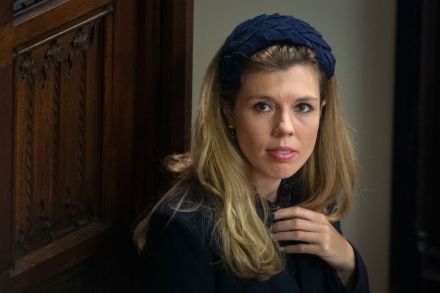
Carrie Symonds and the cult of rewilding

Carrie Symonds is to join the Aspinall Foundation as its new head of communications, in a move very much on-brand for the Prime Minister’s squeeze. Symonds has been credited with Boris Johnson's metamorphosis from pro-liberty, free market Brexiteer to environmentalist — a strategy that she may have spotted as working rather well for disgraced former Italian PM Silvio Berlusconi, who changed his image from that of a love rat to rat lover, frequently sharing snaps of himself with adorable animals on Instagram.  So what will Carrie's call to the wild entail?

On this day: how did the plimsoll get its name?

Every weekend Spectator Life brings you doses of topical trivia – facts, figures and anecdotes inspired by the current week’s dates in history … 6 February In 1918 British women over the age of 30 received the vote. The comedian Frank Skinner had a mother who always voted Labour and a father who always voted Conservative. So they agreed not to bother voting, as they’d only cancel each other out. But one election night, as it was announced on TV that the polls had just closed, Skinner’s mother said: ‘I voted.’ Skinner recalls that ‘my dad went absolutely crazy’. Suffragette Estelle Sylvia Pankhurst (Getty) 7 February In 1991 the IRA fired three mortars at 10 Downing Street.

A handy guide to Ursula von der Leyen

Ursula von der Leyen’s threat to impose a ‘vaccine border’ in Ireland may have taken the world by surprise but was her erratic behaviour really so unprecedented? Having found herself at the helm of an organisation that has worked tirelessly to remove borders and preserve the free movement of people, she decided it was time for a change. Internationalism and pan-national solidarity only take you so far. Her actions in Ireland revealed a darker side. Could it be that, having railed against populism in Italy and Spain, she has become secretly susceptible to its charms? Watching MAGA supporters storm the Capitol, it occurred to her that here was a moment for the EU to shine. Yes, it was time for Ursula to play the Donald at his own game.

The con artist on screen: from American Hustle to The Sting

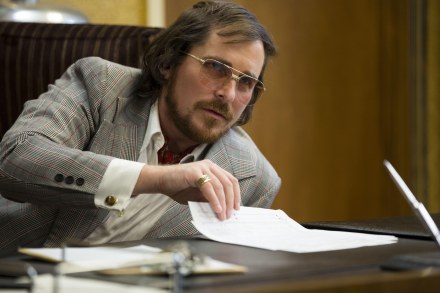
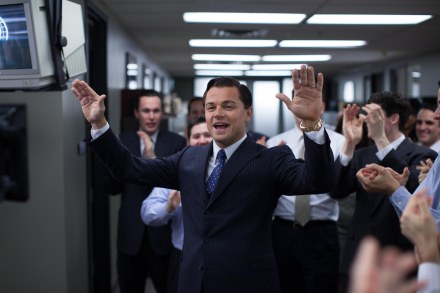
Gone Girl star and former Spectator contributor Rosamund Pike steps into the shoes of a con artist in Netflix’s new original, I Care A Lot. Just like serial killers, swindlers and hustlers have long held a fascination for film-makers and audiences alike - not least during the golden age of Hollywood. If you appreciate a decent grift, here are eight of the best cons to hit our screens: Hustlers (2019, Prime) https://www.youtube.com/watch?v=nyQ9uGoHSwQ Inauguration darling Jennifer Lopez gives a decidedly unpresidential turn as Ramona Vega: the alpha female in a troupe of Manhattan strippers.

Is it too late to save cricket?

The news that cricket is returning to Channel 4 for the forthcoming series between India and England has been greeted with relief by cricket fans and absolute mystification by everyone else. In 2005, after the greatest Ashes series any of us will ever see, the England and Wales Cricket Board (ECB) signed a long-term deal with Sky Sports, which made the ECB a fortune and blew a huge hole in cricket’s potential television audience. To this day I have cricket-mad friends who refuse to sign up to Sky Sports, either because it is owned by Rupert Murdoch or because it’s so bloody expensive, or possibly both.

Isolation is stoking our addictions

Rarely has the public imagination been so injected with the notion of a drug as the way out. AstraZeneca, Pfizer, BioNtech; these names have seeped into our discourse with such ease that it seems hard to imagine the shadowy time before them when vaccines were something routinely administered to children and the elderly. A time before we were bombarded with images of syringes and phials of medicine on conveyor belts, a time before a drug meant liberation.  For addicts living through the pandemic, the idea of a drug as liberation is a well-worn pathway. But there is no vaccine to return them to any sort of freedom or to offset the damage caused by nearly a year of isolation. Because for addicts, to be alone is to suffer.

The best period dramas are irreverent

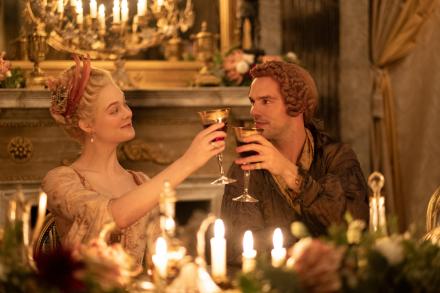
At the moment, there are two costume dramas that everyone is watching, namely Bridgerton and The Great. If you’re a fan of the former, then you’re in good company; it seems to be the Netflix streaming show du jour and millions are enjoying its soap operatic storylines. However, The Great is the real thing, if you’re after laugh-out-loud outrageousness. It comes complete with a scene-stealing, career-best performance from Nicholas Hoult as the vile, hilarious Peter III, Emperor of Russia (not ‘The Great’, as he is constantly reminded, to his chagrin) and with an equally enjoyable Elle Fanning as a young, scheming Catherine (who really is the Great), and a fine array of supporting actors giving various degrees of incompetence, scheming or nastiness.

Before Rashford: sports stars who got political

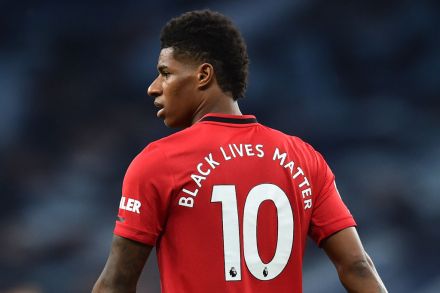
It can’t be easy, holding down a place in the Manchester United and England teams while also serving as de facto Deputy Prime Minister. But Marcus Rashford seems to be managing it. After the footballer’s high profile campaigns on free school meals and homelessness, we look at some of the other sports stars who swapped the pitch for politics. George WeahImage: Getty Rashford’s predecessors in the world of soccer haven’t always focused on Lamborghinis and nightclubs. The Brazilian Socrates founded the Corinthians Democracy movement to oppose his country’s military government, while in 2014 his compatriot Romario went one stage further and got himself elected to the Brazilian senate.

Why we’ll soon look forward to a day in the office

The office, as we once knew it, is dead. Zoom has killed it; the digital genie is out of the lamp. What most of us didn’t realise before Covid – back in April 2020 – was that the closure of offices was final and that the daily commute may well be confined to the history books. Even when things return to ‘normal’ we won’t be able to uninvent remote working, and companies know it. In fact, many of them knew it before the pandemic struck. As one leading business figure told me back the early summer, Covid – by forcing remote working – allowed companies to activate a decade’s worth of mooted corporate culture change in just three months.

The strange case of Colombia’s cocaine hippos

When I first heard the expression ‘cocaine hippo,’ my initial thoughts were that it must either be a reference to some sort of industrial scale drug mule operation, or that someone was being rude about Mitch McConnell.  In fact, the origins of the cocaine hippo aren’t far from the former, but are even more outlandish than you might expect.  In the 1980s, when he wasn’t becoming the world’s richest drug kingpin or going to war with the government, Pablo Escobar indulged his various passions: he bought a football team, grew Colombia’s most lustrous moustache (no mean feat in those days) and opened a private zoo on his estate outside Medellin, Hacienda Napoles.

When the past becomes a page-turner: our pick of the best history books

'May you live in interesting times’. So the Chinese curse goes, and we undeniably live in interesting times, alas. But that doesn't mean the past has lost any of its allure; indeed, quite the opposite. Right now, it's just the tonic we need. If you found history dull at school, being merely an endless parade of facts and heavy-handed analysis, then you are the perfect potential reader for these superb examinations of past eras by some of Britain's best popular historians.  Here are half a dozen of our favourite page-turning history books, guaranteed to have you rapt and astonished at the revelations therein. Dan Jones – The Plantagenets (William Collins, £10.99) Perhaps the most popular new historian of our generation is the medieval writer Dan Jones.

The art of the remake: 10 films that rival the original

It takes a certain amount of chutzpah to remake a film that is already considered a peerless masterpiece. Netflix was roundly trashed for attempting it with Rebecca. 'Superficial and slapdash' was the New Yorker’s verdict (one of the kinder ones): 'somewhere between a lukewarm retread of Hitchcock’s original and a glossy Instagram feed'. As for the BBC’s Christmas three-part adaptation of Black Narcissus, not even Diana Rigg in her final role could save it from coruscating comparisons with the 1947 Powell and Pressburger film.  This year will see remakes, prequels and sequels of Top Gun, Cinderella and 101 Dalmations to name but three.

Money money money: 10 movies about the markets

The furore in the US over the rocketing shares of previously written off companies such as GameStop, Blackberry, AMC Entertainment and Macy’s (the ‘Reddit Revolt’) has introduced stock market trading terms to the general public, with some folks newly opining (with a patina of assumed knowledge) about ‘hedge funds’, ‘penny shares’, ‘junk bonds’ ‘short-selling’ and ‘pump and dump’. But this is hardly the first-time similar events have occurred.

A handy guide to Hotel Quarantine

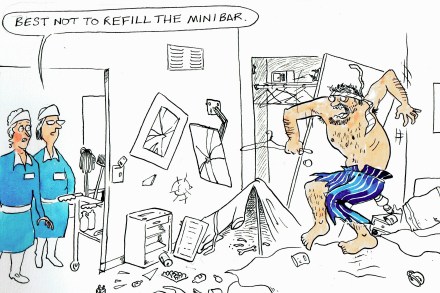
On the one year anniversary of the arrival of the Covid virus in the UK, the government has introduced strict quarantine measures to stop the virus arriving again. The shock discovery that the virus mutates in other countries, as well as our own, has prompted the government to incarcerate travellers as they step off their plane. Robert Jenrick, the Secretary of State for Housing has added the responsibility of ‘housing people in hotel rooms against their will’ to his portfolio. This week, he said: 'There will be a time when we will look back and say, with hindsight, that there are things the government could have done differently. But that time is not now'. With the foresight of hindsight, a senior government Minister has shown perfect near-sightedness about our situation.

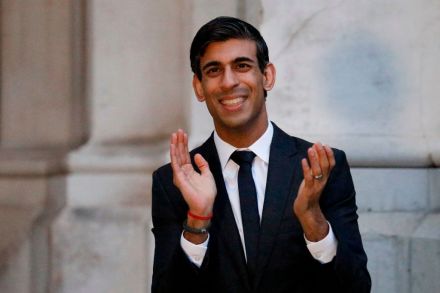
Mum’s the word: Rishi Sunak’s women problem

Just how did Rishi Sunak think it would play when he thanked ‘mums everywhere’ for ‘juggling childcare and work’ in the Commons on Tuesday? Grateful thanks? A few more #dishyrishi plaudits and calls for him to be the next PM?  The Chancellor’s vote of thanks for the nation’s mothers in response to a question about female entrepeneurs who have children has earned him a pummelling on Twitter as social media exploded with visceral rage — from the fathers he neglected to mention as well as women. Hitherto the subject of ‘AIBU [Am I Being Unreasonable] to find Rishi Sunak attractive’- type posts on Mumsnet, he is now - rightly or wrongly - embroiled in a sexism row.

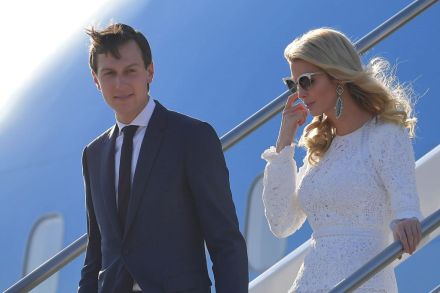
Jared, Ivanka and the art of the social pariah

In New York society, you’re nobody until somebody hates you. By which maxim Jared and Ivanka Kushner will be extremely high-profile indeed. Expelled from the White House after four years, President Trump’s shoe-designer turned special advisor daughter and her real-estate mogul husband find themselves in need of a job and, perhaps more pressingly, somewhere to live.  Will they return to New York’s playground of the filthy rich where they used to pose on the Met Gala carpet and hobnob with the likes of Murdoch’s ex-wife Wendi Deng and oil tycoon Mikey Hess? Given not only the past four years but more recent indiscretions in DC, it seems unlikely.

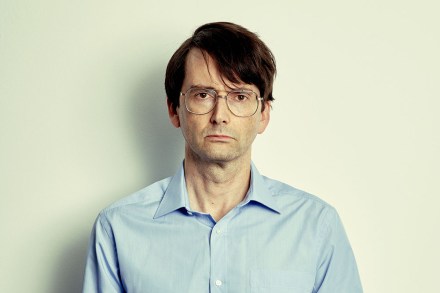
Serial killers on screen: from Nilsen to The Night Stalker

As the success of The Serpent and The Pembrokeshire Murders shows, many of us remain oddly fascinated by serial killers. But for all its popularity, the serial killer format can be tricky to get right - with many coming across as distasteful, clichéd or overly sensationalised. Here are eight recent shows - both dramas and documentaries - that strike the right balance:  Des,  ITV Player  https://www.youtube.com/watch?v=FvWaTtE7rpk ITV’s gripping portrayal of the cold and calculating Dennis Nilsen (known in the red top press as the Muswell Hill Murderer) flips the format on its head by starting with the last thing you’d expect: a confession.

No more echo chambers: the internet’s best left-wing thinkers

As culture and politics become ever more polarised, it's tempting to retreat into the reassuring hum of our own echo chambers and positive feedback loops. But this reluctance to engage with 'the other side' can only corrode civil discourse. As regular readers of The Spectator will know, listening to opposing views in good faith allows us to test our convictions, or as Bertrand Russell put it, 'those who feel certainty are stupid, and those with any imagination and understanding are filled with doubt and indecision.'  In these hyper-partisan times, it's not surprising perhaps that there are so few platforms where opposing intellectual heavyweights can go head to head — who wouldn’t want to see Douglas Murray and Paul Mason debate identity politics for instance?

The rise of the super pessimist

Covid isn’t the only thing to have developed a dangerous strain in the UK; pessimism has also mutated and is on the rise. BBC news recently reported in horrified tones that the economy had contracted 2.6 per cent in November, barely mentioning the fact that this was largely down to the nation being in lockdown. I don’t know what our national broadcaster has up its sleeve next but I’m expecting a dambing connection between home schooling and black market valium. That kind of contraction during lockdown is actually something to be proud of. The resilience of British consumerism during this last year has been this generation’s Dunkirk. Instead of hopping in tiny boats we’re resolutely buying tiny dresses for parties we’ll never attend.

No kissing and Covid robots: inside the socially distant film set

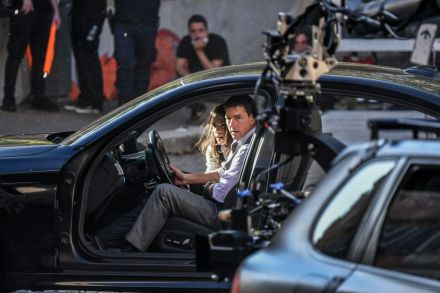
How do you enjoy a socially distanced kiss on screen? Come to that, how do you film a socially distanced murder? And, between takes, can robots carry out COVID testing? These are just some of the perplexing issues that actors, writers and directors on film and TV sets have been grappling with of late.  Hollywood productions, and their stars, haven’t been immune to the on-set stresses, an increasingly surreal side-effect of the pandemic. Leonardo DiCaprio and Jennifer Lawrence have been pictured wearing full plastic face visors on set in Boston for the forthcoming Netflix comedy Don’t Look Up.

Word of the week: Sceptic

Definition: A person who questions the beliefs of others Lord Sumption, is a sceptic. The former Supreme Court judge has questioned the government’s lockdown policies and raised uncomfortable questions: ‘are we punishing too many for the greater good?’; ‘is the life of my grandchildren worth more than my own, because they have much more of it ahead?’ These are moral questions about the value that we place on each life, as well as the price that we are prepared to pay to prevent death. There are no easy answers.  But now is not the time for debate. The enlightenment spawned an array of critical thinkers, sceptics and dissenters.

On this day: why is there a grasshopper on top of the Royal Exchange?

Every weekend Spectator Life brings you doses of topical trivia – facts, figures and anecdotes inspired by the current week’s dates in history. 23 January In 1571, the Royal Exchange opened in London. The building (or rather its Victorian replacement) still bears a golden grasshopper, the emblem of the Exchange’s founder Thomas Gresham. He chose this to commemorate one of his ancestors, who as an illegitimate baby was abandoned in a Norfolk field. A local family, the Greshams, were out walking, and only found the baby because their young son chased a grasshopper into the field. They adopted the infant, calling him Roger. Thomas Gresham knew that without that grasshopper he would never have existed.

The banality of Matt Haig

It doesn't seem like a bad time to be Matt Haig. He’s written multiple bestselling books, including the reputation-making memoir Reasons to Stay Alive about his own experience of severe depression. His latest, The Midnight Library, is proving impossible for everyone but Richard Osman and JK Rowling to knock out of the bestseller charts. There’s a movie adaptation of one of his novels on the way. And we now know that his high-profile admirers run all the way to royalty (well, ex-royalty): Meghan and Harry chose him as one of the guests for their holiday edition of their podcast 'Archewell', to offer 'inspiration, perspective, and reflection' for these difficult Covid times. On the podcast, Haig talks affectingly about his own struggles with depression.

The Claire Williams Edition

37 min listen

Claire Williams OBE is the former Deputy Team Principal of Williams, family-run the Formula One racing team set up by her father, Frank Williams. On the podcast, she talks about what it was like to be seen as 'Frank's daughter', the struggles of trying to turn around an ailing F1 team and how none of her family actually passed their driving test, first time.

The White House on screen: films to watch for a Washington fix

President-Elect Joe Biden is due to formally occupy The White House after his inauguration on 20 January 2021. For those who take an interest in such things, The White House was not formally called such until 1901, when President Theodore Roosevelt officially gave the building its name. Previously it had been informally known by the term, but also as ‘The President's Palace’, the ‘President's House’, and the ‘Executive Mansion’.  For the residence of the most powerful person in the world, The White House is surprisingly modest, considerably smaller than the likes of Buckingham Palace, The Élysée, Quirinal, Kremlin, Hofburg and The Forbidden City.

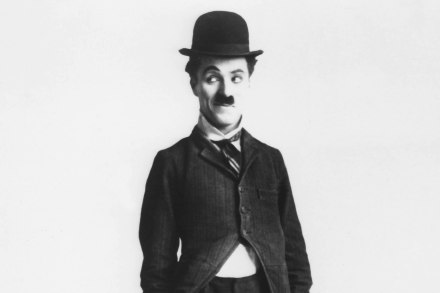
We have Charlie Chaplin to thank for the blockbuster

The pandemic has hit the film industry for six - but there’s a precedent to suggest that it can come back stronger. Because that’s what Hollywood did after the devastation of the Spanish Flu a century ago. As that killer virus was still ravaging post-WWI America, a great auteur was at work on a project that would change everything.  This week sees the centenary of the result - the first ever movie blockbuster. 21 January 1921, was the US release date of Charlie Chaplin's first feature film, The Kid. Never mind the endless present-day stress about if and when anyone will ever get to see the 25th Bond film; it’s small beer compared to the significance of The Kid to the 1920s and their subsequent roaring.

James Corden and the problem with post-Trump comedy

With admirable and determined positivity, James Corden and the Late, Late Show released a Les Mis-themed video last night, bidding a fond adieu to the Trump era. It was a coup — if you’ll forgive the word — de théatre. Corden and his team are well-versed in the well-oiled machinery of the viral video. And this one was no exception.  The Les Misérables number 'One Day More' was transposed from its original setting on the eve of the 1832 Paris Uprising to the eve of the departure of Trump, plucked as he was by helicopter like a thorn from the lion’s paw of American democracy after four short, limping years. It was neatly done.

The 20th century told in 10 films

Cinema came of age in the 20th century and documented that epoch in all its trials and tribulations. Movies are for the most part escapist confections but they can also reflect our world back to us. To learn about the major events of the last century, it is sometimes as useful to turn to a film as to pick up a book. The following are ten movies that tell key chapters of the 20th century. The Great War, 1917 (Sam Mendes, 2019)  https://www.youtube.com/watch?v=gZjQROMAh_s World War I is the harder of the two world wars to make a movie about. It was not a good war, easily rendered into a Hollywood morality play about monstrous Germans, cruel Japanese, plucky Brits and heroic Americans.