Spectator Life

Spectator Life

An intelligent mix of culture, style, travel, food and property, as well as where to go and what to see.

A handy guide to Marklism

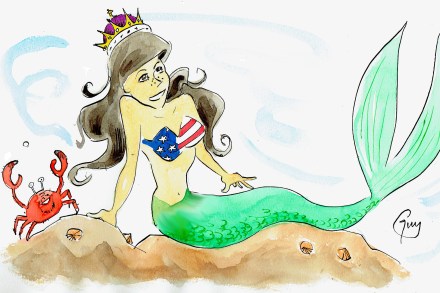
Many of us have been watching in awe at the profound impact that Meghan and Harry’s Oprah interview has had on the fight against endemic injustice. There has been an outpouring of empathy for the Duchess's suffering at the hands of the British. Not only has she had to live through the public spectacle of a royal wedding, she has had to endure the indignity of public scrutiny every time she wishes to travel by private jet. This is not how a victim should be treated. The Duchess is riding on a wave of American support and has challenged one of the oldest institutions on earth. She shows us that the world can be turned upside down when the power of suffering is successfully harnessed.

The art of the public apology

If your genetic code survived the Pleistocene epoch, and prospered sufficiently that you find yourself reading this, I feel I ought to warn you that you are in great danger. For though the woolly marmoset and sabre-toothed sloth may be extinct, a new apex predator has emerged: human beings, or more specifically, other human beings. In this latest evolutionary cycle, they have turned cannibalistic, traversing great swathes of the webosphere at high speed to feast on their favoured delicacy: you and your opinions. Far from becoming a more civilised species, we are in the midst of an epidemic of cancellations. We have no dinner dates to bail on, so we cancel each other instead. It can be for almost anything — a racist sneeze here, a transphobic pair of shoes there.

What does science say about souls?

Until the mid 19th Century, most of us believed that we had a soul. It was what separated us from the animals. This belief could be modified to accommodate slavery, Malthusian economics and to allow dogs into Heaven, but the principle was pretty stable. A hundred years later, thanks largely to Darwin, and innovations such as quantum mechanics and Auschwitz, such a view seemed childlike, romantic, or in the case of the Clergy, downright dogged. The 'soul' became just another invention of the under-informed, over-excited primitive imagination, like faeries, Valhalla and insidious whispering serpents. We have Science now.

The problem with Facebook’s ‘Supreme Court’

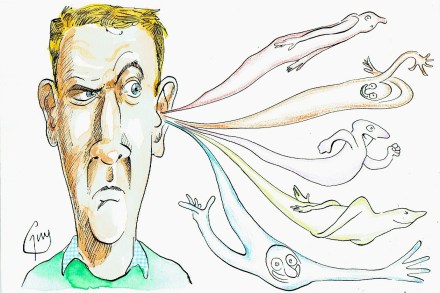
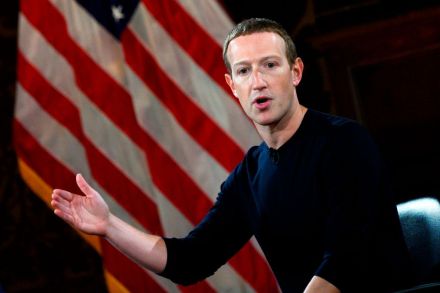
He might now be one of the most powerful men in global media, but I find whenever I see a photograph of Nick Clegg, Orwell’s quote about everyone getting the face they deserve by 50 comes to mind. Now 54, the remnants of the boyish idealist are still just about there, but the eyes to me are ledgers of too much unhappy compromise – deadened, I always assume, by the principles he felt forced by David Cameron to sacrifice for personal advancement, and by the amazing decision to see out the remaining years of a career spent failing upwards as Mark Zuckerberg’s lavishly remunerated PR lickspittle. For a decade and more, Clegg positioned himself as the good guy of British politics – radiating sixth form actor star power at every opportunity.

In praise of bad mothers

It’s Mother’s Day and, once again, I muse on how little some friends really know one. I never expect anything in a friendship that I can’t return – hence I do not look for loyalty or kindness – but the only area in which I am ceaselessly short-changed is in the business of being seen as one truly is. Michel Polac may have opined that ‘To be loved is to accept to be mistaken for who you are not’, but I like someone who sees me clearly. You can slander my reputation and I won’t turn a hair (I’ll probably put you on the payroll), but if you dare insinuate at this time of year that I must be feeling mis because of my dismal record on that front, I will immediately dismiss you as a sentimental half-wit with the perception of a pit-pony.

The trouble with mindfulness

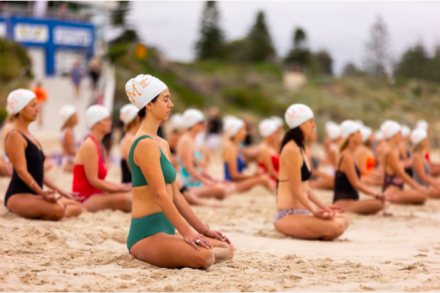
Mindfulness makes you smug. And not just mindfulness; a whole raft of alternative spiritual practices such as chakra cleansing and past life regressions feed a sense of superiority over normal mortals. That’s the finding of research from Radboud University in Nijmegen in the Netherlands involving some 3,700 people. The leader of the research, Professor Roos Vonk, first engaged in this field of study when she found that a boyfriend who went on a quasi-Buddhist spiritual retreat for clinical psychology students came back with ‘an enlightened, elevated look in his eyes’ and became really tiresome. In particular, she wanted to test whether the ideals of a Tibetan Buddhist meditation master, Chogyam Trungpa, who taught renunciation of self, actually worked out in practice.

Jordan Peterson and the cult of tidiness

The world is obsessed with clutter. Today, untidiness is seen as a moral failure and messy people are cast as incontinent reprobates lacking in all self-discipline. In his new book, Beyond Order: 12 More Rules for Life, Jordan Peterson tells readers that cleaning up their homes and offices is nothing less than a ‘moral obligation’. Brits seem to agree. Princess Anne was recently criticised and urged to declutter after viewers glimpsed her living room at Gatcombe Park, whilst Channel 5 is planning a new TV show in which Nick Knowles helps messy homeowners tidy up. With the end of lockdown in sight, UK charity shops are expecting a huge boom in donations as Britons rush to declutter.

Beyond Bond: the timeless appeal of the spy novel

There is something intrinsic to the British novel-writing tradition of a good espionage story. From its beginnings in the early twentieth century with Rudyard Kipling and Erskine Childers through to the thoroughly contemporary likes of Mick Herron and Charles Cumming, there is apparently no shortage of gripping, witty and brilliantly executed spy tales, all of which continue to fascinate us with their combination of cloak-and-dagger mystery, larger-than-life protagonists and antagonists and twist-laden storylines. Everyone, of course, thinks of James Bond when it comes to spy stories, and it would be churlish to omit his adventures from a selection like this. But there are many more distinctly unglamorous spooks and joes whose tales are worth a read.

On this day: which county’s water is especially suited to Earl Grey tea?

Every weekend Spectator Life brings you doses of topical trivia – facts, figures and anecdotes inspired by the current week’s dates in history … 13 March Earl Grey (born 1764). The Prime Minister gave his name to the tea. It was specially blended for him by a Chinese mandarin to suit the water in Northumberland, where the Grey family seat Howick Hall is located. The tea contains bergamot, to take account of the water’s high lime content. 14 March International Pi Day. The date was chosen because in American format (3/14) it matches pi’s first three digits. To remember the first seven digits (3.141592), count the letters in each word of ‘how I wish I could calculate pi’.

In defence of Kew Gardens’ ‘woke’ signs

Forget statues: the latest victims of the colonialism culture war are racist plants. Ah yes, those menacing snowdrops with their overly white petals and dangerous daffodils. As Mr Steerpike reports, Kew Gardens has entered the fray with a promise to 'decolonise' its collections. Presumably the next step is for its sister site in Sussex to be renamed Wokehurst Place. The Royal Botanic Gardens' director Richard Deverell has said that 'We’re looking at our collections and how we bring new narratives'; while his organisation's recently-published 'manifesto for change' promises that by 2030, 'we will move quickly to 'de-colonise' our collections, re-examining them to acknowledge and address any exploitative or racist legacies, and develop new narratives around them'.

The curious censorship of Chloé Zhao’s Nomadland

Fortunes shift quickly in Chinese cyberspace. On March 1, Chloé Zhao, the Beijing-born film director, was the ‘pride of China’, according to the Chinese Communist Party’s The Global Times. Zhao had just won the best director Golden Globe for her film Nomadland, becoming the first Asian woman in history to win the award, and only the second woman full stop. As news of her victory emerged, Chinese social media was awash with congratulatory messages for the 38-year old director.

The viral appeal of the aubergine

It seems at first an unlikely ingredient for global domination - particularly if, like me, you first encountered it as an unappetising squidge at the centre of a badly-made seventies moussaka. While the actual aubergine - the palpable purple signature ingredient from said retro Greek bake - remains a relatively minor player in the western larder at least, its visual representation, the aubergine in emoji form, has broken out of the virtual veg box.

The interview on screen: from Frost/Nixon to Basic Instinct

Whilst not exactly (to paraphrase Richard Burton as Marc Anthony in Cleopatra) the 'biggest thing to hit Rome since Romulus & Remus', Oprah Winfrey's recent interview with the Duke and Duchess of Sussex was certainly A Big Deal. With over 17 million viewers watching in the States and 11.3m here, the renegade former royals cannot be ignored.  High-stakes interviews have long been a favourite subject of movies. The onscreen celebrity interview is obviously not a recent creation, with the phenomenon depicted in films as far back as Sunset Boulevard, Champagne for Caesar (both 1950), A Face in the Crowd (1957) and of course Fellini’s La Dolce Vita (1960).

Kazuo Ishiguro’s craft: five novels worth reading

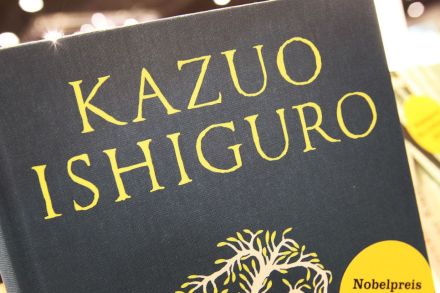
When Kazuo Ishiguro first appeared on the literary scene in the 1980s, his work was often described using terms such as 'exquisite', 'refined' and 'understated'. The supposedly Japanese sensibility of this Surrey-raised writer was on full display in his fine second novel An Artist of the Floating World (1986), narrated by a retired artist called Masuji Ono. What was less clear to English critics, perhaps, was that Ishiguro’s Japan was the imagined one of his grandparents—alongside traces of filmmaker Yasujirō Ozu’s family dramas—rather than one strictly drawn from observation. This novel’s formal perfection also disguised a much darker tale of the artist’s complicity with wartime fascism.

Labour’s TikTok paranoia

As if the Labour party didn’t have enough to worry about with its withering opinion poll ratings, yesterday’s Times reveals that party officials are warning MPs of another potential danger: malicious TikTok parodies. The paper reports that Sir Keir himself is one of several Labour MPs whose names have been used by hard-left TikTok pranksters keen to cause trouble for the party’s Leadership. One user is apparently impersonating a shadow cabinet minister while using the antifa-linked slogan ACAB (all cops are bastards). Labour is now apparently lobbying the Chinese-owned video giant to remove the false accounts to avoid confusion. Well, quelle surprise really.

Is the Marble Arch mound a joke?

What better way to get shoppers back into London's West End than by, er, building a large hill in the middle of it? That's the latest plan from Westminster City Council, who hope that the Marble Arch Hill will lure people back to the area with the promise of stunning views around the city from its 25 metre high summit. The mound, designed by an architectural firm MVRDV, will boast a winding path with trees and plants, along with a hollow centre for exhibitions. It will tower over Marble Arch, and visitors could be charged a small fee for scaling its heights by Westminster City Council. The BID's chief executive Kay Buxton describes the hill as a 'clarion call to the recovery of London's hospitality and leisure sector, in an enduring, world-renowned destination'.

Ben Shapiro’s battle with Hollywood

The sacking of Gina Carano is still creating waves in Hollywood. The martial artist turned movie actress was dropped from the Star Wars spin-off, The Mandalorian, after blocking BLM supporters on Twitter and stating that being a Republican in Hollywood was like being a Jew during the Holocaust. She compounded her sins by suggesting that voter fraud had affected the result of the 2020 election. Her employers, Lucasfilm, dismissed her views as ‘abhorrent’ and accused her of, ‘denigrating people based on their cultural and religious identities.’ Carano was also dropped by her management company, United Talent Agency. (So much for ‘united.’)  Then came the backlash.

On this day: which of barbie’s body parts did parents want removed?

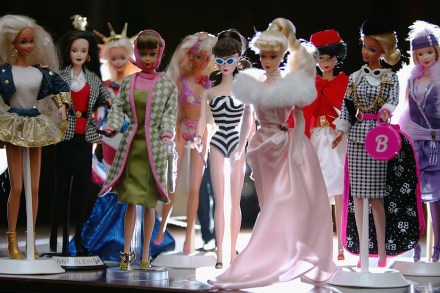
Every weekend Spectator Life brings you doses of topical trivia – facts, figures and anecdotes inspired by the current week’s dates in history … 6 March In 1957 Ghana achieved independence from Britain. The country’s subsequent heroes have included Ferdie Ato Adoboe, who holds the world record for the fastest time to run 100 metres backwards (13.6 seconds). He has also held the world record for speed juggling a football, recording 141 touches in 30 seconds. 7 March Robert Harris (born 1957). The author prides himself on being able to put the cork back into an opened bottle of champagne. ‘The trick is to pinch the cork quickly before it’s had a chance to swell too much.

Fake views: the problem with Netflix documentaries

Netflix gets a lot of stick for being woke these days - and not just from this parish. And when you look at the network’s recent signings, it’s not hard to see why. From hiring Michelle Obama to present kids’ shows to splashing out on the Sussexes, Netflix executives don't exactly hide their worldview. But for all the gripes levied against the media empire, there is one section of its content that gets off rather lightly. And that’s a bit of a shame. As not only do Netflix's current affairs documentaries come with a strong agenda, they’re also terrible examples of factual filmmaking. And the latter is the really unforgivable part. If you’re not familiar with Netflix’s documentary output, here's a quick rundown of some recent hits.

‘Perpetuating falsehoods’: films about royal fiascos

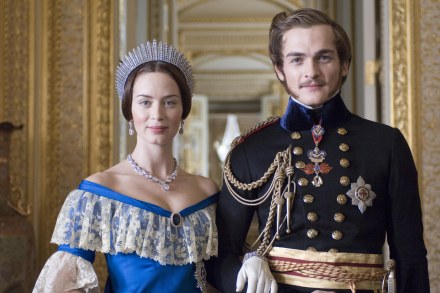
As the nation waits with bated breath for Sunday's broadcast of Oprah Winfrey’s already notorious interview with the Duke and Duchess of Sussex, here's a smorgasbord of royalty in the movies, both real and fictional. With the success of Netflix’s, The Crown at the Golden Globes (granted a semi-seal of approval from Prince Harry) and the threat of yet another biopic of his mother (this time starring Kristen Stewart), the appetite for on screen depiction of ‘The Firm’ shows no sign of lessening.

Parents should stop complaining about World Book Day

Every year, at the same time, they come – great flocks of them. Squawking, squabbling, screeching. Never mind the first cuckoo call or the sighting of the earliest swallow, there is no more reliable metric in modern Britain for the arrival of spring than parents moaning about their children having to dress up for World Book Day. What started in the mid-nineties as a fairly innocuous celebration of all things children’s lit, has somehow in the quarter century since evolved into an annual festival of epic parental whining: ‘it’s too commercial’; ‘too demanding’; ‘too expensive’; ‘too tacky’; ‘too much’. These are all, I concede, to a degree, reasonable criticisms.

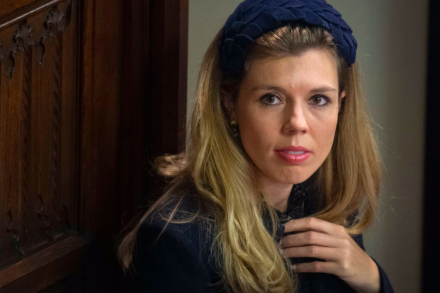
The curious similarities between Carrie Symonds and Marie Antoinette

What is Carrie Symonds’s status? She seems to have a lot of influence but its extent is undefined. People find the lack of clarity unsettling. Nic Conner of the Bow Group observed in the Times that unlike ministers or civil servants she ‘cannot be sacked’ — a questionable point given Boris Johnson’s alleged amatory record. It is true however that she was neither elected nor appointed. So what is she — mistress, partner, girlfriend, fiancé or (perish the thought) first lady? We have to raid the historical locker to find the mot juste: maîtresse-en-titre - the official mistress of the French kings. The mistress that seems most relevant is Madame de Pompadour (1721-64) the maîtresse-en-titre of Louis XV.

Taylor Swift and the problem with ‘sexist’ jokes

It is the third day of Women’s History Month, and instead of talking about a range of female accomplishments and achievements; everyone is instead, once again, talking about Taylor Swift. Swift tweeted yesterday, criticising the Netflix series Ginny and Georgia for its 'lazy, deeply sexist joke' which apparently is 'degrading hard working women.' The joke comes from the series’ finale, when 15 year old Ginny argues with her 30 year old mother and cries, 'What do you care, you go through men faster than Taylor Swift!' A lazy joke? Yes. A deeply sexist one? I’m not so sure. After a decade of mass tabloid coverage of her relationships, it’s understandable that Swift might be tired of her love life being a punchline.

Beyond Parasite: the genius of Bong Joon Ho

While we weren't looking, the countries we used to patronise for their charming but niche 'World Cinema', started making movies often classier, more interesting and definitely less woke than we do in the English-speaking world. Perhaps nowhere is this more evident than in South Korea.South Korean directors have mastered the horror genre, with classics such as Train to Busan (featuring the modern ‘fast zombies’ on steroids) and nail-biting The Wailing. And thanks to Bong Joon-Ho, they've cracked the commercial mainstream, too. Cinephiles have known he was great for sometime. But in the West, until Parasite won a triple crown of Best Picture, Director, and Original Screenplay in 2019, Bong was certainly no household name.

The truth about the Gen Z abstinence fad

MeToo may have fundamentally shifted the way men and women interact, but that hasn’t stopped a musty, old turn of the century relationship manual from making a surprise comeback. In Sherry Argov's 2001 bestseller Why Men Love Bitches, the journalist offers tips on how to bag a man. Her principal premise is a surprising one: that women should hold off having sex. And a new generation seem to be heeding her advice: the book has been a favourite subject of Gen Z TikTok videos as well as making a reappearance on the Sunday Times bestseller list. Argov's book emerged out of the barely recognisable age before online dating, slut shaming and revenge porn.

The sad decline of The Simpsons

In the latest episode of 'Americans Do the Funniest Things,' it has emerged that The Simpsons is to replace the white voice actor for the character of Dr. Julius Hibbert with a black actor.  Hibbert, for those who don’t know him, is a mainstay of the show — a family doctor recognised by his white lab coat, gentle manner and signature chuckle. He is perhaps the least offensive character, despite being a Republican, a suspected morphine addict, and a member of Mensa, who revised his official position on the safety of binge eating after buying a 12 per cent stake in an all-you-can-eat restaurant, and who won’t conduct unethical procedures himself, but is more than happy to give you the number of a doctor who will.

On this day: what motto is written on Elton John’s coat of arms?

Every weekend the Spectator brings you doses of topical trivia – facts, figures and anecdotes inspired by the current week’s dates in history … February 27 Elizabeth Taylor (born 1932). The actress’s 2011 funeral started 15 minutes behind schedule, on her own instructions. Her spokesman confirmed that she ‘even wanted to be late for her own funeral’. February 28 In 1939 the non-existent word ‘dord’ was discovered in Webster’s New International Dictionary. It was a misprint, which had arisen several years earlier when an editor suggested including ‘D or d, cont.

The worst political speeches of the decade

In thinking about the worst political speeches delivered in Britain, I reached for lectures that weren’t just technically poor but epoch defining in their badness. Each one had to have said something larger about the inherent problems of the political class in our beleaguered age. With that in mind, in descending order, here are five that fell flat: Jeremy Corbyn’s 2015 Labour conference speech https://www.youtube.com/watch?v=iFo5a3PFn1M In his first conference speech as party leader, the reasons for Corbyn’s eventual defeat are all here, on full display. The speech itself is relentlessly boring and substance is remarkably absent throughout.

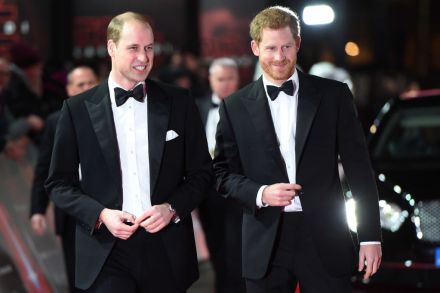
A very royal rift: what Prince Harry can learn from Queen Victoria

For all the long looks and transatlantic sniping via their courtiers, the Battle of the Dukes – Cambridge vs. Sussex - has been relatively tame thus far. No princely duel has taken place, no swords have been drawn at dawn in the grounds of Windsor Castle and, regrettably, neither Duchess has fainted at the scene. All we can hope for at this point is a proxy battle waged in the arid landscape of digital media, barbed insults poking out among the podcasts and twitter feeds.  Gone are the days of gladiatorial contest offered up to the public in search of absolutism. Those in search of Ducal blood sports must instead content themselves with four seasons of The Crown, an interview with James Corden, or the pronouncements of historian and Netflix advisor Robert Lacey.