Spectator Life

Spectator Life

An intelligent mix of culture, style, travel, food and property, as well as where to go and what to see.

The trouble with being teetotal

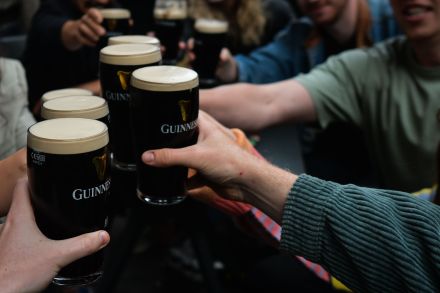
I’m 58 years old and have spent 40 of those years as a journalist and yet there is something that shames me, that makes me inferior to so many of my colleagues and, indeed, many of my friends and family outside the world of journalism. I'm rubbish at drinking.  Instead of being wasted on booze, booze is often wasted on me. I've never had a Lost Weekend, never woken up tied to a lamp-post with a traffic cone on my head, never got a tattoo while under the influence. I've been to Magaluf with the lads and Las Vegas on a press trip. I've been to stag dos and TUC conferences and away days with both Spurs and England football fans. And, embarrassingly, I can remember every moment of every one of them.  It's not that I can't get drunk.
The rise of WitchTok

Halloween might be over, but Witching Hour has accelerated on TikTok. #WitchTok (or Witch TikTok) is the viral take on spirituality – think Paganism, psychics, and seances in 60 second videos. The hashtag #WitchTok currently has over 20.7 billion views on the video app. In comparison, #Kardashian only has 6.4 billion, and #LoveIsland clocks up a mere 4.9 billion.  As an enthusiastic TikTok user, I started liking WitchTok videos during lockdown. I found myself drawn in by beautiful witches with their crystals and soft-spoken voices. Influencer branding has inevitably pounced on this spiritual trend; the creators of this content practice both magic and sales, and while I can’t speak for the former, the latter is extremely effective.

Moral dilemmas on screen: from Oppenheimer to Passengers

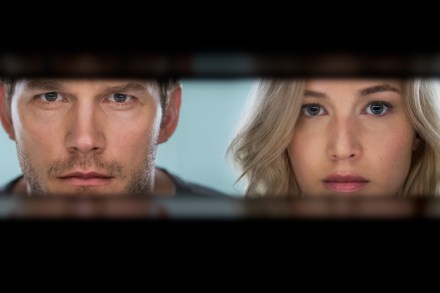
'Now I am become Death, the destroyer of worlds.' Father of the Atomic Bomb Robert Oppenheimer once claimed that these words from Hindu scripture’s Bhagavad Gita raced through his mind when he witnessed the first nuclear weapon detonate on July 16, 1945. Much of Oppenheimer’s life and work are seen through the lens of the moral dilemma he faced in leading the Manhattan Project that developed the deadly bombs (dubbed ‘Fatman’ and ‘Little Boy’) which destroyed the Japanese cities of Hiroshima and Nagasaki less than a month later. Director Christopher Nolan has chosen the scientist as the subject of his next film, the follow-up to the underwhelming Tenet (2020).

Is men fighting women really a new sport?

Last weekend, the first formal inter-gender mixed martial arts cagefighting contest – post Enlightenment, at least – took place in front of a paying audience in the city of Czestochowa, in Poland. Remarkably, the fight went to a second round. Many well aimed blows were landed by Piotrek Lisowski on his female opponent Ula Siekacz. But the referee eventually called things off when he had her pinned helplessly to the floor with his knees and was thumping her in the face. A second fight, between Michal Przybylowicz and Wiktoria Domzlaska was stopped in the first round when the female fighter had no answer to a vicious early Przybylowicz onslaught.

The strange allure of talking to the dead

My aunt, Charlotte, had a profound influence on my life. A second mother, a friend and someone who was always there. The thief that took her was the rare disease PSP. It slipped into our lives with no warning and ripped her away from us. The house she lived in was a home to our family. Somewhere we could always go. An anchor in my childhood. Recently her son (my cousin) and my four siblings spent a weekend there. We lit the fire and chatted about the goings on in our lives. Pictures of our aunt and her beautiful treasures which remain in the same place as well as the familiar smell when I walked through the front door. We looked at the space on the sofa where she always sat with her two dogs. It was as if she was there, listening to us, but of course she wasn’t.

The geopolitical thrillers to watch during COP26

This year is a bumper year for the UK in terms of international summitry; in June Prime Minister Boris Johnson hosted the G7 ‘Build Back Better’ conference in Cornwall; and on Sunday he welcomes participating countries to 2021 United Nations Climate Change Conference (COP26) in Glasgow. Before the 13-day summit, which perhaps ominously begins on Halloween, the PM jets off to Rome for the G20. International conferences and high-stakes meetings being largely static events, are not inherently cinematic, although movies such as Oslo (2021), The French Minister (2013), Paris 1919 (2009), In the Loop (2009), Conspiracy (2001), and The Name of the Rose (1986) all enjoyed popularity with audiences.

Do I have a right to be offended by threesomes?

I couldn’t get to sleep the other night for worrying about the future of liberalism. So I got up and put the telly on. Maybe there would be something soothing on, to help me forget my worries. There was a show on Channel 4 called My First Threesome. The voiceover explained that lockdown had led many of us to be more sexually adventurous, and even to explore ‘what is for many of us the ultimate fantasy’. Before we met some enthusiastic adventurers, a brief historical segment explained that many wise ancient cultures saw sex with more than one person as a perfectly natural desire. ‘Then for centuries religion and shame pushed it to the realm of fantasy.

Beyond Squid Game: the Korean dramas worth watching

Quickly becoming Netflix’s most successful series ever (with an estimated 111 million viewers worldwide), Squid Game has turned the spotlight on Korea as a cultural hotspot. That won’t come as a surprise to anyone who’s had half an eye on film reviews over the past years – with Korean films impressing both viewers and critics alike. Here are eight films and series worth watching, and where to catch them: Moving On, Mubi https://www.youtube.com/watch?v=h26X-DHrpr8 Our own film critic was surprised by how gripped she became by Moving On: a quiet – and deliberately understated – film about a family (a single father and two children) whose economic circumstances force them to move in with an elderly, and near silent, relative.

Can Ben Stokes save The Ashes?

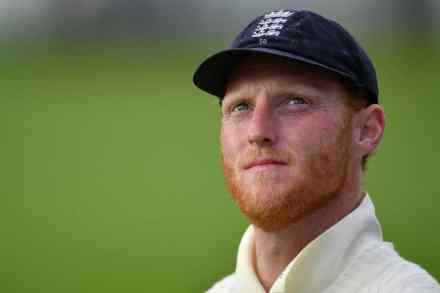
England cricket fans rejoiced on Monday at the news that few saw coming. It was not their side’s comprehensive victory over reigning T20 World Champions West Indies at the weekend that had champagne corks popping and hope for a renaissance after a less than impressive summer coursing through the veins of the Barmy Army. Rather, it was the announcement that their talisman and Ginger General, Ben Stokes, had been added to the Ashes squad to tour Australia next month. Stokes had been sidelined for the vast majority of the 2021 season with a badly broken finger, sustained while playing for the Rajasthan Royals in the IPL last April.

The BBC is right to reject David Hare’s Covid drama

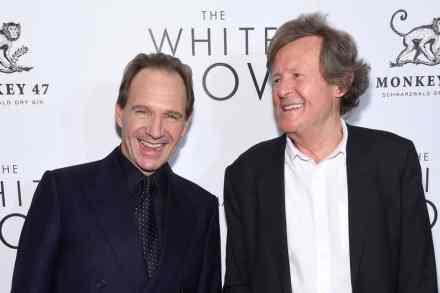
If the BBC’s constant tension with various Conservative ministers weren’t enough, now it has another name on its list of critics. This weekend veteran playwright Sir David Hare launched an attack on the corporation for refusing to broadcast his Covid play – and for shunning dramas about the pandemic more generally. ‘It strikes me as so derelict,’ the long-term grandee of the National Theatre vented to the Observer. Does it now?

‘Farming is hungry work’: The Yorkshire Shepherdess on life with nine children

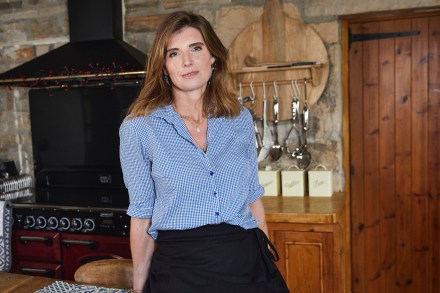
The Yorkshire Shepherdess was raised in suburban Huddersfield, not a sheep in sight. Amanda Owen was a romantic type who pored over pastoral images in library books – by chance, one image of some men at a cattle auction contained her future husband, Clive. She determined to head for the moors and, like some Thomas Hardy heroine, make her way in the windswept world of sheep farming.  She is now the nation’s chief supplier of pastoral, today’s version of a rural-hymning poet, warbling the woodnotes wild. She is also an icon of motherhood, having produced no less than nine young farmhands. For many of us, Our Yorkshire Farm, the Channel 5 programme that mixes family and farming, was an ideal escape from the stresses of lockdown life.

The films beloved by Boris

The Prime Minister is known to be fond of dropping pop culture movie references into his speeches, so it came as no surprise when he threw in a few attempted zingers when addressing the Global Investment Summit on Tuesday morning. Given the audience, it may have seemed impolitic for the Prime Minister to quote Trading Places (1983) and Wall Street (1987), two movies that deal with greed, corporate corruption, and financial fraud. Peppa Pig, Adele, Coldplay, and Ed Sheeran also made appearances in his speech; the latter trio termed as a 'cyclotron of talent.' As a man in his mid-fifties, many of Boris’s filmic allusions are from movies that he may have seen in his childhood, teens, and twenties, maybe in the local Windsor/Slough fleapit as a pupil at Eton College.

In praise of gay Superman

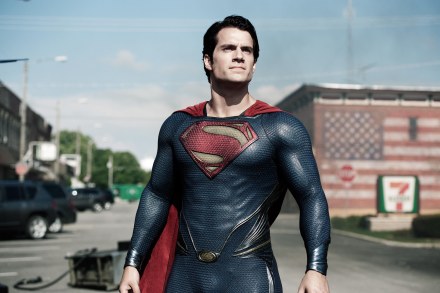
For most little boys of my generation, and several before, the only man who could conceivably have beaten up their father was Superman. Which is why now discovering that Superman is sexually attracted to men is so brilliantly subversive. It’s like discovering Mount Everest is gay. Back in August, DC Comics artist Ethan van Sciver first broke the news that Superman was coming out, although then it sounded as if the plan was for him to be fully gay, and not just bi, during a YouTube livestream. ‘I guess Clark Kent is going bye bye,’ he said. ‘Superman is effectively gay everyone. He is gay.’ Now the first images have been released of the new Superman – Jonathan Kent – deeply French kissing his boyfriend Jay, of all things a journalist.

There’s more to Jesse Armstrong than Succession

It’s Succession week, as the inaugural episode of season three finally lands (available, in the UK, via Sky’s NOW service). Generally considered to be the sharpest and most scathing comedy on television, the Emmy-winning epic known for its globe-trotting locations is actually the brainchild of a Brit: Shropshire-born Jesse Armstrong. A former collaborator of both Armando Ianucci and Chris Morris (and, interestingly, a former parliamentary researcher), Armstrong is one of the creative minds behind some of the most successful British comedies: although he’s succeeded, on the whole, at keeping his profile more low key than some of his contemporaries.

The problem with YouTube’s political adverts

Even a few seconds can feel like an eternity when your favourite Spectator TV debate is interrupted by a sweaty bloke in a bedsit flogging digital currency. YouTube understands how painful its ludicrous advertising interludes have become which is presumably why they invented the five-second skip button. Regular ads are bad enough but it's those twenty-minute infomercials that somehow manage to catch us off guard that really grate. How does YouTube know when I am least able to reach for the skip button? It happened again the other day during my morning shower; midway through a favourite song a perky female voice barged in to ask whether it was 'ok to call someone queer'.

The Nordic Noir thrillers worth watching

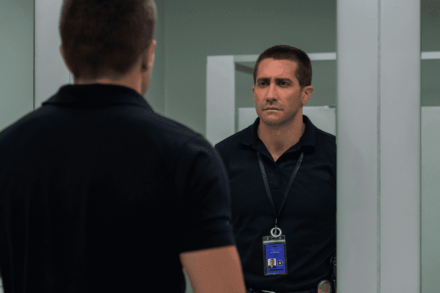
With the recent Netflix release of Jake Gyllenhaal’s nordic-inspired The Guilty, as the nights draw in, what better time for a smorgasbord of films from the land of the midnight sun?  The Guilty is a remake of the 2018 Danish film of the same name about a troubled 911 operator who attempts to come to the rescue of a distressed caller.  Since the literary, TV and movie phenomenon of Nordic Noir first broke out from its Scandinavian confines in the 2000s, the genre has become an established part of UK culture, along with cosy lifestyle cousins hygge, lagom and lykke.

Why Lego is right to eliminate gender

So, is it farewell to the Friends Cat Grooming Car playset with Kitten, and the Disney Princess Ariel, Belle and Cinderella set? And what about Olivia’s Electric Car toy, Eco Education Playset? Or the Ninjago Legacy Fire Dragon Attack? Or the City Great Vehicles Refuse Truck? Lego, you may have gathered, is to eliminate gender stereotypes from its products, including labelling that marks toys for boys or girls. Look up Lego for boys or girls on Argos or similar, and you’ll see the full horror of what that entails. The girls’ stuff has a pink or mauve element plus a kitten or a princess or a castle or a hairdresser (though the Eco Education set has its very own wind turbine).

The faith of Tyson Fury

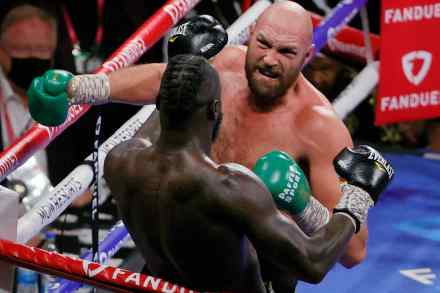
As soon as he had beaten Deontay Wilder last weekend, Tyson Fury gave thanks “to my Lord and savior Jesus Christ”. He said that he was going to pray for his fallen opponent. He has said that when he was recovering from depression and mental illness he “couldn’t do it on [his] own” and got down on his knees to ask God for help: I went down as a four hundred pound fat guy but when I got up off the floor after praying for like twenty minutes...I felt like the weight of the world was lifted off me shoulders. Most media reports glossed over these (admittedly eccentric) expressions of Christian piety, but the clips of Fury praising Jesus for his victory went viral for good reason.

Our strange need for pandemic novels

Our collective Covid hangover includes facing the inevitable influx of pandemic novels. Following a cameo in Ali Smith’s Orwell Prize–winning Summer and Sally Rooney’s Beautiful World, Where Are You, the pandemic takes centre stage this autumn in titles including Sarah Hall’s Burntcoat and Sarah Moss’s The Fell. Across the Atlantic, authors including Gary Shteyngart and Louise Erdrich are also taking up the gauntlet. 'Practically speaking, the public would say that a novel devoted to influenza lacked plot,' warned Virginia Woolf in her 1926 essay ‘On Illness’. 'They would complain that there was no love in it.' The trick for authors, then, is to add a dash of drama to the monotony inherent to illness and quarantine.

Do we really need to send actors to space?

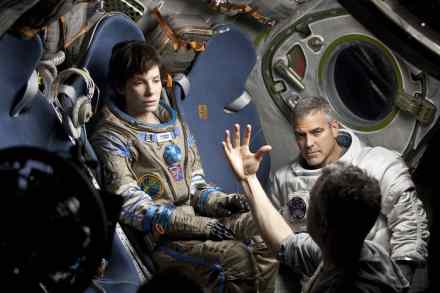
The news that Russia has beaten Tom Cruise and NASA in the latest bout of the space race – by sending actress Yulia Peresild and director Klim Shipenko to the International Space Station to film a movie – almost certainly heralds a pointless new low in cinema. Just like the difference between erotica and pornography, we all know that you don’t need to go in to space to shoot a film about it. In fact, it’s almost certainly better if you don’t. I’m all in favour of method acting ­– whether it’s Timothy Spall sporting a paintbrush for his role in Mr Turner or Adrien Brody getting to grips with Chopin for The Pianist – but propelling actors into space defies the principal purpose of the space movie.

The spy movies that rival 007

If No Time to Die and the inevitable 007 re-runs on ITV haven’t already sated your appetite for Bond-style espionage thrills, there’s a veritable smorgasbord of spy movies available to assuage your hunger. Some of the actors who portrayed Bond also essayed secret agents of a different stripe, with Sean Connery (The Russia House), Pierce Brosnan (The Tailor of Panama), Daniel Craig (Munich, Archangel) and Timothy Dalton (Permission to Kill, The Rocketeer) all dabbling in non-007 cloak and dagger roles. For such a long-lasting and successful franchise, it’s perhaps odd that the producers (Eon) haven’t yet contrived to release any 007 film spin-offs.

Justin Bieber and the truth about cannabis

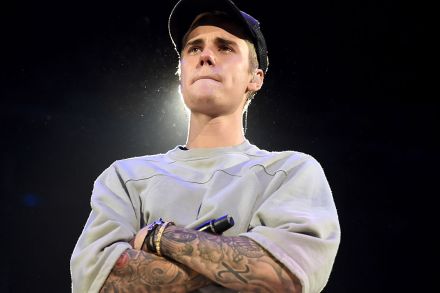
Every few days some celebrity ninny will call for the scrapping of marijuana laws, saying that it will take the drug out of the hands of criminal gangs. And all kinds of conservative-minded people will gravely nod their heads at the idea. But those looking to condone cannabis use through the law should think about the consequences of such a move. All crime is caused by law. If we had no laws, there would be no need for those expensive police, courts and prisons to enforce them. There would be no crimes. There would be no criminal gangs. But there would still be a lot of people doing stupid, wrong things. Decriminalising cannabis won’t make its impact on society any less potent.

The joy of being childish

I sat next to a man at dinner who told me I was nosey. Perhaps he was right, although I saw it as being curious. When a conversation consists of weather patterns, I like to throw in a personal question. That way I learn something more interesting about that individual other than his views on meteorology. However, in this case it unnerved the poor man. He glanced at me sideways and reached for his wine. I’m a hypocrite, of course. I hate talking about my private life. But that doesn’t stop me from taking an interest in other people’s lives and loves. Otherwise I find myself falling asleep and I too have to reach for more wine. There can be truth and wisdom in foolishness When I was younger, I loved the story of Alice and Wonderland.

The London Film Festival lets you watch films early – and brag about them

 October plays host to one of my very favourite jamborees across the entire spectrum of the arts, namely the London Film Festival. One of the myriad joys of an arts festival is the tantalising opportunity it offers to deviate from our cultural strait and narrow and try something out of the ordinary. We can rest easy in our festival wanderings, knowing that everything has been curated by experts in the field. Under this reassuring aegis of selection, we find ourselves emboldened to roam far and wide, often encountering en route the very artists who have made the work, as festivals love nothing better than to offer a Q&A in congenial surroundings.

The classic sci-fi films that rival Dune

Denis Villeneuve's eagerly awaited remake of Frank Herbert's sci-fi novel Dune features a host of barons, dukes, and princes living under a Galactic Emperor. In his dystopia, Herbert depicts a highly stratified society of competing guilds, noble houses, human computer schools (‘Mentats’) and religious cults, with a Padishah Emperor playing them off against each other to retain his place at the top of the heap. Paul Atreides (Timothée Chalamet) the son of a ruined Ducal house rises to become a Madhi-like figure on the planet of Dune, the only source of ‘Spice,’ a substance that both enables faster-than-light space travel and prolongs human life.

Gabby Petito and the pitfalls of online sleuthing

The tragic case of Gabrielle Petito attracted international interest for various reasons: the mystery of her disappearance, the double mystery of her boyfriend disappearing and, perhaps most significantly, the fact that the pair had been traveling together and documenting their journey on social media. People had an almost proprietorial interest in the case. Somehow, it belonged to the internet. Also relevant to the scale of the attention attracted by the case was the popularity of the ‘true crime’ genre.

I tried to become a lorry driver – and failed

Two years ago I tried to become a lorry driver. Everyone told me it wasn’t the right time, and I should have done it five years ago. 'It’s a mug’s game now,' they said. 'You’ll be sitting around waiting for a job.' Still, everything I ever did was five years past its prime - buying a house, visiting Prague, becoming a stand-up comedian; all these things were a joyful wild west five years before they occurred to me, apparently, so I wasn’t bothered about hoovering crumbs. I’d moved to Devon, the circuit had forgotten me and I needed something to do. Besides, I really love driving. Driving for me means freedom, but it was hard won. I failed my standard UK test twice and wondered if there was a country where passing is easier.

Why have A-listers stopped washing?

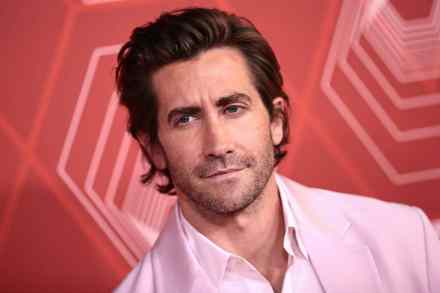
Something's in the air in Hollywood. It’s the whiff of A-list celebs who’ve given up washing. Jake Gyllenhaal recently revealed that, ‘more and more I find bathing to be less and less necessary.’ Cryptically, he added, ‘we naturally clean ourselves,’ without explaining how he keeps himself smelling of roses while avoiding soap and water. Hollywood’s new dirty dozen is said to include Brad Pitt and Ashton Kutcher. Kutcher and his wife Mila Kunis have said they ‘seldom’ take the trouble to bathe. Power-couple Dax Shepard and Kirsten Bell offered this stern warning to anyone on the brink of a morning shower. ‘You should not be getting rid of all the natural oil on your skin with a bar of soap every day.

The truth about Facebook’s ‘metaverse’

Do you ever catch yourself thinking, 'You know, I need to spend less time in the real world and more on the internet'? If so, Mark Zuckerberg has good news for you! The Facebook founder is promoting the development of the 'metaverse' – a virtual reality world, or virtual reality worlds, that would allow us to be in rather than on social media. That might sound far-fetched but think about how odd it would have sounded to people a few decades ago, before the internet, if you had told them you would be able to speak to people in Britain, Bhutan and Bangladesh simultaneously. The concept can be reduced to the radicalisation of the immersiveness that already unites us with our phones.