Spectator Life

Spectator Life

An intelligent mix of culture, style, travel, food and property, as well as where to go and what to see.

At last, the UK has a decent Eurovision act

Jemini sits on an unenviable plinth in the UK’s cultural history. In 2003, this pair of enthusiastic Liverpudlians were the first ever UK entry to score a spectacular nul points at the Eurovision Song Contest, with Cry Baby. Oh, we did. In 2021, it was the cruel and unusual fate of James Newman to follow in their footsteps all the way to the bottom of the right hand side of the board with an equally non-existent score for Embers, the ensuing headlines writing themselves.


Rebel Wilson’s crass humour was a bad fit for the BAFTAs

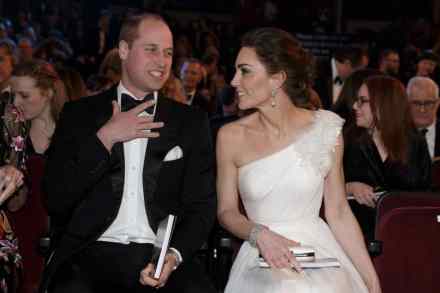
After the two oddest years in the history of the red carpet, when Covid restrictions saw stars accepting gongs from their sofas via Zoom, glitzy prizegivings as we (used to) know them are back. Last night’s BAFTA ceremony, from the Royal Albert Hall, marked the opening salvo of a two-week run-in of the biggies, as the Oscars follows at the end of the month. It was, reassuringly for fans and teeth-grindingly for detractors, the customary heady cocktail of self-absorption and virtue-signalling, along with acknowledgment of some very fine pieces of cinema. As well as Kenneth Branagh’s Belfast. In recent years, awards ceremonies have tied themselves in all sorts of knots over their hosts.

Refugees in film: a cinematic guide

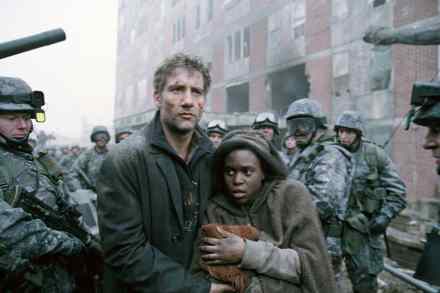
The tragic ongoing events in Ukraine have highlighted the plight of refugees, with over 2m people (mainly women and children) fleeing the country since Russia invaded on 24 February 2022. Sadly, refugee crises have been occurring since the dawn of what may ironically be called ‘civilisation’, most notably the Biblical Exodus from Egypt and Caesar’s conquest of Gaul, which began when the Swiss Helvetii confederation, under pressure of Germanic tribes, sought to cross into Roman territory on their westward journey to safety.

Why taking cold showers could help Ukraine

I found myself in Berlin at the weekend gasping for breath in a cold shower, doing my bit for Ukraine. Berliners are a phlegmatic bunch but the arrival of a European war two hours from their doorstep is triggering memories of much darker periods of conflict and stirring not-so-dormant feelings of solidarity and direct action. Could cold showers be the answer? Last week the German government undid decades of foreign policy, announcing massive investment in German defence spending and sending anti-tank and air defence weapons to Ukraine. Chancellor Olaf Scholz called Putin’s invasion a Zeitenwende, a ‘watershed moment’ as he pledged €100 billion to upgrade German’s defence forces and committed to top the two per cent GDP contribution to NATO.

How do we talk to children about war?

Every day when my niece gets home from school she seems angry and frustrated. She wonders why we can’t do more to help the people in Ukraine. She is bewildered by video clips of children saying goodbye to their fathers who are staying behind to defend their country. Since the shocking news of the invasion broke, she has joined her school politics group and wants to learn more about the conflict, why it is happening, and what can be done. She is aware of the contrast between her sheltered life and those less fortunate. I asked her mum (my sister) how she parents in this situation. Her greatest concern is how to preserve her daughter’s innocence when she’s so well informed. ‘Everything is out there, you can’t just hide from it.

Fatherhood is a risk men aren’t willing to take

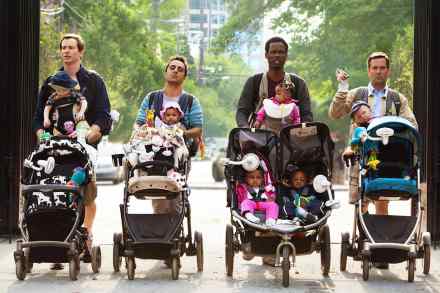
Recent reports that half of women in England and Wales are now childless by their 30th birthday reveal a worrying new attitude amongst Gen Z. Parenthood, to the younger generation, is the enemy of unfettered frivolity. Young women, we are told, would rather live for the moment than plan for the future. 'Being present' has become the mantra of the 'mindful' generation who see autonomy as the ultimate expression of a life well lived. But how complicit are men in this myopic 'me-only' utopia we have created for ourselves? Are women actively rejecting the sort of men who would like to settle down or have the sort of men who once yearned to settle themselves become cynical about taking the plunge?

James Dyson is right to urge us back to the office

I have almost no clue what office life is like. And I really mean ‘almost no clue’. Over several decades of professional work, my entire experience of office life consists of four hours working as a receptionist at a shipbroker’s in the City. I was so bad they sacked me by lunchtime: I didn’t even make it through the first day.  Chastened by this trauma, I thereafter vowed I would never do another hour of paid work in an ‘office’, and I have stuck to my principles. I have never been woken by a horrible alarm at 7am; instead, for all my life, I have heroically kept on sleeping until about 10.30.

Louis Theroux and the problem with sex scenes

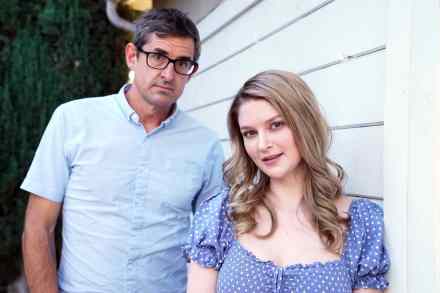
You know the restaurant scene in Notting Hill? The Hugh Grant character defends the honour of his magical girlfriend when she is the butt of some sexist banter from some vulgar brutes, who don’t realise she is sitting round the corner. In many languages, says one, the word for actress is the same as the word for prostitute. Hugh just can’t bear it: he confronts them with an angry eye-flutter, telling them to bloody well shut up, and then Magic Girlfriend appears and tells them that they have small penises. It’s one of those scenes in which Richard Curtis helps us to understand what is good and what is bad these days.  Well, at the risk of resembling one of the nasty sexists in this scene, I want to suggest that the new orthodoxy has its limits.

How a royal disagreement over a penny revealed Edward VIII’s vanity

A rare penny piece goes on sale this month for 20 million times its face value – quite the mark up. But it’s the backstory to the coin’s creation that is arguably the most interesting aspect of the sale – because of the insight it gives into the frosty relationship between George VI and Edward, whose sudden abdication put his brother on the throne. The story begins in 1936 with a dispute over the small matter of a hairstyle. While plunging the government towards a constitutional crisis through his relationship with the American divorcee Wallis Simpson, the notoriously vain Edward was also concerned about how he might look as loose change.

Ten cerebral superhero films to rival The Batman

With an added ‘The’ for extra gravitas, Matt Reeves’ fresh take on The Batman is picking up generally favourable notices both for the movie and Robert Pattinson’s interpretation of the character, which apparently makes Christian Bale’s dour Bruce Wayne a happy-go-lucky scamp in comparison. The Spectator's Deborah Ross wasn't convinced by yet another dark twist on the superhero but elsewhere the film has received solid reviews. The Caped Crusader has seen many iterations on film, the most recent being Ben Affleck’s constipated billionaire, which never really caught on with audiences.

Can a new dating app stop ‘ghosting’?

Modern dating is a mess: it's a shallow world of filters, FaceTune and superficial swiping. Across the internet, Gen Z complain that daters flake, catfish, scam, and – most objectionably of all – ghost. A new dating app, Snack, proposes a solution. Snack is described as ‘Tinder meets TikTok': a place where Gen Zs can film themselves flirting, create content with fun video prompts, and enjoy a ‘more authentic video-first dating experience’. Snack also enables its users to punish those who ‘ghost’ them by leaving them negative reviews. ‘Ghosting’ is rejection without the closure – you’re talking to someone and, suddenly, they stop responding and disappear.

The enduring appeal of Peaky Blinders

What’s the next step for a macho gangland drama that’s already built a fanbase in some 183 countries worldwide? That’s right: a collaboration with one of the highest regarded companies in UK contemporary dance. When it opens in September at Birmingham’s Hippodrome theatre, The Redemption of Thomas Shelby – a 20-strong dance production from the South Bank’s Rambert Dance Company – will mark yet another cultural milestone for Peaky Blinders: the BBC’s historic drama about a gang of Brummie ruffians who ran parts of the city between the two world wars.

Ten action films that rival Reacher

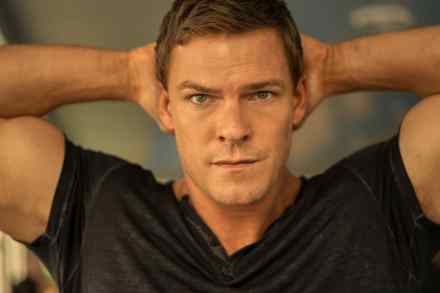
The trope of a loner, either new in town or returning from years away, who is forced to confront the corruption and violence of the bad guys now in charge, is a familiar storyline in both film and TV. Westerns such as Shane (1953) and the classic TV series Kung Fu (1972-75) revolved around this scenario, but it also plays out in a variety of other settings ranging from Ancient Rome (Gladiator, 2000) to outer space (Soldier, 1998). And all points between. Amazon’s Jack Reacher adaptation is only the latest in this long line of wrong-righting protagonists and has been picking up positive reviews for beefy star Alan Ritchson’s depiction of the titular character.

The curious cult of self love

As Sigmund Freud once told me in a YouTube video: ‘Who lacks sex – speaks about sex, hungry talks about food, a person who has no money – about money, and our oligarchs and bankers talk about morality.’ So beware anyone who starts preaching ‘self-love’ at you. Chances are they hate themselves quite as much as you do – if not more so – and have been duped by the latest fad into revealing their deeply narcissistic behaviour patterns.

Drive My Car and the joy of quiet films

Every now and then you watch something that makes you realise how much the likes of Netflix have skewed our viewing habits. While the kings of streaming may have injected more money into Hollywood than ever before, they’ve also stacked the deck yet further in favour of the celebrity blockbuster, the big and the bombastic. Quieter, subtler films all too often disappear into the ether. You can understand Netflix's position. What better way to attract the fleeting attention of the scrolling viewer than with a glimpse of the likes of Leonardo Di Caprio or Benedict Cumberbatch? Throw in a big, juicy concept – like an imminent asteroid collision – and things are really looking up. But what about those would-be classics which fail the clickbait test?

The lost art of browsing

The paperback’s cover showed a woman and man walking down Ludgate Hill towards Fleet Street with St Paul’s behind them and a red double decker passing to their right, dressed in the office fashions of the post war years. It looked like a still from an Ealing Comedy. A friend posted the image on his social media because he liked the look of the Fontana edition which he had found on his father’s shelves. It was a copy of London Belongs to Me by Norman Collins. Most people seeing this would immediately start thinking of the fifties but for me it had rather different associations, triggering intense memories of the 1990s. This was because I had spent many hours over several years of that decade trying to find a copy of this very book.

How to restore the British countryside

Our countryside is one of the wonders of the world – a great patchwork quilt of green fields, hedgerows, and rolling hills. But our sad little secret is that England ranks among the most nature-depleted countries in the world. Countless species have vanished altogether, and others cling on in isolated patches of remnant nature. While most of us are dimly aware of nature’s decline – car windscreens no longer splattered with insects after a summer car journey; a countryside strangely silent in springtime – few realise the full extent of the catastrophe that is unfolding around us. Accounts from earlier centuries describe meadows riotous with colour, hedgerows thronged with songbirds.

Ten films that faced censorship

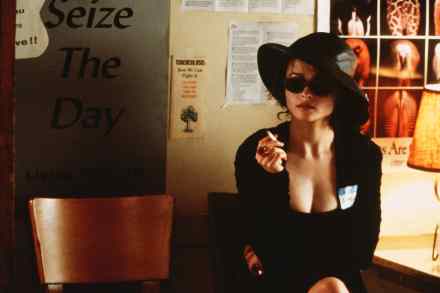
The news that film censors from China’s Tencent streaming service have restored the original ending of David Fincher’s cult classic Fight Club will be warmly welcomed by cineastes around the globe. If you, recall, the picture ends with Edward Norton's narrator offing his alter ego Tyler Durden (Brad Pitt) and initiating a lethal city-wide bombing spree. The Chinese authorities had previously decided in their collective wisdom that it was better to go with an end board that stated: 'Through the clue provided by Tyler, the police rapidly figured out the whole plan and arrested all criminals, successfully preventing the bomb from exploding. After the trial, Tyler was sent to a lunatic asylum receiving psychological treatment. He was discharged from the hospital in 2012.

The heroism of Novak Djokovic

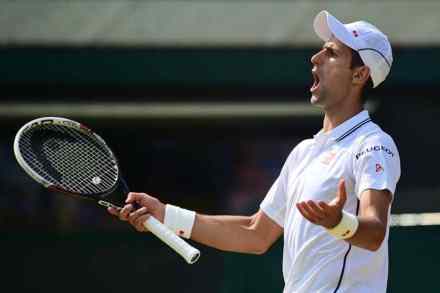
Novak Djokovic’s readiness to walk away from tennis on a point of principle is an act of sporting heroism on a par with Muhammad Ali’s refusal to fight in the Vietnam war. Like Ali was when he said he had ‘no quarrel with them Viet Cong’, Djokovic is widely accepted to be the greatest master of his sport of all time. Ali, then at the height of his powers, was banned from boxing for three years for his stance. For refusing to take a Covid vaccination — a matter of conscience — we don’t yet know for how long Djokovic will be prevented from playing tennis at the highest level.

What does Gen Z have against motherhood?

On Monday supermodel Naomi Campbell was pictured posing with her new baby daughter for the first time on the cover of British Vogue. Having become a mother in her 50s, she described having a child as 'the biggest joy I could ever imagine.' And yet it's a 'joy' few members of the younger generation want to share. New statistics reveal that half of women in England and Wales are now childless by their 30th birthday. In 1971, just 18 per cent of 30-year-olds had no children – now that figure has risen to a record 50 per cent. This phenomenon is by no means unique to Britain; fertility rates are collapsing across the developed world.

Prince Harry’s ‘Americanisms’ are no such thing

Ever since Prince Harry moved to Los Angeles, royal commentators with an interest in the English language have been watching what he says. He may have walked the walk but has he also started to talk the talk? In October 2020, the Mail ran a piece headed ‘Prince Harry calls opening the bonnet 'popping the hood' as he picks up Americanisms after seven months in US with Meghan Markle’. In May 2021, the Express announced 'Prince Harry swaps Queen’s English for Americanisms in desperate bid to "be liked"', gasping that 'Prince Harry has dropped elements of his cut-glass English accent in favour of Americanisms'.

Ten sports films to watch during the winter Olympics

'There’s no such thing as bad snow, just bad skiers' (Popular skiing saying) The 2022 Olympics have to an extent been overshadowed by diplomatic boycotts over host nation China’s alleged human rights abuses. The US, UK, Canada, Australia, Lithuania, Kosovo, Belgium, Denmark, and Estonia will not be sending any ministers or officials. Other countries (New Zealand, Austria, Slovenia, Sweden, and the Netherlands) cite Covid concerns for the lack of official representation. Whether boycotting the event will have any discernible effect is debatable. France’s President Macron certainly doesn’t think so: 'I don't think we should politicise these topics, especially if it is to take steps that are insignificant and symbolic.

Why BAFTA has shunned the Oscars A-list

Last week, the nominations for the BAFTA film awards were announced and very swiftly afterwards the annual chorus of lamentation started up. For whatever poor old BAFTA does, a vocal segment of film fans and critics alike will declare themselves unhappy. BAFTAs-bashing, it can often seem, is how those in cultural circles like to keep themselves warm and entertained in the darkest and dullest months of the year. As if that weren’t enough, hot on BAFTA’s sweaty heels come the Oscar nominations, providing the opportunity to grumble on an international scale. As recently as 2020, grave accusations of ‘whitewashing’ were levelled at the British Academy, when it somehow managed to locate not one actor of colour worthy of nomination in the four acting categories.

The truth about Jimmy Carr’s ‘offensive’ joke

Jimmy Carr is known as the hardest-working man in comedy. He loves making people laugh and most of all he likes making people laugh at the things they know they shouldn’t. He also loves making money and knows full well that audiences have become a lot more sensitive in recent years. That’s why he opens his Netflix show by saying: 'Before we start, a quick trigger warning. Tonight’s show contains jokes about terrible things. Things that may have affected you and the people you love. But these are just jokes. They’re not the terrible things.’ If you continued watching after that and were offended, I’m sorry you were upset but that’s on you. No one made you watch.

The real reason culture warriors want to take down Joe Rogan

Joe Rogan is wildly popular with men because his podcast most closely approximates the way the majority of us speak, think and interact with one another. By turns funny, clever, stupid, thoughtful and irreverent, there is nothing else like it in the media. This means it needs to be cancelled. If you’re trying to organise a cultural revolution and bring down the patriarchy, the existence of The Joe Rogan Experience – a bastion of relatively guiltless masculinity that draws an audience of tens of millions of men three times a week – is unhelpful in the extreme.

Swindled daters aren’t the only ones cynical about Tinder

Elliot, 28: ‘My greatest achievements in life are: drinking a bottle of Listerine in 10 seconds, beating my laptop at chess on easy difficult and surviving till the age of 28’.  Frank, 40: ‘Professional career, into extreme sports and stay fit, yet also enjoy the finer things in life like diner [sic] and a glass of champagne.’ It's the communication culture spawned by Tinder itself that is the biggest menace These were the first two Tinder profiles I saw when I opened the app after watching Netflix's The Tinder Swindler. They capture the fairly gormless but harmless nature of most male Tinder profiles, with fairly gormless but harmless men attached.

Why are we so fascinated by crime?

A suitcase landed in my garden. It seemed to have come from the sky. Soon after, two policemen urgently knocked on my door. Confused, I invited them in, they hurriedly went to retrieve the bag. Inside was a load of money, drugs and keys belonging to expensive cars. They inquired if the items were mine. ‘Certainly not,’ I said. After they’d gone, I was filled with questions. That evening the policemen returned and I was interviewed for an hour. I asked them for more information, but they were unable to tell me anything. Drug deals occur regularly on our street. They happen in a flash; a hand through a car window, bowed heads and hushed voices. The flying suitcase incident added a touch of reality to one of my favourite past times which is crime fiction.

The indomitable popularity of Joe Rogan

‘Nobody has stronger opinions about Joe Rogan than people who have never listened to Joe Rogan,’ is Edward Snowden’s view but I am the exception that proves the rule because the more I listen to him the more I profess my love for him. At points in the past year, the Joe Rogan podcast has been all that’s prevented me hurling myself out of the window with Elizabeth Day’s latest book. If you feel isolated and lonely in the post-lockdown world you might find yourself – among the legions of truck drivers stuck in cabs and Amazon workers waiting for robots to replace them – falling for him too.

The return of the black and white movie – and ten of the best to watch

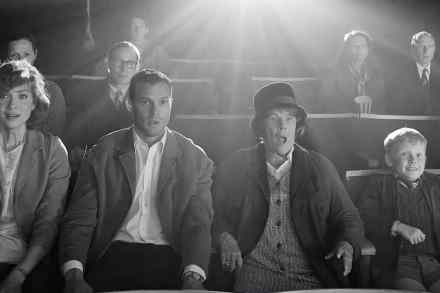
Are black and white films making a comeback – or did they ever really go away?  With Belfast, The Tragedy of Macbeth, Passing, Mank and Roma all generating critical buzz, they are certainly having a moment. Even after the advent of colour motion pictures, black and white movies continued to be made, chiefly for economic (lower cost stock) and aesthetic reasons. Some present-day directors have even released monochrome versions of their colour movies, including The Mist (Frank Darabont, 2008) Logan: Noir (James Mangold, 2017) and Guillermo del Toro’s remake of 1947’s Nightmare Alley (2021). Why is the Black and White format growing in popularity?